


Mr Punter
-
Posts
8581 -
Joined
-
Last visited
-
Days Won
27
Everything posted by Mr Punter
-
It looks like you have used C studs and have them 90 degrees the wrong way round
-
Fascias and soffits question - need some help!
Mr Punter replied to Coops85's topic in Roofing, Tiling & Slating
I don't know why the t/f co. are not able to make this work with the approved plans? 175mm ridge height increase means a new application for the amendment or risk being in breach. Do your planning drawings show any heights, datums or reference points? -
I don't get what you have done here. When I have seen this the membrane is fixed to the wall with properly watertight fixings, then the u=channel is fixed ceiling and floor with a small gap to the membrane and the I studs are located in the channel and fixed with the stubby fat head screws. You can't just screw through the membrane as it needs to be completely sealed. The idea is you build an independent wall on the dry side of the membrane using u track and I studs. Is there a perimeter drain, sump and pump to be included?
-
I am no expert but if that is going to be a cupboard then gas and electric in there together must be a no-no.
-
You could try https://www.justdoorsuk.com/composite-fire-doors.php I have bought from them before. Phone them if you are unsure what you need. They were fairly helpful with me.
-
I think you will be fine if you move the WC to the left a bit.
-
Lindab: does the exact specification matter?
Mr Punter replied to ToughButterCup's topic in Rainwater, Guttering & SuDS
Unless there is an aesthetic reason to fit Lindab, plastic is a lot cheaper and easier to fit and will outlast most of us. If you are going with Lindab you should use proper cutting shears. Chop saw and holesaws are not allowed as the cuts need to be clean for the galv to work. -
I would fill with concrete as you build up.
-
To prevent mortar staining. Also see diesel used on blue bricks.
-
It would be really useful if someone did an on line 3d print service for house models from autocad.
-
Our contractors used the Klober permo type product in the past under a zinc roof. It has a layer of what looks like course trimmed pubic hair to create a gap.
-
Perhaps a strong coffee and a cigarette tomorrow morning, following tonight's kebab, will allay any scruples and see it properly christened.
-
If this is for your basement and you have waterproof membrane you need to use 50mm I stud and it can be independent of the wall. If you wedge a bit of insulation behind them it stops any rattle.
-
I know it's just concrete, but FLOORS!
Mr Punter replied to Digmixfill's topic in General Self Build & DIY Discussion
Combined with your underpinning this is a decent structural milestone. I assume from the DPM your insulation is on top of the concrete? -
20 tonne.
-
Saving Stamp Duty on Derelict Properties
Mr Punter commented on Ferdinand's blog entry in God is in the Details
@EverHopefull the post is about SDLT, not council tax. To get the property removed from the council tax register you may need to remove the roof as a minimum and perhaps demolish internal walls and remove and board over doors and windows. They don't want people owning properties that can easily be made habitable and not paying council tax. @Ferdinand the SDLT rates seem quite similar - so much so I am surprised there has been a court case. It looks like the property would have to be in excess of £1M to bother. -
Overage - applicable to future owners
Mr Punter replied to edsr's topic in Party Wall & Property Legal Issues
I was just looking at an overage clause for a friend the other day. It was in favour of the Church of England and was 34% of the difference between the original purchase price and the uplifted value after planning consent. Duration was 21 years. I am a layman but it looked tightly worded including the assumption for the revised valuation that all services, rights etc were in place. They paid £30k for a plot which will be worth £250k with consent. They were a monopoly bidder as the site was landlocked, the only access being through land owned by the friend. 50% for 50 years I would tell them to do one. -
They are when a fire gets into the cavity, because timber is flammable and masonry is not.
-
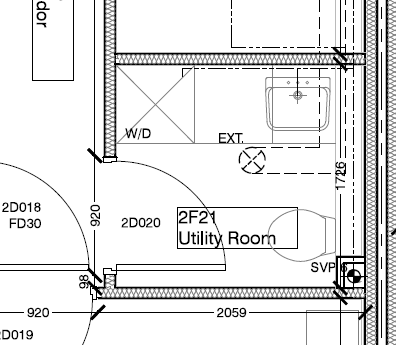
Villeroy & Boch wall hung on a Geberit type frame. 300mm between wall and WC. We have reduced this to 250mm in other units where soil pipe location dictates. It gives 400mm-450mm between sink unit and WC.
-
Sprinklers will not put out a fire in a strongly vented cavity, but they should stop it reaching there. I still can't believe how fire stopping / cavity barriers are such a design / specify / install on the hoof thing where correctly installed they could save lives and buildings. I would liken it to buying a car and being left to work out how to fit seatbelts and airbags.
-
I have a very similar setup but the 1650 measurement is 1700. The WC is pushed away from the sink a bit, rather than centred, and no issue getting to the sink.
-
Hilti gun fastenings are used a fair bit for metal ceiling systems.
-
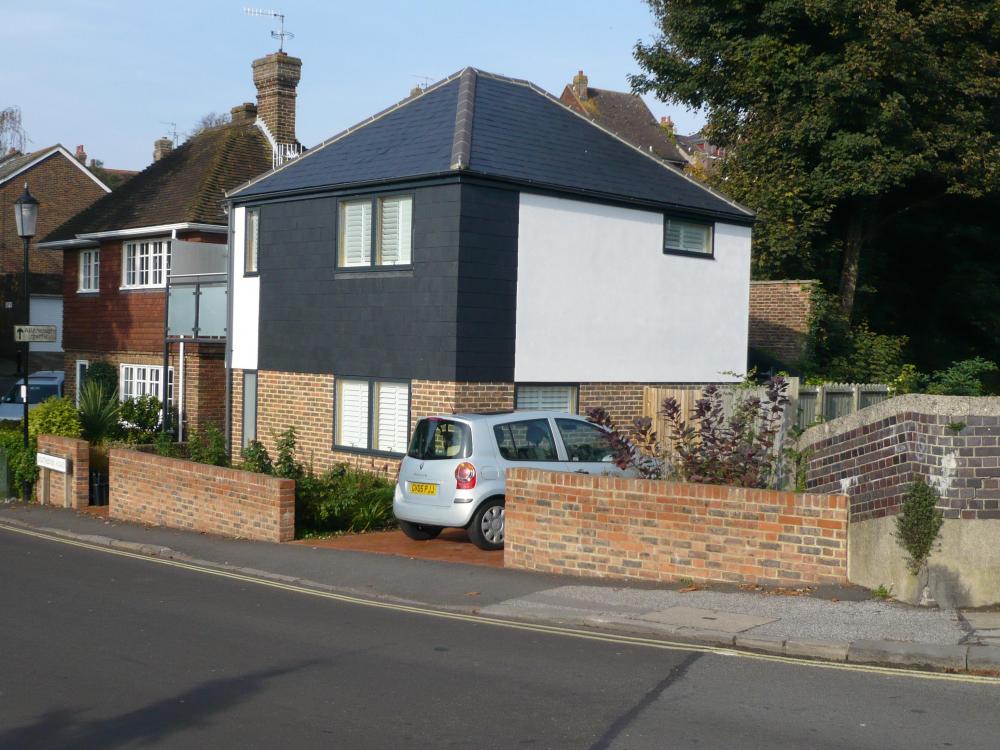
We have in the past used 75mm blocks for slate hanging and 100mm for render so they match depthwise.
-
Are you no longer having the roof as a drive-on area? Also, are you planning on doing a plasterboard ceiling under the concrete?
-
@pocster I think he is asking if you are going to suspend people?



