markc
-
Posts
3826 -
Joined
-
Last visited
-
Days Won
22
Everything posted by markc
-
@Kilt any pics? I’m struggling to get my head around this
-
For it to freeze it must be full of standing water … that’s not how a stack works. or the stack has to be so cold that any water will flash freeze while the water flows through it … that’s not going to happen in UK. if the underground or lower portion did somehow get blocked then the stack could backup and freeze. Again unlikely.
-
As above, the designer should specify the connections, bolted is rare, spikes plates (shear connectors) almost never. usual is 3inch annular ring nails staggered at 300-400mm centres.
-

Flat roof parapet wall repair - is this realistic?
markc replied to hamburgers's topic in Flat Roofs
Omg! The masonry is in a bad state, definitely needs work to make it waterproof. looking at the pics the quote is more than reasonable. as above, parapet walls are always more trouble than they are worth. -
Flat roof parapet wall repair - is this realistic?
markc replied to hamburgers's topic in Flat Roofs
Good morning and welcome, the zinc work looks very reasonable. the render initially looks high but you do not say how high the parapet Wall is? or the access available? Vehicular access etc. overall I don’t think it’s bad at all, especially after seeing some prices for poor work done recently. -
That’s a very neat back-of-a-fag-packet drawing hmmm, looks like some cill grinding will be on the next job list
-
100mm
-
Flooring chipboard or 18mm ply set into the insulation. It’s just something to spread the load and give you something to screw into. or a wall hung pan and you don’t need the batten under the toilet … but you would be needed under the frame unless solely supported from the wall.
-
Interesting detail, I think I would be installing the duct as you say and then insulate the pipe as it is installed through the duct. .. 25mm pipe with 70mm dia insulation will go through the duct if you keep the bend radius as large as possible
-
When you say wood within the door, I presume you mean the frame? And what door, sliders, bi fold etc? a sketch would help
-
Any geo membrane will be fine, and nothing wrong with digging in a few hundred mill. sectional garages do not put much load down and certainly to point loads so the base doesn’t have to be anything serious. We have free stood them on bare soil as temporary stores and they didn’t sink much at all.
-
Unless your house has been under water since it was poured I can’t see these reading being anywhere near correct.
-
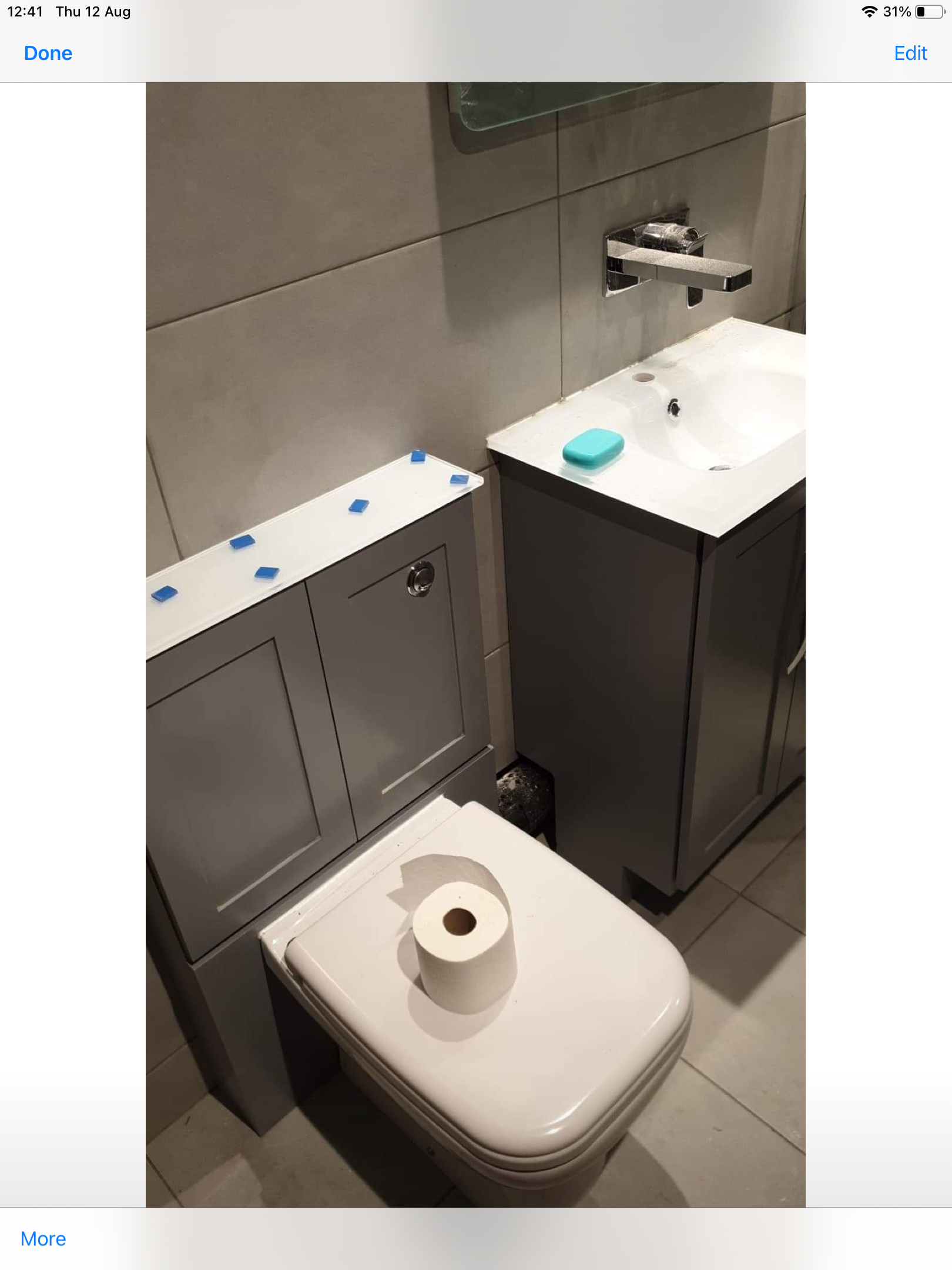
The waste runs proud of the wall (stud wall in only 75mm deep) so I kept the cistern and sink units separate and connected with a small link box with glass to to match. note the box and glass top are not fitted in this pic
-
Took me a while to find a pic, I’m not one for taking photos of stuff
-
As long as they are not halogen floods then 1.5 will be fine and the voltage drop won’t affect LEDs
-
I recently had a similar problem. The vanity units looked cheap and hotel like. I ended up building my own shaker style cistern box and sink unit.
-
As above, word of mouth is the only believable information, I would never trust check a trader etc.
- 16 replies
-
- 2
-

-
- leadwork
- poor practice
- (and 1 more)
-
You can/do get charged for taking water from rivers and for sewage if you discharge into a sewer or water course as these are managed. pretty sure you should have a license to take water out of a borehole tho.
-
No because they are not supplying a service … I.e the water is not being treated or pumped by anyone
-
Water isn’t a problem but oil, petrol etc dripping from a mower will sink straight in and become a permanent stain. Sealer doesn’t need to be anything special inside.
-
70mm of concrete will crack, move and take the tiles with them. playing tiles on a slope is just a case of setting levels for top and bottom and then using a straight edge to check the “level” as the tiles are laid
-
Nothing! Atmosphere will cause oxidation and UV can fade paint but Alu itself isn’t affected.
-
Hello and welcome.
- 5 replies
-
- 1
-
-
- wales
- timberframe
- (and 1 more)
-
You definitely don’t want concrete and no need for a laser level either. as above, good hardcore base and then lay as ordinary tiles/slabs as above.
-
I was concerned you had already paid, tell him you will accept £200 for the shoddy job you need to put right
- 16 replies
-
- 1
-
-
- leadwork
- poor practice
- (and 1 more)