


Adsibob
-
Posts
3609 -
Joined
-
Last visited
-
Days Won
10
2 Followers


Recent Profile Visitors
6598 profile views


Adsibob's Achievements

Advanced Member (5/5)
745
Reputation
-
 I'm thinking of installing MVHR in a flat which comprises two bedrooms, a bathroom, an open plan lounge/kitchen and a hallway which links each of these rooms together. The flat is only about 780 sq feet. Here is the layout (though the room at the bottom of the drawing, labelled "living room" will be a bedroom): My first question is where to install the actual MVHR unit itself. The current options are: 1) There is a large cupboard that sits above the bathroom. It is about 45cm tall and has the footprint almost as big as the whole bathroom (which is about 1.8m by 2m). That cupboard is, accessed from the smaller of the two bedrooms, though it's slightly awkward because the cupboard doors are about 2.1m above floor height. Apart from the access issue, the main disadvantage of this location for the MVHR unit is that it will be audible from the small bedroom, and that is a big problem. So unless units operate close to silently, I don't think this is viable. 2) There is a cupboard which houses the tumble dryer which has enough space to house another laundry machine, on top of the tumble dryer, but that second laundry unit went into the kitchen instead, leaving that space available. That cupboard is at the bottom of the staircase within the flat, just to the left, before entering the kitchen. The advantage of that location is that it's not adjacent to anything other than the kitchen. This would be my preferred location, although I'd still want a quiet machine if possible, as the kitchen will be in regular use and in combination with the open plan "morning room" area will form the only communal living area, as the "living room" is actually a second bedroom. 3) I could build a small external insulated cupboard outside in the garden, up agains the external kitchen wall (shown to the right). The downside of this is that there aren't any PD rights with flats, so we'll need planning permission probably, even though it will be a small addition. It will also need to be detailed carefully to ensure it's sufficiently well insulated, and it might need its own heat supply, which would be a bugger. So my questions are whether people think option 2 is viable from a sound insulation perspective. How quiet can a machine for a 780 square foot flat be? Ceiling heights are about 2.65m at most (and less in some places, e.g. the bathroom). But assuming an average of 2.55 throughout, the cubic volume of the flat is 2.55 x 72.5m^2 =184.875 m^3. Rounding up to 200m^3 to be safe. I'd like to aim for very low air velocities, generous duct sizes, proper attenuation between the MVHR and distribution system, and low-noise terminals, like the Lindab airy ones. My second question: is a machine with 250m^3 per hour output sufficient? If so, can anybody recommend a quiet one?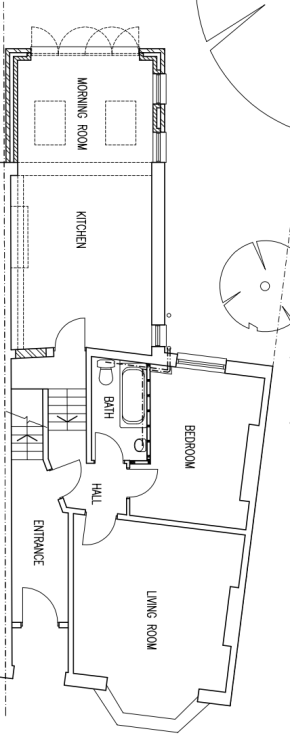
-
I know this site is more for self-build than for buyers of new-build, but posting this anyway as it's pretty significant imo: https://consumervoice.uk/homes/housebuilders-claim-new-build-buyers-compensation/
-
This is a very clever, though now I think about it, very obvious advantage of luminaires. I got pissed off with the last luminaire because it was bloody expensive and when a part inside it failed, even though it was a Siteco branded part with a clear part number, Siteco wouldn't sell me one individually. So thought lightbulbs were better. But now I'm regretting the lightbulbs.
-
Good point. How do I work that out? I guess if it’s running in series, unscrewing one will cause the other to switch off. Have I remembered my GCSE physics correctly?
-
Got rid of a somewhat sophisticated LED luminaire and replaced it with a light fitting that takes two E27 bulbs. The light is rated for a maximum wattage of 2 x 40W, which with modern LED tech should be plenty to replicate the 3000 lumens we had from the old LED luminaire. So I bought two of these bulbs: https://www.screwfix.com/p/sylvania-toledo-platinum-e27-gls-led-light-bulb-1535lm-7-3w/959vn which at 1535 lumens each, should give us plenty of light. Wired in the new ceiling lamp screwed the two E27 lights in, switch it on and it is a very dim yellow light indeed. This is 3m above a utility room and it the light is just not very utilitarian. I originally thought the reason the light was so pants was that the diffuser that comes with the light fitting is far too thick, it's slightly frosted and has a cheap and slightly aquamarine blue tinge to it. The light bulbs are 2700K, the same (I believe, as the luminaire we had before - though maybe it was 3000K). But when I removed the diffuser and ran the light without it, it really wasn't that much better, just a little brighter, but really not much. Are the Sylvania lightbulbs I've purchased from Screwfix really that crap? Looking for brighter lightbulbs that does not exceed the 40W rating per bulb, the only thing reasonably priced I've found is this: https://www.bltdirect.com/high-quality-gls-e27-bulb-2000lm-brightness-14-5w-power-4000k-cool-white-non-dimmable-200-degree-beam-angle-frosted-finish I wouldn't normally never buy a 4000K coloured lightbulb for the home, but this is in a utility room and maybe a bluer light is not a bad thing. Not sure. Any suggestions for which lightbulbs to get to significantly boost the light in this utility room? Don't understand why 3070 lumens from two LED light bulbs is not producing anywhere near as much light as the 3000 lumen LED luminaire we had before???
-
Please don’t do this. As much as I hate conveyancers, a good one is with their fee several times over. You don’t want to make DIY mistakes on what’s likely to be one of the highest value transactions you havre ever entered into.
-
It is the WiFi Interface (accessed via a web browser rather than an app), but I don’t think it’s lost connection as otherwise I would get a connection error, whereas the interface seems happy in twitch if all other data points.
-
Yes, it’sa presence sensor. That appears to be working just fine, in that the light still comes on when it’s meant to and stays on for the amount of time it’s meant to.
-
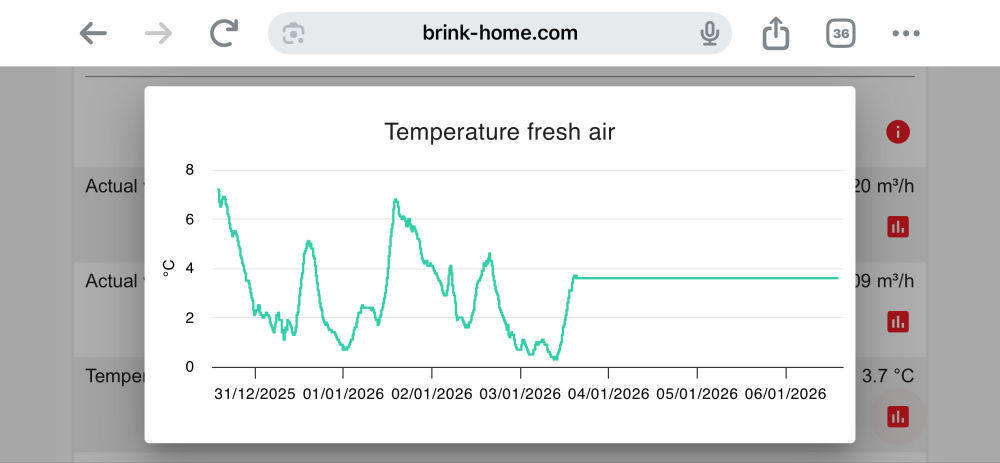
The fresh air temperature reading on my Brink Flair 400 appears to be Stuck at constant: anyone had this (presumed) sensor fault before?
-
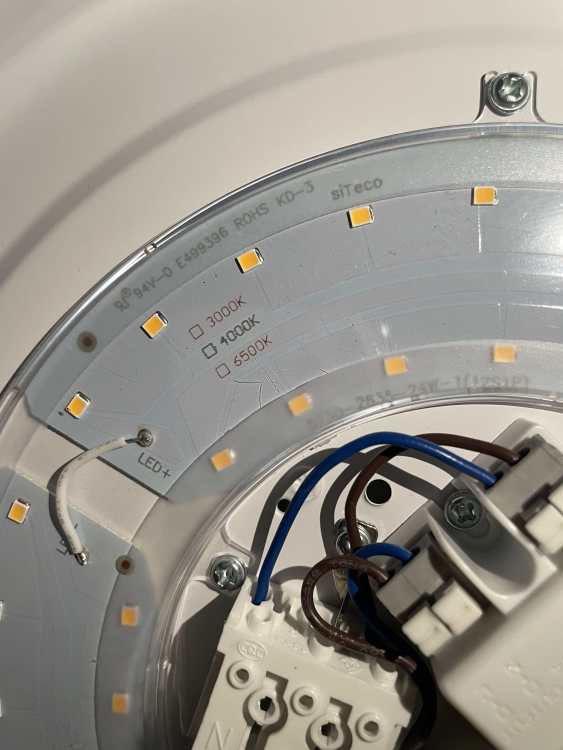
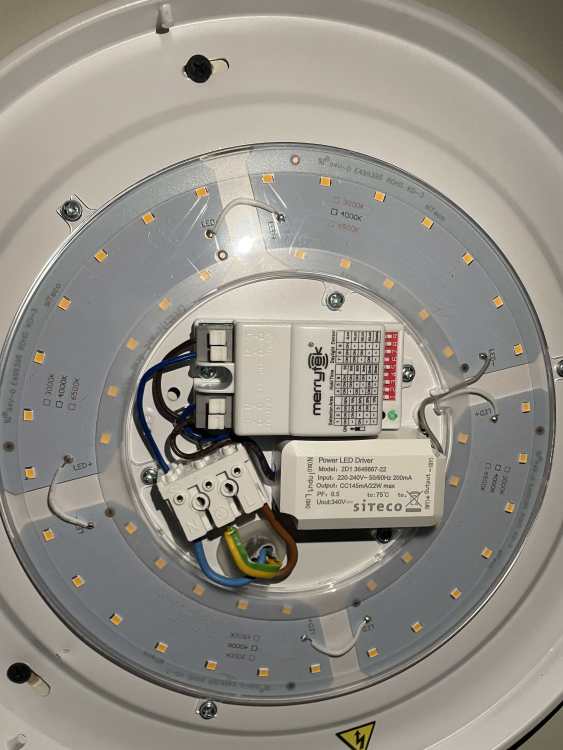
Thanks. The external diameter of the LED ring is about 20cm and the internal diameter is about 10cm. But how would I work out which capacitor. If any welding is required, that rules me out. Interesting… even for Siteco modules? I thought they were a reputable company. Other option I have is to buy a driver and LED chip pair, that way I know they are compatible with eachother. Though shame to waste money on replacing the led chip given that it’s still working.
-
Why do you say that @Temp? Because of the flickering symptom?
-
We have a flush mounted ceiling light that produces 1480 lumens at 3000K. It has a module inside it which acts as a presence sensor so it comes on when people walk into the room, and switches off a certain number of minutes afterwards. There is also another module inside, branded Siteco, which is the LED driver. After almost 4 years of regular use (at least a few on/off cycles a day) it has started to flicker. The flickering is worst when first coming on in a day; after that it’s sometimes a bit better, depending how long between activations. I attach some photos. I searched for replacement circular LED chips using the model codes on the circular chip itself, but had no luck. Can’t believe I need to replace the whole unit when it’s just the LED chip which is dying. any ideas?
-
Zanussi combi oven/microwave tripping fuse
Adsibob replied to Adsibob's topic in Electrics - Kitchen & Bathroom
We ended up replacing the microwave as it was about the same money as paying for a repair out of warranty and SWMBO didn’t like the microwave in any case. -
I’ve had a setup where I run internet from a Ubiquiti Dream router to a PoE Switch via a pair of TP-Link powerline adaptors. The PoE switch then provides data and power to two Ring PoE security cameras. It’s worked really well for the best part of a year. I have Ubiquiti surge protectors interrupting each PoE connection (ie between the PoE camera and the Switch) just for belt and braces protection. A couple days ago both of these Ring cameras went offline. My other PoE cameras were fine although they are plugged into the Ubiquiti Dream Router directly. Initially I thought the issue was the cameras themselves, as the TP-Link powerline adaptor had normal indicator lights and I just suspected Ring over a reliable brand like TP-Link. Tried resetting and reinstalling them, but that failed. It soon became clear there is a fault with the TP-Link as leaving it on causes the consumer unit to trip the only other appliance plugged in on that socket pair (a tumble drier). So this means the TP-Link has died after 10-11 months of continuous use. Annoyingly I think it’s out of warranty, as I bought it a while back. Just wondering whether to replace with another Tp-Link adaptor, or go for a more reliable brand.





