billt
-
Posts
499 -
Joined
-
Last visited
Everything posted by billt
-
Looks acceptable to me. Tiles aren't a precision product, variations leading to small gaps are inevitable. The overlap pattern is designed to keep the roof waterproof even with gaps between the tiles. If you want a more even result I think you'ld have to strip and relay the whole roof.
-
Really? Do you have any evidence to support that view? Which particular type of mould is the toxic one and how do you identify it from its colour? As mould is ubiquitous it does seem a stretch to claim that a bit more mould than usual is going to kill a normal healthy adult.
-
But German pipe threads are exactly the same as British ones, but with a different name, apparently. https://www.harveywatersofteners.co.uk/blog/plumbers-pipes-and-german-vs-english-standards "What most people do not appreciate is that Whitworth invented the standardised thread-form back in 1841 and the British Empire spread this around the world. When they decided on a standard thread for plumbing pipework, the British Standard Pipe Thread, it was the Whitworth thread-form that was adopted. This also spread around the world and virtually every continent uses this system. However, there are two anomalies. The German’s didn’t like the idea of recognising the English BSP so they called their system DIN. It is in fact exactly the same thread-form as Whitworth so to identify the correct thread size under the DIN Standard, you have DIN 15 equalling BSP half inch. DIN 20 equalling BSP three quarter inch and DIN 25 equalling BSP one inch. Our dear friends the Americans went one better and they called their system NPT, National Pipe Thread. Just as they changed the size of the Imperial gallon to the US gallon, they changed the thread-form from Whitworth to something entirely different. So instead of having the Standard 55 degree angle on the threads, they changed it to 60. (Yes you have to ask yourself why?). The net result is that whereas the DIN pipe threads are interchangeable with BSP pipe threads, the American NPT pipe threads are not. You can graunch a half inch NPT into a half inch BSP fitting and the sealant will take up the slack."
-
Cool Energy ASHPs'...............any good?
billt replied to selvbygg's topic in Air Source Heat Pumps (ASHP)
There seems to be a manual download link on the page that you linked to in your previous post! It's got various installation and wiring diagrams. -
You should have bollocked him. One of the principles of H&S is that the worker has a share of responsibility for his own safety, not just the employer. The worker should check that his work area and equipment is safe and not assume that it is. As a trained senior officer he should know that and should have checked the ladder before climbing it. If he'd fallen off he would have had any claim reduced or repudiated by his own contributory negligence. On the whole H & S rules are a good thing, unfortunately there seem to be a few people around who enforce them in an unthinking way.
-
I've installed a Drayton Wiser system which simply plugs into the industry standard back plate. Very easy to install. It also works without an internet connection, although you need one if you want control when away from home. It's cheaper than the competition too.
-
They don't. In the early days of the PV boom when inverters were expensive you could reduce system costs by using a slightly undersize inverter. As times of peak output are quite infrequent the impact on overall generation is small. At times of high insolation the inverter simply reduces the power that the panels deliver to the maximum power that the inverter can deliver - the nominal maximum output of the panels will only be produced if the load is suitable and an undersized inverter will give an undersized load.
-
I have to ask what is the point of a burglar alarm for normal people, that is those who are not going to be targeted by professional thieves? If it's not monitored and just makes a lot of noise all it will do is annoy the neighbours - if you have any. It will almost certainly not put off the burglars or generate any response from passersby. If it's monitored the thieves will be long gone before anyone can react effectively. https://www.theguardian.com/business/2017/aug/18/former-burglars-barking-dogs-cctv-best-deterrent gives anecdotal support to my view. We've inherited one with this house and it's just a nuisance.
-
Another option if shading is an issue is optimisers. SMA/Tigo TS4-O are available for about £45 each. You need one per panel but only for the shading affected ones. There's no particular limit to DC cable length; depends on the string voltage and cable size. I had about 30M runs on the old ground mounted system and the losses were negligible. SMA has a wonderful free, online, system design tool which will calculate the cable losses for you, among lots of other things. https://www.sunnydesignweb.com/
-
Grand Designs at Graven Hill starts tonight on Channel 4
billt replied to ProDave's topic in Property TV Programmes
To be fair, he claimed to be a human rights lawyer and presumably not very well paid by legal standards, and she seemed to be a full time parent. Maybe some people aren't entirely focused on climbing a corporate ladder and maximising their wealth; they might actually want to enjoy life and do something more interesting than lawyering. It's their house, why shouldn't they design it to fit what they want, not to maximise resale value. After all, that's what most people seem to claim as the main reason for building themselves. After seeing it after reading a lot of these posts, it was a lot better than I expected it to be. The wall finishes were good, I liked the exterior. I couldn't see much evidence for lots of air leaks. It was quite obvious that the interior wasn't anything like finished, so it looked poor in places. Yes, the thermal store was insane; we've got a very similar Akva 2,500l store with 3 coils, but it's designed to accept 10 hour burns from a log boiler. With the pathetic energy sources they seem to have it's doubtful if it will get more than tepid without the gas boiler going most of the time. The balcony also looked a bit dodgy, the timber looked inadequate and the rail was unsafe, although that could just be temporary. He also claimed to be doing a PHD and teaching at some time during the build. Overall I was quite impressed. -
at what cost of mains supply is PV a real option
billt replied to scottishjohn's topic in Photovoltaics (PV)
A battery based system can certainly power a house, but PV won't in the UK, unless your a hair-shirt user who's willing to live without power for a large part of the year. A PV based system with supplementary supplies (i.e. a generator) will certainly work. -
Oil usage and micro hydro content
billt replied to Lesgrandepotato's topic in General Alternative Energy Issues
Actually that looks pretty good to me, well into the realm of diminishing returns. A typical 1970s house would have 50mm of loft insulation, no wall insulation and single glazed windows. Presumably the cavities are insulated as well as the 60mm of celotex. Your 1100l of oil sounds quite credible, bearing in mind that you keep the room temperatures low (a lot of people seem to like 23C+) and last winter was very mild. You might find your consumption increases significantly in a cold winter. -
What about cooling ?
billt replied to Tim Alsop's topic in Mechanical Ventilation with Heat Recovery (MVHR)
A wine cellar in an old building isn't equivalent to a cellar in a modern, well insulated building. An old wine cellar will be thermally connected to the surrounding earth and have no significant internal heat input, so will maintain a temperature roughly the same as the underground temperature, a few degrees C. A modern basement should have a large amount of insulation isolating it from the moderating effects of the surrounding earth. It is also likely to have significant local heat input, depending on its use. Might have a plant room or be used as a home theatre or a gym etc, all of which will generate heat and introduce the possibility of over heating. -
Good advice, as usual. It looks as if the buyer has pulled out already. I'm sure that there are some good conveyancers out there, no doubt there are some good solicitors as well, but my experience is that they are few and far between. For instance, when my late parents house was sold a few years ago the first potential buyers conveyancer refused to do the first registration! (it was an unregistered property). That's part of their job and trivially easy. In the end I did it myself. We're selling and buying at the moment and getting similar laziness and minor incompetence from the solicitor we are using. (I would rather do it myself but there's an effective closed shop around here and the aggro isn't worth it.)
-
That's a bit unfair (about BigJimbo). You (or rather the conveyancer who first registered the land and didn't do it properly) have got into a very difficult situation. No doubt you do own the land in question, but if the Land Registry map is wrong it is up to you to get the Land Registry to fix the error. If you don't the problem is going to recur. (In my experience conveyancers are pretty stupid people who can't deviate from their stupid list of questions and won't help you.) In the first instance I would ask the Land Registry for their view. They are usually very helpful.
-
How to quieten a fridge freezer in an open-plan living room?
billt replied to Dreadnaught's topic in Sound Insulation
I never knew a fridge could make you go blind! I would modify the design so you don't have a fridge in a living area. Even the best of them make some noise. All these developer houses with one big (cheap) kitchen/dining area seem flawed to me partly because you can't get away from noisy appliances -
In a manner of speaking. The thermal store is used to decouple the heat source from the heat sinks, among other things. All the heating requirements are met from the thermal store; there are 2 coils to supply DHW, there's a weather compensated supply to feed the radiators and another supply to feed the 2 UFH areas. If it's not too cold and there's a fair amount of sun the solar thermal panels and diverted PV supply more than enough energy. The boiler hasn't been lit since the 22nd of March. Unfortunately it had to be lit this afternoon. Even in the depths of winter it doesn't usually have to burn for more than 8 hours a day (3 fills). Last year the last burn was on the 28th of April and the next one was on the 9th of October. Bear in mind this is in an old house with a much higher heat load than a modern house should have. It's possible to justify a system like this if you need to spend a lot of money on fuel. In a modern house heated by gas I'd expect the annual heating cost to be pretty low. Spending multiple thousands on a complex wood system isn't going to make financial sense.
-
Yes, it's just feeding a fantasy. You will be spending a lot of money on a system which will give you no benefit, given that you are on mains gas and not burning wood frequently. You will also end up with a needlessly complex and bulky system. (Oh, and wood is a polluting fuel.) If you want to burn wood, just use a stand alone heater, it's a lot simpler and a lot cheaper. We've been burning wood to heat our house for nearly 10 years, using a log boiler and a large thermal store supplemented by feeds from solar thermal panels, a PV fed immersion heater and a Rayburn (with provision for adding an oil boiler). Despite having free fuel I wouldn't do it again. The system is complex, bulky and a lot of work.
-
What is this mini beam in my 1850 wall?
billt replied to Ferdinand's topic in Plastering & Rendering
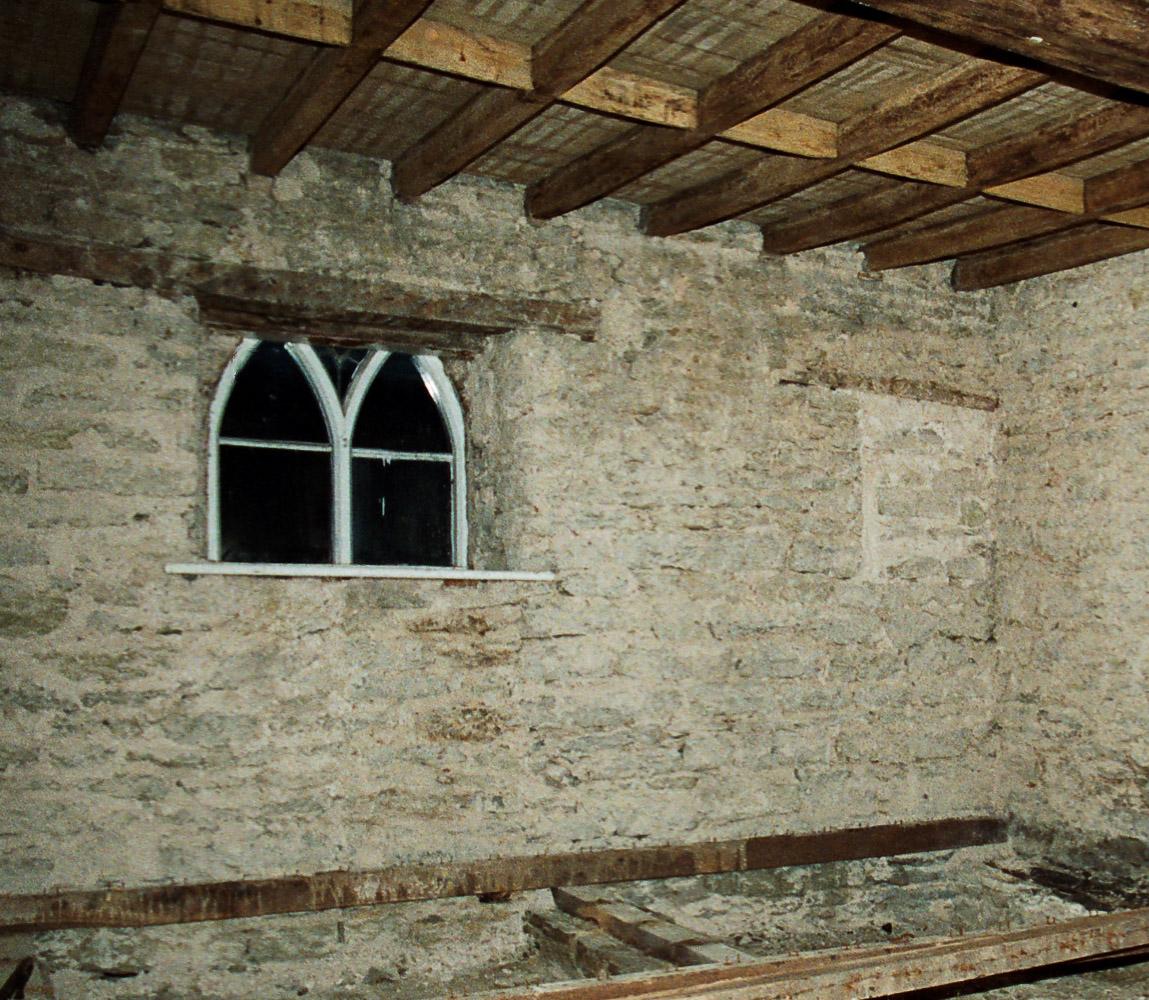
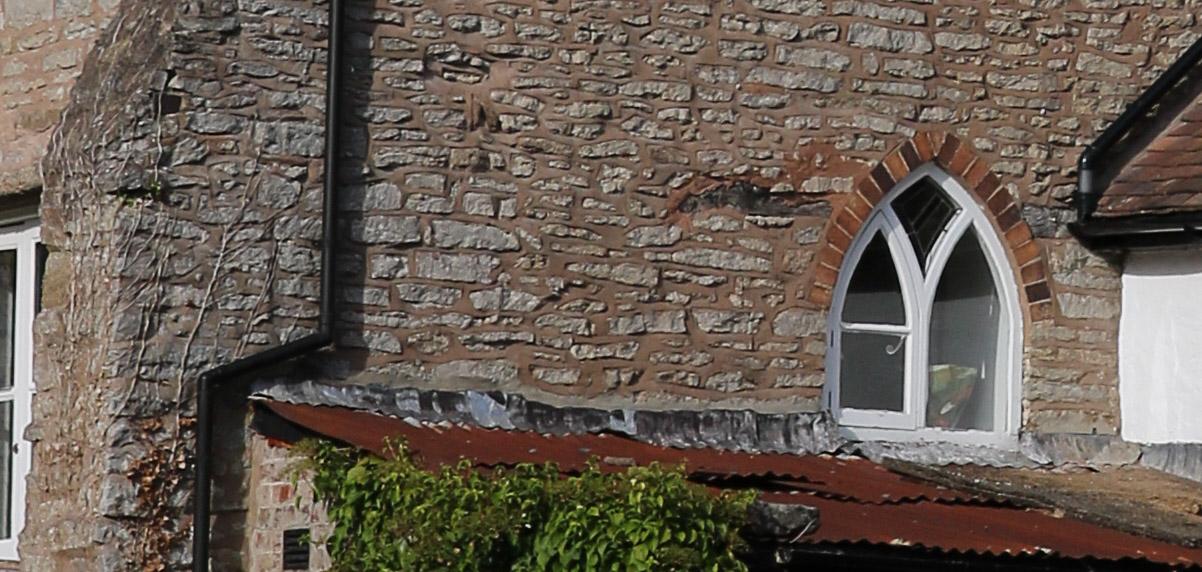
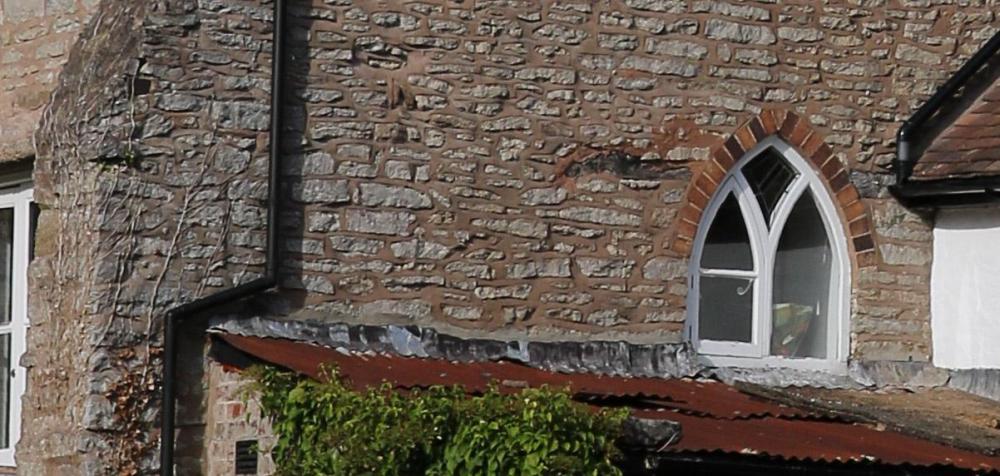
Yes, no doubt an old lintel over an opening of some sort. Our house had something similar. What is now the dining room had an old lintel over a filled in opening in the corner and a window had been enlarged on the outside to make a gothic style frame, but they left the old lintel on the inside, but cut the outside lintel and left the ends of it in the wall.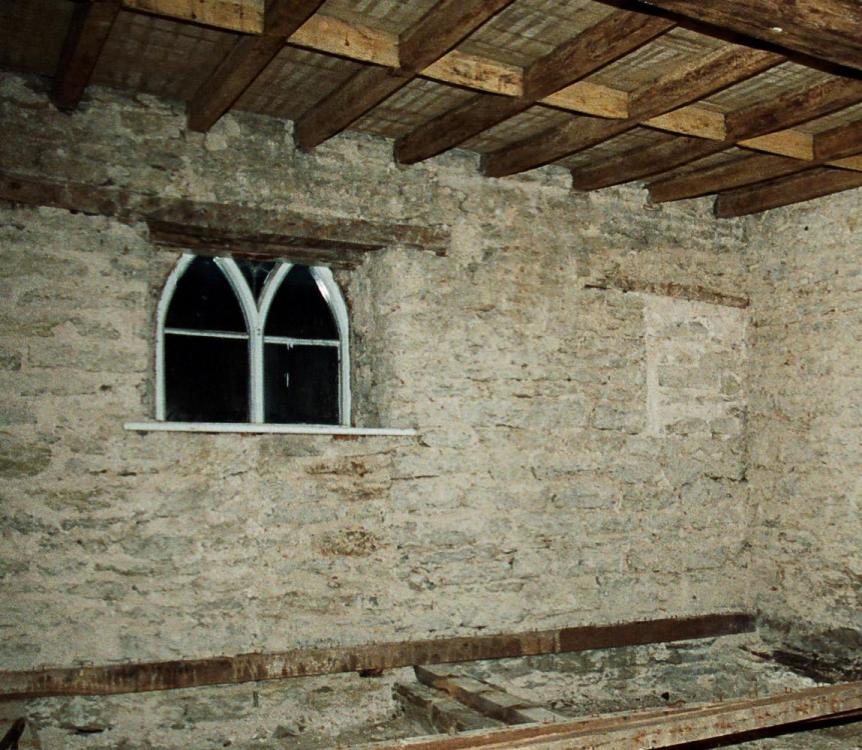
-
I was wrong about the orientation, it should have been SSW, about 15 degrees W of S. The tank is 2,500l; the ST has had it up to 95C or more after several days of unbroken sun with not much hot water draw off. On the 20th of March the tank started at 36C On the 17th of March the tank started at 37C On the 16th of March the tank started at 38C The point is that in overcast conditions there is little energy available and the non linearity of solar thermal systems means that the harvest-able energy drops off rapidly. IOW in effect they don't work in dull conditions.
-
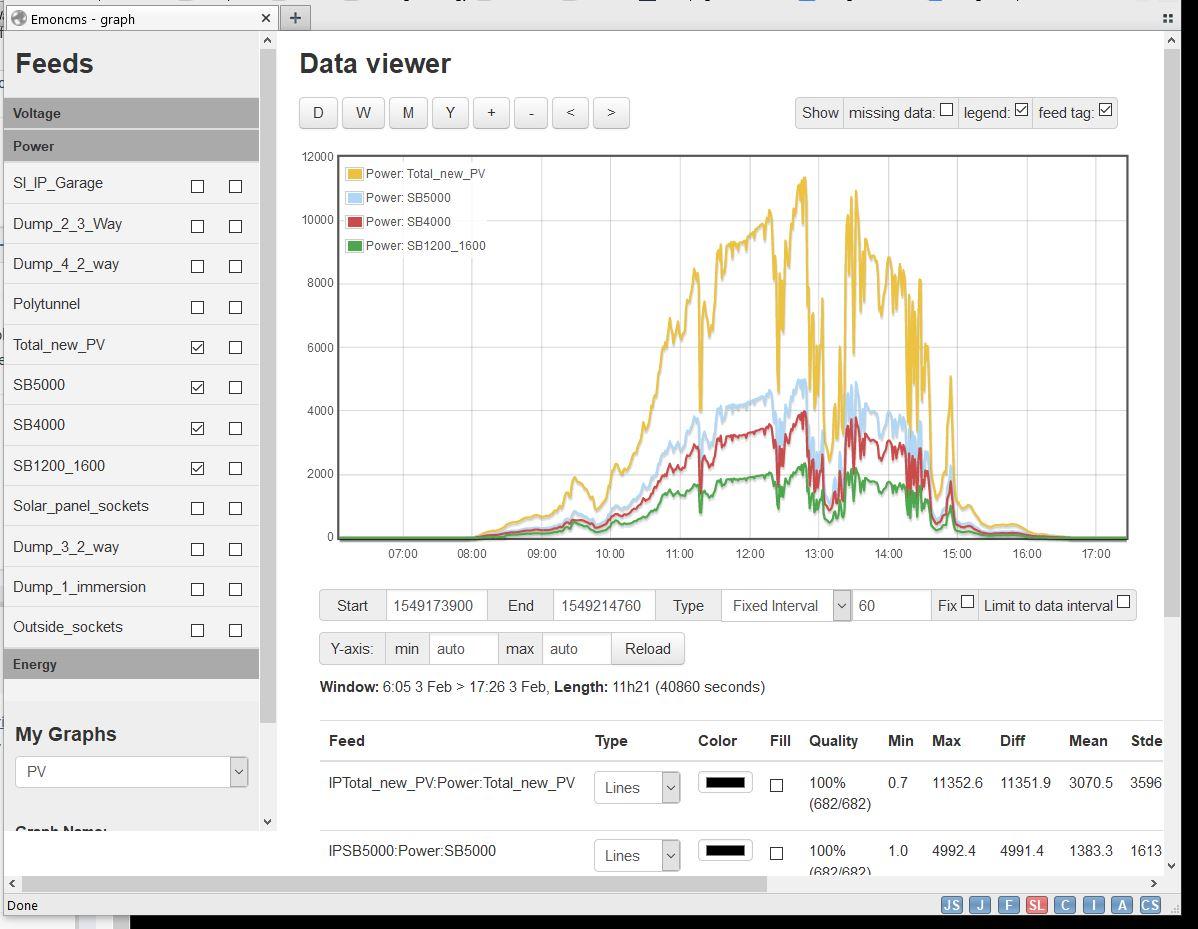
You won't get much meaningful heat on overcast days. It's difficult to estimate output as it depends on insolation, ambient temperature and store temperature, but they are only reasonably effective in bright light. Some examples, I have 3.8kW peak PV on the roof and 120 evacuated tubes, installed at about 45 degrees tilt and facing WSW. 20th March PV 20.3 kWhr, ST 31.5 kWhr (good sunny day) 17th March PV 12.7 kWhr, ST 16.2 kWhr (bright day) 16th March PV 3.9 kWhr, ST 2.1 kWhr (dull day) 7th March PV 2.5 kWhr, ST 0 kWhr (very dull day) Over the winter months you can expect very little energy. In January we had 20 days with no energy collected and only 3 with more than 3kWhr collected. Put it another way, January was one of the dullest months we've had since 2012, when the data collection started. PV averaged 2.63kWhr a day, ST 1.09 February was one of the brightest winter months we've had. PV averaged 9.42kWhr a day, ST 10.88
-
You might be thinking of CFLs. The unusual form factor ones were expensive and very slow to start (and dim anyway). Slow start isn't a natural feature of LEDs. Most of our lights are LED now and we've had a fair number of failures; mainly early ones and mainly ones with unsuitable forms like GU10. Can't think of a failure with externally powered ones. I'd say G9 is an unsuitable form for LED conversion, very likely to overheat.
-
I like this bit at the end of the BBC story. https://www.bbc.co.uk/news/science-environment-47306766 " The chair of the Committee, Lord Deben, is being investigated by the Lords Standards Committee to see if he has breached rules by not declaring income from firms that benefit from pro-active climate policies."
-
Smart Monitoring without a Smart Meter
billt replied to NSS's topic in General Alternative Energy Issues
A bit OTT, but the Iotawatt (https://iotawatt.com/) sold in the UK by https://openenergymonitor.com/iotawatt-wifi-connected-14-channel-electricity-monitor/ is a very versatile multichannel monitoring device. It's ready built, uses clip on CTs and is fairly simple to set up. Stores data locally with its own web server but can export data to the Open Energy Monitor server (or a lcoal version), PVOutput.org or InfluxDB. It's a bit expensive, but much more useful than the commonly available simple versions while still being fairly easy to install.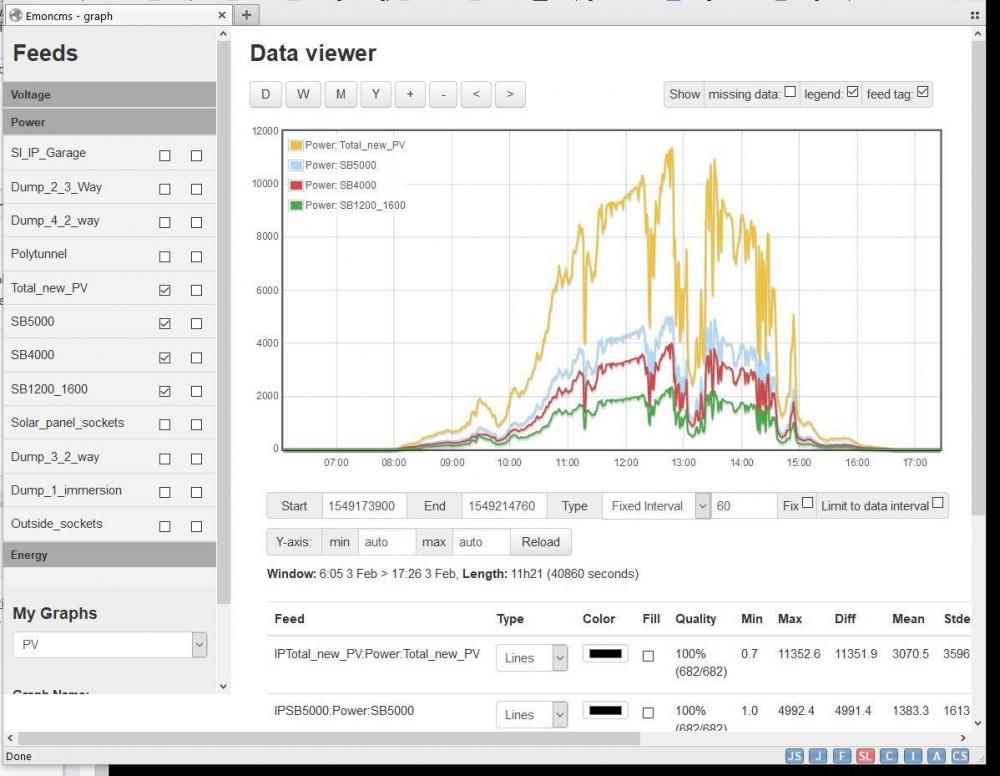
-
Instead of putting PIR in the cavity why don't we put it on the inside
billt replied to AliG's topic in Brick & Block
The dew is due to condense at the dew point.