billt
-
Posts
499 -
Joined
-
Last visited
Everything posted by billt
-
We've just been staying in a relatives house with a modern water supply system (no storage tank) and marveled at just how absolutely awful it is! Turn on a second tap and the flow in the first reduces, turn on a cold tap and the flow from the hot reduces. Takes ages for the hot water to flow (combi boiler), then, if someone turns on a cold tap the water gets hotter. Every house I've been in with a combi boiler has had similar issues. When I redid our system (with 400l storage in the loft) I made sure that there was no interaction between the taps and the hot water doesn't change temperature when another tap is turned on. And the flow rate and pressure at each tap is adequate and equal for both hot and cold. Our water supply is private, the mains electricity is not completely reliable, so it was eminently sensible to have loft storage which holds enough for at least 2 days and doesn't need power to pressurise the system. These days, if there was a decent mains water supply I would probably do it differently, but bad performance isn't a reason to condemn gravity stored systems.
-
But you still need the nuclear power stations to cope with the 50% of the time when PV isn't generating anything. I'll believe the practicality of other storage systems when there's 10GWhr in reliable operation; I won't hold my breath. Of course, the costs and time scales are completely distorted by the totally irrational attitude to nuclear power.
-
Interesting discussion about the origin of dining rooms. Kitchens in affordable housing used to be very small, much too small to eat in, so you had to eat elsewhere. Very cheap houses would just have one room where you'ld eat and live. A bit more up market houses might have 2 'reception' rooms, so one could be used as a living room and one as a dining room. The house that I was brought up in had 2 rooms and a small kitchen, but central heating wasn't an option for the masses then, so only one room was heated and used as a living/dining room, the other was kept for special occasions and the fire there would only be lit on Christmas day and Boxing day. I agree with the OP about using dining rooms. We now have a big kitchen; big enough to have a dining table in it, but it's never used for eating. The dining room is next door and used for almost all our meals. It's a haven of peace from all the mechanical noises that the kitchen gadgets create! The point about a direct route is a good one; our dining room connects directly to the kitchen, having to go through a hallway would mean that the dining room didn't get used for dining. You could make the door from the kitchen to the hall a single door to increase the cupboard space and allow a door between kitchen and dining room. Personally I wouldn't have that enormouse bi-fold window in the kitchen; put it in the snug if you must have one. That way you could have normal windows in the kitchen outside wall with cupboards under the windows. I don't see the objection to a big hall myself. It's a big expensive house, so it seems quite reasonable to have an impressive entrance hall. Externally, the design looks interesting, rather than the simple box (maybe with a bit of token decoration) that most new houses are. But removing the strange difference in floor areas between ground and first wouldn't detract from the appearance whilst simplifying the construction.
-
+1. Used the cheapest rapeseed oil on some form work recently, worked fine.
-
Planning fees are set by central government, so there's no room for personal charging scales at the moment. They're understaffed because councils are under considerable financial pressure and one of their first targets is to get rid of staff. Quite a few planning staff have been made redundant by our council. Of course the number of applications will be increasing as you seem to need planning permission for the most trivial of changes these days, so there is more work for less staff.
-
A person could take exception to that remark. We had a system fitted in 2011, the main motivation was my long term interest in PV and other forms of semi-self sufficiency in energy. A FIT supported system was the only economically feasible way of doing it at the time - the subsequent collapse in PV system prices was unforeseen. The economics aren't actually that good. The FIT will have paid the capital cost of this system in another 2 years, so 9 years from installation. The loss of interest etc will take another year or so to recover. After that it should be providing an income for another 15 years, but it's a very long term investment and we probably won't be getting the income. Actually, I don't disagree with your comment. All the renewable incentive schemes have been ill conceived and badly implemented; FITs should have been reduced much sooner and phased out completely by now; the RHI was a nonsense from the start.
-
Yes, too much heat. I used one of those MAPP torches when installing the wood boiler; they're great for 28mm+ fittings, but OTT for 15mm. Keep the torch a bit further away should help. On the other hand it is quick, once you've got the knack.
-
Come on baby, light my fire!
billt replied to vivienz's topic in General Self Build & DIY Discussion
I find the old fashioned way works well. A few bits of screwed up news paper, some small DRY kindling, twigs etc and a match. Light the newspaper and add more small dry bits of wood slowly until you've got a reasonable fire going then you can add bigger bits until you can chuck anything on. (Doesn't work too well in a high wind, though.) Recently had a bonfire started this way to get rid of a couple of years worth of hedging. Ended up being a 4 day bonfire. The ashes are still hot, 2 weeks later. -
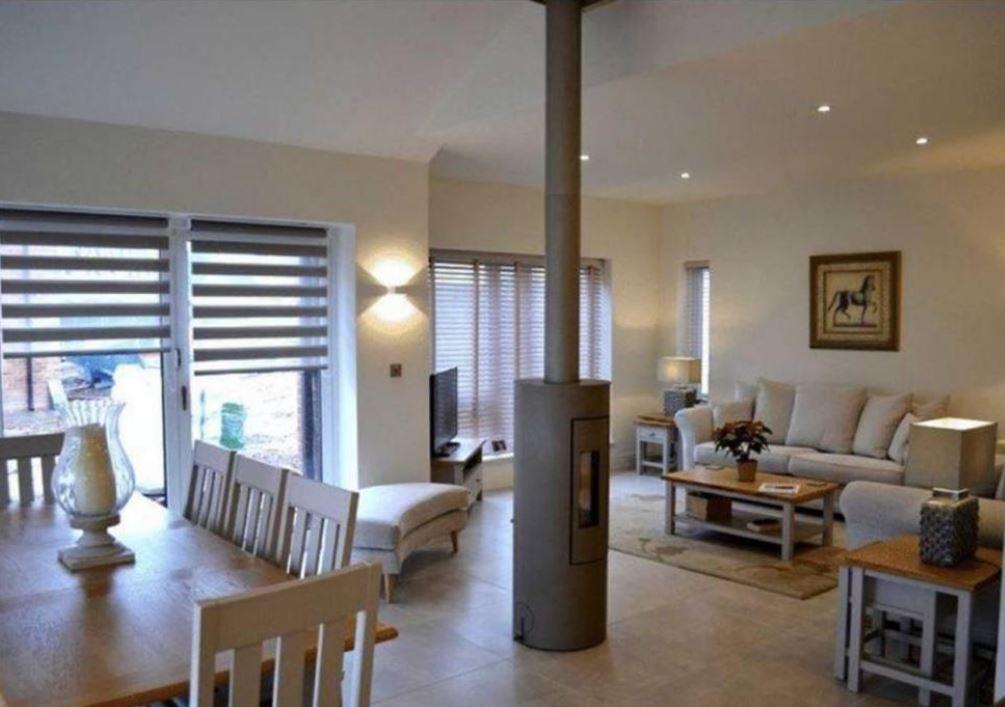
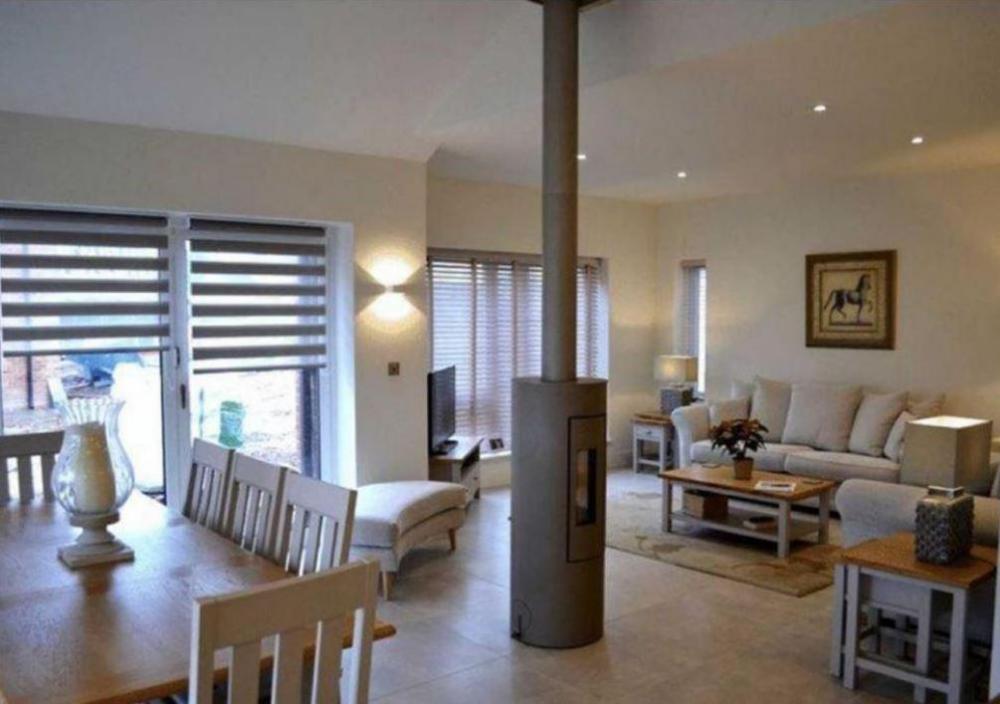
Not at all, I would think. Very few people burn coal these days and most sellers of wood claim that it's dry! We're thinking of moving to a house that doesn't demand constant grounds maintenance and have been looking at available houses in the vicinity (virtually looking, of course!). It seems that most of the upmarket developments, while claiming low running costs, have a feature wood burner. Complete insanity of course; the heat should be unnecessary, they'll make a mess in the immaculate interiors and the plots are usually to small to have anywhere to store the wood. One of them had this gem of inept design, whilst claiming to be low energy - built with SIPs and using a GSHP.
-
If it's of any interest I've been monitoring our consumption and production for several years and have modeled the performance for a battery system. The results are not very impressive. The system has just under 13kW of solar panels, facing SSW at 45 degrees. Nominal battery capacity 14.4kWhr, DOD limited to 80%. Average daily consumption is about 21kWhr, so annually about 7700kWhr. 2012 shortfall of 1370 kWhr (3 months with zero import) 2013 shortfall of 1510 kWhr (5 months with zero import) 2014 shortfall of 1180 kWhr (4 months with zero import) 2015 shortfall of 1410 kWhr (4 months with zero import) 2016 shortfall of 1410 kWhr (4 months with zero import) 2017 shortfall of 1320 kWhr (4 months with zero import)
-
Are Cat 5 sockets required all round the house
billt replied to Jude1234's topic in Networks, AV, Security & Automation
Unfortunately you can't predict the course of technology. When we started on this house in 1990 it was more or less gutted and I wanted to preempt future wiring wants. Every room has at least one telephone socket, at least one VHF socket at least one UHF socket. As computer networking was in its' infancy, at least domestically, I put in multi-core serial cables and network coax in some rooms. Now almost all of that is redundant, phones are DECT, TV is networked from a server as is sound and networking is mainly CAT5 with a bit of wireless. -
Are Cat 5 sockets required all round the house
billt replied to Jude1234's topic in Networks, AV, Security & Automation
The rooms should be easy to fix if you aren't going to use the cables, just fit a pattress box if there isn't one, push most of the cable back into the wall leaving a short end accessible in the pattress box and cover with a blanking plate. Simple and cheap. -
Not in the British Isles, maybe in the US. Timber frame of the sort being discussed here, frames made with small section timber is only about 100 years old.Traditional UK timber framing of massive structural timbers with infilled panels is a completely different system and, in my view completely unsuitable for a house intended to meet modern requirements, despite it's aesthetic attractions. And here's the problem. I've no doubt that very good houses can be built with either system and probably at similar cost; which you choose depends very much on how you want to go about the build and how much involvement you have. For instance, if I were to build with my own hands I would most likely use timber frame (constructed on site) as I have no brick laying skills.If using someone else to build the choice is more open, and to some extent dependent on the external finish you want. If you re happy with render or cladding (I think they both have issues - render seems very prone to mould growth and timber cladding suffers that and discolouration unless it's painted which leads to life long maintenance), then TF is the obvious choice. If you want a brick or stone finish then it seems more rational to me to build the whole thing with masonry. There's no simple answer.
-
Prunus varieties are supposed to be trimmed in summer (when the sap is rising) rather than winter to reduce susceptibility to diseases such as silver leaf; if it's going to be removed anyway it's not going to matter when you prune it.
-
Try SBK! Yes, cutting fairly often during the growing season gets rid of them, and you don't have to use expensive dubious weedkillers.
-
My point is that the system is autonomous; it maintains the temperatures that I want in the rooms that I want at the times that I want heat. In warm weather heating will not be required and the system "knows" this so heat will not be delivered and I do not have to modify the controls at all. With the controls that I've seen pictured for your system I'd imagine that you shouldn't have to 'switch the heating off' at all. All our rooms are used, but they all have individual control, so it wouldn't be much of an issue to not heat individual rooms; in our house that wouldn't achieve much as it responds very slowly to heat changes and the rooms aren't thermally isolated.
-
Our heating is never turned off by us; it monitors both the external and internal temperature and only runs when there is a need for heat. Why think about turning the heating off when you don't have to? The temperatures have dropped since I started heating with wood! We now keep the living room, dining room and kitchen at about 19 and the other rooms at about 18 during occupancy periods; they set back to about 17 at other times. You readily get used to lower temperatures than seem to be generally wanted if you wear a reasonable amount of clothing! And we were brought up in draughty houses which only had heating in one room, except for special occasions.
-
I started off with three of these http://www.brultech.com/ecm-1240/ when there was little else available. I'd now use one of these http://www.brultech.com/greeneye/ Then tried a couple of Open Energy Monitor Arduino boards, but had a few failures and ended up making one of these https://boredomprojects.net/index.php/projects/home-energy-monitor which is may be the cheapest option if you don't want to design your own. The ECM1240s came with lots of CTs, mainly doughnut ones, which are used with the Boredom projects system as well as the ECM1240s; they suit my purposes better as they are small and easier to fit into a consumer unit, but you can use clip on CTs as well.
-
Very 1st draft of my dream home
billt replied to Youngredders's topic in New House & Self Build Design
Not necessarily! Our house is on 3 floors, kitchen and dining room on the lower floor (with another room down 2 steps containing fridge, freezer, washing machine and coffee machine), middle floor has living room, enormous useless hall and shower room, top floor has bedrooms and bathroom. 2 of the bedrooms are used as workrooms, so all 3 floors are used throughout the day. The stairs simply aren't an issue. This is partly due to habituation (we've lived here for 28 years) but also because of the layout of the floors. They are approximately square, 9M on a side, the stairs are in the centre of the house, are straight and reasonably wide. Most of the time we effectively unaware of the stairs. Of course, they help keep you fit as well. Obviously, if you have mobility problems, stairs aren't a good idea, but I don't see much of a problem with split level living for fairly healthy, young people. -
You're probably right about the system stagnating, however the cylinder thermostats shouldn't have anything to do with it. The ST system should be controlled entirely by the Resol controller. The Resol controller should have a temperature sensor in the collector and one in the store. When the collector is some amount above the store temperature the solar pump will start and will continue to run until the collector temperature drops below the store temp or the store temperature exceeds some value which will be set in one of the controller parameters. The limit temperature looks to be set quite low to me; my system has got to 90C store temperature with several sunny days and no heating demand. However, my system is designed to cope with high temperatures (wood burning boiler) and has a mixing valve on the hot water feed to ensure that HW is always at a safe temperature (<50C). I guess that this system doesn't have HW mixing valves (although these days they seem to be a requirement) and that the store temperature is limited for safety reasons. However, as the store was up to 65C the other day, it might be worth a little experiment with the controller settings. (They aren't very user friendly 'though!)
-
Unfortunately the Dunning-Kruger effect will render that warning ineffective.
-
Now the system's working properly (I guess) is Ms newhome fully trained on the (presumably simplified) system and able to fix it herself without the use of local plumbers?
-
Looks like one of these projects designed to either get investment money from the gullible, or sell ineffective systems to the gullible. You can't compare wind generator efficiency with PV efficiency in any meaningful way. PV efficiency is a measure of how much energy you can collect from the incident light (real world theoretical maximum about 50%, generally 15-20%), wind generator efficiency is a measure of the amount of energy extracted from the wind passing through the swept area of the collector. Betz's law says the theoretical maximum is about 60%. Real world efficiency of the best turbines about 45%. Of course PV output is perfectly linear, wind output is proportional to the cube of the wind speed; low wind speed no energy, high wind speed turbine destroys itself. As well as not generating much energy, those Windsave house mounted turbines had a big problem with noise transmitted directly to the house structure. I'd expect this design to have similar issues. Paul Gipe has a website with lots of information about wind turbines. http://www.wind-works.org/cms/
-
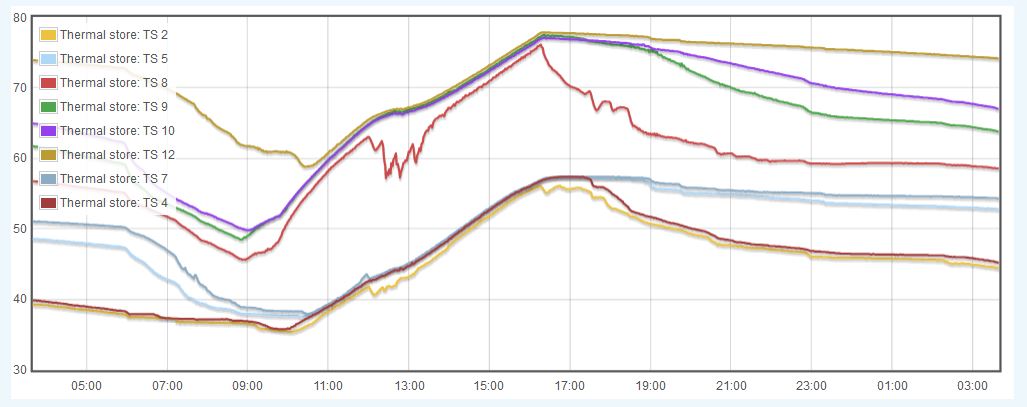
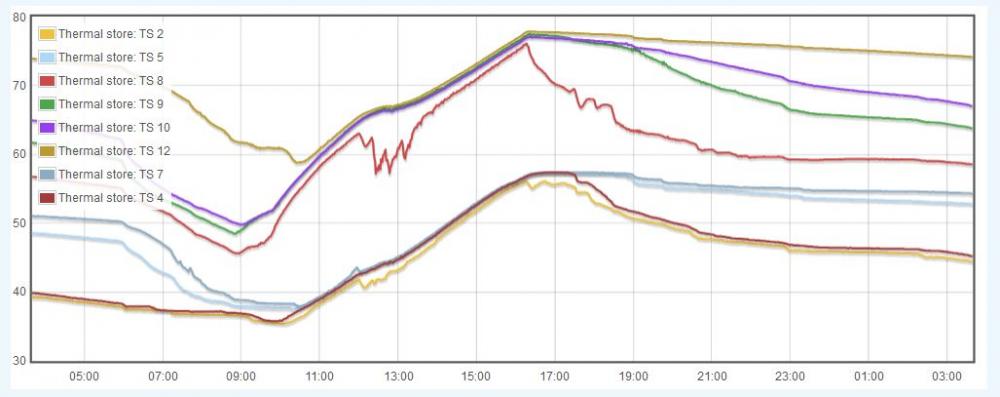
First thought is a measurement error. How deep are the pockets?, How good is the contact between the sensor and the pocket lining? Temperature sensors are very sensitive to contact quality. 3.3C isn't much of a difference and could easily be a measurement issue. If it's a genuine difference then the store isn't being heated in a stratified way or heat is being removed from the top first. Can't remember how big the store is, but maybe stratification isn't that good in fairly small stores. This what a 2,500l store looks like.
-
It is in England. In Scotland sarking is wooden boards, these days likely to be OSB sheets.