billt
-
Posts
499 -
Joined
-
Last visited
Everything posted by billt
-
Refurb - setting up for heat pump in future?
billt replied to -crashd's topic in Other Heating Systems
It's because you want as low a temperature drop across the emitters as possible to keep the mean emitter temperature up, unlike a condensing boiler system where you want to control the flow so there's 20C or so drop across the emitters to keep the boiler return temperature in the condensing range. With a high flow temperature the emitters will still have a reasonably high output. John Cantor's web site has a very useful simulator which lets you fiddle with flow rates and radiator sizings etc to get an idea of optimum radiator sizes and flow rates. https://heatpumps.co.uk/heating-simulator-for-radiators/ It seems sensible to me; that's all disruptive work so it makes sense to do it when you're doing other disruptive work. installing the heat pump itself should be fairly straightforward and can be done at a later stage. -
ASHP SCOP=3 in uninsulated 1960s house!
billt replied to richi's topic in Air Source Heat Pumps (ASHP)
In the video he seems to be saying that you can throw a heat pump into any old house with no calculation and it will work as if by magic. I see no evidence that he actually designed a system and his claims for performance are dodgy at best. Claims like that need supporting evidence and I don't see any in the video. -
Looks OK to me.
-
ASHP SCOP=3 in uninsulated 1960s house!
billt replied to richi's topic in Air Source Heat Pumps (ASHP)
Yes, he's being economical with the information. If you look at the OEM graph that he shows, he claims that the outside temperature was low and he was still getting a COP of 2.85. When you actually look at the graph, although the temperature did drop for a few days at the end of the period, the average was about 8-9, so not impossible that the COP was reasonable. I seriously doubt that that system could actually heat the space over several days of sub zero temperatures. On the other hand, the Open Energy monitor video is very good and that and the John Cantor web site convinced me that it is possible to run a heat pump system effectively in high energy demand housing. You don't do it by waving your hands in the air, though. You calculate the heat losses, flow rates etc and design the system to suit. IOW you need BIG radiators in a leaky house. John Cantor https://heatpumps.co.uk/ is something of a heat pump expert, and Trystan Lea knows his monitoring. https://www.youtube.com/watch?v=m2-_x0XZUSM -
Yes, I' definitely a good idea if the grid connection costs are high. No, it doesn't feed into the grid. It's a DIY non MCS install and the SI 8.0 isn't approved for grid connection. Battery life - how long is a piece of string? The makers claim 7000 cycles at 70% DOD. That works out at 19 years at a cycle a day, however they tend not to do a full discharge every day so the batteries aren't being driven very hard and who knows how credible the makers life expectancy is. I thought of another cost, loss of interest. At a pessimistic 2.5% that adds 16p per unit.
-
I think that you've misinterpreted the cost per kWh. The 9p per kWh seems to be based on the generator running costs; the generator can be run at full load and hence maximum efficiency if charging a battery bank intermittently, with assistance from PV. They are not accounting for the capital cost, which will push the cost per kWhr up nearer 75p. Because I'm stupid and like playing with toys, I have an (in effect) off grid system. It has 14.7kW of panels, 13kW of inverters feeding a Sunny Island 8.0 inverter/charger with about 19kWh worth of LiFEPO4 batteries. It cost about £32,000, including 20% VAT (would be quite a lot cheaper now, as costs have dropped a lot since I started buying bits) and generated about 5,000 kWh over the last 12 months. It should generate a bit more now it is completely commissioned and I've got some extra load in the summer. If you assume a 10 year life, that gives a unit cost of £0.65. If you were lucky and got 20 years out of it the cost drops to £0.33, however that doesn't include fuel for the generator in the 3 months when PV is inadequate.
-
I have several SunnyBoy inverters and all use bluetooth communication to Raspberry Pi Zeros running SBFspot to upload PV data to PVoutput. Once setup there are no issues. But I actually use a couple of Iotawatts (https://iotawatt.com/) to measure output for local logging. Stick one current transformer on the Inverter output and one on the Sunamp input and Bob's your uncle. (And there are 12 other inputs for logging other feeds.)
-
Boiler temperature for UFH and hot water cylinder
billt replied to Rob1992's topic in General Plumbing
I wouldn't say that it's more complicated. My system still has the mid-position valve, but it's turned round so the normally open port feeds the heating and the wiring has to be changed so that it becomes, in effect, a two way valve which feeds the cylinder when water heating is demanded. The controls are exactly the same as before; you just have to think about the wiring a bit. The cylinder reheats so quickly that lack of heating for a few minutes is unnoticeable. -
Boiler temperature for UFH and hot water cylinder
billt replied to Rob1992's topic in General Plumbing
Boiler output at 75 is OK if it's just at that temperature for reheating the cylinder. A high efficiency coil should be able to absorb that energy and keep the return temperature low enough to keep the boiler condensing. It should be much lower than that in heating mode. My Veissmann has an accessory box available which puts the boiler into maximum output mode for cylinder reheating, but reverts to lower temperature when the cylinder is satisfied. The return temperature is always less than 40C. If the boiler is running at 75C all the time it's not going to be working efficiently so I'd investigate getting proper controls -
Used a couple of these on our gate https://www.amazon.co.uk/gp/product/B089Y9KXVH/ref=ppx_yo_dt_b_search_asin_title?ie=UTF8&psc=1 They're on at a low level when it's dark, but brighten up when the PIR is activated. Haven't run out of battery even in the winter. They aren't exactly flood lights, but bright enough for us. They are unknown Chinese though.
-
I initially preferred the render version, but on closer examination it seems as if the side walls on the render version have the same tiled finish as the reality, but it doesn't look like it. IOW the render is lighter than the reality which skews the effect rather a lot. the lighting effect is very different too.
-
Need a security camera recommendation..
billt replied to Bitpipe's topic in Networks, AV, Security & Automation
Yes, it came with the house. It even works now! -
Need a security camera recommendation..
billt replied to Bitpipe's topic in Networks, AV, Security & Automation
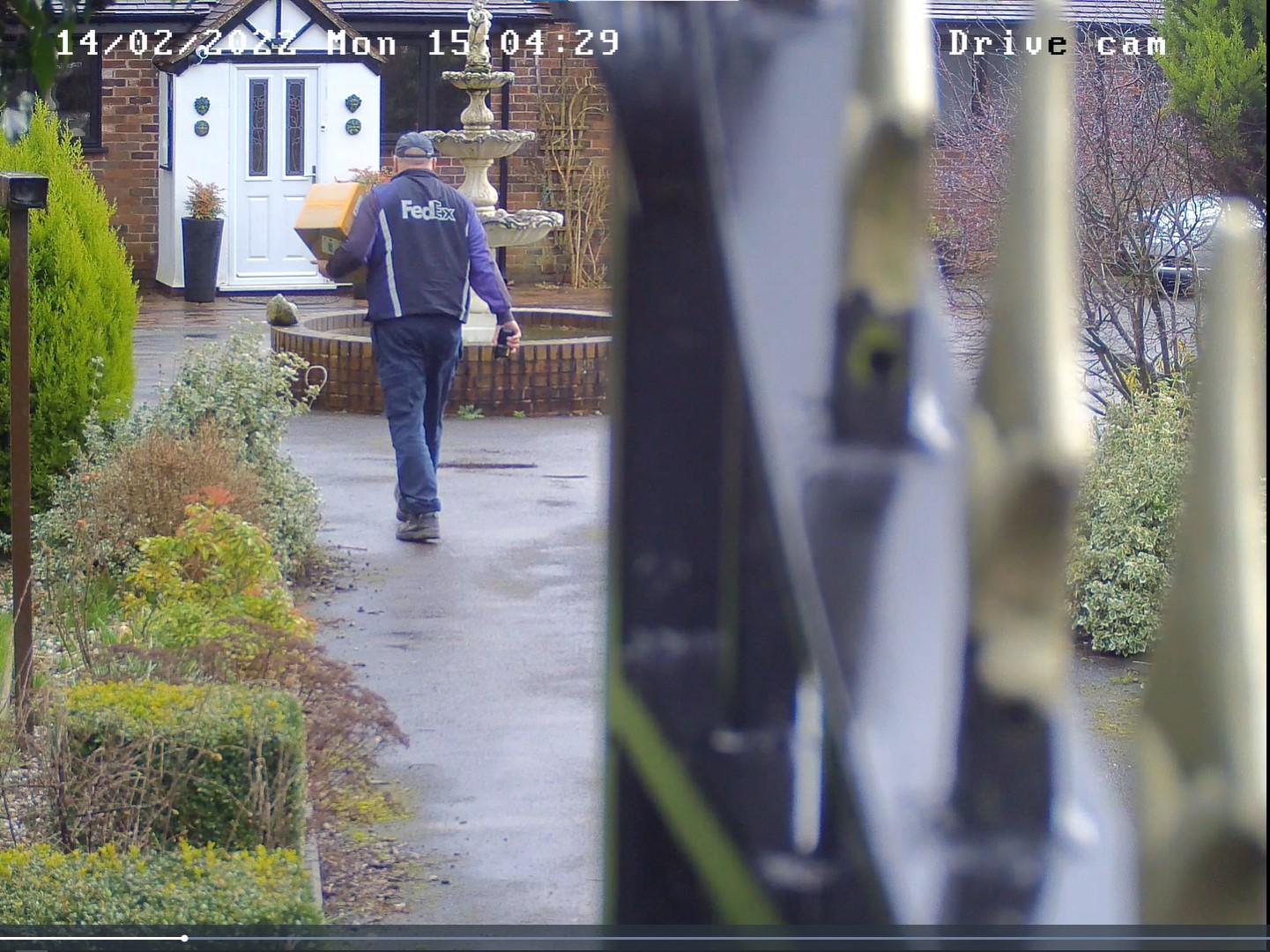
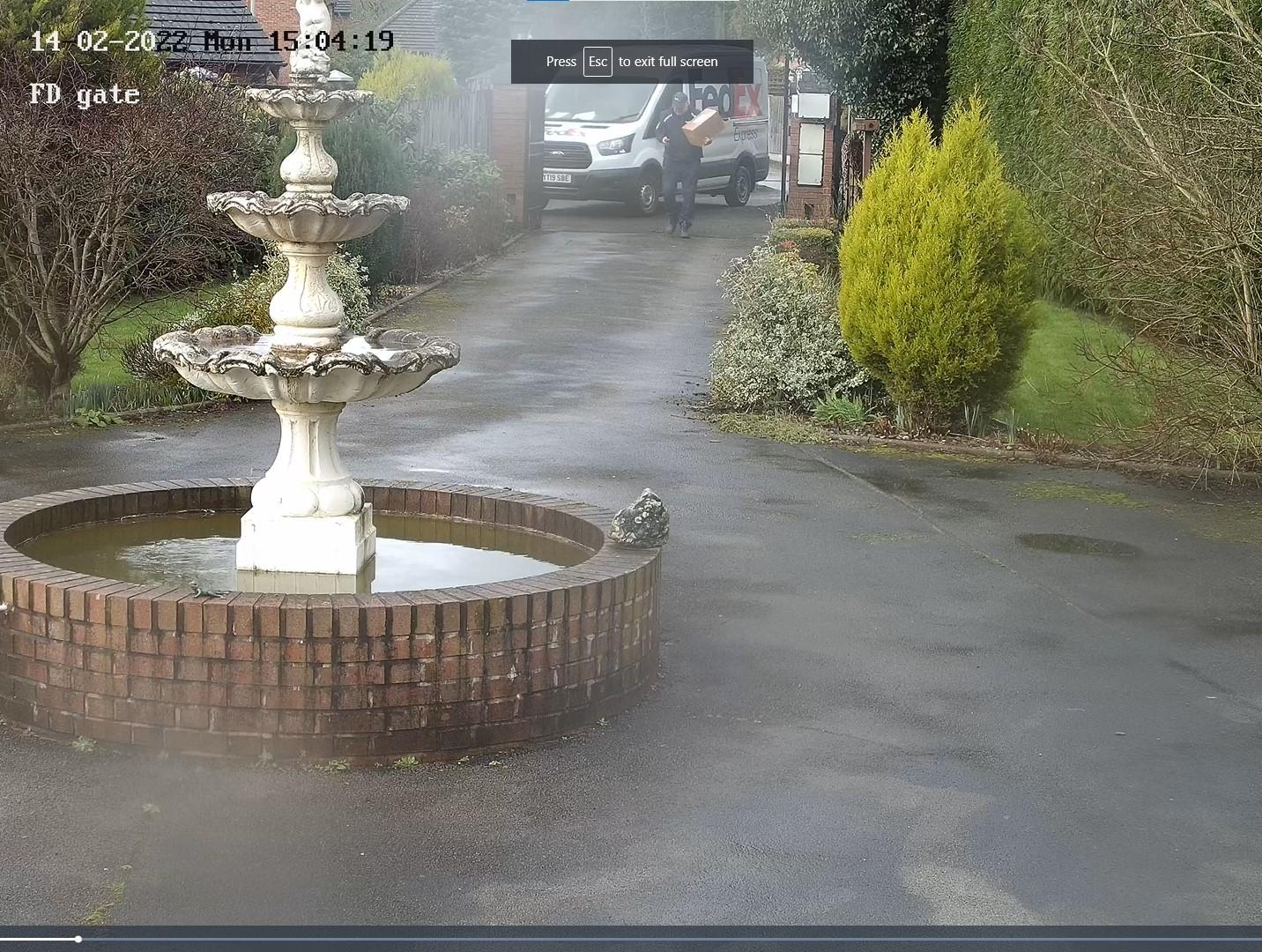
There's also a Hikvision DS-2CD2232-I5 looking back at the front door.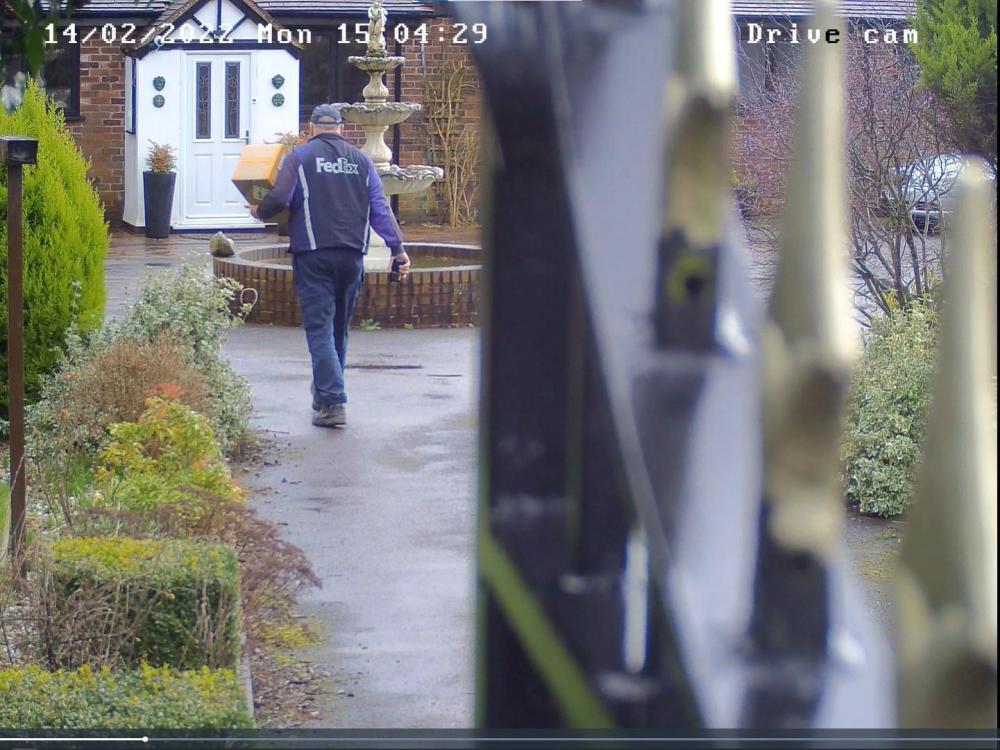
-
Need a security camera recommendation..
billt replied to Bitpipe's topic in Networks, AV, Security & Automation
Front door camera

-
Need a security camera recommendation..
billt replied to Bitpipe's topic in Networks, AV, Security & Automation
If you want to waste some time I recommend the IP Cam Talk forums. They're biassed towards BlueIris but there's lots of useful information. https://ipcamtalk.com/wiki/ip-cam-talk-cliff-notes/ has lots of good information about camera selection and location. There's a wiki https://ipcamtalk.com/wiki/ and a forum https://ipcamtalk.com/forums/ I wouldn't use any of the cloud connected cameras; keep everything local and under your own control. (I do have a Eufy wireless doorbell/camera, but only because there's 30-40M from the gate to the house and recordings are stored locally.) I've found WiFi cameras flaky so I will only use wired POE cameras now. I have used BlueIris, but it does demand a fairly powerful PC and the 80+ W it was using was too much. joth brought Frigate to my attention. Apart from the nightmare of installation (Linux, lots of magic incantations and a scripting language that's unbelievably sensitive to spaces) it is looking very promising. The trial is running on a fairly low power consumption i5-6260 NUC and is coping with 4 fairly high resolution cameras even without the Coral TPU. I have one of these at our gate https://www.amazon.co.uk/gp/product/B083Q52DYM/ref=ppx_yo_dt_b_search_asin_title?ie=UTF8&psc=1 One of these https://uk.annke.com/products/c500-zoom at the front door looking at the gate, although I'm going to try one of these https://www.aliexpress.com/item/4001195185878.html?spm=a2g0s.12269583.0.0.188913cbOe7kJa in its' place as the zoom isn't tight enough.
-
No. Inverters can cope with much higher nominal DC input power than their rating. They just reduce the power taken from the panels t match the output rating of the inverter. For instance, I have a 5kW inverter, but it has 6kW of panels connected to it.
-
Central heating systems required for 1 storey new build
billt replied to Adam NT's topic in Central Heating (Radiators)
Forget it, however much you spend on solar collectors you won't get enough energy in the winter. We have a 14kW PV system. In December it generated 115kWhr or 3.7kWhr per day; not enough for the average houses standing consumption, let alone heating. In November it averaged 9kWhr per day and in January 8kWhr per day. (February's better at 13kWhr per day so far.) In this house our typical electricity (non heating) consumption is 10-14kWhr per day. Heating is 120-160kWhr per day in the winter, or about 30-40 times the amount of energy generated in January. Admittedly we use a lot of energy in a poorly insulated house, but the principle remains. In your situation I would try to ensure that the new building has extremely high levels of insulation and air tightness; possibly oriented so that any winter solar can be used directly (south facing windows, but designed to avoid summer overheating). After having done that the heat requirement should be so low you might be able to get away with direct electrical heating, failing that a small ASHP should work. PV is useful for about 8 months of the year, but not for heat in the winter. -
They were bought in 2013, so 6 years old when they were moved. I tested them before the reinstall and there was no noticeable degradation. Yes, newer panels are slightly more efficient, but I already had the panels, so no point in spending lots of money on new ones. The installations were off grid, not MCS regstered, no FITs, so it's unlikely that any purchaser would want to take over the system, especially as it was highly visible on a bank.
-
Yes you can move panels. We had a 12kW ground mounted array (46 panels) at our last house. Moved it to our new (to us) house and put them on various roofs.
-
The manual says that it has a small tank attached to the brush with a battery powered pump that sprays cleaning fluid in the centre of the brush head.
-
The, relatively cheap, AEG hobs that we installed recently claim that they can be installed in a 12mm work surface. The gubbins project 44mm below the top though and they still ask for 60mm clearance above a drawer. They don't have that sort of clamp, they use spring clips that push against the edge of the work surface so it's an interference fit.
-
But delaying the start of a wash cycle isn't reducing the energy usage it's just changing the time at which energy is used, so not reducing demand at all. Also the cost reduction is actually going to be much less than 20p. I don't know what the "smart" tariff rates actually are but I doubt that there's more than a 2:1 swing most of the time, so the savings actually only 10p a go (or 15p after April). I don't know if you've noticed, but supply and demand isn't working in energy markets at the moment. the rapid price increases have no relationship to demand and a lot to do with local incompetence and global politics.
-
If you've managed to load the WM and dishwasher appropriately before hand. The amounts of money saved by doing this are trivial, typical WM/DW use about 1-1.5kWh per cycle so you're talking about saving 20p a go for the sake of a lot of inconvenience. The washing machine has just finished - it used 1kWh.
-
Underfloor Heating with Electric boiler & Stove
billt replied to Curtis's topic in Underfloor Heating
In our previous house we had a gasifying log boiler with a large thermal store and lots of solar thermal collectors. If run hot with dry wood, as it should be, it doesn't create much pollution and presumably you don't have near neighbors to annoy. (Unlike all the houses near us who all have gas ch but still burn wet wood and coal and create lots of pollution.) However in a new well insulated house (as it should be if it's a new build) it's a bad idea. It will be expensive to install, messy to run and stands a good chance of over heating the house. Solar thermal and PV are useless for heat in the winter especially in the north. ASHP is a much better option if you can get it designed and configured correctly. I wouldn't take a sample of one as a guide. Various contributors here have ASHPs which apparently work well, but the system must be properly designed. -
FWIW the SE1000/1500/2000 have an input voltage range of 75-480, maximum 500. I think you'll need more panels.