Dudda
-
Posts
487 -
Joined
-
Last visited
-
Days Won
1
Everything posted by Dudda
-
You give them the size of the hole. The manufacture will work out the size of the glass taking into account the frame as all companies have different frames. Better yet is if you can get the window manufactures to measure the windows. That way if they take a wrong measurement or make a mistake it's up to them to fix it. If you make a mistake in your measurements it's going to be expensive.
-

What to use to fill this gap?
Dudda replied to Ferdinand's topic in General Self Build & DIY Discussion
Try the flexible caulk first and if it still looks crap as it can be difficult for a first timer to make neat you can always do the quadrant later. -
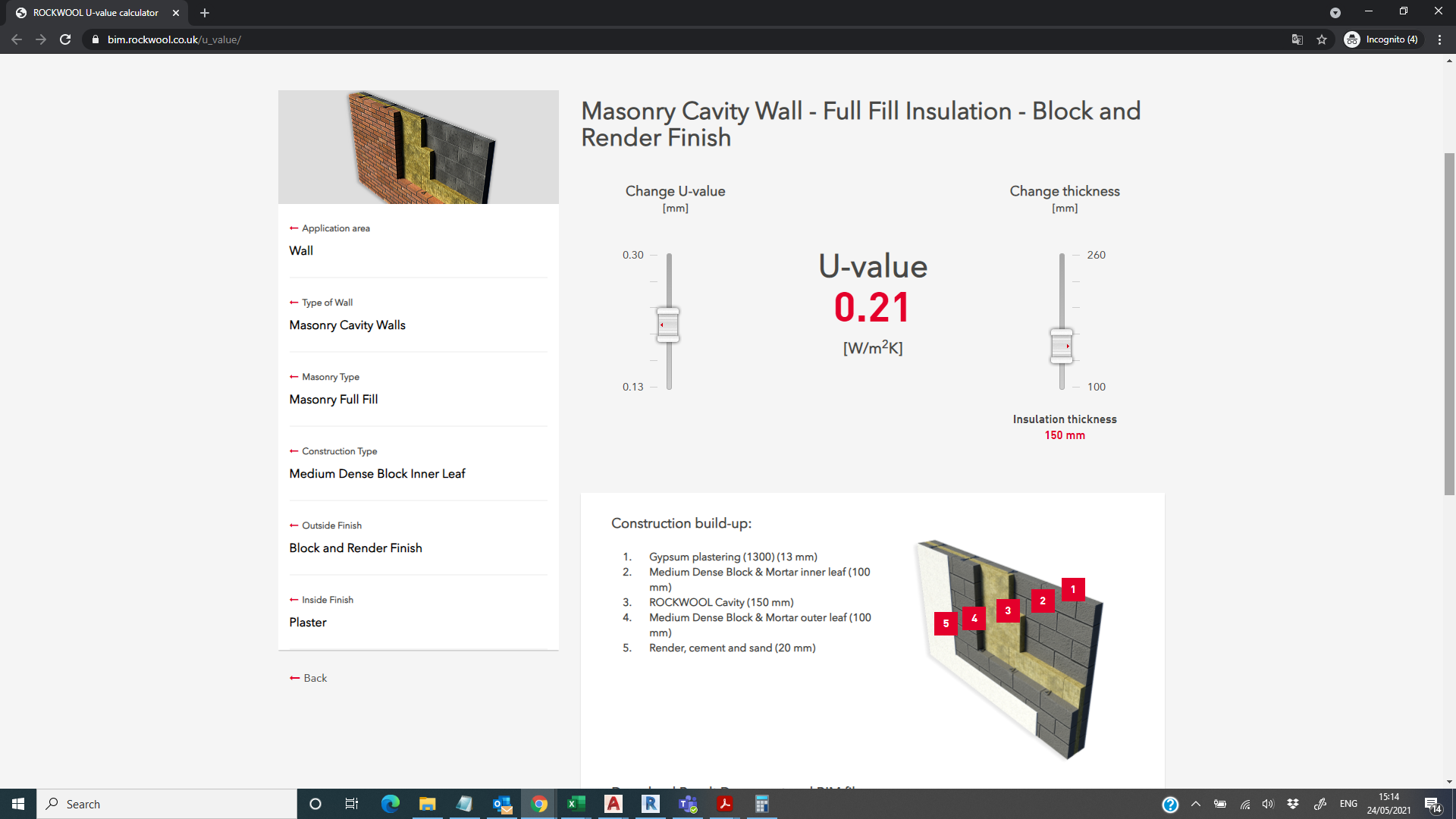
In you're case no. What's the build up of the walls? See below example I've done for you.
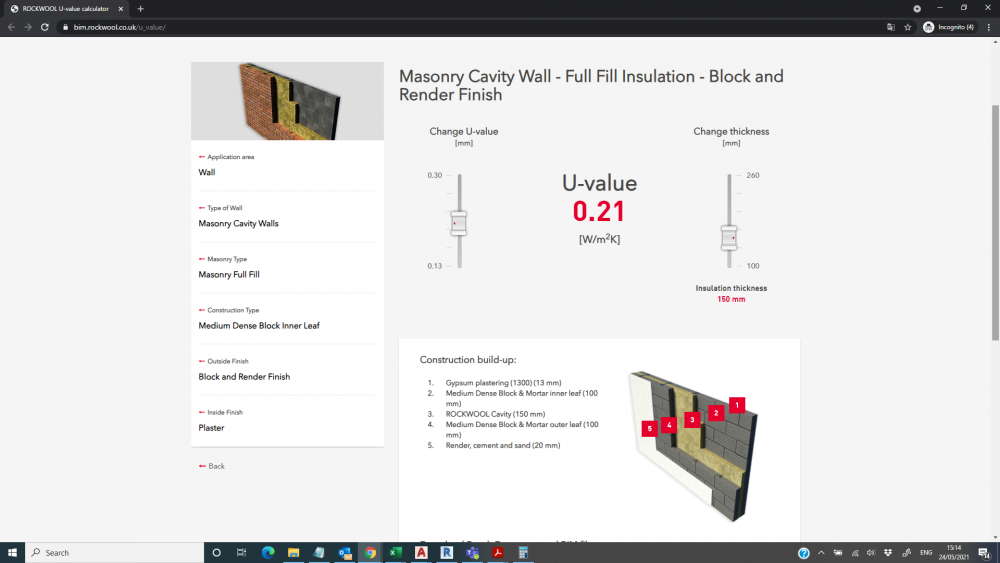
-
Architect plans - opinions welcome
Dudda replied to deancatherine09's topic in New House & Self Build Design
Swap the kitchen and Family areas. This way the kitchen is closer the larder and utility (which I'd also modify so the larder has more direct access and integrated into the new kitchen location better). By swapping the kitchen and family area the family area will have the nice views towards the south you mentioned. You can have a larger window to the floor which can also provide access to outside and connect with the paved area from the dining room. Upstairs while a lovely large master bedroom I'd consider reducing it and taking a bit of space from it to give to Bedroom 03. I just think it's a bit big compared to the other bedrooms, which are fine and functional but feel a few mm more would be appreciated which the master bedroom can spare. I'd also consider putting in a proper plant room where the hot water tank, MVHR unit, electrical board, water pumps and other items go. You'll loose a massive amount of area in the Utility or storage in the linen if you try and cram plant stuff into them. -
In a modern well insulated, airtight house with MVHR, lots of different heating zones are less useful. I'm on about houses insulated to passive or near passive level with an ACH of 1 or lower. If you've the main living areas set at 21 degrees and an unused room set at 17 degrees then the MVHR unit (depending on efficiently and other factors) is probably supplying air to the unused room at 19 degrees. Having all these thermostats and zones then becomes pointless. Depending on the design of the house (eg open plan/ an atrium / gallery / double height / etc. helps heat rise) you might not need heating upstairs. Between the heat rising and the MVHR unit dispersing the heat around the building the upstairs will probably be warm enough. Again this is presuming its well insulated and airtight. Otherwise you've one stat downstairs and another upstairs.
-
Depends on the steel we're talking about. If it's a one off piece of steel over a large span that sits on blockwork it doesn't matter which option you go for. The blocklayer will just move the next line of blocks in or out a few mm. If it's a timber frame house and one piece of steel for a large span or support than you can use the dimension from the shop drawings of the timber frame company. If it's a proper steel structure with columns and beams that have end plates welded and pre drilled holes for connecting bolts these have to measured on site, have shop drawings created and then made in the workshop before delivery to site.
-
Sink, bath and shower wastes in concrete floor
Dudda replied to Triassic's topic in Waste & Sewerage
You can be don't have it to close to the waste or it could dry it out. I suppose it also depends on the type you have in the shower area but I'd presume most low profile ones are fine. -
I'd be ok with the 50mm too if you're neat but is the 25mm a bit light? It will have a fair amount of screws in it. Screws fixing the batten to the structure and then the panel to the batten which are doubled in number at a joint. Very easy to split. Would you go 50x35mm?
-
Bathroom Stud Walls - Insualtion for Sound
Dudda replied to Conor's topic in Bathrooms, Ensuites & Wetrooms
If you go to the Gyrpoc website and click on the "White Book - C04 - S02 - GypWall Classic" under Related Downloads you see see diagrams and tables of various standard stud walls. You can quickly and easily compare the Sound insulation by comparing the various dB rating numbers. https://www.british-gypsum.com/literature/white-book/partitions/gypwall-classic You'll be able to compare easily what a 12.5mm regular board provides compared to a 12.5mm soundblock board or two layers of plasterboard and the difference with and without the 25mm isover acoustic insulation. They also have GypWall Quiet, GypWall Staggered, and GypWall Audio, etc. which would provide higher sound insulation. It's going to be a case of how thick you want the wall and to what level of sound insulation you want to achieve but hundreds of possibilities with various levels of sound level and price points. -
No problem at all. My friends house did this recently for the same reason. If you find the clips aren't as secure just use a few more. The clips are very cheap and will still be a massive saving.
-
Shadow gaps around window boards?
Dudda replied to PI build's topic in General Self Build & DIY Discussion
Possibly but beyond my level of skill and equipment. The problem I see with this is it's very 'bitty'. By that I mean the two lengths of shadow gap at each side of the window (so four in total) are only about 30mm long all with 45 degree cuts and then the other is the depth of the reveal which wouldn't be long either. It would be very messy and difficult to get straight and clean looking. You kind of need them to be a decent length to be able to fit them straight and level. In theory it can be done but in practice I'd expect this to be very difficult to get looking right. -
I have 10-15 years to plan everything... how would you use the time?
Dudda replied to JayUK's topic in Introduce Yourself
It's to far down the road. Look at sites but I wouldn't stress to much about anything else. Building regulations, styles, environmental requirements, materials, etc will all have changed a massive amount not to mention any personal or financial circumstances. In 7-8 years I'd review and start getting a bit more serious. Just enjoy life until then. -
Shadow gaps around window boards?
Dudda replied to PI build's topic in General Self Build & DIY Discussion
Not a hope in hell. It was very difficult to do that as is. First project each part was put in individually. It was a refurbishment and the walls weren't plum and blockwork so rough. Incredibly hard. Second project was a new timber framed house. This was easier and the walls were more plumb and timber made it easier. The surrounds were made up in a workshop and lifted into place. For some of them we have in the top part a recessed cut out in the top of the timber which is where the blind is. This has to be designed in early enough as you could have structure or a DPC above the window in the way. Another one has birch ply shutters incorporated into the sides that disappear when open. Again this was difficult but looks well. -
Shadow gaps around window boards?
Dudda replied to PI build's topic in General Self Build & DIY Discussion
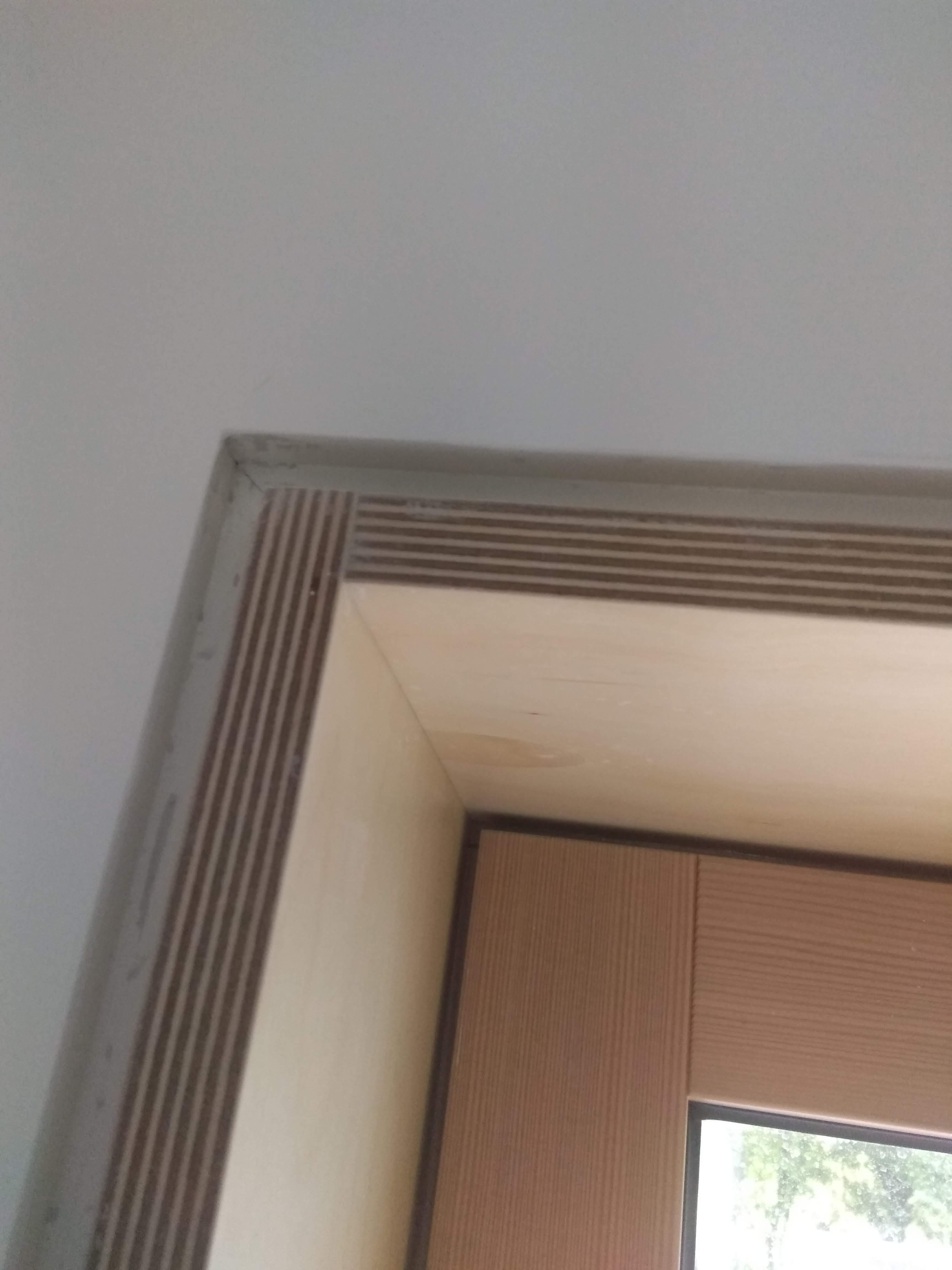
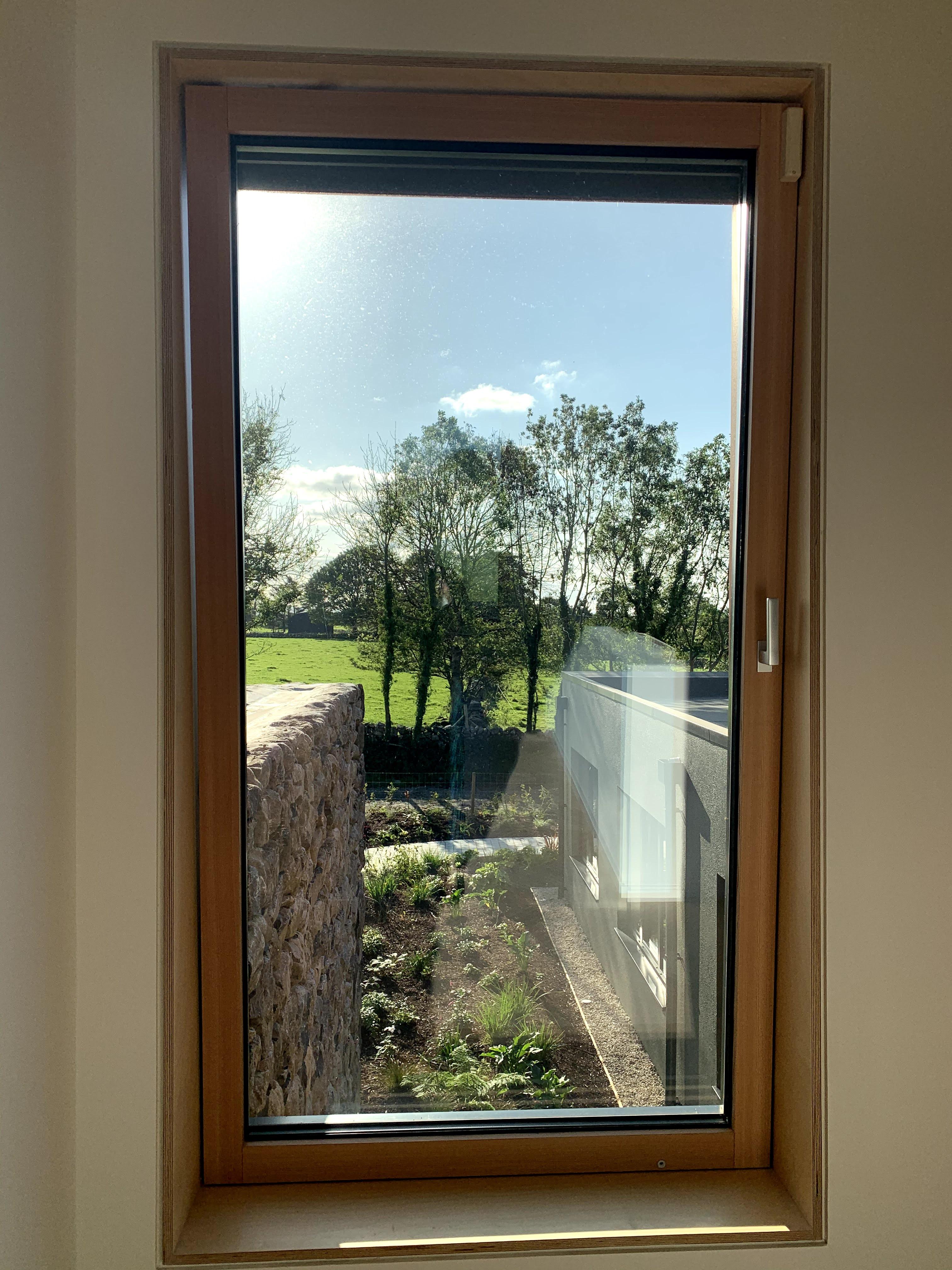
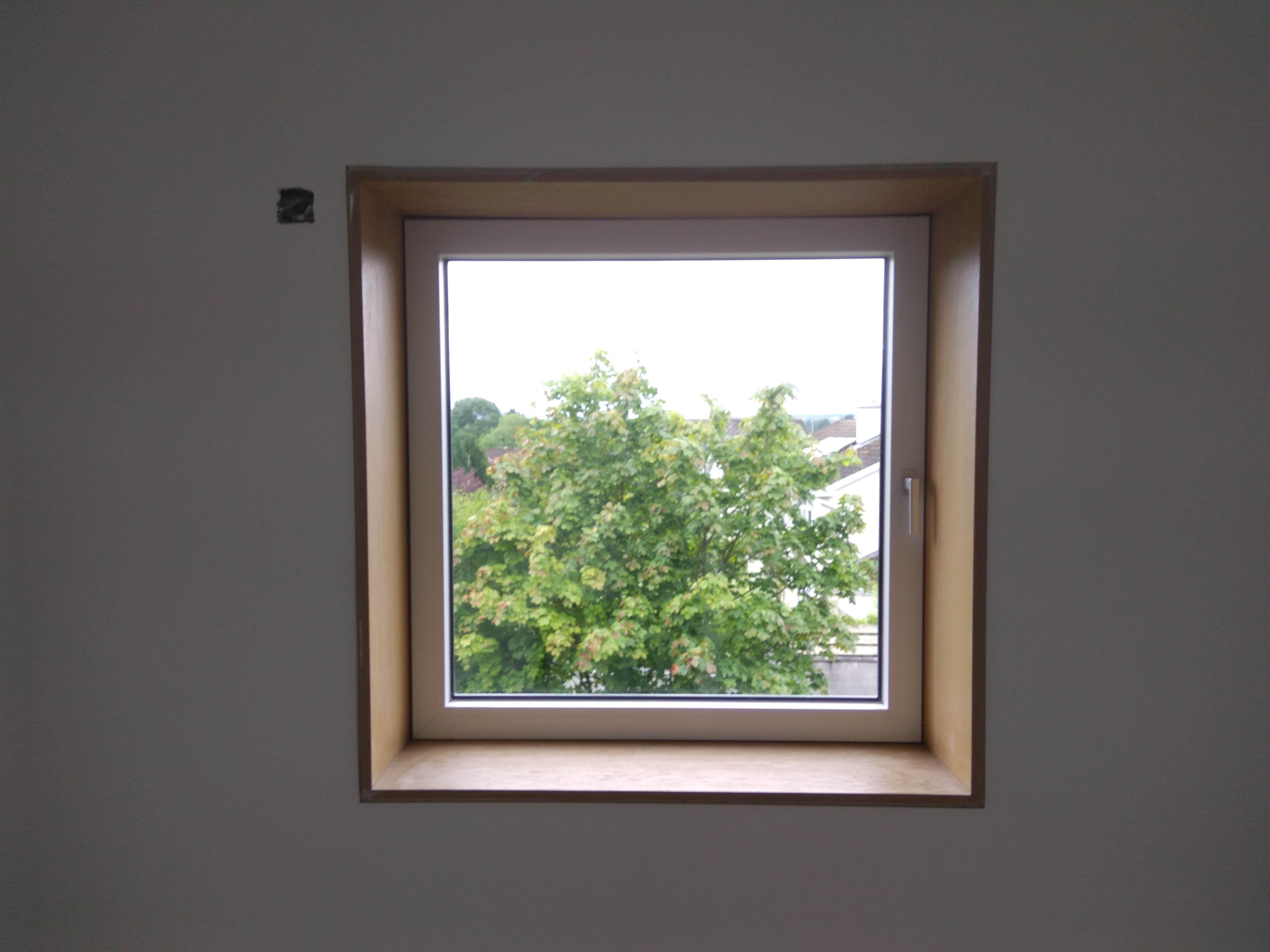
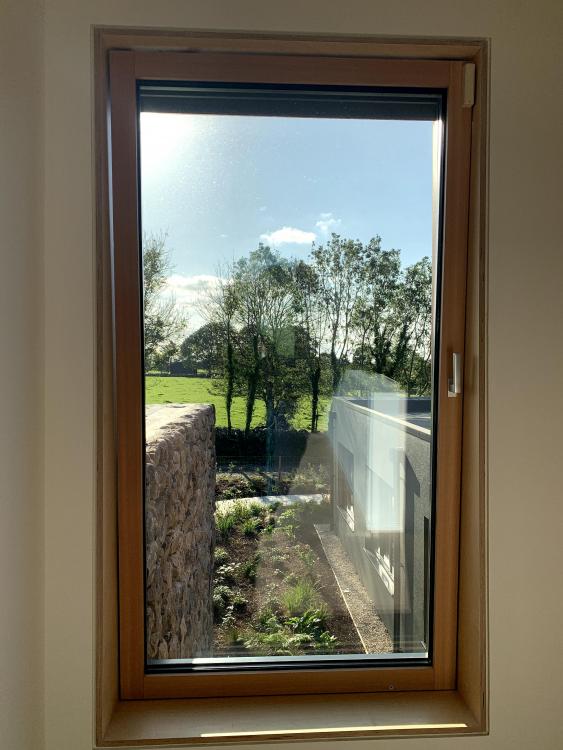
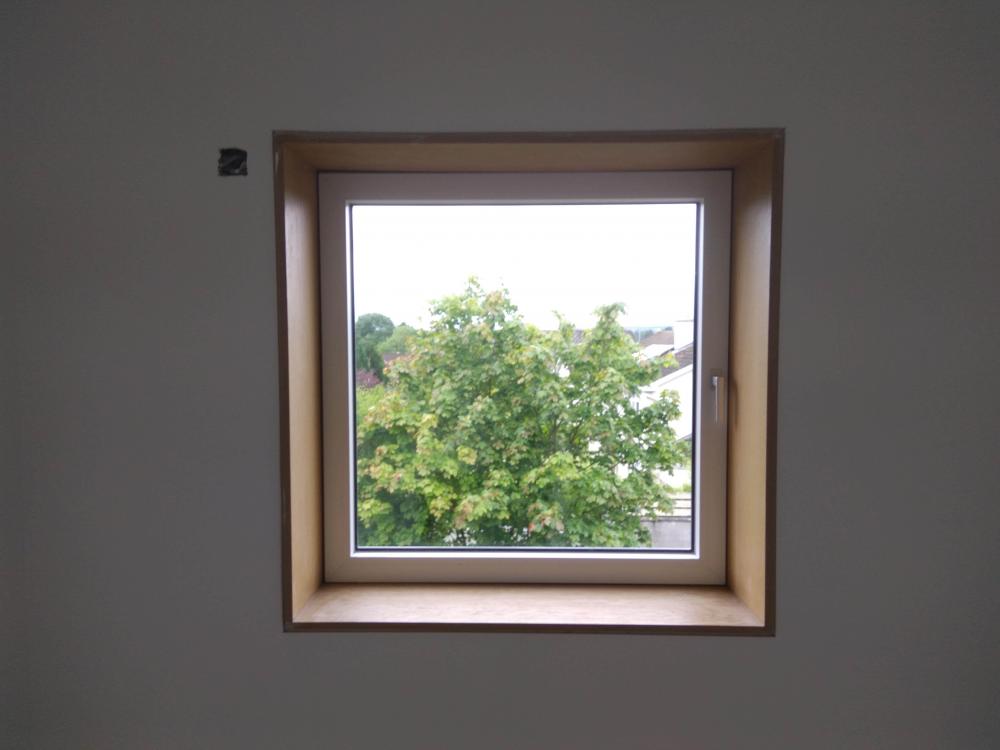
Yes I've done it in my own house and others. Some of the below photos are before moving in and they window surrounds were cleaned or shadow gaps tidied but you get the idea. Edit: one of the below is veneered MDF and the other is Birch ply so you've options.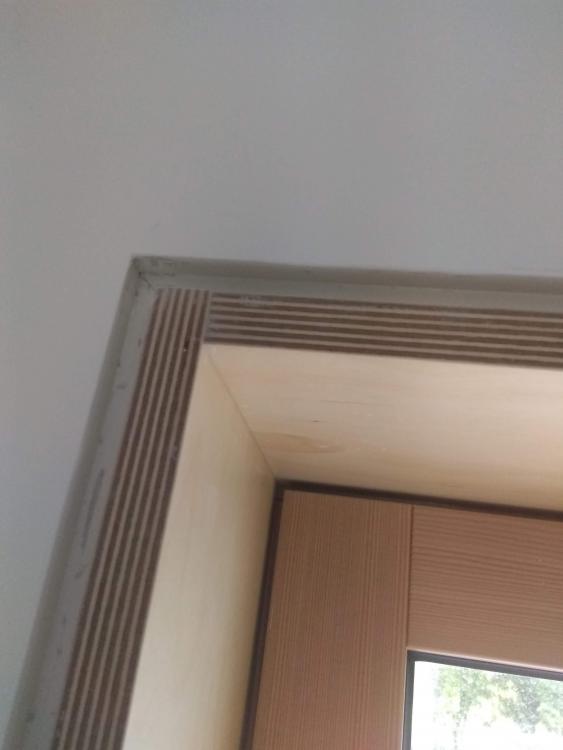
-
That mightn't be enough all right. It depends on how high spec you go with the windows, kitchen, tiles, stairs, sanitary, etc. I presume they'll be decent quality triple glazed. While the extension at only 16 sqm is small it's at first floor making things more difficult and expensive than a ground floor extension. You're going to need new floor finishes throughout, repainting and if moving the stairs minor structural work and then making good and plastering all that area around the stairs as well as the wall you're removing in the kitchen / dining. What work is exactly done to the ground floor? Is it just a retrofit UFH system on the existing floor with tiles on top raising the floor level circa 40mm or are you digging out the floor, adding insulation and then a new self leveling liquid screed with UFH. Massive difference in the cost between these.
-
Yes put in an additional horizontal batten at the end of the vertical (faded blue) batten to support the ends of the boards. The spacing of the horizontal battens (400 or 600) might depend on the thickness of the cladding boards and the potential impact it will receive. eg if it was cladding a classroom facing a school playground where kids are playing and kicking a ball against you can be sure you'd need them at 400 no matter what the manufactures diagram says about 600mm.
-
If getting three quotes from builders at this stage definitely don't treat it like a tender and go with the lowest. At this stage you go with the average price or slightly higher to ere on the side of caution. After you get planning and have the detailed drawings and specification done get a QS to do a pre-tender cost estimate. This is a great stage to change the specification of things before sending it out to tender. A good QS will be able to guild you at this stage on what parts are inflating the cost.
-
I'd probably put down 20-30mm of insulation and then a self leveling liquid screed with UFH in it. Then a good quality vinyl with acoustic properties. I don't know Karndean but you want a vinyl with good acoustic properties. eg https://www.forbo.com/flooring/en-ie/products/acoustic-flooring/sarlon-19-db/sarlon-19-db-wood/bvialm The noise in the room will be from the people chatting, shouting, laughing, etc. It's not really the floor that will cause noise in this case. You'll need sound absorbing materials either with lots of fabric in furniture or panels fixed to the ceiling and walls. These can be either expensive acoustic panels or cheaper home made DIY attempts or a mixture of both. Carpet would help acoustically but I think you need something like a vinyl that's easy to clean. A timber floor build up will add to the acoustic issues compared to a liquid screed.
-
I'd add a vapour control layer/airtight layer and then the counter battens. This will give you a service cavity for cables and a recess for spotlights, etc. This will help a huge amount with heat loss and something I'd do regardless of any plasterboard issue (which should be 12.5mm anyway).
-
The Topo survey will also pick up the boundaries and cover the road outside the site. This is useful to work out sightlines for entrances if needed. It's several years since I worked on a project where we didn't get a Topo survey done. It will make the architects life so much easier and a lot more accurate. I'd get it done. If something happens onsite they can claim it's not their fault as they didn't get the survey they requested. The project I'm working on now is a large extension to an existing educational building. The surveys we've done include Topo, 3D building survey, utility survey, aspestos survey, structural timber defects survey and tree survey. That would be fairly standard for the buildings I work on. On one of the last projects we did a bird SHlT survey as the amount of birds in the roof created a high level of ammonia which was a health hazard. Bat surveys, environmental and invasive species surveys are also common. Getting off lightly if you only need the Topo
-
Yes but you'd be better going with a rockwool batt or similar that would help with the thermal performance.
-
I've a velux and keylight in my house but researched Fakro at the time. I've also had various CPD's by all these companies. I've installed them all at various times in different projects I've worked on but only once installed the conservation version so don't know as much about these. All the knowledge is about 18 months old so newer stuff may exist or have changed. What I've found in summary: For the electrics velux have their own control panel. This actually has a benefit in that the the Velux technical department can answer questions and help. Keylight just use a control panel by an outside manufacture. I've never used Fakro electric rooflights that I can think of (maybe a standalone AOV). On one university project I installed 20 odd Keylight rooflights and had loads of problems connecting these back to the BMS. They got it to work in the end but it was difficult. Velux have a 5 layers of glass Passive House version but that needs it's own separate mortgage and only comes in one or limited sizes. The Velux and Keylight triple glazed are very similar however you can get a sound reducing glazing for Velux. This adds cost but also improves the u-value beyond what Keylight can achieve and what I went for in my own house. The electric Keylight roof windows are cheaper than the electric Velux rooflights which is why I've an electric Keylight. The thermo foam perimeter strip on Keylight rooflights is a bit of a gimmick and marketing pitch. A squirt of expanding foam finished with airtight tape is better in practice. In tripple glazed they're all heavy. The Keylight Flick-fit brackets help but it's still a two person job on the larger ones. In generally Fakro are more expensive (based in Ireland, not sure if this is the same in the UK). Not relevant but Fakro make excellent loft ladders. In short the differences are minor and I don't think you'll go far wrong with any of them.
-
The other advantage of adding a thin membrane over the insulation is if you've any gaps between the insulation sheets it stops the concrete seeping down the joints.
-
Have to agree with this. If you can stretch to it solid surfaces such as Dekton, DuPont, Silestone, etc are the way to go but even in these you've different price points like Corian, HiMac, Dekton, etc. Corian and HiMac can get scratches which can be buffed out but Dekton is more durable again. I'd specify these products a lot for hospital reception desks, university canteens, etc where they need to last and be easily cleaned. The abuse they can stand up to is incredible. Going back to the kitchens I've Ikea carcass (all joints glued giving the solid feel) under an expensive solid surface worktop so the whole kitchen feels and looks good. We 'Ikea Hacked' some of the kitchen units to provide custom designs and purchased handles ourselves.
-
Oh that's a given. That's why I'm saying the bolts are tight to hold them vertical but even then I'd consider two sheets of ply particularly if using only 12mm or 15mm ply. You've very little tolerance so need them exact.