Dudda
-
Posts
487 -
Joined
-
Last visited
-
Days Won
1
Everything posted by Dudda
-

temporary habitation certificate and stairs
Dudda replied to Scoobyrex's topic in Building Regulations
If worried about the 100mm between the balustrades you can just screw a sheet of MDF or similar to the side of the stairs. Painted white it can look ok short term -
I'd be looking for commercial products only. A lot of large multinational companies (think Google, Facebook offices, etc) are now looking for sustainable VOC free products and trying to achieve lots of 'green' credentials such as LEED, WELL, etc so carpet manufacturing companies are having to react to meet these demands. These carpets obviously have to be very modern and super hard wearing, easy to clean, good acoustic properties, etc. This isn't happening to the same extent in the domestic market.
-
My guess is the window supplier to fitting triple glazing into a poor quality cheap frame designed for double glazing which is common among cowboys. If you've a frame designed for double glazing with say 8mm glass, 16mm cavity and 8mm glass that's at total of 32mm thick glazing. They could be putting 6mm glass, 8mm cavity, 4mm glass, 8mm cavity and 6mm glass which is also 32mm thick in total. You'll only get a minor improvement as the cavity's are small and the frame the same however as it's now triple glazed he can charge a lot more and you think it's a lot better. A real triple glazed window in a frame designed for triple glazing will get you a u-value of around 1 or lower as other above have said.
-
Airtightness tape for windows and doors
Dudda replied to Adsibob's topic in Mechanical Ventilation with Heat Recovery (MVHR)
You stick the 15mm part of the split tape onto the face of the window frame. This ends up getting covered and hidden by plasterboard or plaster and therefore isn't seen when finished. -
Airtightness tape for windows and doors
Dudda replied to Adsibob's topic in Mechanical Ventilation with Heat Recovery (MVHR)
The only issue I see with that product is where you've a company doing the airtightness and another fitting the windows. If using normal airtighness tape the airtight company can come at a later date and airtight the whole building. If you're doing the airtightness yourself and are around when the windows are getting fitted that's great. -
Airtightness tape for windows and doors
Dudda replied to Adsibob's topic in Mechanical Ventilation with Heat Recovery (MVHR)
The tapes are supposed to be 60 to 75mm wide (even more) around windows. You're looking for the double split tapes where about 15mm sticks to the window frame and the remaining 45mm gets stuck to the internal airtight layer or wider 100mm tape is used and 85mm is stuck to the brick / concrete / blockwork structure which wouldn't be as smooth as the window frame and therefore needs to be wider to get a better adhesion and allow for plastering over. -
Radiators don't actually radiate much heat. Most of the heat is from convention where the air moves around the room. Radiators were traditionally placed under windows to heat the cold air and create convection currents. This warmed air would travel up across the ceiling down the opposite wall and back to the radiator heating the whole room. If you were to put the radiator on the wall opposite a single glazed window then the window would cool the dropping air and a cold flow of air would travel along the room at the level of the occupants where they'd feel a cold draft even if the room was warm. There was sense and logic to it. The position isn't as important now with very high performance windows. Instead consider the layout of the room and position them where air can move infront of them. They shouldn't be placed near the head of a bed as they convection currents can cause a flow of air around the head. Again not as much of an issue in a modern well insulated house. The only place you need to give real consideration to them in a modern house is double height areas as the warm air obviously rises more. Particularly if you've a mezzanine overlooking as this will be the warmest part.
-
Welcome and it's looking great. So pretend you're on Grand Designs. Where's the drama? What problems or issues are you facing, things you'd have done different? How's covid and brexit effecting the programmer, labor shortages and material prices for you? Questions on the house. I can see it's timber frame. Are you insulating with cellulose, foam, etc? It also looks big. Is the roof zinc and is it just going on the timber clad element or the entire house?
-
I'd love to use and specify sheep's wool more but it's (or was last I checked) multiple times the cost of fiberglass. With all the price rises on other buildings materials how has the price of sheep's wool insulation changed over the last two years I wonder. Would love to see the gap to fiberglass close
-
Ignoring the acoustic advantage, personally it's getting to the stage where I think double glazed anything should be banned. The climate crisis we're all in, the carbon taxes and phasing out of fossil fuels over the next few years are all going to make a few euro saving during construction very expensive long term. That rooflight will be there for 20-30 years at least. Unless it's a protected building where space is limited or you're trying to reuse original sash frames, etc. I think a carbon tax on single or poor double glazing that don't reach a certain performance should be applied. I can understand developers looking to cut costs but homeowners should be looking more long term. End rant
-
I think the glazing and stonework around the door looks beautiful. I'd have little faith in any modern window or door company keeping that looking as good as it is. I think I'd be looking for a good joiner to make and fit a new timber door. Please don't go anywhere near PVC. The PVC window on the right doesn't look great and a PVC door with that ornate stone and glazing would look worse.
-
Ya 3:1 sand cement is perfect. No lime needed but lots of water. You want it like a wet paste. I used a large sweeping brush to apply it. It's very easy but very messy. It splashes everywhere.
-
I worked on an old listed warehouse. It was a distillery, linen factory and even made ammunition shells during the war. Was afraid of finding unexploded shells. Instead found loads of asbestos someone had buried which was probably a bigger headache.
-
Forgot the membrane. It's not needed and you'll need to introduce battens if you want to use it on the walls. You have blockwork internally which is perfect for the parge coat I mentioned earlier. Go around with airtight tape and tape everything; around doors, windows, floor to wall, walls to airtight membrane in the ceiling, around all pipes and cables going from inside to outside. Then add the parge coat. This will give you a brilliant airtight home to Passive House standard and is something you can do yourself to save money if needed. You do not need an airtight membrane to the walls but do for the ceiling.
-
Is it a new build? You can add a parge coat to the walls first. This is a very wet layer of plaster. So wet you can put it on yourself like a thick layer or slurry paint. A lot of members here have done that, myself included. The quality of the plasterboard doesn't matter as much then
-
Screwfix Drill/Impact Driver Twin Pack Bargains - DeWalt vs Makita
Dudda replied to Oxbow16's topic in Tools & Equipment
I'd think long and hard about the whole ecosystem. Once you start the next tool will likely be bought 'bare' which is without a battery or charger to save money as you'll already have them. I purchased a DeWalt drill at the start of my self build. Still have it but now I also have a DeWalt impact driver, laser level, radio, SDS drill, multitool, two types of sanders, and possibly something else I can't remember right now along with multiple batteries, chargers, etc. If you purchase a Erbauer or Makita then you'll probably stick with them for future bits. -
Perfect worktop doesn't exist - but how about optimal?
Dudda replied to puntloos's topic in Kitchen Units & Worktops
Deckton is similar to corian but stronger and more durable with a higher price tag to match. That's the Roll's Royce of solid surfaces that I know of. It would be better than Corian, Hi-mac, stilestone, etc. I couldn't afford it so went with Corian but have a timber worktop in the pantry which is also perfect but doesn't get as much abuse. -
Is the 1000 high worktops in the render only or is that what you are proposing? It's higher than the usual 900 which is fine if you are slightly taller. I'm 6'2' so would be fine with 1000mm high although I find 900 ok too but the 5'4' other half would struggle with the extra height.
-
It's not demount-able. Once you crimpt the Buteline you can't take them apart unlike Hep20. The other thing is Buteline claim they don't have separate inserts but they are built into their fittings so they do have them it's just they're not separate like Hep20 or JG speedfit, etc. The Hep20 inserts are very thin metal and therefore don't reduce the internal diameter much. The JG Speedfit are plastic and therefore thicker and reduce the internal diameter a bit more. Similarly the Buteline inserts which are fixed to the pipe connections are also plastic which reduce the internal diameter. I don't think it matters which system the plumber goes for. It's if you're doing it yourself the Hep20 is probably easier as you can take them apart which will need to happen at some point somewhere. If you've a hot water circulation loop you can use 15mm to basins. It's where you don't have a circulation loop and instead have something like a central manifold then having a 10mm pipe reduces the amount of water that has to run before it gets hot.
-
Small chapel conversion in the Lake District
Dudda replied to LakesDylan's topic in Introduce Yourself
Brilliant project and opportunity. As an architect I've converted two churches. I'd definitely be looking to retain as many original features as possible. For example in one of the projects we took up all the marble altar steps and reinstated them in the same place but flat so it's a marble floor highlighting the location of the altar but it's now all flat and level. Looking at the photos I'd definitely try and reuse some of the timber and keep at least one pew someplace (along a corridor or wall for example). Things like that so it retains it's character. -
Do we know which way north is? Possibly not but the kitchen and glazing could be facing north.
-
Why wait that long? Get a Quantity Surveyor to do a quick high level calculation now as it will be money well spent. Pennies in the grand scheme of things. The rule we have is if the cost of an extension and refurbishment is 80% of the cost of a new build then you're better off doing a new build as you reduce unknowns and end up with a better building (no cold bridges, easier to achieve better airtightness, optimum layout, etc). Personally I'd get this an order of magnitude cost and see which is the way to go; new build or extension and major refurb. If it's new build you can start clean from scratch with your own new house design. You don't have to stick to whatever elements you're trying to retain in the existing and will have much more freedom. Then this is the building you go and get planning permission for. No way would I get planning permission if I didn't know it would be a new build or extension and refurb or existing. I don't know about the UK but in Ireland you have to say how much is demolished on a planning application and what's retained. Lets say you went and got permission for the above layout and found out it was cheaper to get a rebuild you technically can't as you wouldn't have permission to demolish it all. The likelihood of someone noticing and objecting are probably small but you wouldn't have permission and compliance could also be an issue. As for the plan I don't like the way a visitor to the house has to go through a utility to use the bathroom.
-
Yes
-
Wunda will just look at the plans. They won't really take into account the levels. I don't think the two / three steps are an issue. I've two steps between my sitting and entrance at the lower level and kitchen, living, dining and utility on the upper one all supplied by the same manifold. I find it's the same temperature everywhere. The floor finish isn't really an issue unless you'd heavy carpet but you could just reduce the flow to other areas. If you've mechanical heat recovery ventilation it will help transfer the heat throughout the house reducing any further discrepancies in the heat provided to individual areas.
-
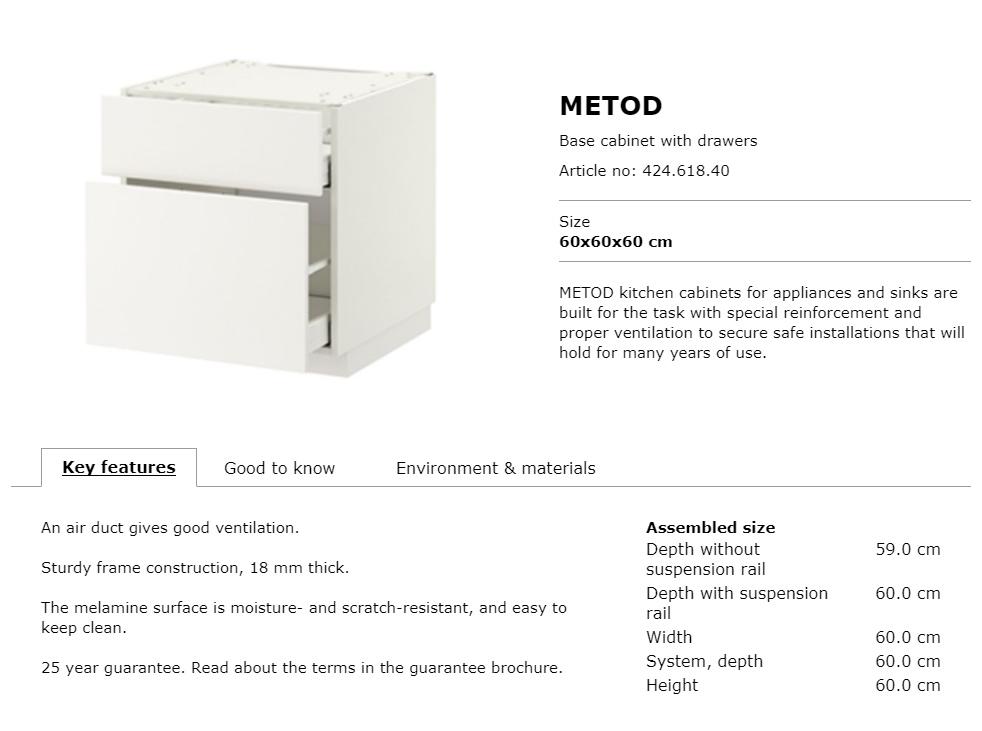
You can ask kitchen companies about their accessible kitchens (for wheelchair users) which are lower. You'll find some companies will be to afraid to say they don't cater for wheelchair users and try and work something out for you. I know Ikea do lower base kitchen cabinets but don't know about other DIY companies. This is 60cm high so include the 8cm plinth and say 4cm for the worktop you're at 72cm tall.