Dudda
-
Posts
487 -
Joined
-
Last visited
-
Days Won
1
Everything posted by Dudda
-
Buy a crappy timber shed and stick it to the house side of the garage. Get it second hand a put a rusty lock on it. Do that now. It's going to take a few months to find an architect and agree on a design. Do the surveys, etc. When going for planning your garage and shed are now withing 5 meters and you'll probably be able to get 55-60sqm extra. ?
-
900mm isn't too wide. If you think about it how wide is a door? Everyone uses a door without issue. All companies differ and have a table of max sizes for fixed, casement, tilt and turn, etc. Usually these max sizes are in a ratio of width and height. Eg if you reduce the height you might be allowed wider but only up to a point. They'll also have a table for the minimum size. It relates to the strength of the frame, the weight of the glass, the proportions, etc. You'll find some alu clad companies can do a opening of a certain size while another can't. It's similar for PVC. What you'll generally find is the higher quality and more expensive brands can do bigger opes and sizes. Cheaper frames struggle with larger opes. I've one project for a client currently on site and we had a lot of discussions with the size of the windows. Elements of the house were designed around the largest pieces of glass we could get without having to split it into multiple parts and have chunky frames or glazing joints. We had one opening 6.5 m long and 2.7m wide. When getting quotes everyone needed to split it in two so we talked to the suppliers to see what was their max size and reduced the size of the ope. The difference in max sizes was eye opening with a lot only able to go 2.4m high. For example the largest lift and slide in a single piece Internorm do is 5.8 meters wide and 2.7 meters tall so we went with this and reduced the ope. The odd company said they'd make it bigger than their usual max size but it would be sold and installed without a guarantee. I'd definitely avoid this.
-
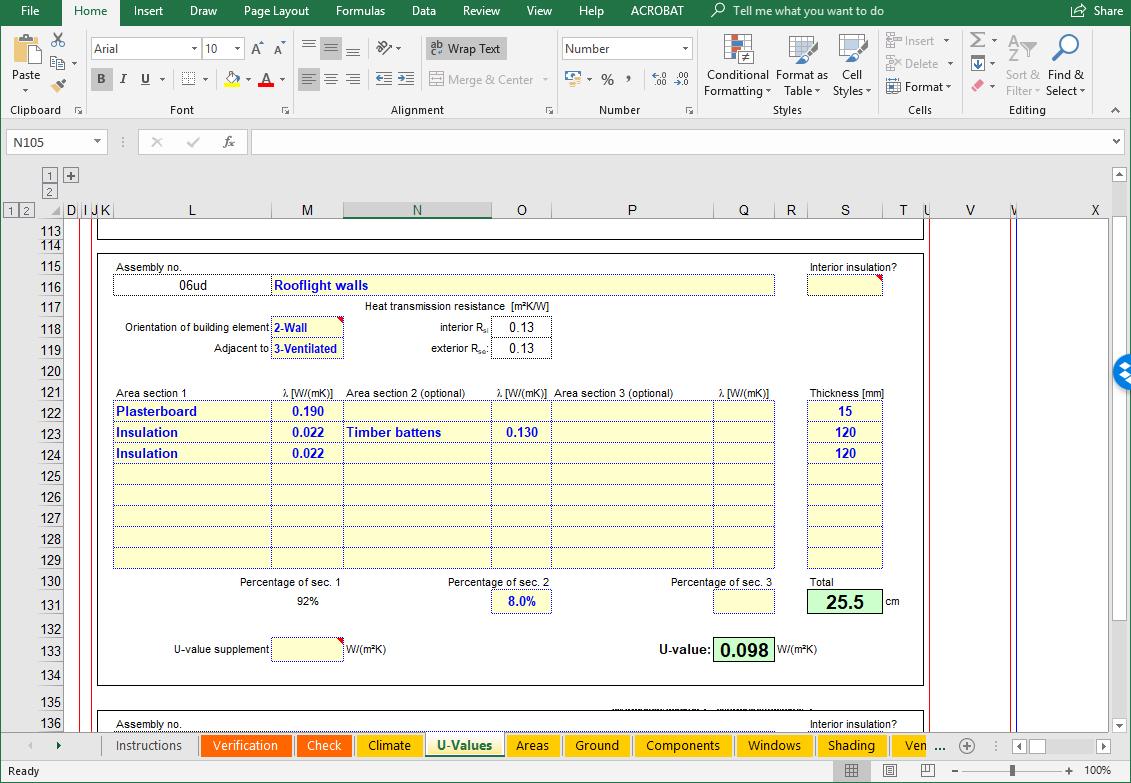
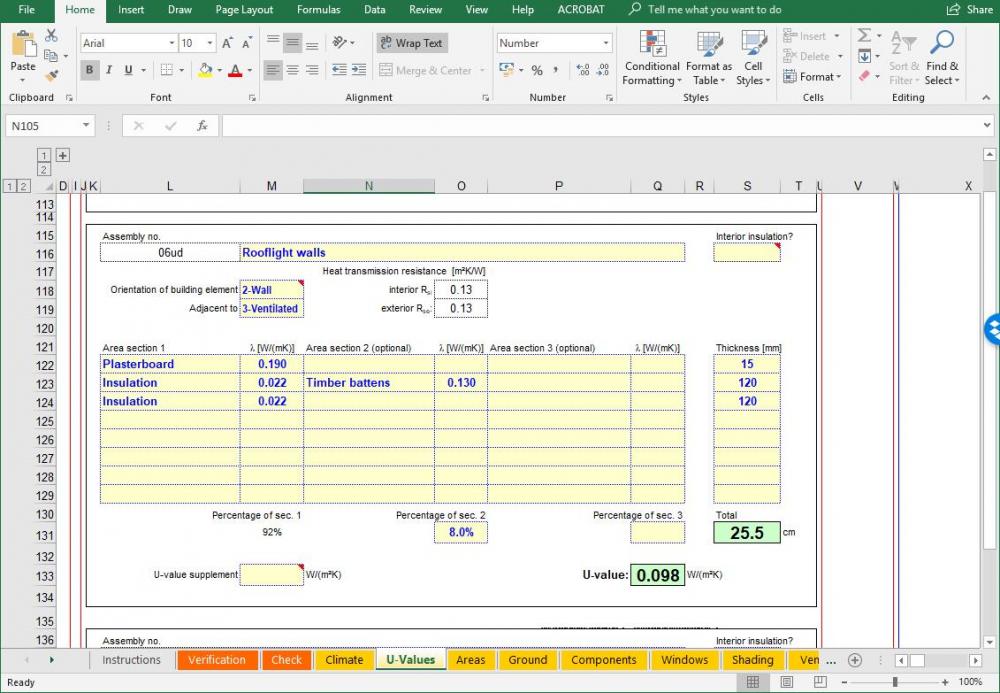
I bought PHPP and have used it quiet a bit but never went as far as getting a house certified. I've also never took any course but read the manual a few times in detail. The person in our office who took the course a number of years ago hasn't a clue and never uses it.They wouldn't claim to be able to use it either. PHPP is a lot of work and it takes a lot of time to input everything. It's really interesting to see little things you modify change the final results. I've also downloaded Therm and modeled the thermal bridges at floor and wall junctions, eaves, etc and incorporated them. The more time and effort you put in the more accurate the output. I always model the timber supports or nail plates wherever they are. It makes a massive difference always. This screenshot is off the sun tunnells from the rooflights to the ceiling.
-
While the new SunAmp is an obvious improvement the range of options now available, (HW, eHW, rHW, Dual, Dual+i, eDual, dPV, ePV) has made it a little more confusing, at least for me. If you want the future option of getting a Heat Pump I believe you need to get a SunAmp which can later connect to an ASHP from the start. If you get an electric only SunAmp you won't later be able to connect the Heat Pump. The other issue is the Dual SunAmp for heat pumps only has an electrical heating element for the PCM58 and not for the PCM34 as that would be charged by the heat pump. Therefore if you install this SunAmp and don't connect it to the heat pump you'll need to ask SunAmp to put in an electrical heating element for the PCM34 (at least that's what I'm having to do). They're incredibly busy so having trouble getting this exact information from them but that's my understanding at the moment.
-
Haven't really held screws in my mouth since I cut my gum. I was lucky. It was more of a bad scrape but did find it awkward eating on one side for a few days.
-

showers, washbasins, toilets etc.
Dudda replied to Hecateh's topic in Bathrooms, Ensuites & Wetrooms
If you're getting a lot try the German website Megabad.com and use google translate. With the sterling falling against the euro not sure how much of a deal it will be for you now but it's very cheap if you've euro. Delivery isn't cheap but if ordering a lot you'll save a decent amount for good brands. The website is mentioned here a good bit in other threads and how I came to know about it. -
The Build - watch out for the pot holes!
Dudda commented on Redoctober's blog entry in Our Journey North of the Border
Ya as ProDave said above you'll get an answer to most small issues like what you're encountering within 20 minutes. You're going to start getting a LOT more questions as you manage electricians, plumbers, carpenters, etc. Preparation is often the key to reducing stress. Electricians are one of the worst for asking questions as a lot of what they do is personal preference and usually need an answer instantly. Take the weekend to review every single light switch location, spot light, under counter kitchen lights, hanging lights over dining tables or kitchen islands, power socket, alarm keypad, alarm pir, TV point, HDMi to Sky or cable box, telephone point, data or computer point, where's the wifi point(s), thermostat for heating, any CCTV cables, fire alarm, CO2 alarm, etc. Think about where furniture will go (eg dining table), what way the door opens (don't put the switch behind the door). Do you need power behind a mirror in a WC or ensuite for a light? You probably have most of this on a drawing but now that you've the timber frame up it's important to review this onsite as you'll find improvements or small changes to make. The following weekend take you're time and do the same when nobody is onsite for all the taps, showers, WC's, etc and just be confident in your head where everything is going. Also do it for the heat recovery duct locations if you're having MVHR. Do you want these to line up with spot lights in the ceiling for example? You have to know this in advance before they come and start. -
Laying engineered structural floor on joists
Dudda replied to ProDave's topic in Wood & Laminate Flooring
The reason I suggested the screws is because they pull the boards tight together and holds them as the glue dries. After squeeky boards my next big hate is gaps or poorly fitted floorboards. It allows you to progress much faster. You only need to screw every third joist or second on shorter boards. -
Laying engineered structural floor on joists
Dudda replied to ProDave's topic in Wood & Laminate Flooring
Glue and screw something like these screws. You shouldn't need to pilot drill the boards if they're engineered. You do with some solid floors like oak which might split. https://www.ie.screwfix.com/tongue-tite-screws-3-5-x-45mm-pack-of-200.html I stay away from nails where possible. -
Looking at the spec sheet and CAD drawings that's the exact same track I have just sold under another name. I'm making it in one piece. I've the track installed but haven't the door made yet. Still plastering and painting here. Not sure what type of ply I'll use yet. I was also considering mdf as it's smoother finish for painting. Whatever I use it will be 6mm thick.
-
I've almost the exact same. I call it a sliding wall as it’s too big to consider a door. Mine is 3.2 meters long and 2.5 meters high. I purchased a track from PC Henderson. I got was the Soltaire 180 with the low headroom kit which supports 180kg. You can also get the larger 250. The reason I’m mentioning this is the weight of the door and a track that can support the door is important. I was fixing it to the underside of a timber truss roof so didn’t want to put a huge weight on it. I’ve made up a timber frame with battens and facing it with ply. You’re looking at 13.7kg for a sheet of Oak veneered ply and about 13.5kg for MDF. I need just under 8 sheets so 8 x 13.7 = 109.6kg and allow another 20kg for the battens brings me up about 130kg. If you took gluing two 18mm sheets together you’d need 5 and ⅓ sheets total and at about 41kg a sheet that’s a door weighing about 220kg for the 2400mm high. If it’s 2700mm high it will weigh 248kg which is a bit close to the max weight of the larger Soltaire 250 track. Now you can get larger tracks but I don’t think they’re as elegant or slimline. What I’m getting at is I think the solid is just to heavy. It’s going to get harder to construct, open and close and put a serious weight on the structure above. What track did you get and do you intend to paint or use a veneered ply finish like birch or oak?
-
Differences in 75mm semi-rigid ducting?
Dudda replied to MJNewton's topic in Mechanical Ventilation with Heat Recovery (MVHR)
You can get 75mm inner diameter which is 92mm outer diameter and you can get cheaper ducts advertising as 75mm but it's outer with 63mm I think. The bigger is better for airflow. Usually that difference in size is more than £26 though so might be just difference in quality. -
Don't worry about where the scrim tape goes or when the pva has to go on. The plasterer will know and take care of all this for you.
-
The header tank came with the Torbeck float valve as its a rainwater header tank. It only has the Torbeck value on the rainwater income and a regular ball valve on the mains backup. I actually do have a none return valve as an additional just in case. Its a Hep2O one so fits easily into the pipework. Having said that no water has or can come in that way yet as I don't have a source of rainwater.
-
I'm using Hep2O manifolds in my plant room as done by other here. I put in three manifolds, cold water, hot water and rain water. The rain water manifold is fed by a small gravity header tank in the attic and the manifold feeds the WC's and outside taps. Now the header tank has two ball cocks. One for a rainwater tank in the garden and the other, a mains for when the outside rain tank is empty. The tank you put in the garden as you said is about 1,5000 to purchase. A big expense. I don't have the money currently for this so my rainwater header tank is currently fed from mains water as if the outside rainwater tank (which I don't have) is empty. The whole thing is working great and all I spent was €60 on a small header tank and two additional runs of Hep2O from the manifolds in the utility to the attic. If I ever decide to put the big expensive tank in the garden I can and the whole house is currently plumbed for it.
-
Not hot at all. TBH the 'test' mostly involved getting approval from the other half in terms of how bright it was and that she was happy with the warm white colour. The thing I like is they're waterproof so can be used in the bathrooms too.
-
I'm using these as in a similar position stuck for height. Have received one I ordered to test and going to order more now that I'm happy with them. CE certified https://www.aliexpress.com/item/Hot-Sale-5W-7W-9W-Waterproof-LED-Downlight-Dimmable-Warm-White-Cold-White-Recessed-LED-Lamp/32758714806.html Lots of options on aliexpress or ebay if you're looking for something quicker.
-
What goes more than 100mm deep into the slab.
Dudda replied to MikeSharp01's topic in General Structural Issues
Consider what rooms do and don't need UFH. I won't go putting heating into a pantry for example. Having that 2-3 degrees cooler for storing food is useful. Similarly you don't need UFH in a plant room as it will be hot enough with all the manifolds and kit in it. The plant room is one area where you could end up bolting random items to the floor. -
I like the idea of an outside hot tap and never saw one before. Good for dogs and washing cars particularly on hot summer days when it's free hot water. Added to my todo list!
- 15 replies
-
- 1
-

-
- external blind
- motorised
- (and 2 more)
-
Fibre Optic vs Cat 5 or Cat 6
Dudda replied to laurenco's topic in Networks, AV, Security & Automation
In the architects office I work in Universities and hospitals are the only buildings I can think of where we regularly install fibre inside the building and even then its only between the comms/server rooms. Same principle to large office buildings with multiple server rooms. Can't think of anywhere else. Haven't had to install in any secondary schools or any industry/manufacturing building yet so can't imagine how you'd need it in a house. I'm all for future proofing though and putting in conduit / cable trays / access hatches / etc. to allow for future services. I put in a cable tray and have access hatches hidden in the ceiling of full height kitchen units so nothing will be seen but will allow future services to be pulled whatever that technology may be.- 15 replies
-
- 2
-
-
- electrician
- cctv
- (and 2 more)
-
No problem using it. The acoustic is usually more expensive though as it can be used vertically unlike the cheaper loft insulation which is only horizontal. It's the added expense reason you don't see it used in attics.
-
Ya aware the issue of foam. I suppose I'm trying to reduce the interference between the high and low voltage cables (data and power) as they're very close in an area which can't be avoided and sticking in the acoustic insulation isn't helping. I'll move onto the next job. Plenty of bigger issues to tackle and worry about.
-
Any issue using offcuts and waste UFH pipe as electrical conduit? I've no other use for the short lengths. It’s in internal stud walls to stop the cables coming in contact with the earthwool insulation I’m putting between the studs for sound. Mostly for cables to light switches and data cables as it’s too small for socket cables. It’s from Wunda 16mm pert-al-pert if that matters.
-
"A licence to use and copy the drawings" A PDF copy is fine for this. It doesn't state modify? As an Architect in Ireland we rarely issue autocad drawings. It's just a recipe for disaster. We actually work in Revit which is 3D BIM software that can export to autocad if required but same principles apply. For large projects we work on (hospitals, schools, etc) we include in the tender documents that the contractor has to create their own as built drawings of the project in 3D BIM software. The school, university or hospital maintenance department then use these 3D drawings to help identify service routes, equipment reviews, filter checks, fire alarm checks, etc as part of the safety file. It's actually a government requirement that a 3D BIM drawing is handed over to the client on competition of publicly funded projects but the contractor prepares these to ensure all service routes are correct. If a pipe that was supposed to run in the floor on our drawings is changed to the ceiling onsite they're more likely to pick up on this.
-
Rafter tails being a pain in the Botticelli
Dudda replied to ToughButterCup's topic in Roofing, Tiling & Slating
Had a similar job myself. Took a while. The whole roof was stripped but the eaves first to allow me to continue the external insulation up over the wall plate.