Dudda
-
Posts
487 -
Joined
-
Last visited
-
Days Won
1
Everything posted by Dudda
-
https://www.screwfix.com/p/ced-all-round-band-12mm-x-10m/18298 Or this would be stronger https://www.screwfix.com/p/sabrefix-builders-band-galvanised-dx275-9-6m-x-20mm/38619 Yes raw plug or concrete screws are very useful. You should always take loads of photos and when you think you've enough take some more. Useful for occasions like this.
-
As an architect I'd also be worried about matching the coursing levels. At 50mm in height that's 60mm including the mortar joint. You're looking at 120mm, 180mm, 240mm, etc. These don't tie into any blockwork dimensions which has a standard of 215mm or 225mm including the 10mm mortar. A standard brick at 65mm high with a 10mm mortar joint is 75mm. Three number high fits nicely into the 225mm block (65mm brick + 10mm joint + 65mm brick + 10mm joint + 65mm brick + 10mm joint = 215mm Block + 10mm joint). You could use them on a timber frame but I'd stay away from them if it's a block build.
-
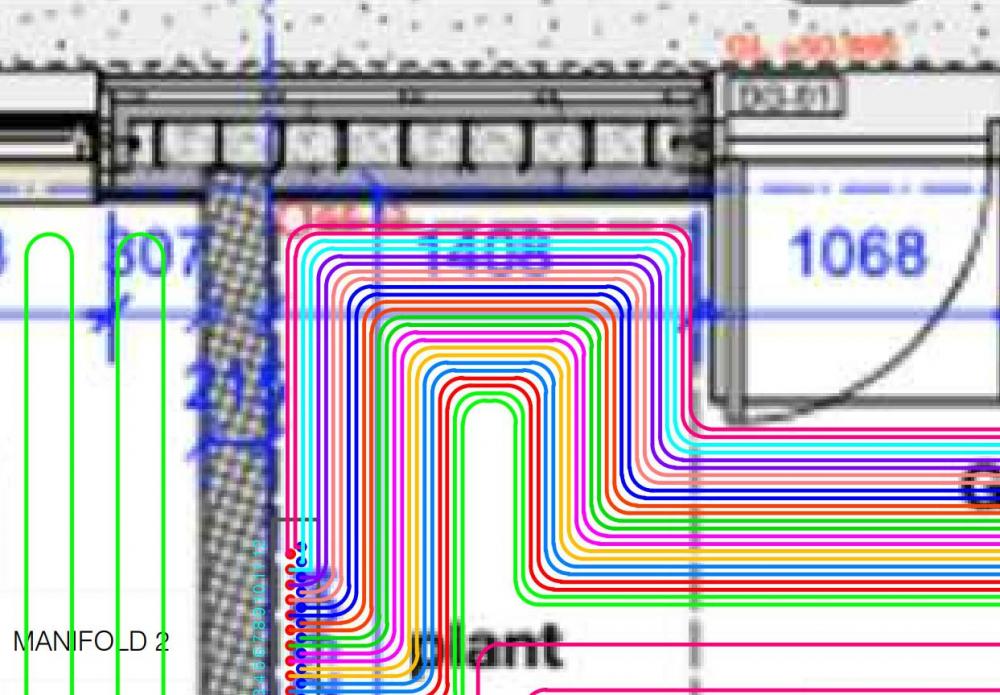
Are you growing Cannabis plants in this corner? They'll run straight through but I wouldn't worry as the plumber will sort out of few of these types of minor issues out onsite.
-
Can you take off an electrical switch, TV point or similar and have a look behind the plasterboard this way? Similarly recessed spot lights are a great way to see what's behind plasterboard. Take a small long knife and cut out a tiny bit of insulation to see how thick it is and if you can see what's behind it. You can also purchase cheap inspection cameras. I'm not sure how accurate drawings from circa 20 years ago would be. They aren't something we'd rely on in our office when renovating buildings.
-
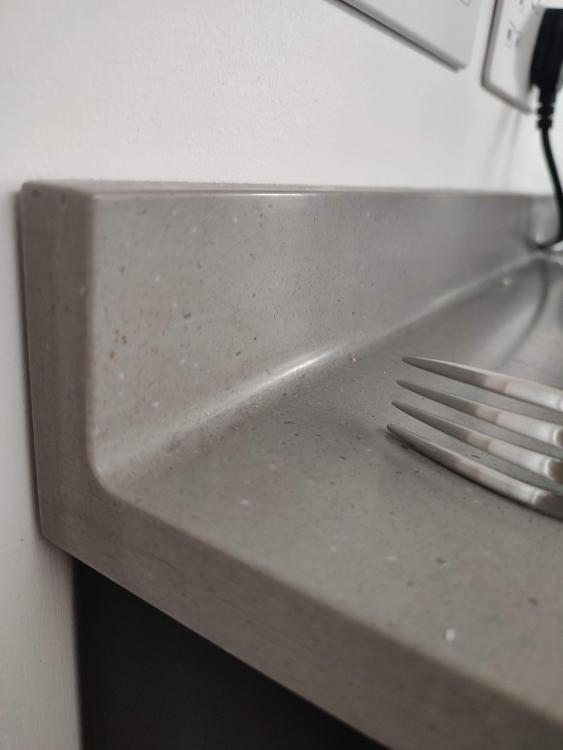
If going with Corian or a similar reconstituted stone worktop you can bevel it. See below. Obviously you can only do this with certain products but it prevents the dirt build up issue.
-
You need 75mm for polished concrete. If you have this then let me know and I'll provide a lot more information to help you. For example you have to use a special type of glass aggregate. Regular glass will shatter during the grinding process.
-

How do you organise and keep cables tidy? Tips please
Dudda replied to SimonD's topic in General Self Build & DIY Discussion
But do fridges, freezers, TV's on standby, the little clock on the microwave, internet router, network switch and all the other bits not draw a constant small amount of power. I'd have thought it's impractical to have a house that draws no power at all for several hours. -
Appliance socket and isolation location
Dudda replied to cwr's topic in Electrics - Kitchen & Bathroom
I put one of these in the corner of the kitchen. It's very handy. Think if you want to defrost a freezer, extra safety in replacing a filter in a cooker hood, do a deep clean on the fridge, etc.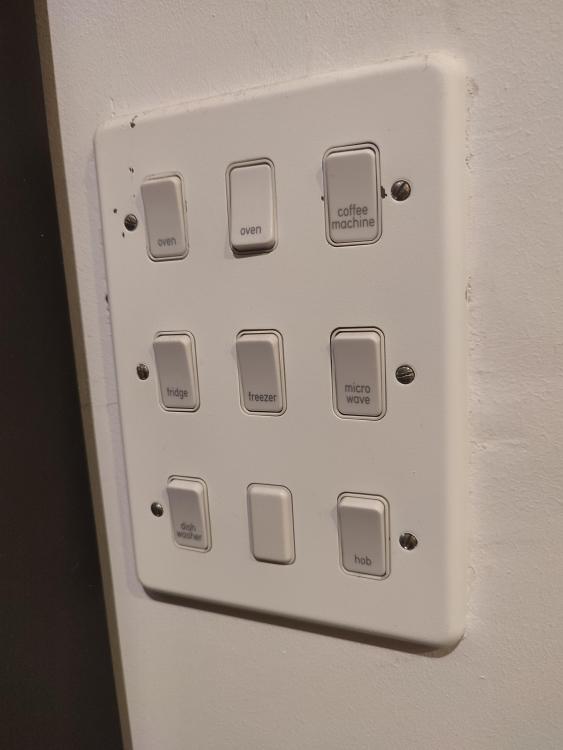
-
You don't need planning for small buildings (terms & conditions apply) presuming they're for storage, den/man cave/ home office etc but if it has bedroom, kitchenette, etc you will no matter how small it it. Anything that can be used as a self contained unit, granny flat, etc. needs planning. This is the rule where I am but it will depend on your local planning laws. Where are you based?
-
Airtightness - Parge Coat vs Airtight Paint
Dudda replied to Johnny Jekyll's topic in Heat Insulation
Presuming you do both yourself Airtight paint will work out very expensive I'd have thought compared to a parge coat. I did a parge coat and found it fairly easy. It's messy but easy. We then had battens with a quick squirt of airtight sealant in the holes before screwing the battens to the wall. Worked well. I think whichever method you go with (airtight paint, parge coat, AT membrane or plaster) it will depend on the quality of workmanship and attention to detail. -
If you think about it often lots of salvaged materials are used in listed or protected buildings. You often have reclaimed slates, beams, doors, architraves, etc. Re-using oak beams or doors is acceptable and they'd be required for fire. Building regulations for listed or protected buildings can be more relaxed and exemptions given in order to preserve our national heritage however the point still stands that they can be used. As for PIR rather than using reclaimed you can purchase 'seconds'. These are boards which mightn't be 100% perfect and often sold at greatly reduced prices. eg a 150mm board measures 140mm at one end so is technically defective but perfect in every other way . I've used seconds for insulation and found no issues. I might have been lucky but they were perfect. I think out of 20 boards 2 had a small void and one had a corner missing. Other member's here have used seconds in the past also without issue. I'm not sure how available these are now as I got them 5 years ago.
-
Ya do, that's perfect. No need for EPS or anything else.
-
You've two types of insulation. Flexible and rigid. EPS, PIR, etc are all rigid. These are NOT WHAT YOU WANT if its expansion insulation you're looking for and will result in cracking in the slab. You want expansion insulation which you purchase it in rolls like the one you posted in the OP. Expansion insulation is most commonly used in polished concrete floors or other exposed slabs or non structural slabs that have underfloor heating. They're cheap and available anywhere. Any type will do. Some some with a sticky back to hold in place, some come with a plastic skirt to help connect to the membrane on the flat. It doesn't really matter and any type will do. If its not expansion insulation you want then you can go for 25mm EPS, PIR or whatever you want. If you're drylining internally or have tiles that can cantilever over you can have 50mm thickness. Who's saying it's expansion you want or need or what type of floor do you have? You need to know for certain if it's expansion or rigid insulation to the perimeter you need.
-
No... I said above it will come on before the night rate ends. If you're asleep in bed does it really matter if it comes on at 1am or 5am? Or if at work and not back until 6pm in the evening does it matter if it comes on at 11am or 3pm to suit available PV? My machine has a 'Finish By time" setting.
-
True the savings are minimal. I'm not arguing that point although for a family with small kids and multiple washes a day they do add up. I'm arguing ProDave's point of "no merit whatsoever". There is merit, albeit it relatively small, from a financial and environmental view. I'd also disagree with your point of a "lot of inconvenience". We put dirty dishes into the dishwasher straight away as do most people and close the door to keep any potential smells in. If a smart one senses a full or partial full load in the middle of the night and turns on automatically then I'd argue that's more convenient than having to remember to turn it on. Smart appliances now also let you add huge amounts of detergent and they dispense the correct amount based on the size / weight of the load and programme selected so it's not an issue of having to remember to add detergent either or think about how much to add. That's the opposite and a lot more convenient.
-
As smart meters roll out in time we should get more dynamic pricing and time of use tariffs from suppliers. Lets say in the middle of a stormy night a lot of renewable energy is generated and the grid gets overloaded. This energy is offered free or at a tiny rate at a certain time for a short period while overloaded. A notification is sent and then the Dishwasher or washing machine is turned on to utilize the free or super cheap power. Otherwise it knows the program selected and duration of the wash and turns on so the wash ends before the regular night rate period ends. Alternatively before heading off to work you load the dishwasher and washing machine. When the PV have filled up your batteries a notification is sent to the washine machine which starts. Once this is finished and provided the PV are still looking to export the dishwasher starts. I know smart fridges can help make shopping lists but I can't see the benefit in that.
-
Where's the extract from the WC or is it just a window? Are you having MVHR? Do you've anything else that has to run in the service void other than a few cables for lights and a potential smoke alarm, intruder alarm?
-
Grand Designs - Chisel Cliff House up for sale ay £10m
Dudda replied to AliG's topic in Property TV Programmes
If trying to sell a house for 10 million people expect a certain level of finish and materials. You'll be expecting granite or other high quality floors, expensive lighting systems and home automation, high quality sanitary, taps, showers, ironmongery to doors, high end kitchen, etc. If you're 4 million in dept and have taken 10 years before you start the finishes you'll be looking at bargain and cheap stuff. You can't put a flat pack kitchen into a 10 million house. I therefore wouldn't be expecting the final product to 'wow'. It's unfourtionate and I feel for him but he was naive and took on far to much. -
Ducts for wires through external insulated walls?
Dudda replied to Dreadnaught's topic in Timber Frame
If using PVC conduit (which is what I did) and as suggested by ProDave above, have it at a tiny slope or fall to outside. If doing as markocosic suggested above coming out at the floor be careful with outside ground level. If you've a level thresshold you run the risk of having moisture coming inside. Additionally bunching them together makes it a tiny bit harder to seal so extra care and attention is required. I find it's easier to seal and airtight individual cables than a bunch. -
I used a plaster boarder lifer on house and it worked very well. Mostly flat ceilings but did have one area on the slope that was about 4m high.
-
Like AliG I'd also suggest the Ubiquiti WiFi AP's. I've two of them, one one each floor, powered by POE.
-
Oven, Slide and Hide or Pivot down (stay out)
Dudda replied to NewToAllOfThis's topic in Kitchen & Household Appliances
Yes that's obvious but having a fan blowing the heat out will reduce the temperature faster. That's the point I'm making. -
Oven, Slide and Hide or Pivot down (stay out)
Dudda replied to NewToAllOfThis's topic in Kitchen & Household Appliances
You don't have to open it fully if you don't want and also the fan shuts off when the door opens so it doesn't blow the heat out. A bit like the way a modern car turns off when at traffic lights and restarts automatically. -
Oven, Slide and Hide or Pivot down (stay out)
Dudda replied to NewToAllOfThis's topic in Kitchen & Household Appliances
The other half swears by our slide and glide neff oven. I don't see the advantage but she loves it and does a lot more baking and cooking than me. It allows her (who would be a lot smaller than me) to get closer to the oven making it a lot easier to lift things in and out. I agreed to it and the higher price for an easy life. It's not smaller internally from what I see. She's now looking for the steam version as the second oven when funds allow she's so happy with this one. -
You can buy standard blocks and certified airtight blocks which look exactly the same. Here in Ireland the budgets for schools is very small and they want buildings very durable so you'll often find fairfaced blocks are used in schools. The other problem is new buildings, due to regulations, have to achieve a certain level of airtightness. We recently completed a school using airtight blocks that were fairfaced and passed the airtightness requirements. The only thing to consider is you do have to tape the windows to the blocks so a painted window board was used to hide and protect this tape for the full perimeter of the window not just the bottom of the window where you usually see it.