Dudda
-
Posts
487 -
Joined
-
Last visited
-
Days Won
1
Everything posted by Dudda
-
That's presuming floor finishes aren't laid. Can @Jen B confirm if the floor finishes are in yet?
-
Is it ASHP, gas, oil, geothermal or what are you proposing to use and what type of insulation do you have in the floor? Extra pipe is relatively cheap and a larger manifold isn't a big increase either. The cost will be any additional stats or actuators. I'd be putting them in at 100mm which I presume is the green. In the grand scheme of things it's not a lot extra and you can't dig up the floor later to add more.
-
The plywood works well. Just make sure the bolts are tight in the plywood or use two layers of plywood to keep them vertical otherwise they can be in the right place but at an angle and not vertical.
-

Is there any downside of an extra slim concealed cistern?
Dudda replied to Adsibob's topic in Bathrooms, Ensuites & Wetrooms
When you get to the very slim cisterns the waste pipe and connecting that becomes the 'fat' part. You've very little tolerance so they become a bit more difficult to fit. -
External insulation is when the insulation is on the outside and it's plastered or rendered over. You mentioned architect. They'll be able to advise you best as you may have a very exposed site or be in a conservation area or be looking for a specific finish externally or have some other requirement we're not aware of. I wouldn't go to the architect suggesting external insulation. See what he proposes first and then consider your options. Under no circumstances should a builder be making this decision. Are you doing any work to the existing house or what age or quality of insulation and airtightness does the existing house have? Not much point going overkill and having a super insulated passive house standard extension if all the heat is lost through the existing house.
-
It's fine under the tray just not that close to the waste. The shower waste tray always contains water to stop the smell getting into the room. The UFH can dry out the waste trap which if it's not used daily. The WC Pan is fixed to the ground usually so you don't want the UFH pipe punctured. If it's a wall hung WC I'd continue the UFH under it.
-
In addition to PeterW's post above if you've an extension that was 2m deep for foundations and you wanted a solid floor, instead of screw piles you could pour a raft foundation that the timber framed structure sat on top of. I definitely think timber frame is the way to go. At only 3m wide it's a very short span. What's the intended use of the building? This will help advise on structure, insulation, soundproofing, etc.
-
How do you zoom into photos to see the bolt or how do you see the full resolution photo? I can't make out what's a bolt and what's a knot in the wood.
-
Running 25mm mdpe pipe under slab from 15mm pipe.
Dudda replied to hotnuts21's topic in General Plumbing
Lay it above the slab to the kitchen Island. The less times you puncture any waterproof or radon layer the better. Also less chance it gets damaged or cut back and forgotten during construction of left till later -
I've a Nest Doorbell and have it on the free version so not paying a subscription. We have standard bells so no lag with them. 2-3 second average lag with the phone notification but by the time you've the phone unlocked and opened the app you'd have answered the door. My parents are Magpies and wanted a Nest after seeing mine so fitted one for them. They've the subscription and it has benefits but not enough for me to bother paying. If I'd more cameras (which I intend to get in time) I'd get a subscription.
-
Sorry I meant to say stick to the radon. They stick very well as it's a smooth flat surface they're sticking too. It just will means you'll have to pay extra care and attention to getting it flat and even. If you've a giant space that's flat its easier but if you've a lot of load bearing internal walls or popup's it makes it more time consuming. Just pay extra care to getting it flat and even and folding it tight into the corners. The weight of the filled UFH pipes will help.
-
I understand now. The 375mm insulation isn't 100% insulation but is an insulated beam system and the 50mm concrete is a structural screed that ties it all together. To late but I'd have put the radon below this. In you're case I'd use the clip rail tracks and just stick them to the concrete. I've stuck them to just the slip membrane and they worked fine. When you've all the UFH pipes in place they tend to all click together to form a giant web that doesn't move and the weight (when you've the pipes pressurized and filled with water to test for leaks prior to pouring the screed) ensures they don't lift or move.
-
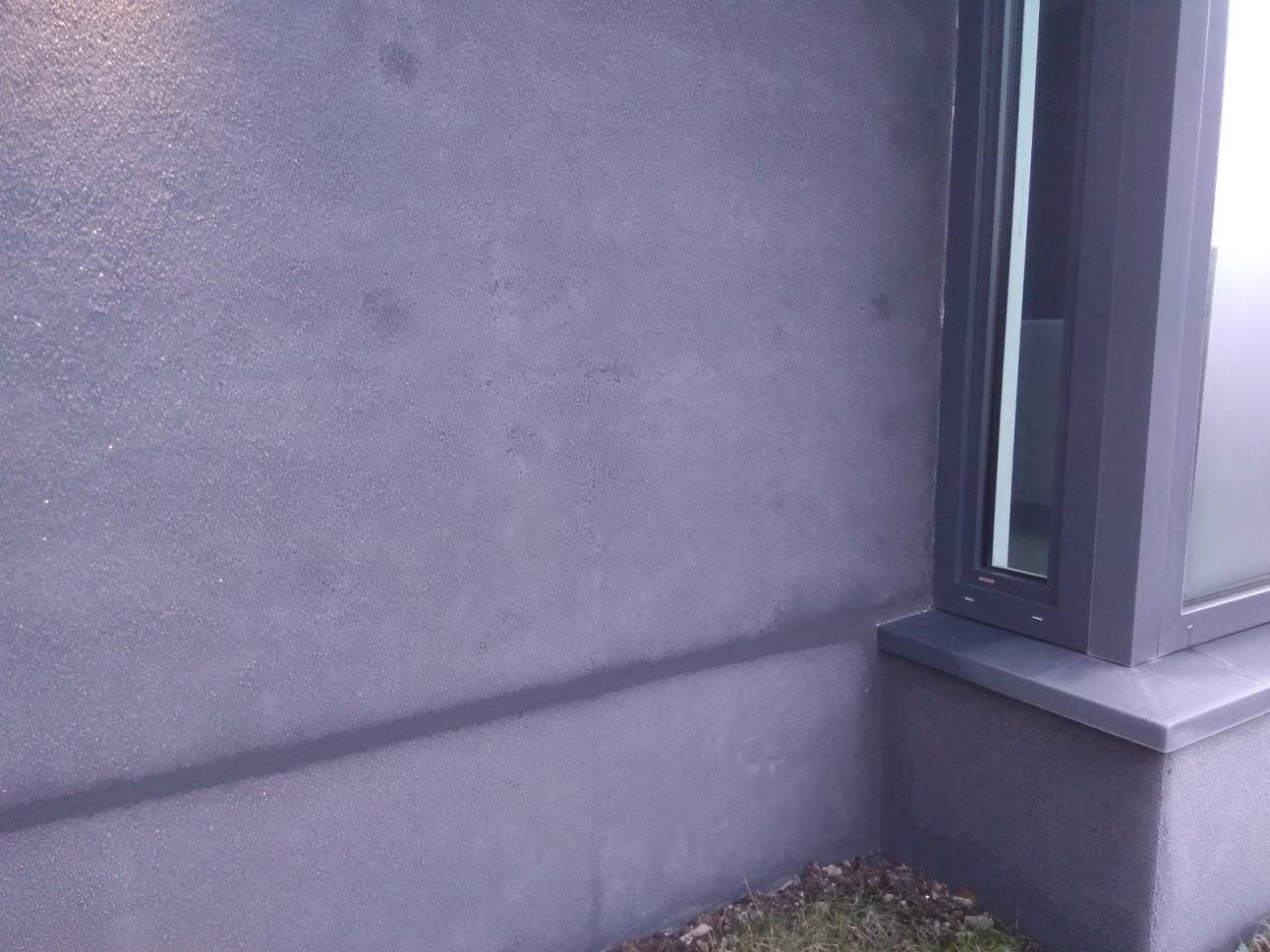
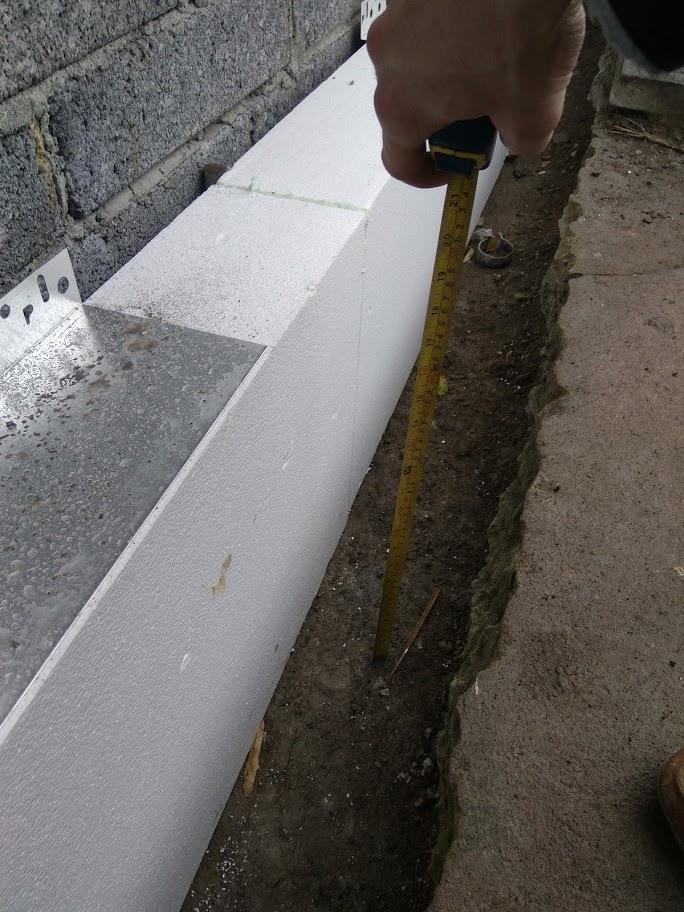
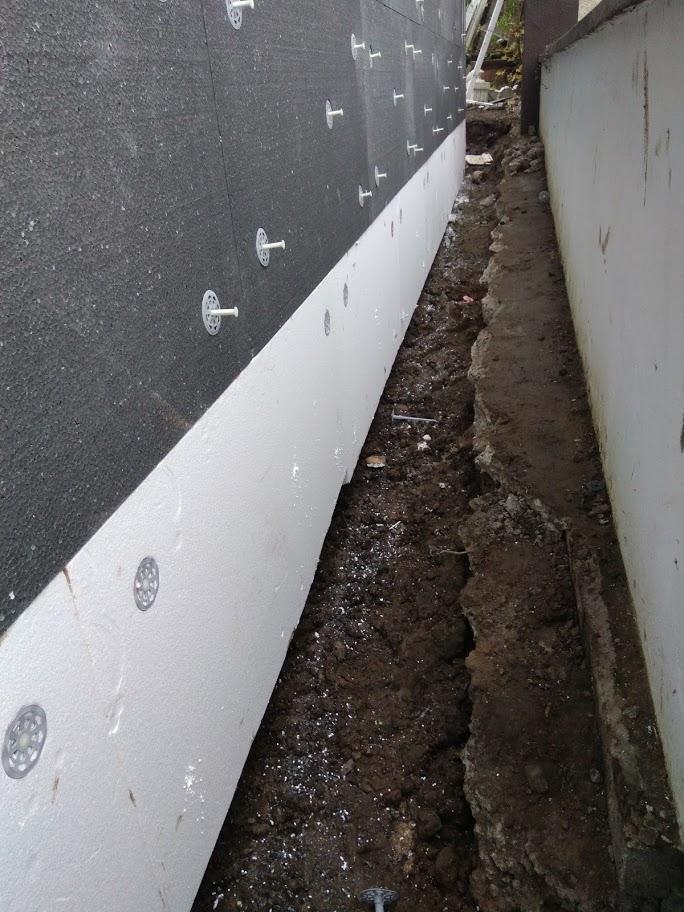
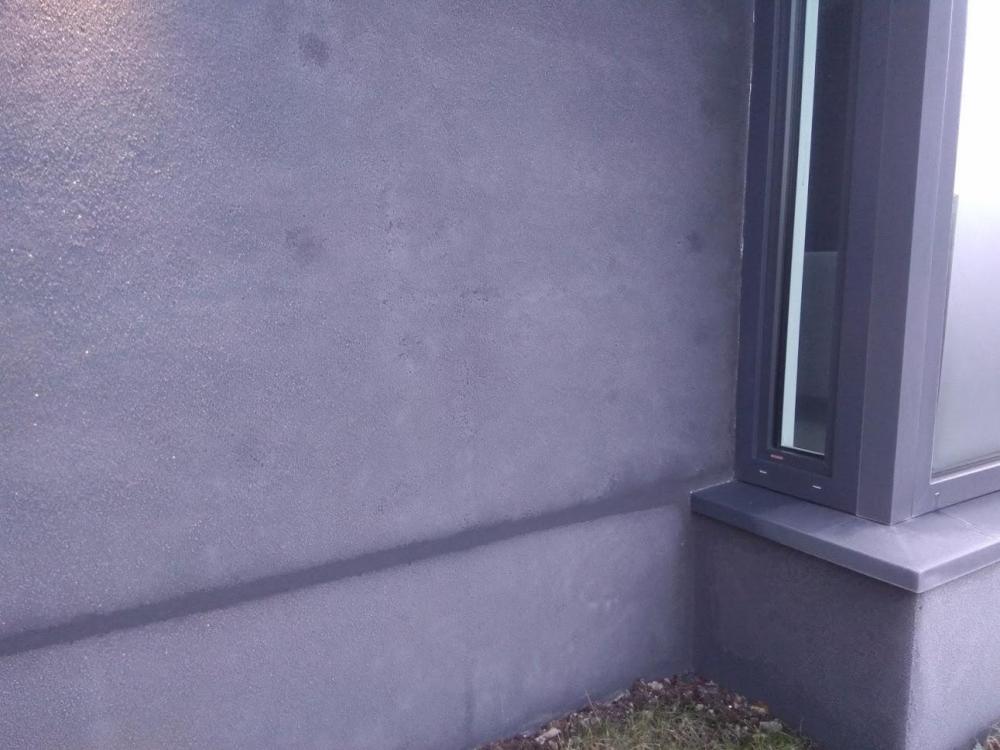
I don't know of the Jablite system but on our house when we externally insulated our 1970's house we just plastered it flush. You have the grey EPS above DPC and the white insulation below the DPC. We had it done about 4 years ago and used the aluminium DPC tray but this finishes flush with the insulation and the whole thing is plastered over flat. Externally it's impossible to tell where the DPC layer is except when it freezes hard. Then the aluminium which conducts the heat from inside shows as a thin horizontal line. See attached. If doing it again they now don't use aluminium as it's a thermal bridge and they use plastic or carbon. We also dug out footpaths to allow the insulation continue down below ground level which helps a lot as you can't add thermal blocks to an existing wall. Aluminium DPC tray level with DPC in wall DPC level varies around the house due to slope in site and change in levels internally In very cold weather you can see the DPC line due to the aluminium which conducts heat. They now use plastic or carbon DPC trays.
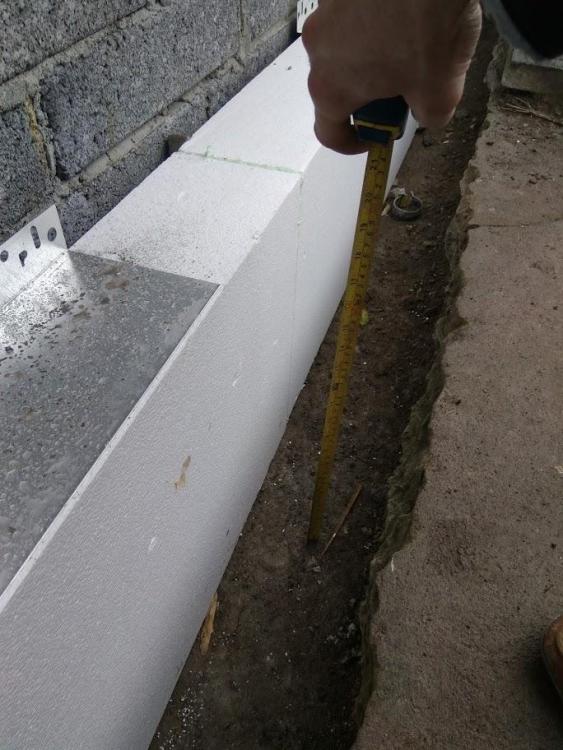
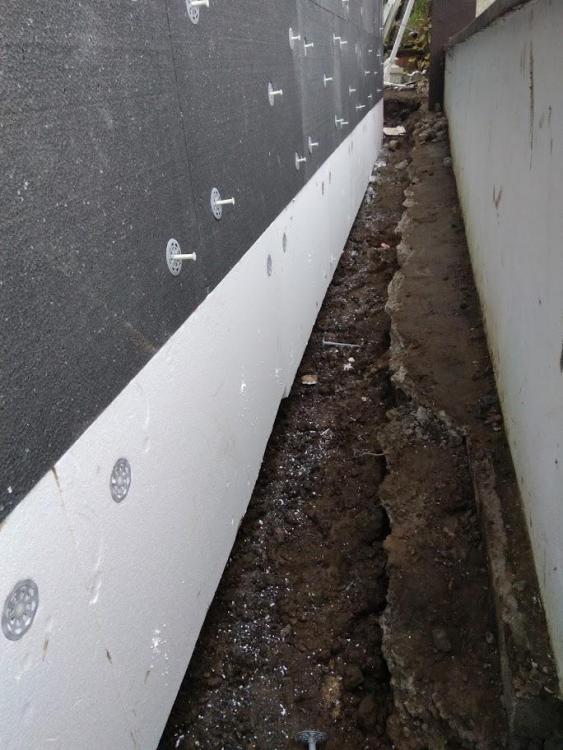
-
Thanks. I don't understand what the ~50mm of precast concrete is doing. This can't be a structural layer at that thickness. What's under the insulation and what layers are already in place? I still think it would be better if the Gas / Radon layer was below the insulation.
-
I don't quiet understand the floor build up. Is this correct: 50mm Anhydrite screed with UFH Gas / Radon Membrane Insulation Sub floor of some type Why not do what everyone else does and have the following: 50mm Anhydrite screed with UFH Slip membrane (light sheet of plastic to stop the liquid screed seeping down between the gaps in the insulation. Insulation Gas / Radon Membrane Sub floor of some type This way the radon layer is protected by the insulation. If you put the Radon on top of the insulation you'll have pipes, UFH installers walking across it, some type of UFH clips, potentially steel mesh to clip the UFH onto, etc. The Radon layer will get damaged. The other advantage of having the Radon layer below the insulation is you're keeping the insulation dry. If the Radon layer is the main waterproof layer rising damp can lower the thermal performance of the insulation. In terms of installing the radon it shouldn't impact any DPC levels or anything else it's just dressed up the side of the insulation to whatever height you want. The other advantage is Radon is a thick layer that can be difficult to work with and get flat. Having the large insulation sheets flattens it down. You won't be able to do that with a liquid screed and any bulges, folds or creases in the radon layer will lead to thinner Anhydrite screed in areas where cracks will form. This isn't an issue when using a lighter slip membrane.
-
You should be able to get 900x900 to open side hung I'd have thought. What's the max size they can do side hung? I've a 1250x1250mm tilt and turn so works side hung.
-
As per Mr Punter above on the mains power with battery backup and they need to be interlinked so if one alarm goes off they all go off. If it's a new build and you're bringing power to them you may as well interlink them with a cable rather than wireless as the alarms will work out cheaper. I know it rarely happens but you're supposed to replace smoke alarms every 10 years so the additional cost for the wireless alarms will be multiplied every 10 years. The wireless alarms are good for retrofit projects where it can be difficult to connect them with a cable. The alarms have to be within 600mm of the apex.
-
By kit I presume you mean timber frame? Are you still in design stage or has manufacture started? If still at design stage you've a few options. You can ask them to check the loadings and span and design the posi joists to take the load of a 50mm liquid screed at first floor. You can have your underfloor heating pipes in this. Need to know what stage exactly of the build you're at so we can give other options.
-
Yes. You have tiles and timber battens, roof membrane then timber and insulation then Vapour / Airtight layer then timber battens to create service void and then the plasterboard. I'm wondering where you're putting the vapour control layer if you don't have the service void.
-
Have you a vapour control layer or airtight layer planned?
-
You put down the OSB or chipboard floor on top of the posi joists and then put down small battens directly over the posi joists. These battens can be notched or cut to leave gaps for the UFH pipes. Another layer of chipboard / OSB / Floorboards is placed over this. The issue is the floor will be about 50mm higher. Not an issue if you're early enough in the build.
-
You need to highlight the issue to Nigel Farage
-
Wall construction and airtightness around posi-joists
Dudda replied to Johnny Jekyll's topic in General Construction Issues
Who did the drawings or design and worked out the joists are 253mm high? Can you ask them (presuming they design and sign off on the calculations) if you use joist hangers as it would make things far easier? While possible it will be very messy and time consuming trying to have the membrane stretch around the notched ends of the blockwork. -
The OSB3 that's T&G is the same size at 2400x600mm. This is what I'd use.
-
Cheap Way To Raise Internal Floor Height By 150mm
Dudda replied to Johnny Jekyll's topic in Heat Insulation
Yes it's fine. EPS at the bottom.