


Gus Potter
-
Posts
2155 -
Joined
-
Last visited
-
Days Won
26
Everything posted by Gus Potter
-
Thanks, appreciate your help. Brain fade.. can now see how it shifts the dew point outwards. ta for the heads up.
-
It's interesting how this is panning out with the pricing and erection of kits. I've been mucking about with this as a contractor and a designer for a good thirty years in Scotland where we embraced TF a bit earlier than down South. Some of the Scottish TF companies have sold out to the big outfits, some truss manufactures also. What I can say is that it is worth a look at getting your local builder / joiner to price to stick build the kit and buy in the trusses. And / or spend a bit more earlier and get your SE to do you a traditional kit with the roof you want, if you need a bit of steel then it's relatively cheep for your local SE / Builder to sort this out for you. Even 30 years ago it was hard to compare like with like from TF suppliers, now the waters are further muddied. Really unless you are a developer / or have a lot of technical knowledge you have no chance at getting like for like costs from the TF folk on a one off build. What you do need to know is what could you build based on stick built with you supplying the insulation and so on, how long will it take and then make the call on what suits you. Then you have a real base line. I often do the panel drawings for the local builders and spec easliy sourced stuff (truss clips / hangers) and rough out the truss design with the key dimensions to make the roof bracing work. You'll need to pay up front for this but I have found that it is often an economical way of doing it in the long run. It can also work for some folk on the cost plan where you don't need to stump up a big deposit for the kit up front.. you buy the timber.. belongs to you then you pay as you go as it gets erected. Also on the "soft side" many self builders change their mind as they go.. stick building can offer more flexibilty to "just change your mind" without the financial penalty.
-
Good thread this and learning all the time. I have an ex council house two story terrace with cavity brick wall.. which has a howling draft in the cavity. Was contemplating EWI. Problem is that the inner leaf of brickwork holds up the roof and first floor... and at ground floor level there is a 4" x 3.4" inch timber wall plate build into the load bearing brickwork, all be it it is pitch pine. In other words someone thought it would be a great idea to put in a bit of wood instead of a bed of mortar in the inner leaf which is carrying all the load from the house above! So not keen to fill the cavity as the timber could rot and the house settle. @House man check you don't have the same dillema as I before progressing.
-
Advice needed before I tackle the installers!
Gus Potter replied to MattB67's topic in Air Source Heat Pumps (ASHP)
@MattB67 Glad you got it sorted! I'm old sckoooool but the old plumbing / hydraulic rules still apply even with modern unvented sytems./ ASHP etc. It looks great having all the pipes level and well clipped, nice to see on an electrical system but on plumbing no. We know we need to get the air out so lets run the pipes on a slope so we can get the air to a place we can easily vent it. Don't do your smaller bore (any pipes if you can) pipes so air, debris can get trapped.. no funny U bends just under the rads say.. run them so that the metal gunk gets picked up by the magnetic filter. Make it easy to flush out the stuff that the magnetic filter won't catch.. it basic stuff and good workmanship. If you are using under floor software to design your loops make sure you check you bend radius is compatible with the pipe you are using! And when you are installing pay particular attentions to the bend radius or you are inviting trouble. Worry less about the pipe spacing as if you choke a loop you will have much more to worry about! If you take care of the basics you'll save yourself a lot of grief later and get the best out of your tecky controls. Take care of the basics and this will allow you to get value out of your high tech controls. For me I would go for the simplest design that you can that is easily maintained by your local heating Enginner. Save your money.. and spend it on insulation or making your house just a great home.. buy some furniture, pots pans etc. -
Temp..Yes good /great summary. @LSB Is there another page or two of calcs relating to the roof? I have deduced that the calcs are based on Eurocode 3 rather than BS 5268. I did this by comparing the SLS (serviceability limit state) to the ULS (ultimate limit state) ratio. Your calcs give a ratio of 1.35 and 1.5 for SLS and ULS respectively and that correlates with the Euro Code safety factors. The BS code is different.. I'll leave the explanation out for brevity. Before making any further comment it would be good to see all the calcs relating to the rafters and the cladding on top. A 6" x 2" rafter spanning 4.0m invites interest even at 400mm centres then you have the insulation.. closer centre rafters the more bridging effect.. sometimes the lightest structural members can be counter productive? I can see an alpha factor... 16.0mm Assuming this is some kind of deflection limit then BS 5268 recommends a limit of span *0.003 = 12.0mm but the Eurocodes allow for the limits to be agreed to some extent between the Client and Engineer... they cut you a bit more slack.. allow you to innovate. I'm interested to see the if the rest of the calcs take into account the deflection limits set by the metal cladding provider and the internal lining provider.. say Gyproc? While the roof may not collapse it may bend so much that it tears the cladding fixings and causes cracking in the ceiling. If you are going to stretch the deflection limits as an SE you should be pointing this out to your Client and let them decide what level of risk they want to take on. Have you got a good builder who has said.. mmm, these rafters look a bit small?
-
Sorry for the OT post but maybe you have a rebate you can work with. When you have old solid walls it's a challenge. Your starting point here is look at how the wall is constructed. In the late 1600's the weighted sash and case window caught on for houses but this was high end stuff at the time. Have seen some steadings that have sash and case but the steadings were subsiduary to the main house so some Lairds were not that keen to share the luxury with their "workforce". There are steadings ( folk lived in part of them) and buildings for housing animals (barns / byres ). Sometimes you just have no rebate especially if the wall is 14" instead of 20" thick. The key here is that to fit a sash and case window they created a good rebate behind the rybats and lintel. The rybat is the stone up the sides of the window often looks like a key effect from the outside. Now with modern windows (even a sash and case window) you have space here to be innovative. Modern sash and case look alike windows are often fitted with spiral balances instead of pulleys and weights leaving you room to play with to get some insulation behind the window frame and up to / against the rebate. You do need some discrete fixings which act as a thermal bridge but.. you can't have all the cake..
-
Welcome Ruth. Great place to build. You'll get plenty help and friendly advice on BH. All the best with the project.
-
Foul Treatment Plant advice - choosing the right one!
Gus Potter replied to Dale Hesketh's topic in Introduce Yourself
Speced this tank on a new build job about 2 years ago. No adverse reports so far. https://www.wte-ltd.co.uk/pureflo_sewage_plant.html It's a bio digester, no underground moving parts. Key drivers were; 1/ 4 bed house with substancial principle living space but Client is abroad for a number of months only a cleaner in from time to time. 2/ When Client is back only two of them living in the house but from time to time have full occupancy with guests, two dishwashers running etc. 3/ That it has a CE approval which ties in with the regs and design codes in Scotland. In summary was looking for a tank that would work based on variable flows and loads. Much like a holiday home. In reality how they perform is based on how you look after them. Some folk that take a holiday let take their own bleach and chuck it down the bog! some put other items that don't bode well for anything "sewage". In an ideal world for the self builder who is using the house on an irregular basis / or with variable flows and nutrient loads then some extra control over the air blower would be helpful. Maybe like the app you have on your phone for controlling the heating. A few days before you go away you turn down the blower so that you keep plenty live culture ticking over with the odd boost to clear the pipes. Then a couple of days before you come home you crank it up a bit so its all ready to receive your homecoming gifts. Hopefully someone will make this technology readily available. -
Have you been "at rest" after your days away or doing something else? Apparently the human body "at rest" produces around 0.1 kWh but this can increase significantly when active. I'll stand corrected of course.
-
Why did you knock the old house down before embarking on this journey?
-
Onoff. The steel fabrication is done outside. All you are doing is making up some bespoke truss shoes out of 10 / 12mm flat bar.. well within your skill set.
-
Got to the age where you dabble in all sorts, realised there are folk that have forgotton more than you know, hence enjoy being on build hub, every day is a school day here for me. Keep up with the research Zak.
- 38 replies
-
- 1
-

-
- selfbuild
- experimental
- (and 5 more)
-
Yes the raft with a void is an option not least as it provides a service space under the floor. Have done some jobs this way. On the technical side if you find a ground bearing raft is loading up the ground just a little too much then the weight of muck you dig out to create a void reduces the loading on the soil and bingo! it all works out.
- 38 replies
-
- 1
-
-
- selfbuild
- experimental
- (and 5 more)
-
Hi Zak S. Yes that looks pretty soft right enough at certain depths. Looking at the cores the ones to the right seem to be from the surface, the left ones in the photo from greater depth? The shallower cores look like there is maybe a stiffer crust with soft clay below and that the bungalow founds are using this crust to spread the load out before it reaches the softer clays... The folk that designed the founds for the bungalow may have taken advantage of this crust. I would still expore the raft first. If the water table is high and not likely to drop then the soft clay can't shrink as it will always be submerged. It also can't go anywhere.. it is confined at depth. Once you go down a bit the pressures in the ground from a raft are often found to be very modest so even a soft clay can carry a surprising amount of load with acceptable settlement.
-
Hi Onoff. Will this work as a concept in terms of space and fit up. You have a purlin, binder below with a couple of soldier studs. Introduce a couple of diagonal braces from the purlin ends down to the middle soldier at binder level. Plate up the joints each side with marine ply screwed and glued with say Cascamite structural glue. Now you have created a girder truss. Put in a ridge beam to prevent the ridge from dropping and causing potential roof spread. Now you can remove the internal diagonals. You can beef up the floor with steel box section underslung from the binder if need be. Where the girder meets the stack you can support the ends of the girders by fabricating an upside down triangle. At the top weld on ledger pieces that recess into the brick at the sides of the chimney. For good measure fix the ends of the girder and steel triangle so it can't move away from the brick or sideways. Deploy similar tactics at the other end by creating a shoe with a ledger turned into the blockwork.
-
As @epsilonGreedy says have you consulted with someone who knows a little about the ground? Hope the following gives you some food for thought. By all accounts the existing bungalow is sitting on competant ground. The good news is that for many domestic houses clay can be a good medium to build off. One early thing to do is to identify the type of clay you have. Starting with the basics. Have a look at where you live and look at how far the last ice age extended. Ice is heavy and has often pre compressed the clay we encounter today. We call this an over consolidated clay and this can carry a good bit of load without excessive settlement. You may have this under your bungalow. Dig a hole down to foundation level and have a look at the clay. Is it like pottery clay that you can easily mould and press your thumb into with little effort? or is it a mixture of different sized particles and harder to indent and mould? Grab a copy of the "Structural Engineers Hand Book" F. Cobb and you find info on how to relate this to the soil bearing capacity. You'll find same info else where also. Spend some time on learning about clays and you are on your way to saving money! The next step is to ask.. ok we want to put a heavier structure on roughly the same foot print. Can we just add more strip foundations similar to what we have and put something under the ground floor that will spread the higher loads over more strips? You can back calculate (on the back of a fag packet) the loads the bungalow is imposing on the ground and compare this with the weight of the extra storeys. There comes a point where you need to many strips of founds. Practically they become so difficult to set out on site, dig with a machine, clear away the excavated soil and pour that you abondon the idea. Technically the bulbs of pressure under the strips start to interact and you are faced with the law of diminishing return anyway. The next stage is to say.. what if we just join the strips together.. and make a raft? Rafts are a different animal but they work a bit like concrete beams with steel to carry the tension loads, the concrete takes the compression. If you have plenty depth to play with, often occurs with rafts compared with say a concrete beam holding up a floor where depth is a factor, then you explore different thickness' of slab. This is partly driven by the soil and if you have insulated under the slab. The secret here is to find a slab thickness that uses the least steel and just as importantly to make the steel common sizes, easy to source, easily read drawings and quick to fix. This widens the field when finding a contractor.. go for the simple stupid! It's easier to pour an extra 50 - 75mm of concrete into a found than make / use more steel with complex bends and laps say. Putting insulation under a slab is not difficult provided you keep it simple. I would try if you can to get to grips with this. Then if you can't make it work start to look at other options. What you do learn will serve you well even if you find the strips and rafts are not suitable.
- 38 replies
-
- 1
-
-
- selfbuild
- experimental
- (and 5 more)
-
Minor Building Works , or not. Scottish Warrant
Gus Potter replied to saveasteading's topic in Barn Conversions
Hello Sole. Appreciate your perspective and experience. I have enjoyed reading your posts. One but not least was how you explained how you aim to submit a comprehensive warrant / planning submission. I commend you. I hope praise does not offend. Your right though. I think you may deal with Argyll and Bute Council more often than not? Have dabbled in this area on an off over the years. I can't recollect many happy times when submitting calcs. It's to do with the funding I think mostly. Some of my family live on Tiree and thus have experience with the warrant / planning process so I have a bit of local knowledge. I did a SE type job for a developement at Glensanda Quarry a few years back and some other commercial stuff round about Lochgilphead, all through the calc route. For me in the Glasgow / Lanarkshires of Scotland belt my old school submitting calcs approach has worked fine.. so far. Like you I aim to make a quality submission. I actually get very few written queries back from BC, maybe less than five a year relating to the actual calcs. I get a few phone calls from other SE's as they are often just curious about some of my innovations. On the whole though a well presented and correct calc pack sails through. Where you get stuck is that some councils have cut their funding of BC and paid off their Engineers. This then leaves a small group of SER Engineers controlling the domestic extension / self build / renovation market. Yes you get a discount on your warrant fee. I easily mitigate this by including extra information on my drawings which at the end of the day saves many a Client far more than the discount. To finish. Yesterday I had a BC officer call me to say that as I had submitted calcs the warrant would take 8 weeks longer. I have worked with him in the past so know him. He said.. Gus I can follow your calcs and they look fine to me but I am no longer able to sign off so need to send them for external checking. I said.. that is fine as I have told my Client that as I don't offer the SER certificate it will take longer to get the warrant. Funnily I have had some warrants with calcs through faster than the SER route so make what you want of that! Hope this gives folk applying for a warrant in Scotland some food for thought. -
To add to PeterW's contribution.. sorry.. but to put a further spanner in the works you also need to look at global stability of the walls. The wall panels need to resist horizontal wind loading so that part of it needs consideration.
-
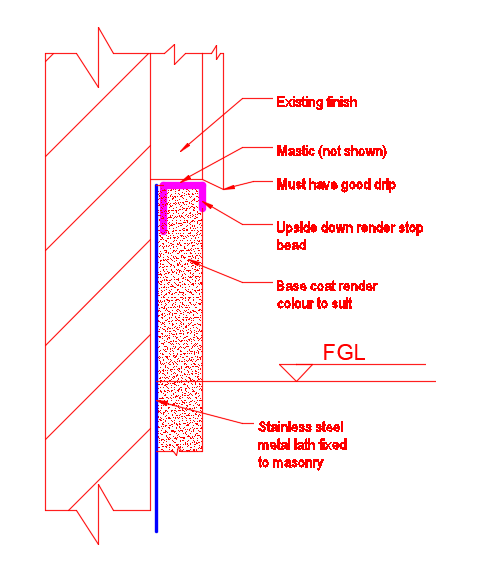
It's not a metal plate..metal lath.. it is a lightweight mesh, easliy cut, bent and fixed. We often use this on base courses where there is a risk of frost and wet masonry below DPC level, proven to work, no significant bridging of DPC etc. Anyway, glad you have ruled it out. Often part of the design process is identifying what you don't want and this makes it easier to narrow the field. Let us know what you go for at the end of the day as interested.
-
Good comments from all. Hope this bit of background info helps you navigate the fire regs. Have made posts in the past about this but can't find the links etc. In the UK the fire boundary conditions were developed off the back of the fire of the great Fire London. In principle they recognised that is it not accepable for your house to go on fire and set light to your neighbours house. It's ok for your house to burn.. so long as you don't say endanger say the Fire Service personnel and make sure you can escape from the building and so on. Jumping forward in time the fire boundary conditions in the regs were based on the principle that if you build within say 1.0m of the boundary then your wall has to do a number of extra things. The fire tests and specs in the regs are based on you not setting light to your neighbour. The regs and tests don't take into account that your neighbour may set light to your house! The wall as Nod says essentially provides a fire break. Ok that's the easy bit.. please bear with me! Lets take a TF wall as it is harder to deal with cf a solid brick 225mm wall. The first thing (there are other ways of doing this where you split the loads under fire conditions.. too much for now) is that your TF wall needs to stay up. The fire is on the inside. To stay up you protect the timber frame that is the structural element. Could be plaster board on the inside or a material that does two things: 1/ It needs what is called integrity. You may see a material that if it is fixed in a certain way it will give you 60 minutes integrity. Integrity means that say a sheet of plaster board will not split in the middle but also not fail where it is fixed at the edges. You can see if the edge fixings fail the board it will come loose and the flames/ sparks will bypass the sheet. Integrity is lost. 2/ You also see what is call "insulation" Here we look at how much radiant heat will be emitted by the covering / material on the side away from the heat source. Think of this as having an electric fire.. no sparks or flames but the radiant heat will set light to say the TF. The same principle applies to the whole wall.. you can't just stop flames and sparks going over the boundary you also need to stop radiant heat. Now to get the fire "resistance" of materials (which is what you often see mentioned) used on a fire boundary wall we look at both the intergrity and resistance to get a value of performance. The Eurocodes present slightly differantly but I hope you have got the jist of it. The idea with TF is to make sure the frame stays intact, up right (with some deflection) and does not fall on the Fire Brigade or others. Lastly we look at the outside surface on your neighbours side. We recognise that you should not put a flammable material on the outside face of a boundary wall next to your neighbours. We know that sparks do fly about so that is partly where the surface spread of flame requirements come from. For example.. a pine timber untreated on a boundary has a high risk of propagating surface spread of flames from a spark. If you can get your head yound the principles then it makes it easier to select your cladding. Lastly when you compare some of the regs in Scotland cf England you could conclude (apparently) that Scottish fires are hotter than English fires!
-
Minor Building Works , or not. Scottish Warrant
Gus Potter replied to saveasteading's topic in Barn Conversions
Hi Saveasteading. I understand your frustration. As a bit of background. Glasgow City Council for example are clamping down on folk who are putting a different interpretation on the word "minor". Folk are submitting warrant applications and trying to pass it off as minor works so as to avoid having to engage an Engineer and to try an speed up the application process. The way BC is set up nowadays is that if there is any doubt on their part they are entitled to ask you to submit supporting calculations or go the SER route. Their first duty is to public safety and they are heavily overloaded at the moment. I just had a letter today from the planners saying they have experienced a 25% increase in applications since COVID kicked off. There are a lot of folk extending and so on and the planning / warrant system is starting to fail. I think it's your replacement timber structure that is the main issue. I can appreciate that you probably have got the main structure sized right, particularly with your experience. But.. if you are interfacing with old stone, have the odd funny shape then things like your standard connections to the walls, the bracing system and small redistribution of loading can take you beyond the spirit / intention of the minor works guidance. This information you have been given is wrong, they are making incorrect / false statements. In Scotland to get a building warrant you can: 1/ Submit drawings and specification showing how you are going to comply with all the parts of the building standards. This includes part 1 of the Standards "Structure". Rather than submitting calculations you get an SER engineer to give you a certificate that effectively says they have done the calcs in the office and rather than printing them off here is a certificate instead with drawing information. The SER registered Enginner still has to do the work in house as the SER ltd auditors should be making sure they do! 2/ You can produce the same drawing / specification information as above but provide the calculations instead. If you lay your design calculations out in the same format as the guidance the SER ltd give to their members then the council have no where to go in terms of questioning your presentation. Provided you get your calculations correct and know what you are doing then a checking Engineer should have no presentation issues and your calcs get approved. In some way this is good for public safety as you have an independant Engineer paid by the council checking your (commercial) work. Now here in Scotland some councils will do their best to delay and try and put you off submitting your own calcs. Quite a few made the mistake of laying off their in house Engineers and now have to funnily.. tender it out to SER Engineers.. ! You do not need to be a registered Engineer, so long as you are competant with sufficient knowledge and experience you can submit calculations. The test is are your drawings conveying all the required information to show how you are going to meet the building standards and are your calculations correct, professionally prepared in an acceptable format. In terms of your calculations a key part of this is the description of the design philosophy and an explanation of where all the load paths are and how the structure "works". If you can't describe this philosophy and defend you design against professional scrutiny then you have failed the competancy test in my view. Some councils in the central belt still have in house checking Engineers, some don't. The ones that don't generally have a standing arrangement where they get an SER Engineer to check the calcs. North Lanarkshire Council have such an arrangement. Roughly the submission is sent to the councils approved list of SER Engineers. They have 3 weeks to respond and a further 3 weeks to do the job. Thus on the whole getting a warrant takes about 6 -8 weeks longer than the SER route. Sometimes when you look at it in the round the calc route is faster as if often as the end of a job you need the SER Engineer to sign the form Q..to get the completion certificate.. and they don't do this if the builder has not kept all the info on say roof trusses / specialist design packages and so on. Go the calc route and it is designed at the front end. Many folk are happy with this old school calculation route provided they know up front. Often in the time the warrant application is progressing you are tendering, a good builder often can't start anyway for a few months so the apparent delay becomes a mute point. -
Much will depend on the amount the finish above overhangs the base course. Will something like this suit you?
-
Well done... keep going! Every day is a school day.
-
I bottled it. The thought of cutting a hole in the flooring was too much of a risk.
-
A few thoughts.. Yes, if you put in a stove and stick the pipe into an old brick chimney rather than installing a liner all the way up you get "smells". Now you wonder.. is it the new short length of metal flue that is leaking (my new stove) or are gases escaping out through the mortar joints and the register plate? For all the register plate is the bit of of metal that the stove pipe disappears into when it goes into an old chimney.. you see this a lot with older Aga installations. Also you may find that someone has been "modernising".. and stripped the plaster off the chimney breast, and replaced it with cable ducting for the massive inch TV .. and dot and dab plasterboard causing the old brick flue to leak. By their very nature you will aways get incomplete cobustion in a stove for part / all of the time.. even with a gas appliance when say it starts up.. see a yellow flame for example. As an a side when we used to design open fires and match them with the brick flue size required we used to say. One storey.. area of flue need 1/8 of the fire place opening, two storeys 1/9 of fire place opening..Glasgow tenements.. well they just had to make do. I installed a wood burner a few years back in our 1955 is house, two storeys. I measured the door opening area of the stove and looked at the flue cross section area.. but remember the two areas (door opening vs flue area) seemed uncannily like 1/9!..of course my maths may be rubbish. In the past I have done a few stoves on 4 story historic buildings.. you are confined by the 9 inch brick internal flue size and lots of twists and turns. Remember that in old buildings the basement would be at this level. The maids / servants would pretty much have the fires running all the time so the flues were always hot and drawing. Now with modern living we need to adapt and recognise that a cold flue can smell a bit. A stove is just not for Christmas! Now if you are doing say a steading the flue may have a bend in it.. you can insulate by pouring vermiculite down.. but it can be horribly messy if it leaks!
