


Gus Potter
-
Posts
2383 -
Joined
-
Last visited
-
Days Won
34
Everything posted by Gus Potter
-
Garage foundation design - borehole plant ducting
Gus Potter replied to Kelvin's topic in Foundations
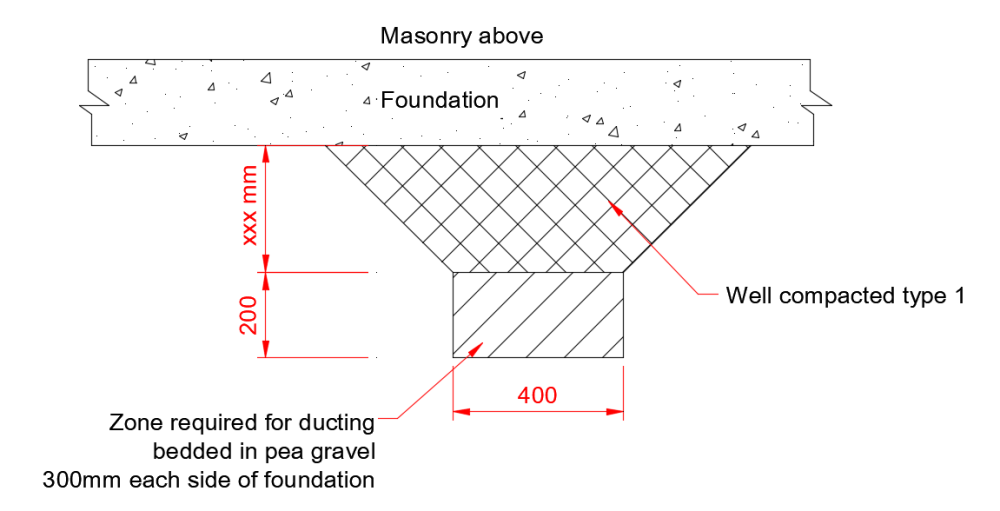
You could try sending them something like this, have sketched a couple of alternative cross sections, put your own dimensions on. Also mark on the plan drawing where the ducts cross the founds, hopefully not near the corner of the founds. The SE will maybe come back with a change in the bedding etc but they probably want to know where the soft spot will be from the ducts and how much the may need to bridge over. Pity they did not ask for the info sooner.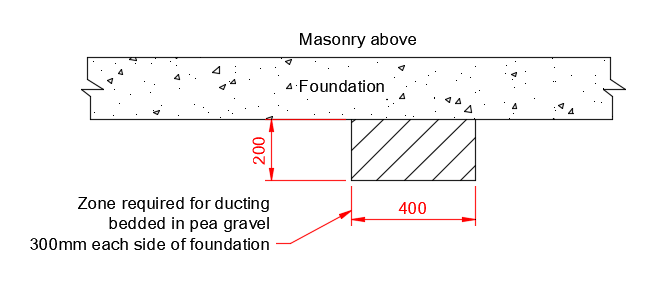
-
Where is the kWh price heading in 2022?
Gus Potter replied to epsilonGreedy's topic in General Self Build & DIY Discussion
But they are a nuclear armed state. The guy probably has not much less to loose personally. Yes the risk is small that this will escalate into the use of tactical nuclear weapons or an intentional realease of nuclear material into the atmosphere from one of Ukraine's reactors.. but it is not a hypothetical risk.. it is plausable.. would you gamble on 1:500 odds (year return period) .. say the same as dam failing over a small UK city? The consequences are severe. Much will depend on China, not just how much influence they have over Putin but most importantly how much influence they have over who they see as the inevitable successor to Putin. That is the a big picture. China will take this right to the edge and gain as much advantage as they can. I'm sure part of their calculation will be to weaken us in the west as much as they can economically, that way they will extract the most. Of course the Chinese regime are corrupt, their leaders are interested in their own personal wealth first and foremost. But what we don't know is how much risk and how far they are willing to go. Xi is up for "re election" .. he needs to play the strong man and has a bit of trouble at home. If you look at it issue in this way it may be worth a discussion? It may be that China offer Putin an exit.. like Idi Amin was offered and died of old age pretty much. That is one possible outcome that could go a long way towards stabalising the current situation. -
What counts as a medium or high end finish?
Gus Potter replied to smart51's topic in New House & Self Build Design
Spot on! For me good design starts with the structural fabric. Then what and how is the house to be used for, is resale value important, or do you want a forever house that you can adapt not just in terms of layout but to make it easy for you to change things as fashions and your taste changes over time. Structurally, if this is your forever home the medium / high end design takes into acount your future needs and what we don't know we don't know to some extent. The way to deal with this is to not push everything to the max in terms of structural design.. I'm not saying you over size everything.. you just make sure that you build in enough say sideways sway resistance to a building to let you take out some walls later and not put lots of point loads down onto a pad foundation that is just hanging in there. You can identify parts of the structure that are getting pushed, some founds may settle / shrink but still stay within the movement limit and be fine SE wise. But all that movement ends up somewhere and will manifest in your finishes, could be cracking, sticky doors / windows etc. Things you can do for example are if you have a bit open plan space is to incorporate shaddow gaps / reveals. This lets you redecorate small panels of wall in a room without doing the whole room, thus quickly over a weekend you can reinvigorate a space without having to change the whole space. That is designing for your own living not what a developer thinks you need.. medium / high end? If you design the fabric of the building to last and move less than say a "major developer house" then you can probably work it so that you can afford "high end" stuff at a medium end price and it will last, still function and look good. Unfortunately as Jilly alludes to, if you have no style then you need to do a bit of work on this aspect, it is a learnt skill to some extent so worth putting in the effort. This way you can get a lot more for less, it just takes time. -
Like it! Some pretty smart lazer cutting there in the webs. Can I be rude and ask what the brackets cost?
-
ICF and Foundation design
Gus Potter replied to Renegade105's topic in Insulated Concrete Formwork (ICF)
Happy to chip in with what I know. But I / BH folk need to know more about the ground before I / we could be of any real help on the nitty gritty. Funnily once you get a handle on it an insulated raft is pretty simple to design. We have been designing insulated raftes for many decades in the commercial sector so it's nothing new. With a good set of drawings you should be able to russle up a few quotes from contractors.. also approach the folk that do high end farm sheds.. they will also quote you. It's bread and butter stuff for them. Check them out on the farming forum, if they get the thumbs up from the farmers they have passed a test. -
Cool. Are the gallows brackets structural?
-
ICF and Foundation design
Gus Potter replied to Renegade105's topic in Insulated Concrete Formwork (ICF)
Hope this give you a few pointers and encourages further discussion on BH. Great to see folk posting about founds and so on as it's a big worry when you are trying to do a self build. Putting a price on the founds is like chasing cats. But how many stories is the house? and what is the construction? The bit that I'm looking at first is your pile depth. I think there is something else going on here. Ok could be worse. Have you had a good site investigation done? For all there are two kinds of generic site investigation report. The first is what we call a factual report. Here the Geotechnical Investigation company comes; maybe drills holes (could be a shell and auger rig, maybe window sampling, excavate trial pits, measure / monitor water levels, maybe some gas monotoring (if you are unlucky).. there are many "tests". A key one is to determine what is in the soil.. is it contaminated, is it acidic or alkalie. Is it going to shrink and swell? What they then do is report the facts only.Thus a factual report. The interpetive report means they (soil investigation company) take the findings of their tests and provide a more in depth report that tells you things like.. how much weight you can put on the soil and at what depth, how aggressive the ground is in terms of it attacking your concrete and the rebar in it. To get a good interpertive report the superstructure / piling SE needs to be involved early so they can tell the investigation team what you are thinking of building and where you may want to put load. This is the most efficient way of doing this. Yes it will cost you more in professional fees on the outset but not that much when you consider the savings that could be made and most importantly justified. But there is a difference in price here as if you provide an interpretive report as a site investigation company you carry much more liability, thus you need to charge more.. and often folk don't want to pay for that at an early stage.. they wait until their back is against the wall.. At some point the buck has to stop. I get factual goetechnical reports and have to interpret them. Thus I take on the liability and charge accordingly. If a Client has got an interpertive report then I can use these values directly and my fee goes down. Again for all. It is really difficult to compare piling costs in particular. Roughly it's common to think of piles as a vertical column that transfers the weight of your building down to something solid. But from time to time the piles are subject to other loads. Say you have 10m of really soft clay on hard rock and a two storey house on top. Now often you'll find that if you install say a 150mm dia pile and just socket it into the rock (200mm say) you can put a lot of load down it. The socket is often required as the rock will have a bit of a weathered surface / a few fractures due to ice ageing. All good until you realise that you need to stop the house from blowing sideways on a windy day. The pile will just move sideways as it pivots at the bottom and the clay etc up the side just compresses. To stop this happening you commonly make a series of flat portal frames (like B & Q roofs but just a but flatter). Here we make a stiff connection between the top of the pile and the ground beam. All of a sudden the ground beam is doing two things: acting as a beam to transfer the vertical loads to the piles and acting in conjunction with the piles to stop the building moving sideways. You can then see how the ground beam may need to increase in size. There is a balance to be struck here.. is it cheeper to make the ground beam much larger.. almost on first glance too large or do we increase the pile size and make the ground beam a bit smaller? Where lies the most economic design? Last but not least if you have clay that can shrink and swell. When it shrinks it can still grip the pile so the piles has to carry not just the load from the building but a bit of the "hanging on clay" When the clay swells is can really grip the pile and tends to lift it up. Often swelling is not uniform and this too can push the pile sideways. I hope the above give you a bit of insight into the "life of a pile"! @Renegade105 Post the info you have and know about the site. The trees.. often this can be mitigated and if you are talking about 19m piles then I think (guessing) this is not critical to the design. It may well be that the raft is an option but before you embark on this you need to know a lot about the soil, ground water flows, topography of the site etc. Also there are other options available, ground improvement and so on. Post the info you have.. you'll get plenty suggestions here on BH, can be helpfull if even to rule things out. -
Good to hear. You have quite a lot of options with a new roof. Existing roofs are a bit trickier as you invariably end up adding more load to the roof so you need to check this out SE wise. I have a warm flat roof on part of the house. Starting from the underside. Skimmed plasterboard, 195 x 45 timbers @ ~600 centres, 18mm timber sheeting, vapour barrier, 200mm of PIR, 18mm timber sheeting and then EPDM. Yes.. you can hear birds etc trundling about and heavy rain, but we have a roof lantern and like to hear the weather and wild life. This roof is over our living area.. would be different if over the bedrooms, worse if you live by the sea and have gulls waking you up at 3.00 am at times. Yes you can put an acoustic make up on the inside under the main joists. Problem is that if you have a lantern the roof thickness becomes even more of an issue. But you can also use a Sedum roof. That will act as a good cushion. You can make an allowance for a bit of extra load. As I have put an extra layer of sheeting directly under the EPDM I could also put some thin slabs on runners or stools on top of the EPDM.. less risk of a puncture, again this I think this would work well. We are plagued with slugs here so have an idea of putting some small plant pots etc up there for a bit of fun. Yes it may mean that you need a few extra timbers at closer centres. But the good thing about a warm roof is that you can do this without loosing performance due to repeating bridging of the joists, all the wood is on the warm side so it has no impact on the performance of the roof. The good thing about the above is that often you find that when you are interfacing a new roof with an existing house it ends up too high and you can't flash it in easily under the upstairs windows. Also, with a lantern you often need a 150mm kerb. If you put sedum or slabs on top you keep them back from the perimeter a bit so you still get the kerbs and flashings to work as you have not increased the roof thickness where you struggle for height. There is another benefit around putting stuff on top and setting it back a bit. It can soften the roof edge and help you not end up with fascia's and verges that look unpleasantly deep. Lastly you can also look at inverted roofs... these are more common on commercial stuff and can be tricky re drainage etc. Have a look maybe to just rule that option out.
-
Have had a look at page three.. oh happy memories Temp shows a bottom drained set up.. I think. Hey ho! Some may say.. "would you see it from a galloping horse?" I say.. get it wrong and you void the warranty on your sealed units and risk water ingress. I don't have a horse BTW so am talking..
-
You can use a thin 2.0mm plaster stop bead to create a shaddow gap. You let it all settle down shrink etc and then mastic to air seal if need be. Have done this on my own house but did the plastering myself as it is really time consuming to set up the bead acurately. Could not afford it otherwise. Have to say.. needed a bit of time off after (sore body) so hat off to @nod
-
I've had a look at page 4 of the posts, I think I should see some small cover plates on the vertical face on the outside of the window frame.. face drains. Page 4 at my end shows a bottom drained setup where the water runs out onto the sub cill and outwards. Am I having a "senior moment"
-
How would you finish round these windows?
Gus Potter replied to Barryscotland's topic in Brick & Block
@Barryscotland Barry that is looking good by the way. Have done something like this before. I would go for a 150 x 90 x 10 thk angle section galvanized. You angle cut top and botton and put on a 6.0mm thk plate at the top and bottom . It's a structural "by inspection" issue per it's the detailing. The main thing is to get the coursing right..that is the key so it looks good.. the rest is fairly simple but you need to make sure it is all tied back to the kit.. or it's dangerous. If you get stuck PM me. -
Until you find out they have made a complete bollocks of it, ask who foots the bill then? Yes Kingspan have a good U value calculator for basic calcs.. it's off line for now as getting tuned.
-
Good point ETC.. but those that do are few and far between.. and if they do they have often moved onto better things.
-
Hi Zoot. Seems like you are going great. Just had a look at the photo. Where are the drainage holes/ slots? ? Looks like you have a face drained window with no sub cill.. can you check, hopefully you are going to tell me I am blind or worse.
-
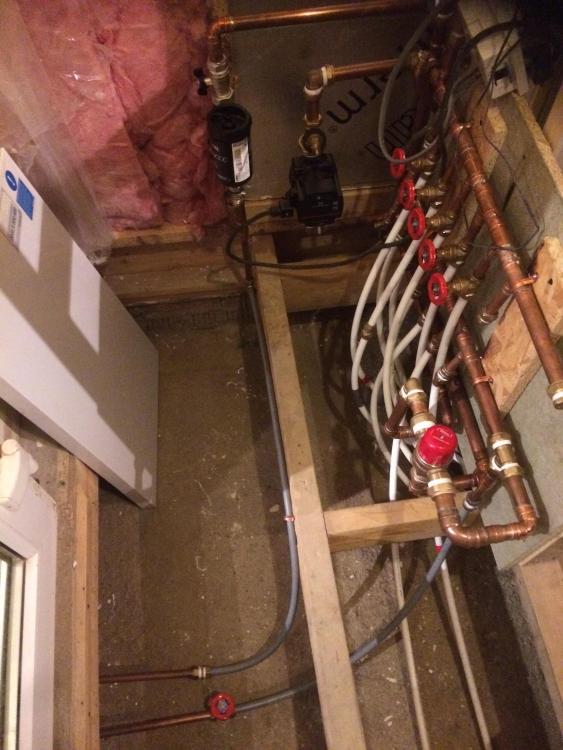
The close coupled tee is a good concept.. I experimented with this.. it worked for some of the time but not all the time. My rads have TRV's so things / flows were always changing.. or maybe I should stick to other stuff.. I probably know enough about plumbing to be dangerous! I made a home made manifold to test how I could couple an old council house up with a modern extension with UFH. It's working great so what luck! Photo uploaded
-
New build design & cost estimation opinions
Gus Potter replied to morgan_22's topic in Costing & Estimating
Well done to you both. The main thing it to also enjoy the journey! I wonder though about the layout of the kitchen living area and lobby. They say first impressions count. The first thing you'll see (and your guests coming for the great grub) when you come into the room from the lobby will be the kitchen and your cooking innovation / what you are up to. Also I think that they will see not least the narrowish space between the peninsula unit and the hob.. it could look like you are going into a small flat? You want the wow factor when you come in and that is the open living space and being able to see the fire place. Where you have the stair invites the eye..so take as much advantage of that as you can. I would look to create the impression of open space as soon as you come in the front door.. then tease with the staircase.. what else is up stairs??.. just how big is this place? Also remember that at say xmas the house could be full..where is the oven and where is door to open? Will an open oven door further restrict the kitchen activity space and pedestrain route to the ground floor wc ? Check the building regs for Kitchen activity spaces / accessibilty at this stage.. better to do this now. I can see you have got someway with the screen concept.. keep going. Have another go at the kitchen and living space. Things to think about are.. yes you don't want the front door open and a huge draft coming into the room.. but you can have walls that don't go all the way to the ceiling. This also lets you shine diffuse light over the top of them while still cutting out the big drafts. This can work both ways.. the living space could be dark with diffuse light coming over the top from the "lobby". It also means you can have kitchen units hidden behind. Walls can be solid but split with glass, again with careful choice you can invite the eye to appreciate the whole room as one space while still achieving the practical side of things. Don't get too hung up on the tree at the moment at that distance.. unless it was particularly large. Very roughly tree roots extend about the same distance as their height. Have a look on google earth and see how high it may have been. Much will also depend on your soil (not the stuff you grow potaoes in but the stuff under the top soil) type. You can do quite a lot on you own at the moment. trees put down deep roots (structural roots) locally so they don't blow down in the wind. They also send out other roots to gather nutriants and water. Dig a few holes in the garden just with a spade and look at the soil.. ask.. does it look like a good medium where roots will grow? Also look at the ground levels.. ask where would this tree have found water.. on my site or somewhere else. Trees are not "daft" the roots grow where water and nutients are easily avaliable.. this lets them save their energy for propagating. In terms of your structure. You have a good amount of solid walls so achieving overall structural stability looks reasonable doable cheeply. You'll probably need a transfer beam where the ground floor steps out it may just work as a beam alone as you have some return walls to stabalise the rear elevation. You have shown a ridge beam..good idea.. stick with this for now.. you may want to split it into three. If you do you'll need to take some point load down roughly where the hinges to the door to the master bedroom are. With a bit of finesse on regigging the lobby you could make this easy to do without resorting to unnecessary structural beams and complexity. Again the ridge beam concept lets you use say a simple cut timber roof, simple connections leaving plenty depth for cheep but effective insulation. -
Good news then on two counts. Getting approval and it looking more like a house than a garage! I love the different terminology as you move about the country. A really experienced Lanarkshire sparkie I used to work with vaguely pointed to a space in an attic conversion and said.. do you want the cable tray in the Camsile? Turned out it was the space behind the vertical soldiers (vertical struts also called the box member). Yes folk also use the term "cut roof" meaning the roof is cut from loose timbers.. a traditional roof Check this as it will depend on the the wind bracing you need, the loads and connections not just between the timber members but also between them and the rest of the structure. The prefabricated truss manufacturer's tends to stay away from this part of the design... the stability system and load transfer to the structure below. You may actually find your stick roof is the most cost effective option. Would be interested to see your plans also.
-
Wow.. these show a really fast results.. you are lucky.. but did you check if they are too fast? From memory there is an upper limit in the BRE design guide. Will stand corrected though.
-
Protection of ICF blocks in foundations
Gus Potter replied to Joey's topic in Insulated Concrete Formwork (ICF)
It's not easy! Starting at the end.. with the render.. you may want a bell cast bead at the base of the render. It needs a sound base. A big thing is for me is that it all looks great on a generic detail along wall detail but how do you detail the door thresholds? Can you later alter the building easily.. add an extension? Do you care? I don't think you need a water proof concrete, no basement and your internal floor slab is isolated with DPC / DPM. If you are really wanting to go ICF then consider an engineering brick course say up the outside, it you want a clean detail at basecourse level.. they do look smart in the right place. Stop the slab short and take extra insulation down on the inside. I know you are seeking the perfect solution but always ask.. at what cost and how durable will it be. Once you get a handle on this do you do a trade off.. I would look at putting more easily installed thicker insulation elsewhere and accept I may fall a bit short in other places. Remember you could have the perfect insulation design, avoid cold bridging.. but if your trades persons can't make a good job of it then it is not just false economy for you but also bad for the environment. Lastly ICF.. there is a time and a place for this.. I support the concept and understand how you reinforce the concrete, detail the corners rebar wise say / openings and design a raft found if need be and so on.. frankly folks this ICF stuff is nothing that new, it boils down to the fact that we are using insulation as shuttering (yes we have some cute wall tiea) and using insulated raft technology that has been proven for the last 50 years.. For insulated rafts the calculations are a bit longer.. it is about two lines of sums and one short written paragraph of explanation of how you have derived the values. You compare the different elasticity of the EPS insulation at a certain compression (usually 10% and convert that down to say 1 -2% and derive a bearing capacity from that) cf say clay or sand soil.. I am not kidding you! And folk think this is magic.. it's not.. it's basic first principles. An experienced Contractor say @saveasteadingthat has done tens of thousand of square metres of insulated floors will tell you what works and what does not.. we can use these same principles for our houses and that will drive the cost down.. we just need to convince say the NHBC and BC that it does work. The theory is internationally well understood. The problem is getting it to the mass market in the UK and knowing when it is the right solution for the self build market at this point in time. And that is the current issue.. unless you are building a very big house not in Scotland or Wales then the economics don't stack up? And after that rant @Joey is ICF your thing? Gus -
Spot on.. Yes it is an inner city garden but there is often no need for panic. If neighbours get together and are of like mind then you can do a lot and not trash your founds or patio. My neighbour over the road has just astroturfed their back garden.. and the number of jobs I'm starting to see where they have done this.. is not good when you take in aggregate.
-
Have a look at the design. It may be that althought the wall is not carrying vertical load it is carrying horizontal load from say the wind blowing on the outside walls? Best thing you can do is to provide more info to get a more defined answer.
-
These are some really good questions. Yes you'll read a lot about trees, their roots and also some horror stories. In some ways.. I think that there may be two issues here. One is that your neighbour has planted a tree that could overshaddow say your garden when it grows without thinking of the consequences. Folk do this.. they like a kind of tree and don't realise how it can impact on their neighbours. Also the hedge.. For you, your first step maybe is to maybe think about how simplistically trees grow, large shrubs are different a bit . Trees that grow big (tall) need some deep roots, they stop them blowing over in the wind. They have other roots that gather nutrients and water and these are close to the surface and spread a long way. They follow the path where they can expand and are close to the surface.. hence why you see these roots under your slabs.. you may have a nice bit of sand bed that encourages the roots to spread, there will also be some very fine roots. The funny thing is that as you have slabs the roots have no competition from weeds and other plants.. you can't blame the tree for taking advantage of this. These secondary and tertiary roots seek out nutriants. To get a handle on this identify the type of tree. Decide if you like it, could be a say a cherry / hornbeam that flowers and looks great / stunning! Could add to you enjoyment of your garden even if not in your ground. If you try and understand how the tree grows, the kind of soil you have and where you live ( Kent or Shetland diiferent rainfall) then you may be in a much better place to manage not just the tree but your neighbours! Now the laurels are a bit different! They are not that fast gowing but they are sturdy! I think. Again though your best approach is to start with understanding the ground and one tree. Engage with your neighbours. You could say.. what do we need these trees for. Do you want privacy? But I too want privacy.. but don't want my house damaged! I may come over as a bit soft here but what you are doing is to establish the facts and groundwork should this escalate into a dispute that you need to involve say an SE. It could be a case of stick and carrot here. The best way is to use persuasion. if that does not work then further persuasion with a hint that you may hold a big stick!
-
Hi Barry. Attached is bit of one of my right in the background working spread sheets that I use from time to time to get a handle on how this works. It does not come out that well, some of parts of the graphs are on different pages and so on and also I don't want to give away too much of my IP. Tommy is the guy who dug the test holes. You'll probably clock that there is a bit work that that goes on behind the scenes and that is why I attach. They won't suit your site but I adapt my calcs and design philosophy on a site to site basis.. and tweak the spread sheets.. yes you can get software to do this but I like from time to time to use firstish principles and adapt to the geology of the site rather than just saying.. the computer says no. Yes you are right.. partly. Yes give this a go, nothing to lose. For folk to help on BH we need to know a lot more about the profile of your site, where you are.. assume you are in Scotland (use of burn rather than stream) then give us some local clues! I would say to you.. don't focus on the calcs at this stage.. look at your ground, the topography, get a feel for it and rely on your common sense.. will serve you well. Clay soils do not drain well generally.. but there are ways around this if you have a bit of room to play with. Check this first.. has he worked a flanker or is this ok? Tell us what you know of the burn.. what do know about it? does it run almost dry in summer? here we want to know dry weather flow as does SEPA. Also if you are say located near some parts of the central belt / Perth catchment area for example they have a big problem with flooding as they have build schemes of houses in "flood planes" .. we need to know about this. Once you get your head around this often a good solution jumps out. But you'll need to do the work first. Then you do the calcs to prove to BC etc you were right all along.. oh the satisfaction! Hope this helps. Rain water calcs prelim.pdf
-
It is indeed. @pocster.. thanks for the response.. it took me a bit of time to write that while trying not to sound too much like an.. @pocstercan fill in the expletives.. I maybe failed as concrete lintels are not that sexy.. The thing I like is that there are folk here on BH that have forgotten more than I know an don't mind sharing their knowledge and experience.



