PeterW
-
Posts
18480 -
Joined
-
Days Won
207
Everything posted by PeterW
-

Worth digging more than 200mm under floor joists?
PeterW replied to House man's topic in Introduce Yourself
Why are you using joists and not backfilling with hardcore, insulation and screed ..? Do you need a ventilated underfloor due to ground conditions ..? Could you use an insulated beam and block rather than timber ..? @House man no point in excavating now any deeper to give access as the founds won’t have been designed to resist the lateral loading but it would be good to get the questions above answered. -
Depending on what’s wired / not in the house either Tenda Nova mesh using mains sockets for power or TP-Link Omada on PoE are good choices.
-
Is this a rental ..? If so, board an area about 6ft square around the hatch, strengthen with 6x2 if needed and just overlay the rest with 200mm loft roll both ways. Then tell the tenants there is no storage other than the small boarded area and leave it or even put a lock on the hatch. They have a habit of leaving yoh all their junk otherwise !
-
What stops water getting into the end of these ..??
-
But light doesn’t go round corners - air does … blocks are inherently leaky - stick a hoover nozzle on one and see what I mean. Blower paint on perps is like sticking a padlock on a paper bag .. by the time you’ve done the perps with a paint brush you could have done the whole wall with a broom and a parge coat.
-
Foam them then trim back and fill with a couple of layers of mortar / render / plaster where appropriate.
-
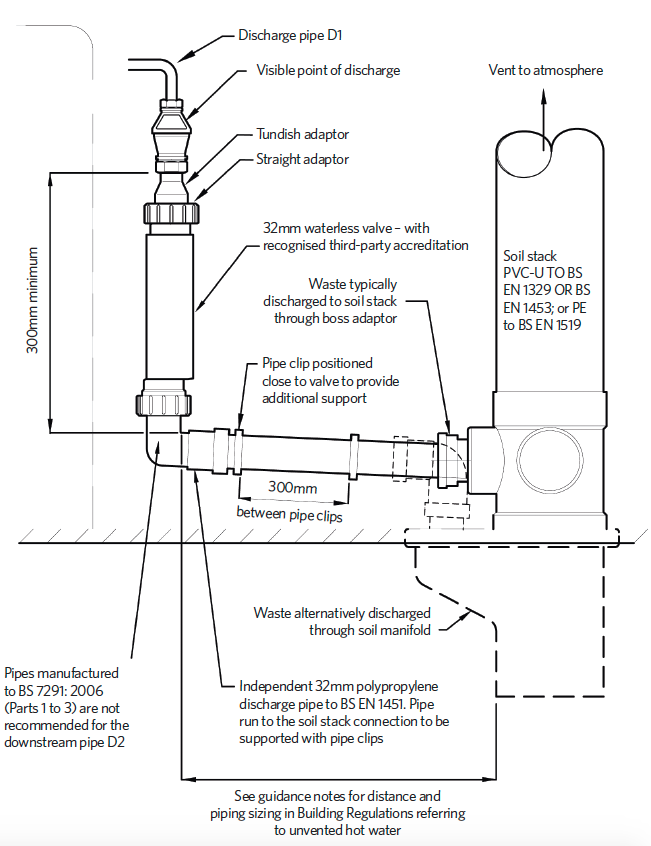
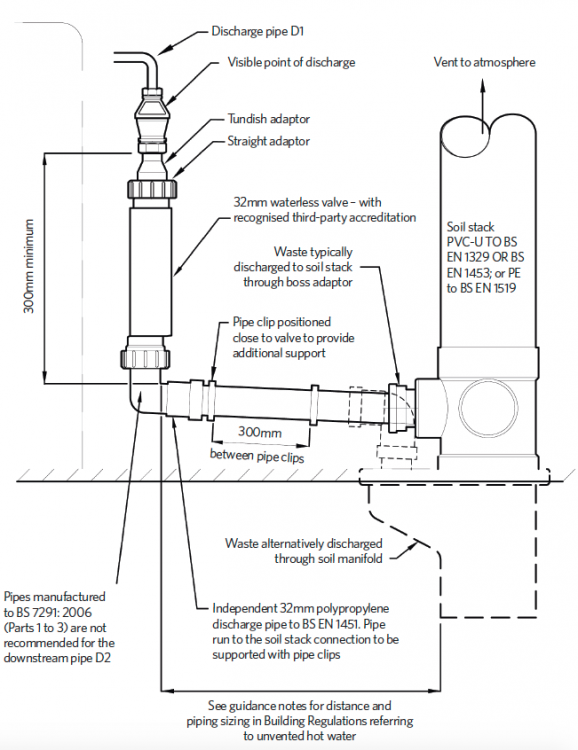
Yes … if it goes through the wall then it has to be copper. If it goes to an internal / tundish arrangement then there are various rules including the lengths and type of pipework. Those BS/EN standards are not on all pipes. They don’t apply to a lot of standard polyethylene pipework.
-
Yes that is ok but you need to run into the correct pipework as standard polyethylene waste pipe does not meet the standard required under G3.
-
sorry read that as in the gaps between.! Got a photo..??
-
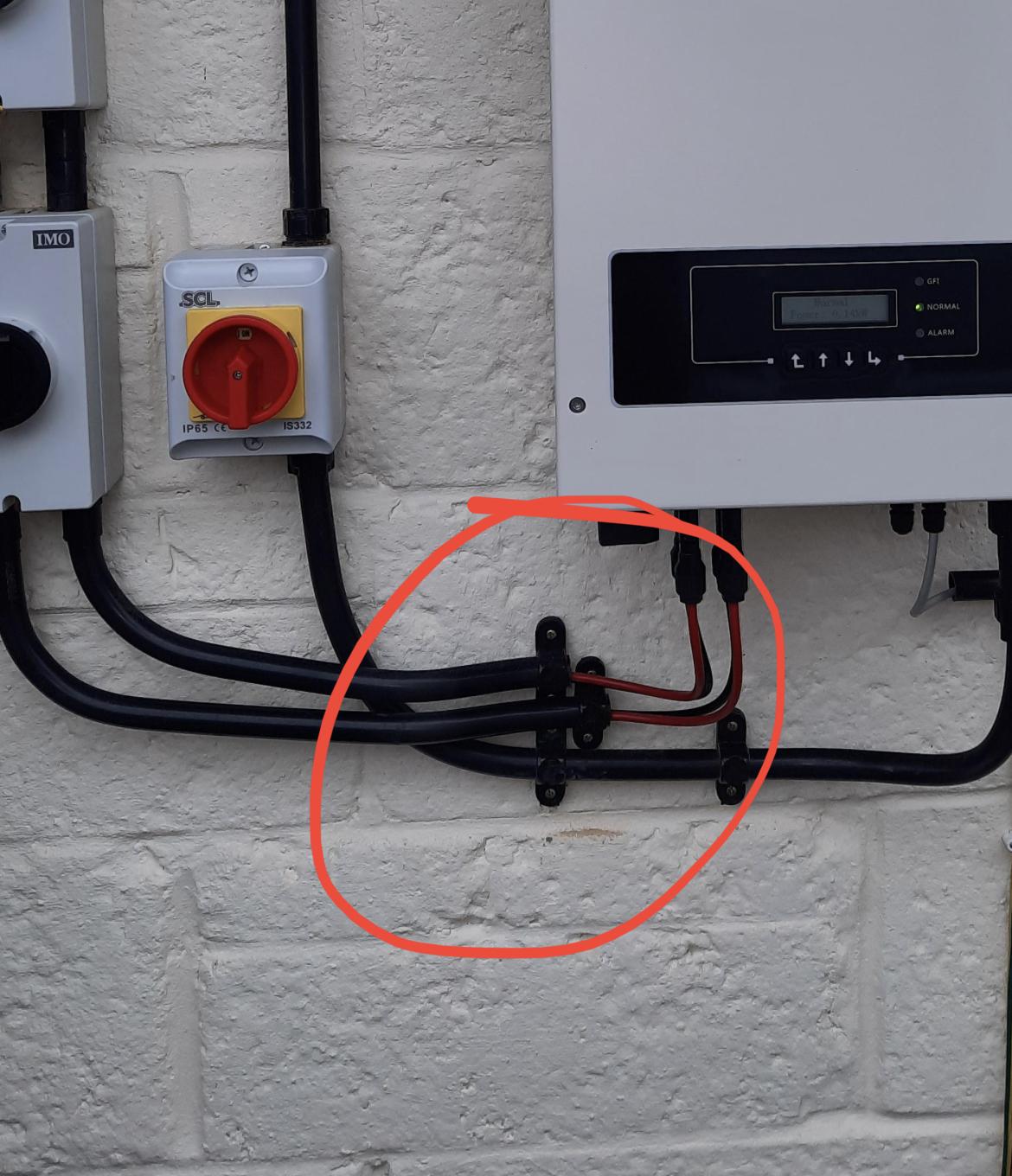
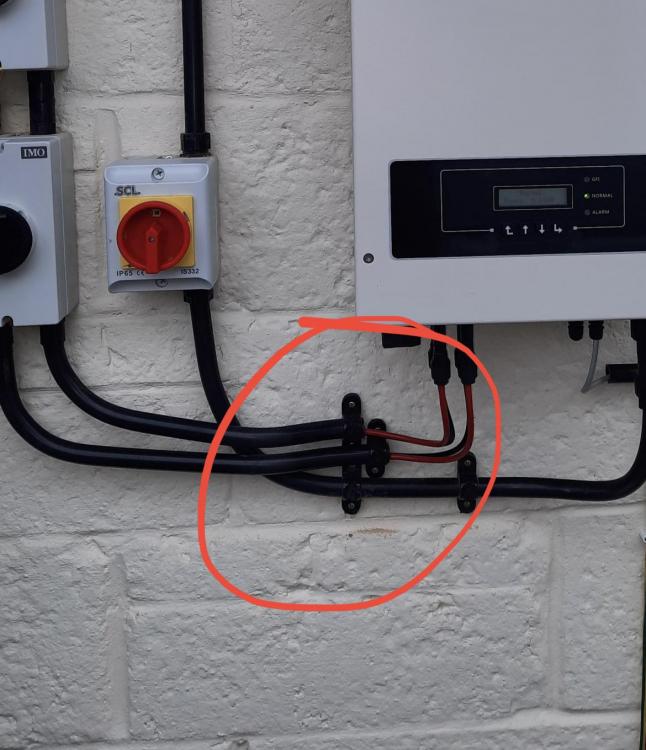
It is the pressure relief blow off and must be made of copper or a similar material and must go to an outside wall. Thermal bridge is negligible - it’s also sealed into the end of a valve on the boiler so no air flow.
-
Sand and cement parge coat then..? Could also use bonding as well. Or do you want something semi flexible ..??
-
Do they state that ..? Or does it say should not be bonded to a chipboard deck but laid floating ..? Just adding a 2-3mm skim of SLC won’t really help you so I would think carefully and possibly post a copy of the MIs here.
-
Because I very much doubt you’ll get a SEng to agree to balance the end of a 2.3m long lintel plus the hip rafter load onto a single skin block wall that has no lateral restraint by any sort of return blockwork 300mm return would broadly be a full block return with the overlap of the internal block skin which is the real minimum I would accept with a roof load and that size opening. You need to speak to your engineer and get their view though as they may want a steel portal around the whole opening.
-
Will require planning / NMA As much as is needed for the bearing of the lintel by the engineer - but I would want internal 300mm
-
@ProDave Nice link here https://beadmaster.co.uk
-
The sand you use will change the colour. You may need to find a silver sand and mix that in part to the overall blend to get something whiter.
-
@Conor you can do what you want to do but with some extra points to make. - insulate the flow and return on all pipes to and from the manifolds. - fit NRVs on the returns and also fit the pump on the return leg where possible. - TMVs need to have full flow available from the heat source, suggest 28mm min - fit flow meters on the flow to the overall manifold to balance per manifold. - fit decent pumps ..! The head comment from the plumber isn’t entirely correct as these are circulation pumps and they rely on the flow of water in a circuit and the falling water coming from the manifold will assist but if you were really desperate you could put a pair on the highest manifold (one flow and one return)
-
That is quite an underestimate of the time to do a full heat loss calculation. You need to understand every room, every structural element and all unheated spaces and then the materials used. Whilst they have this (assuming all is CAD) there are limited M&E tools that can auto import a full layered CAD system to do this out of the box. Given most plumbers still use Mears calculators it’s not exactly a science and a lot more of an art… https://mhmear.co.uk/product/first-principles-domestic-central-heating-calculator/
-
The lockshield is open too far on the rads. Working from the closest to the boiler, close them all and then open first by one half turn, second by 1 full turn and third by 1 1/2 turns. Now push all the thermostatic valves to 5 and trigger the heat source. Then see what the heat is like. You can adjust them from that point but it should balance properly from that.
-
Use a sand / cement parge coat on the blockwork first ..? Then you’ve got options.
-
150mm of PIR is fine - but as everyone else is saying, why not dig down further ..? If you go with 150mm of beads why don’t you also go with 25mm of PIR inside the walls too which gives you a decent level and also adds a space for wiring etc
-
So speak to your BCO now. To meet D2 you need to have hard wired connections between all smoke alarms. Fishing out a new link wire is not easy when your ceilings are up.
-
This stuff is very good for insulating stuff such as beams and posts etc which a steel framed barn has a lot of.
-
it is wired to the circuit using 3 core and when you press a button it sends a pulse to the Aico alarms that they interpret. Very nice and simple bit of kit and useful for silencing alarms that are out of reach !
-
Only if they have smoke seals on them. Better way may be a slightly wider recess and put a bubble seal in the face of the recess.