Ian
-
Posts
751 -
Joined
-
Last visited
-
Days Won
3
Everything posted by Ian
-
Where are all the SIPs suppliers???
Ian replied to hmpmarketing's topic in Structural Insulated Panels (SIPs)
I agree that its would be 'possible' however it would be a really bad idea to render directly onto the outside surface of any SIPS system or timber frame wall construction, even ones faced with a cement based board. It's a much better idea in the wet climate that we have here in the UK to use a rainscreen in front of the SIPS. The rainscreen should create a ventilated cavity between the SIPS and the rainscreen layer. In British Columbia, Canada between 1985 and 2000 approx 50% of all buildings that were rendered directly onto timber framed external walls have subsequently failed. The repair costs exceed $4 billion. They subsequently altered their building codes to make rainscreen construction mandatory for timber bulidings. Google link: https://en.wikipedia.org/wiki/Leaky_condo_crisis -
@lizzie When I was nearing the end of my build I was in a similar situation to you. About 2 months from completion I found I was able to get normal house insurance even though I didn’t yet have a Building Regs completion certificate. Damage etc to the building etc caused by “construction work” was excluded so it may not suit your own situation but all I had left was low risk work. I went through an insurance broker and the cost was £185 for a years cover. Let me know if you want me to PM their details to you. Ian
-
If you want to add any further insulation underneath your completed roof it will be critically important that you install a complete VCL layer on the warmest side. Any area where the VCL is compromised will lead to a major condensation risk - the warm moist air will get through any gaps in the VCL and condense on the OSB underside of your completed roof build-up. EDIT I did a quick (Glaser type not WUFI) condensation risk analysis and using the software's default temperature and humidity settings (internal 20 degC and RH 50% and external -5 degC and 80%) it showed that you 'should' be okay adding up to 100mm of mineral wool below your completed roof build up without an extra VCL but anything more than that produces a risk of condensation. If I then alter the values of the internal temperature and RH to 22 degC and 60% RH to make them more onerous (eg above a bathroom) then it shows damaging levels of condensation.
-
Q: What's in a name? A: £100-£50
Ian commented on curlewhouse's blog entry in Sips and stones may break my bones...
for us it was a free service from Flintshire Council in N Wales and they did the liaison with the Royal Mail -
There's no minimum depth as far as I know however you'd need to check with your BCO. If it's very shallow they may want you to surround the drain in concrete with movement joints at each pipe joint
-
What constitutes the START as regards to Building Regs?
Ian replied to Ed_MK's topic in Building Regulations
@Ed_MK clearing bushes and trees like you’re doing doesn’t constitute a start to building work but starting to do the site strip & foundation trenches would definitely be seen as a start. Building Regs - I see you’re based in England (the system in Scotland is very different). If you want to use an Approved Inspector rather than the local authority equivalent then they will need to be formally appointed by you at least 1 week before you make a start as they in turn need to give 1 weeks notice to the LA. If you don’t then the LA Building Control dept have the right to step in and you’ll be forced to use them instead of your Approved Inspector. I work as an architect and in practice, I’ve found that Approved Inspectors no longer rigidly differentiate between the Building Notice procedure that @JSHarris mentioned and a Full Plans Application, however the shorter the notice period the more certain you need to be that the basics of your proposal will be compliant with the Regs. The more notice you can give the inspector the more chance there will be for any potential problems to be picked up before it’s too late. -
@drb5374 I agree with @Ferdinand that employing a Planning Consultant would be a good idea. Even though I’m an architect I employed one on my own build and we got the PP we were hoping for, even though we had to go to appeal. We definitely wouldn’t have got it without the consultant and he wasn’t expensive.
-
The appeal itself is free but getting ready for one costs if you’re using a consultant
-
Not that I know of but there's only a few major manufacturers of PIR board so it's quite easy to check for example the Celotex equivalent of Kingspan K7.
-
@recoveringacademic All he means by the word "equivalent" is a similar type of PIR board with a thermal conductivity rating at least as good as the K7. The most important equivalency you need is the thermal conductivity rating because if you swop it for something with lower performance it will affect your 'U' values and therefore the SAP rating.
-
Pushing the boundary of temporary habitation.
Ian replied to epsilonGreedy's topic in Building Regulations
Up until 2012 Building Regs completion certificates were not issued as a matter of course. You actually had to formally request that the Inspector issue one. Since 2012 they have been issued as standard procedure but you would need to let the Inspector know that you were ready for a final inspection. The main reason that it’s important to get the completion certificate is because in the future if you want to sell the house the buyers solicitor would normally want to see it. I’ve come across cases where the lack of a completion certificate on an extension to a house has meant that when the owner wanted to sell up, the value of the house was downgraded by the cost of demolishing and rebuilding the extension. -
Nick obviously has Cockney roots. Bobby Moore = “Score”
-
@Rossek9 our build was a small 71sqm 2 bed bungalow on a site with a 1:8 slope. Overall finished cost was £1,350 per sqm. Averaged U values of 0.15 for walls roof and floor + 3G windows. The cost to get from a bare hillside to a weather tight shell inc roof finish, external wall cladding and windows installed was £675 per sqm.
-
@Onoff There are cheaper options which avoid the need for a screen by sending the picture to your smartphone or laptop/tablet eg: https://www.amazon.co.uk/dp/B077ZLCNMK/ref=sspa_dk_detail_0?psc=1&pd_rd_i=B077ZLCNMK&pd_rd_wg=P8Nit&pd_rd_r=9ZYCVCMS81ZE3PMB2PR6&pd_rd_w=2kEdB
-
Good point! The trouble with trying to pick up something new in a short time period like 3 months is that you don't know what you don't know! Donald Rumsfeld said it very well: "There are known knowns. These are things we know that we know. There are known unknowns. That is to say, there are things that we know we don't know. But there are also unknown unknowns. There are things we don't know we don't know."
-
Ballpark cost for single skin reclaimed bricks
Ian replied to divorcingjack's topic in Bricklaying, Blockwork & Mortar
Normally the cavity between the timber frame and any external weather skin such as your brickwork should be ventilated top & bottom of the wall so I don't see the point in paying for thermally efficient wall ties. The standard SS ones will do. -
Per m2 cost discrepancies, enthusiasts v. national figures.
Ian replied to epsilonGreedy's topic in Costing & Estimating
As a general rule larger houses will cost less to build per m2 of floor space than small houses and 2 storey houses will cost less per m2 than single storey. A regular box shape will be cheaper than something that is T shaped etc. There's so many variables that it's difficult to generalise about cost per m2. The other thing to be careful about is making sure that you are comparing like for like. Normally cost per m2 should be related to internal floor area (so not counting the thickness of the external walls). My own build was a small 71m2 two bed bungalow with a long and thin shape because we were building along the gradient of a 1:8 slope. The site also had difficult access (1 km up a steep 1:5 single track narrow road). It cost £1,350 M2 with a variety of contractors doing the work. The only work I did myself was the architectural design and detailing, project management inc Bldg Regs submission etc, painting and decorating. -
It’s much better to start talking to timber frame companies and to also sort out your M&E before making a submission for your Building Warrant.
-
@soapstar Regarding Building Regs there are major procedural differences between Scotland and England/Wales in the way the system works. In England & Wales the Building Inspector system was privatised over a decade ago and you can use private “Approved Inspectors” and you’re allowed to start work on site with only minimal prior drawing/spec information after just a 1 week formal notification period. Scotland has kept the system of Local Authority building control inspectors and normally they insist on fully agreeing your proposals before a start can be made on site. In practice it usually makes the system in England & Wales quicker and more flexible however the flip side of this is that you carry more risk if you don’t know what you’re doing.
-
@sam if you do decide to replace the concrete area of floor make sure when you do the work to allow for a continuation of air flow through the area with the suspended floor. The reason suspended timber floors have air brick ventilators front and back of the house is that the moving air helps remove any risk of dry rot developing in the underfloor timbers
-
Together with an appropriate threshold strip this type of automatically self operating acoustic drop down seal should work http://www.buildtec.ie/acoustic-door-bottom-seal There are various companies who make them. The mechanism is purely mechanically self operated (no power needed)
-
Except of course that Asbestos won’t burn no matter how hard you try. It’s one of the many reasons it was so popular and used in such vast quantities in buildings. There are plenty of countries that are still using it in fact.
-
2000 is the year to use. Asbestos was finally banned in the UK in 1999 but some may have been left in stockists so it’s safer to use the year 2000 as the safe date for new building construction.
-
I agree that the slate grey would look great. The usual reason for choosing white in a location like yours is to maximise light reflection. Do you have many windows where the light would important?
-
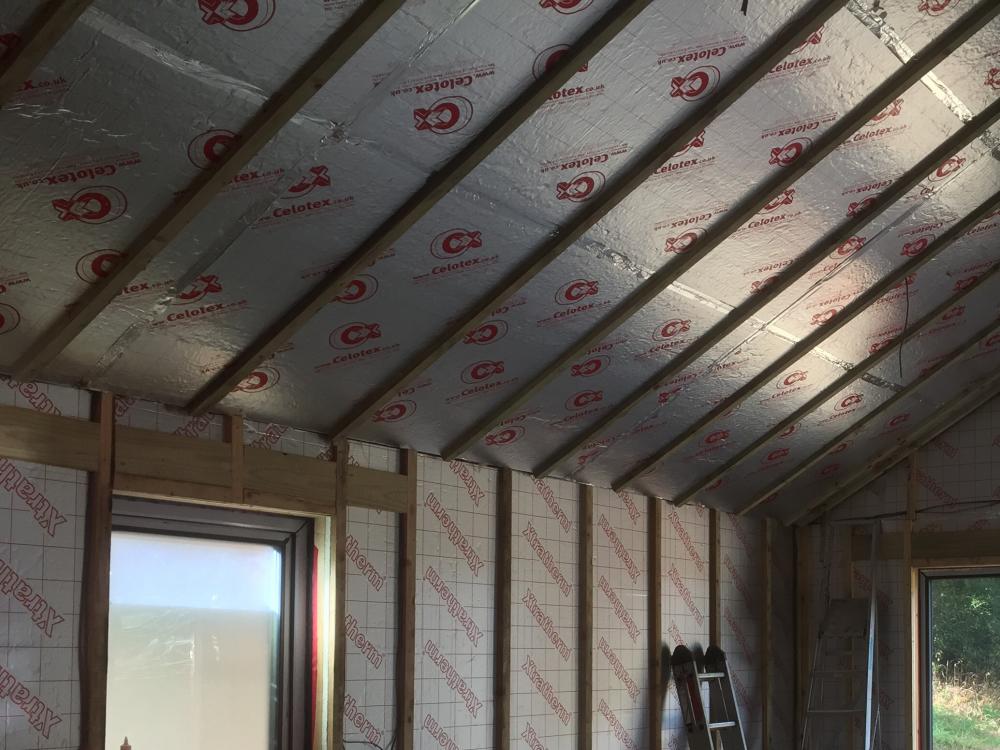
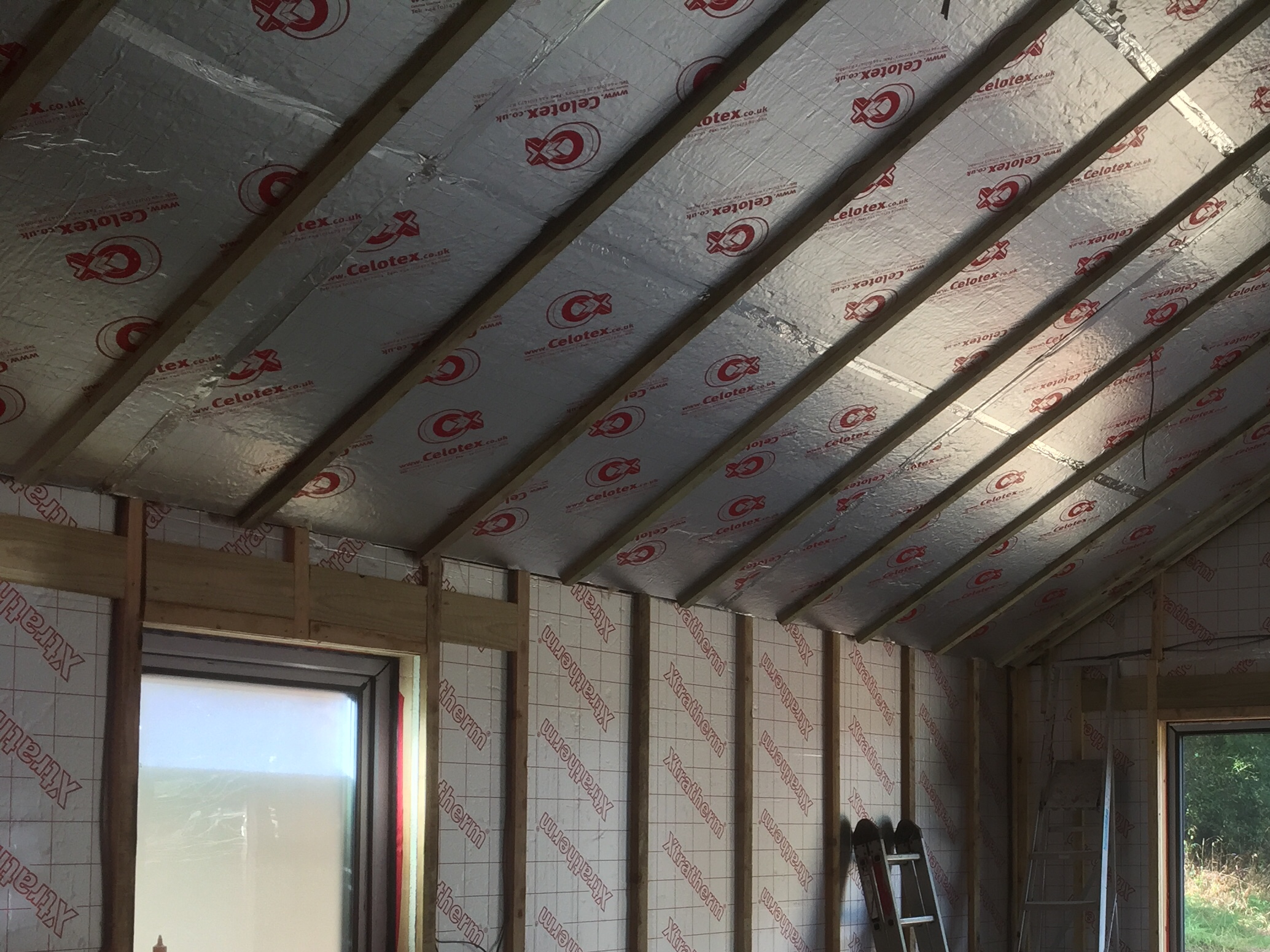
@pocster Isn’t this the usual way of doing it: insulation between rafters and wall studs then continuous layer of PIR over the face then battens to create a wiring zone.