Ian
-
Posts
751 -
Joined
-
Last visited
-
Days Won
3
Everything posted by Ian
-
@Ed_MK no, there’s no down side to using a locally based Approved Inspector instead of the LABC. Prices will be the same or cheaper Comms will usually be better too as will timescales for responses etc
- 36 replies
-
- 1
-

-
- planning permission
- planning conditions
- (and 2 more)
-
Have you already paid the LA Building Control? If not then I’d talk to some local Approved Inspectors to see if you are still able to go with them instead of the LA. You’ll find that they will be much more accommodating.
-
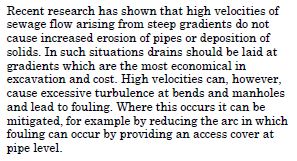
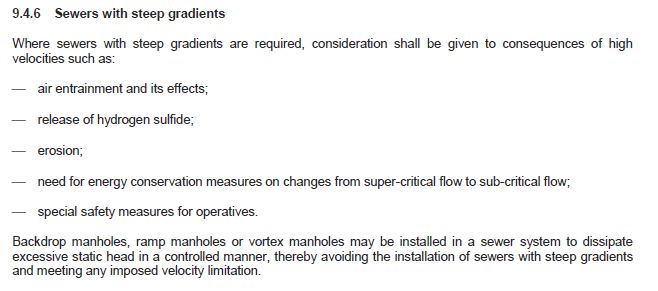
There's no restrictions in either the Building Regs or in the British Standards regarding how steep a fall you can lay a foul drain at (apart from the restrictions governing minimum gradients) Some relevant extracts: First extract is from BS8301:1985 Code of Practice for Building Drainage (now superceded) Second extract is from BS EN 752:2008 Drain & Sewer Systems outside Buildings
-
The best time to do ground works is always when it’s dry weather (summer would be good) especially if your subsoil is clay based. It can turn into a sticky quagmire when you put machines onto wet clay. The engineer will design the foundations in a way which prevents heave - eg to a certain minimum depth and lining the trenches with a slip membrane/board to stop the clay grabbing the concrete. They will also need to consider proximity of any trees to your foundations.
-
@epsilonGreedy the real answer would be that it depends on the type of ground eg: clay - the engineer would typically worry about heave peat - the engineer would worry about settlement, especially differential settlement between the building and the drain connections as they enter the building. In the case of larger steel frame buildings they can also worry about wind uplift forces. I once designed a 100,000 sq. ft. factory with a shallow pitch metal roof where the engineer sized the concrete pad foundations by weight to resist wind uplift loads acting on the roof
-
Insulating to Min Building Regs
Ian replied to Ian's topic in Energy Efficient & Sustainable Design Concepts
@gravelld yes, I think you’ve missed something: the 10 m3/hr/m2 figure is the absolute minimum backstop figure for airtightness in the Part L Approved Document. If you just met all the various backstop figures in Part L then you would have no chance of meeting the minimum overall standard. SAP is effectively a complex spreadsheet where all the key building design inputs interact with each other to allow a flexible approach to design although there are also minimum backstop values that you need to meet for any single element. -
Foundation Cost and requirements - is BC being too picky
Ian replied to hmpmarketing's topic in Foundations
@hmpmarketing The best guide I've seen online is available as a free download here: http://www.ecomobilehomes.com/planning/ It will tell you all you need to know -
Insulating to Min Building Regs
Ian replied to Ian's topic in Energy Efficient & Sustainable Design Concepts
Here's a page from the NHBC's guidance in how to achieve minimum compliance with the Welsh Part L regs. They do examples for 5 differing types of house from mid terrace to large detached. Most forum users will know how the SAP calculation works but for those who don't the various elements in the suggestions in the table can be altered. For example you could decrease the thermal insulation of a wall as long as you increase the value of one of the other elements in the table. Comparing my own build to this table it would have come under option 3 as I didn't have MVHR or renewables.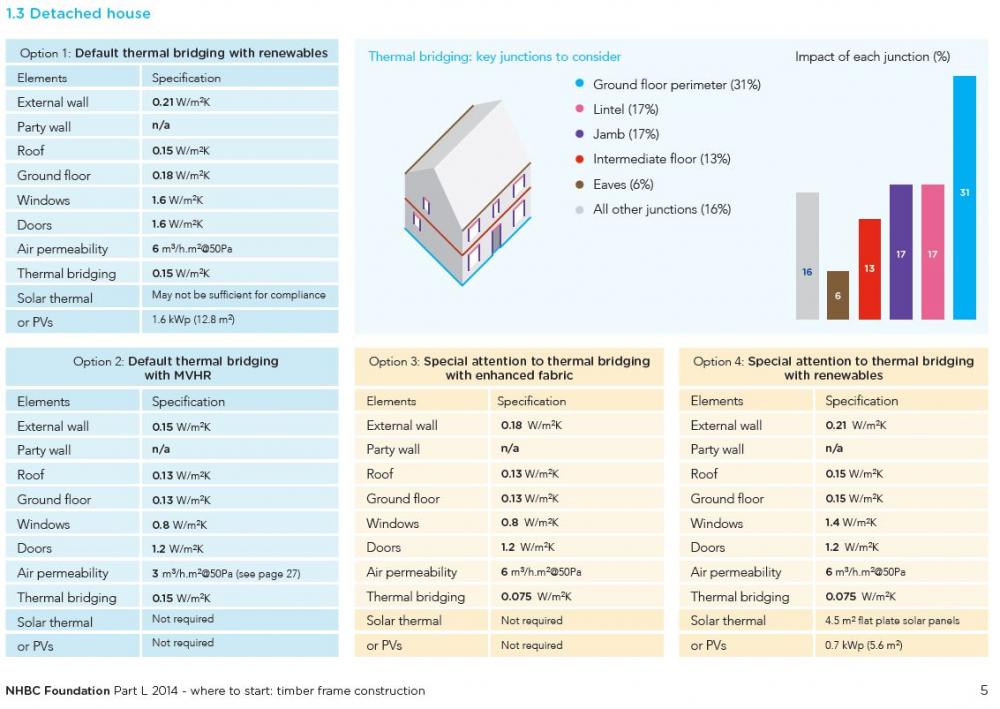
-
+1 my thoughts exactly! That video by @Yzzy is like a scene from a horror movie. It needs viewing full screen to get the full effect!
-
@joe90 You could have a look to see if any of the movement joints designed for vinyl or tiled floors would be suitable for what you want: http://www.schluter.co.uk/movement_joints.aspx
-
that video of the stuff growing down the wall looks very much like tree or plant roots rather than rot. Is that the room located below the failed roof area? The separate photo you posted of the skirting board is rot of some kind but it's not possible to say what type.
-
Insulating to Min Building Regs
Ian replied to Ian's topic in Energy Efficient & Sustainable Design Concepts
@JSHarris Good point about the inaccuracies of SAP for low energy buildings. The one that made me smile is the EPC where it makes recommendations for improving the energy performance of the building. Here's the list which is supposed to be implemented in the same order as on the list: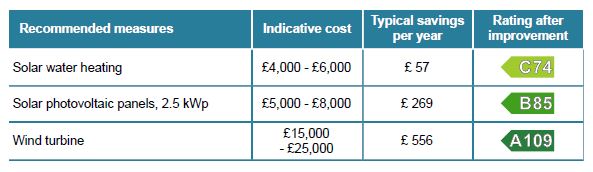
-
Insulating to Min Building Regs
Ian replied to Ian's topic in Energy Efficient & Sustainable Design Concepts
Gas Costs: We have no mains gas where the holiday home is located so the main choices are bulk LPG or oil. I went for LPG as the location is very remote with no immediate neighbours and I didn't want to arrive there one weekend to find all the oil had been nicked. I did try to get Planning Permission for PV but was refused. The guage on a bulk LPG tank is not a very precise way of measuring things but it's looking like we are using around 3,400 kWh of gas a year for heating, hot water and cooking(about 485 litres of LPG). The LPG cost was 30p per litre so that's an annual cost of £145 + the standing charge of £60. (At home where I have mains gas it costs 2.6p per kWh and 3,400 kWh would have been a cost of £88.40 which better puts things into context). Electric Costs: Our annual usage is 1,300 kWh. I worked out that it's cheaper to be on a tariff with no standing charge but pay slightly more per kWh. At a rate of 16.2 p per kWh the total annual cost is £210 per year. Water: We have a metered mains supply with Welsh Water (who are brilliant btw!) but no mains drainage. (I have a Biopure 1 sewage treatment plant the same as @JSHarris ) Total water cost including standing charge is £50 per year -
Thanks for the link which is helpful. On the basis of the info in that link being correct (I haven't read the contract itself) then I think it would be very difficult if not impossible to impose LADs. Even in contracts where LADs are specifically mentioned they are difficult to impose on a contractor as there are 'get-out' clauses for the contractor which would allow him to claim for an extension of time eg (1)weather; (2) lack of timely information/drawing provision by you or the architect; (3) you changing your mind about anything to do with the design during the contract period etc.
-
@DundeeDancer I'm not familiar with that particular form of contract. Does it specifically allow for LADs to be claimed if the builder fails to complete the work on time? On other forms of JCT contract that I've used the LADs would only be claimable once the architect has issued a certificate of non completion and there are time limits that come into play.
-
Insulating to Min Building Regs
Ian replied to Ian's topic in Energy Efficient & Sustainable Design Concepts
with the building being a holiday home that is mainly used at weekends it's difficult to compare actual figures to the ones in the SAP. We are into our second winter of heating now and a 1200 litre tank full of LPG (approx 8,400 kWh) is definitely going to last more than 2 years with the LPG being used for heating and all hot water (edit: and also cooking). The u/floor heating is on all year 24/7 at a minimum 'frost' setting of 12 degC and then I boost it to 19 degC via the Hive app if I know we are going to be there at the weekend. Once it's at the higher temperature for the weekend it then takes several days before it settles back to the frost setting of 12 degrees. In winter f it's at 19 degrees on a Saturday morning and 0 degrees outside temp and I then turn the thermostat back to 12 it would typically be Tuesday morning before the heating turned itself on again to the frost setting.. -
Carbon Air Filter
Ian replied to MikeGrahamT21's topic in Mechanical Ventilation with Heat Recovery (MVHR)
@MikeGrahamT21 The filters in the link you provided look very similar in shape to ones I've got at home on a reverse osmosis water unit: http://www.ro-man.com/shop/large-diameter-carbon-filters -
Carbon Air Filter
Ian replied to MikeGrahamT21's topic in Mechanical Ventilation with Heat Recovery (MVHR)
I once designed a large new-build curry factory located right next to a lot of housing. All extracts from the food production areas were filtered through an externally located shipping container that was fitted with racks of carbon. -
Insulating to Min Building Regs
Ian replied to Ian's topic in Energy Efficient & Sustainable Design Concepts
I suspect that the reason that my bathroom is very similar to @Crofter is that they are both very small buildings so have small bathrooms. They both have a shower rather than a bath + a WC and WHB. -
Insulating to Min Building Regs
Ian replied to Ian's topic in Energy Efficient & Sustainable Design Concepts
Yes it's 3. -
Insulating to Min Building Regs
Ian replied to Ian's topic in Energy Efficient & Sustainable Design Concepts
@IanR here's the relevant minimum 'U' values in the Welsh Regs but as in England you can't get an overall pass by just using these minimum values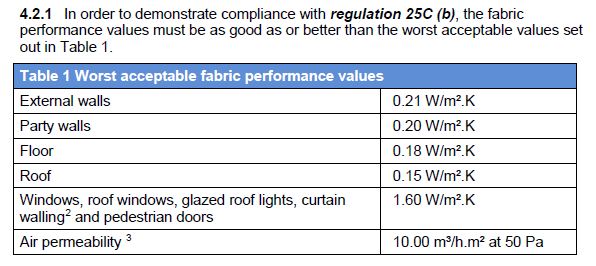
-
Insulating to Min Building Regs
Ian replied to Ian's topic in Energy Efficient & Sustainable Design Concepts
I've been watching progress on your build with great interest due to the similarities in size of build. Your recent photo of your finished bathroom is almost identical to ours. -
Insulating to Min Building Regs
Ian replied to Ian's topic in Energy Efficient & Sustainable Design Concepts
Welsh Regs are now different from England for Part L and they have adopted more of a 'fabric first' approach. The minimum backstop 'U' values for wall, roof and floor are more stringent however I think the end result is very similar -
Insulating to Min Building Regs
Ian posted a topic in Energy Efficient & Sustainable Design Concepts
I know that most people here are building homes that will far exceed the minimum standards required by Part L of the Building Regulations (Part L = conservation of fuel & power) I finished my own build about a year ago - it's a small 2 bed holiday home on a remote site in N Wales and I decided to build it to just meet the minimum standards allowable in Part L and I thought it may be useful to give those of you who are exceeding Part L requirements an example of minimum compliance for comparison purposes. It's a single storey timber frame and timber clad bungalow with a net internal area of 71 m2 and an internal heated volume of 234 m3 (we've exposed the pitch of the roof internally). It's a rectangular shape on plan as it's built along the contour of a 1:8 sloping site. (Small rectangular bungalows are about the worst shape for energy efficiency). It's heated by bulk LPG and a combi boiler. No PV or other renewables. Naturally ventilated with no MVHR. These are my SAP figures: EPC C71 [Edit to add EI Rating of B81] Averaged (area weighted) 'U' values for walls, floor and roof of 0.15 Actual 'U' values are: floor 0.1 (we have a ground bearing conc slab with Hive app controlled underfloor heating and 300mm of EPS under the concrete) walls: 0.21 (minimum allowed in Welsh regs). Roof: 0.13 Windows 3G 0.8 Air test actual figure of 3.7 m3/(h.m2) (no special tapes or air tightness layer) Energy demand figures from the SAP calculation: Heating demand 3400 kWh (this equals 47.9 kWh/sqM of internal area) Hot water: 2290 kWh Electric for pumps and fans: 120 kWh Electric for lighting: 314 kWh (all LED) Primary Energy Demand: 106.1 kWh/sqM/year [Edit to add: CO2 emissions: 1,596 kg/yr CO2 emissions: 22.49 kg/m2] The house is warm and draught free. The things I like most about it apart from the location and spectacular views are the open plan layout with tall 'cathedral' ceilings, the u/floor heating and the 3G windows. I'd be very interested in seeing comparative figures for your own builds. Ian -
@PeterStarck Like you we used Osmo products on our oak doors and also on the solid oak kitchen worktops and an oak table. It’s been in use now for about a year and it’s been really excellent with no problems at all. Any spills on the worktops or table just wipe away easily with no staining.