


IanR
-
Posts
1857 -
Joined
-
Days Won
6
Everything posted by IanR
-

MVHR ducting to outside
IanR replied to Moira Niedzwiecka's topic in Mechanical Ventilation with Heat Recovery (MVHR)
Follow the link from Jack: https://www.greenbuildingstore.co.uk/products/pro-clima-roflex-pipe-grommet/ Just a flat, square piece of 1mm or 2mm thick rubber with an appropriately sized hole in the middle. -
MVHR ducting to outside
IanR replied to Moira Niedzwiecka's topic in Mechanical Ventilation with Heat Recovery (MVHR)
I went with the Roflex grommets that Jack linked to, plus some Airtightness tape: This image is from the outside, and my airtight layer is the outside sheathing board. The membrane then just overlaid this with a hole in in for the duct. You'd need to fix the grommet to the inside.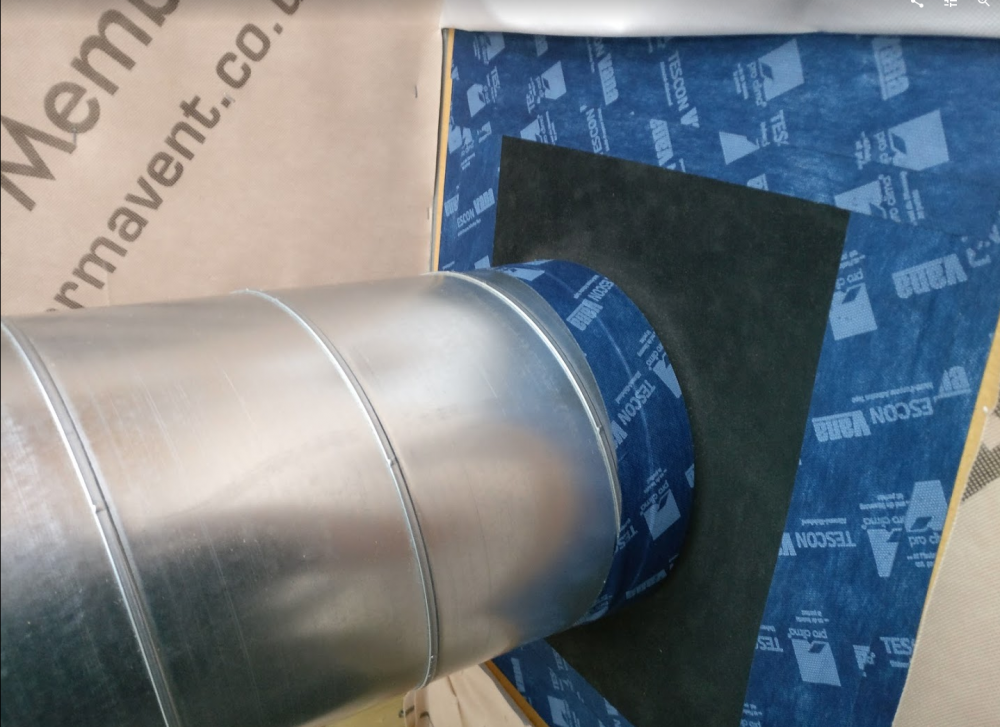
-
When did you submit yours? I submitted mine back in September, but still not had mine reviewed. Keep calling and they say they have a huge backlog.
-
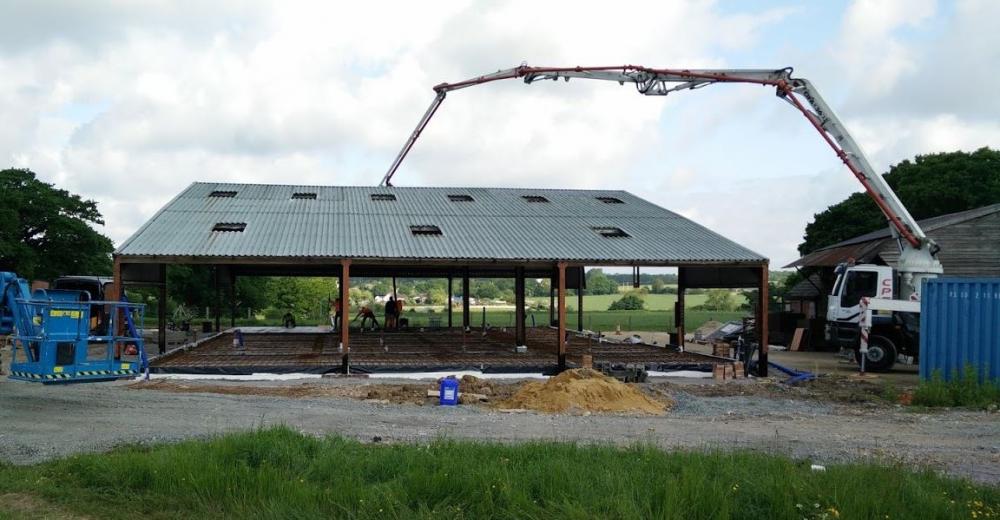
The roof is the original cow-shed roof, we knocked through the clear GRP roof-lights and dropped the boom in through them. No ground-line needed. The roof was then stripped once the concrete had cured.
-
Boom pump, had heck of a reach on it:
-
It was almost 8 loads, so around 60m3 Quick service though, concrete was in by 11:30, just took the rest of the day to level and power-float.
-
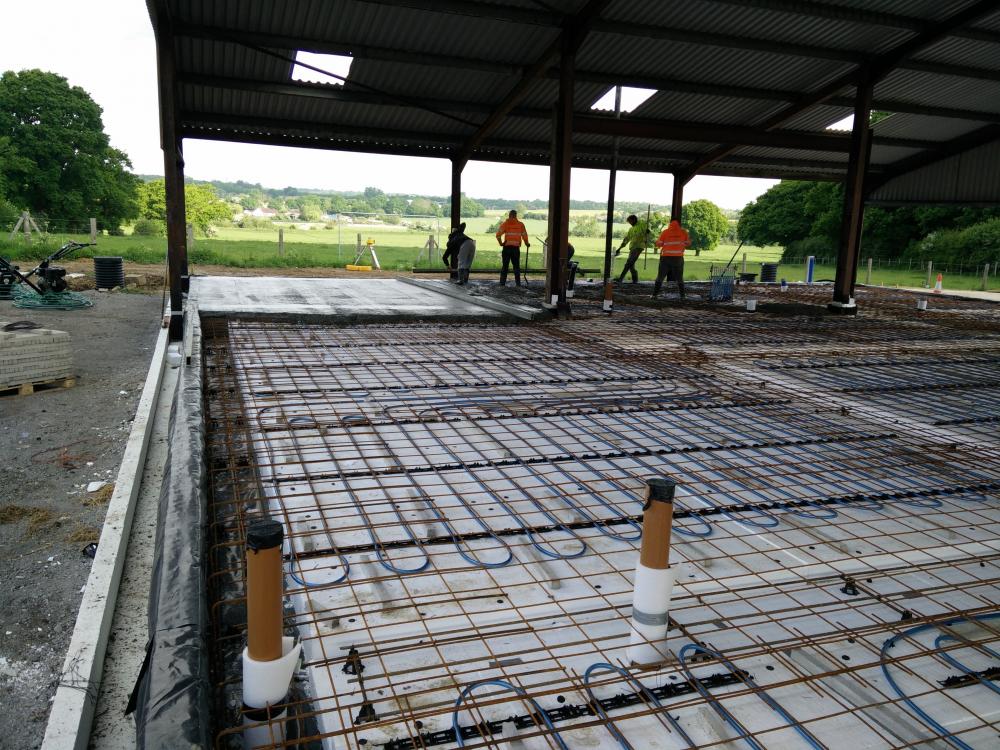
Here's mine during the pour. The DPM is over the bottom layer of EPS and up over the EPS upstand. If you pour directly into the ring beam then there is a risk of the liquid getting under the uncovered EPS and it floating "away", hence pouring on to the higher areas to weight it down and letting it gently flow into the ring beams. This is not an issue with self-compacting, it can happen with C35.
-
It's possible they poured directly in to the ring beam before weighting down the top layers of EPS. They need to let it gently flow into the beams after first pouring on to the EPS in the 100mm thick areas. What did the Engineer specify, most are C35
-
The As Built SAP has to be uploaded by an Accredited person, and my experience was that they wouldn't take someone elses As Designed SAP as a starting point to reduce the fee. From memory I paid £175 for the As Designed and then a further £35 for the update to As Built and the upload to register it.
-
Some more info on TW:
-
Touchwood Homes for the frame and Advanced Foundation Technology for the slab - I can thoroughly recommend both of them. TW and AFT work together on a lot of projects.
-
Worth getting a quote from to see how they compare. For us they were the most expensive that quoted, and want a big figure up front to do the detail design. IIRC the quote is not fixed until the detail design is complete. Seemed to me to be a high quality build solution, although their "patented" foundation/floor seemed a bit over-complicated compared to an insulated slab. They also offer an option where they'll train you how to assemble their frame and then supply only.
-
For the benefit of future readers, "Internal Works" has finally been clarified within the Practical Planning Guidance from the Housing Ministry, under paragraph 105 (revised 22.02.2018). (https://www.gov.uk/guidance/when-is-permission-required#What-are-permitted-development-rights):
-
Snug passivhaus dwellers?
IanR replied to epsilonGreedy's topic in General Self Build & DIY Discussion
Woken up to -4 this morning and clear skys. If that sun stays out for a few more hours then the heating won't be needed and I needn't have bothered with charging up the slab. -
Snug passivhaus dwellers?
IanR replied to epsilonGreedy's topic in General Self Build & DIY Discussion
Along with the cold snap that started last Friday, came some bright and sunny mornings, so we haven't needed to put the heating on. It was sunny all day Saturday and we had to "deploy" the blinds in the afternoon for some shading as the internal air temp jumped up. The house hasn't dropped below 21.5oC. Although with -5 forecast for tomorrow morning and a more cloud around today I stuck the UFH on for around 5 hours to make sure the entire slab is up to temperature (22.5oC ). -
I've never posted anything about mine in the Barn Conversion section as the stuff I've posted about hasn't been unique to a Barn Conversion and I can't think of much that would be. You're in the right place and I'm not aware of a more relevant forum. Welcome.
-
Members' experiences of Timber frame and slab suppliers
IanR replied to TerryE's topic in Timber Frame
Censored? I can't locate it either. -
I used linear gullies, same method to install a central drain. Discussion on a previous thread:
-
For me Touchwood were slightly cheaper on the Frame, but in the same ball-park, However the slab, AFT via Touchwood, was much cheaper than MBC.
-
Members' experiences of Timber frame and slab suppliers
IanR replied to TerryE's topic in Timber Frame
Don't forget this thread: -
Insulating to Min Building Regs
IanR replied to Ian's topic in Energy Efficient & Sustainable Design Concepts
I remembered it as 3. I know Airflow don't advise their MVHRs are used in properties with a figure of more than 5. -
Insulating to Min Building Regs
IanR replied to Ian's topic in Energy Efficient & Sustainable Design Concepts
Floor, Roof, Windows and air tightness all appear to exceed Regs, or are the Welsh Regs more stringent than the English ones I'm familiar with. -
Plaster board ceiling gradient?
IanR replied to 8ball's topic in General Self Build & DIY Discussion
I'd go with another layer of 12mm on the new side. Can't see that you could loose 12mm without a physical step. -
We've got a Monarch system, Ultimate Master is the model. We've not had a softener before and previously really suffered with limescale on everything plumbing related, ours is a moderate-to-high hardness area. Really like the result of having a softener in the system, so far no signs of any limescale after 6 months (apart from slight milky residue on glass shower screen that wipes off), and very noticeable how little soap is required. I thought we were using a lot of salt, ie. 25kg covers approx. 30,000 - 35,000 ltrs, but on research that seems about right for an electronic softener. While the salt shouldn't get into the supply for the house I have noticed on one occasion a heavy brine taste on the softened water. This surprised me and I'm working through the installation instructions to make sure everything has been done correctly.
-
VAT on builders purchases
IanR replied to Mark A's topic in Self Build VAT, Community Infrastructure Levy (CIL), S106 & Tax
Welcome, As long as you are building a new build for yourself or family member to live in then you are almost correct. Builder 2 will invoice you inclusive of VAT at 0%, so you will not incur any VAT on materials (or labour) he uses on your build.





