


IanR
-
Posts
1857 -
Joined
-
Days Won
6
Everything posted by IanR
-
We're a family of 5 with a 500l tank, and never get close to running out of hot water. For swapping over I'd be more concerned about the size of heat emitters. If you are on rads, they need to be oversized.
-
 Our LPA takes a very different view on all change of use from non-resi to resi. It requires the Phase 1 to get the history, and a walk-over to determine if there are any potential risks. If any risks are found then a Phase 2 is required. I assumed this was the norm, as every Class MB/Q and "normal" Barn conversions I researched had the same conditions attached.
 -
The Structural Engineer will be interested in the Soil Survey, and the Bore Hole work can derive the ground bearing capacity which the Structural Engineer will likely also want, but the whole of the Phase 2 would normally be done by a separate company and will likely be a condition of your Planning. If you plan it well you can avoid a double-count in the tests and make sure the Environmental tests cover what is required by the SE as well as the Contamination report.
-
Reading back to your initial post, it looks like your Class Q application has not been submitted yet. Are you aware that you will likely require a contamination survey? and unfortunately with asbestos present a Phase 1, desktop survey and walk over probably will not be enough. We'd hoped to get away with a Phase 1, but having an unbunded diesel tank close to the site necessitated a Phase 2 with bore holes, soil analysis and gas sampling. All in it was close to £5K. I believe these came under professional fees, so were not VAT recoverable.
-
I guess your roofers wouldn't have had the tools on site to fabricate the cladding for the columns from the wall cladding. It would also need some careful thought to avoid sharp edges that could cut hands. While the pre-made parts you link to are expensive, I would have thought fabricating bespoke cladding panels that neatly fit together, leave no sharp edges exposed and hide all fixings, would be even more expensive. That leaves you with a timber cladding, but for me that introduces another material and texture that doesn't relate to anything else on the facade. I'm back to painting what you have to match your windows, but introduce some detail at the top if you don't like the junction to the eaves. I don't personally feel they look too small in section, but do understand your concern. Perhaps with the balustrade attached they won't look so "out on their own".
-
How about sand and fill (automotive body filler), and spray paint to match external window finish
-
I believe this is a mix-up of the rules. Conversions are subject to a 5% VAT rate for supply and install, rather than the 0% of a New Build. However that 5%, + the full 20% of supplied goods can then be reclaimed at the end.
-
This is the bit to me that actually makes it clear. Class Q PD is for the creation of a new Residential unit, so there is no term in the Planning Permission that stops it being sold separately. It doesn't need to "yet" be separated off on to its own Title, it just needs to be capable of being. Conversions can also make use of the 5% VAT rate for Supply and Install work, t help cashflow.
-
When first quoted late 2016, Colorcoat was the best value, and I had a company lined up to Install. When I pushed the button mid 2017, the install company had just got busy with a development of properties and Colorcoat's pricing seemed to have gone up 40% (plus they appeared to be having some internal issues) I went back to re-quote all the options and Falzonal was now the better value. I also liked that all the flashings could be hand worked in the Aluminium, rather than introducing another material.
-
I was planning to use Colorcoat Urban originally and Tata, at the time, said they were investigating using their product directly on the sheathing of a Warm roof, without a ventilation gap. They did come back to me and say all their analysis showed it "would be fine". I wasn't willing to take the risk personally - in the end I went with an Aluminium roof (for other reasons), and a ventilation gap. As you say, battens and 18mm OSB.
-
CIL - Community Infrastructure Levy = a Planning "tax" that many Planning authority's have now entered into, that allows for a standardised charge of £xxx.xx / sqr m of residential development for any new developments. There are exemptions allowed, that need to be in place before you commence the development. You'd normally receive a CIL notice around the same time you receive the planning application notification. If you've not heard of it it's probably because your LPA has not yet signed up to CIL, but worth double-checking. RHI - Renewable Heat Incentive = a grant from the government to encourage use of technologies like ASHP, that is meant to reduce the capital cost of that technology to around the same as the fossil fuel alternatives. ASHP - Air Source Heat Pump - I actually thought you'd mentioned it in your post, but I must have mixed it up with a post I was reading just before yours, otherwise I wouldn't have mentioned it. Anyhow. Class Q is for a new Residential Unit, so is VAT deductible, and you will need to reference the Planning Application on your VAT reclaim at the end. The fact that you haven't yet divided it off on to its own Title I don't believe would effect it.
-
It doesn't need to be attached to be an "Annex" - it needs to be on its own Title to not be an Annex, otherwise it would be considered as an extension to the existing homestead and not a new residential unit. Thinking about it, a Class Q is for a new Residential unit, so must be OK. Yes, all listed are VAT deductible, with the possibility of RHI on the ASHP. Edited to add: Is CIL owing? Not sure where you stand with self-build exemption as you won't be living in it, but you should get "conversion" exemption if it's been in "continued lawful use for 6 months within the last 36 months prior to the application".
-
Hi @Ali F , and welcome. Yes, as a new residential unit you can reclaim the VAT on a Class Q, as I did myself. (This is assuming the new unit is not an Annex to an existing residential unit) Keep all the receipts, making sure they have VAT showing as a separate amount, and claim at the end. Same process as for any other new build/conversion.
-
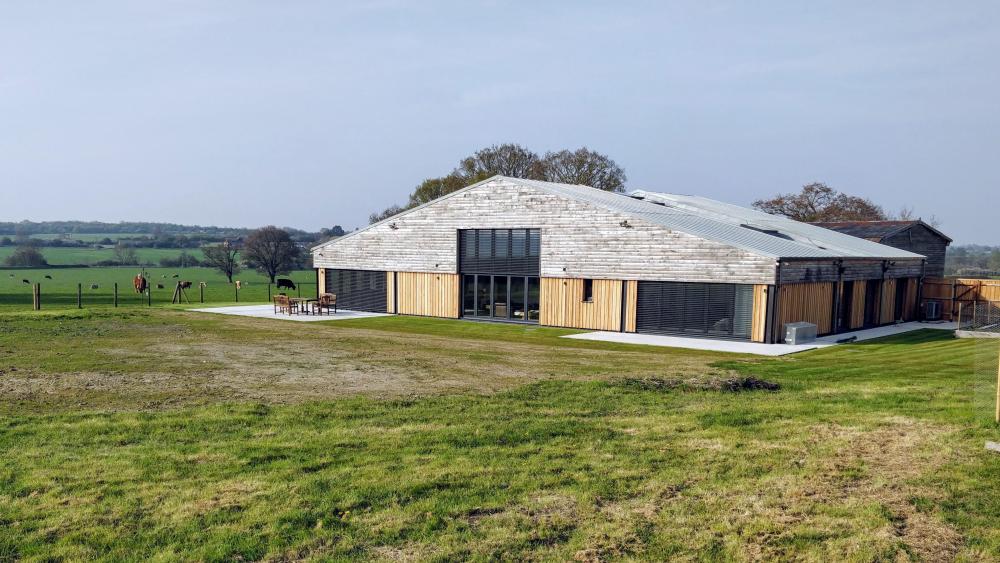
From that to this.....
IanR replied to ToughButterCup's topic in General Self Build & DIY Discussion
...and still working on the landscaping.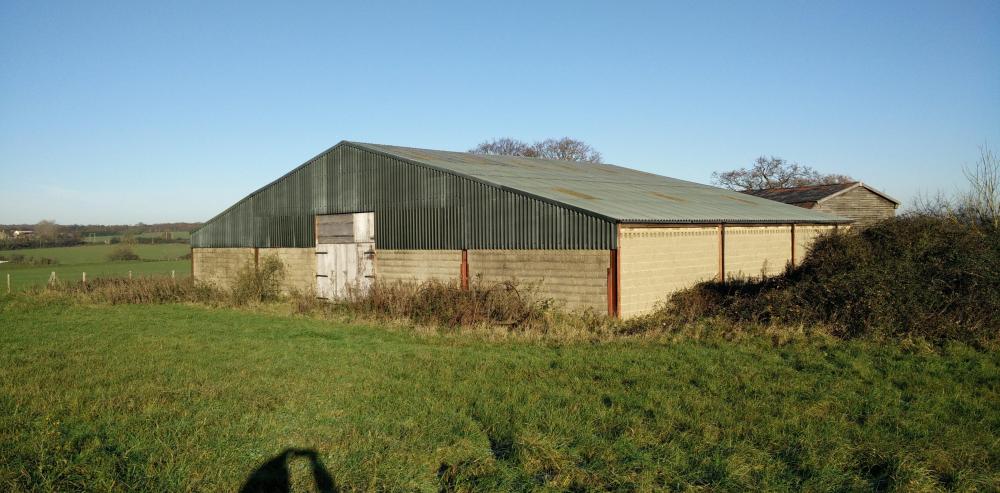
-
Hunter Douglas used to manage their own UK Install team, but halfway through my order with them (2016/2017) they swapped to using independent Installers in the UK. They passed me on to Interlace Blinds, who did a good job for me. At the time Interlace didn't advertise that they did Hunter Douglas, but at least they do mention them on their website now, even if it's not their blinds that the show on the "External Blinds" page. https://interlaceblinds.com/hunterdouglas/ When I researched, only Hunter Douglas did a 5m width in a single span, so I didn't get into too much detail with any of the other blind manufacturers, but I'm very happy with the HD product. Edited to add: They do need to be considered early, to get them integrated into the the facade and avoid them looking like a retrofit.
-
I have a Nibe with the cooling add-on. I cool the buffer which is then sent to UFH and MVHR heat exchanger. The UFH is very effective for cooling, in my set-up, the MVHR less so, as you would expect. I have other processes to help cooling so the ASHP/UFH doesn't do it all on its own, which probably helps. First step is to even out the energy in the slab, to move heat from solar gain areas to the rest of the house by just circulating the UFH. Roof vents will also open to dump warm air, if outside temp is lower than internal. I also have external blinds to restrict solar gain if needed. If the "passive" measures are insufficient, then the ASHP starts to cool. I have it stepping in quite quickly so that it is trying to maintain a temperature rather than bring a temp that sailed 10 degrees passed the desired temp. In those circumstances, it is effective.
-
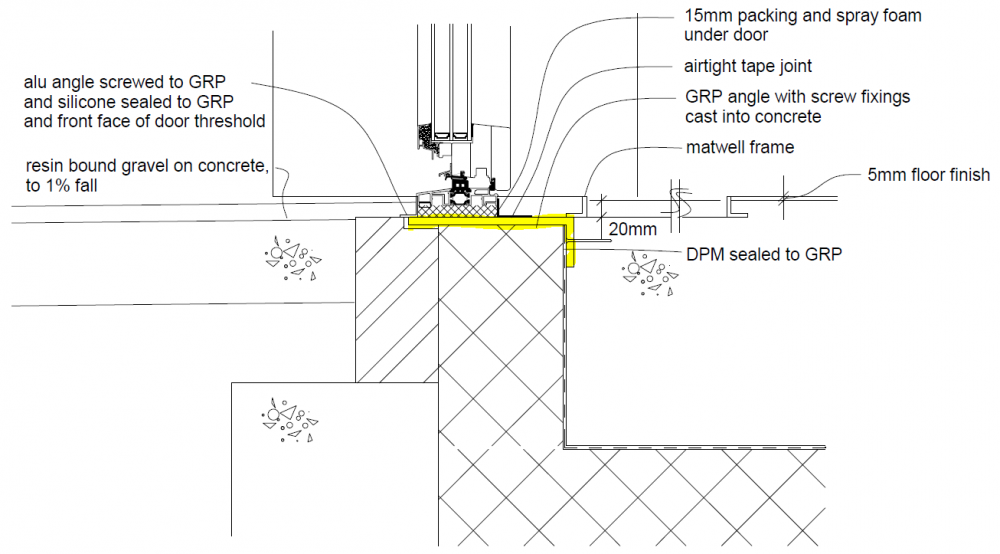
Is it too late to get the Door frame over the EPS upstand, and aligned with the insulation? We used a 9.5mm thick GRP L Section (www.steponsafety.co.uk), sitting on top of the EPS upstand to support the door and window frames. Ours was put in before the slab pour, but they could be fitted after. This threshold is within a covered porch, so we went without the drain, but did tip the outside surface away from the opening by 1°.
-
From main to house is 130m for me, and we've run that in 32mm and have good pressure. IIRC 32mm is as large as you can go before you need run some disinfection process (possibly with water samples sent off??) before the connection is permitted. That helped make my decision!
-
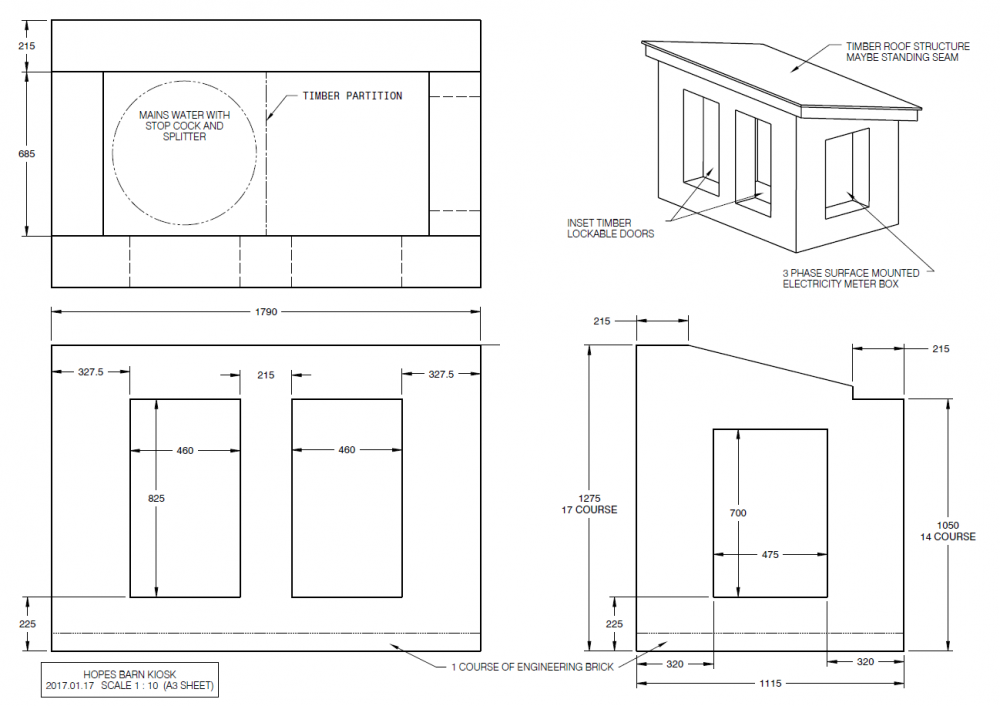
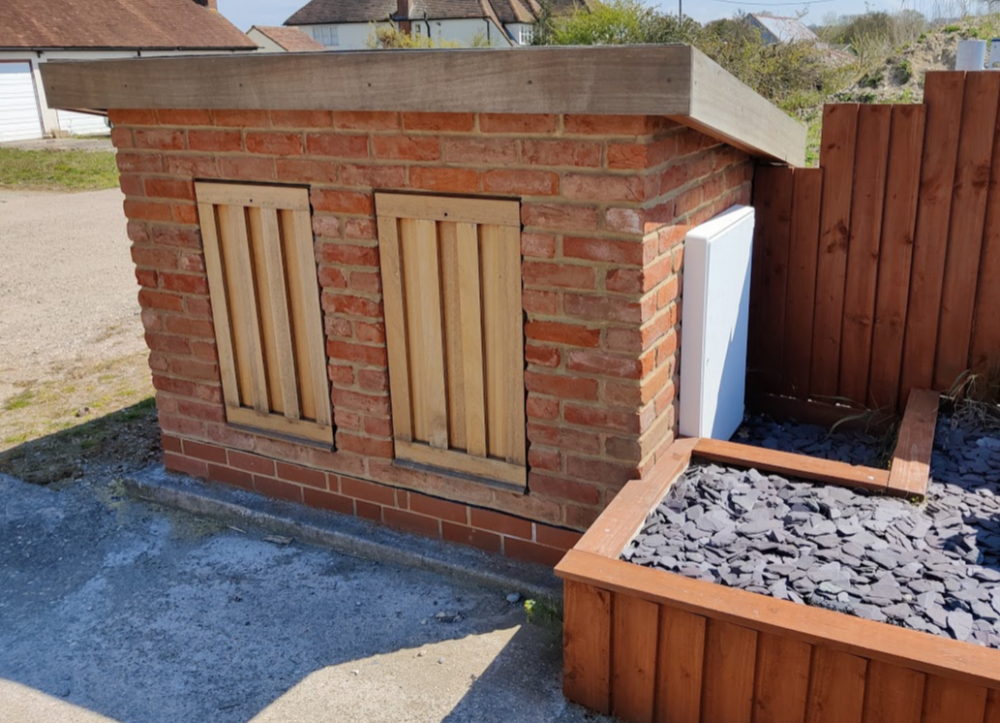
We built a Kiosk for Power, Water and Comms, so is a bit bigger than you require. Similarly, we're around 100m up a track, and having the Kiosk on the edge of the Curtilage, kept us to around about the 100m limit for data and PoE back to the entrance at the start of the Track.
-
Have you tried Advanced Foundation Technology, and their Groundshield products? My experience with them is they turned the Drawings and Structural calcs around very quickly. The EPS sheets and preformed sections come from Derbyshire I believe. They'll install all over the UK as well as "supply only". If you supply your own ground workers and just have Olof onsite for the Install and pour (incl. UFH), costs are very competitive.
-
Ducts and drains under a foundation slab.
IanR replied to Triassic's topic in General Construction Issues
You're better off using a pre-insulated twin duct. I used Rehau Rauvitherm twin 32 dia pre-insulated. Plus a duct for power to ASHP and another for data/comms- 5 replies
-
- 1
-

-
- foundations
- drains
- (and 1 more)
-
Ducts and drains under a foundation slab.
IanR replied to Triassic's topic in General Construction Issues
+ ducts to outside tap positions, ASHP feed & return Power to outside/drive lighting -
I've just looked at the rendering of your house on your profile and your window sizing is similar to mine, large openings made up of smaller sashes. ie. I have a few 5m wide windows by either 2.1m high or 4.2m high, but they're built from five 2.1m x 1.0m sashes which costs a lot less than trying to make it in a single 2.1m x 5m sash. The pound has devalued since I bought mine, but that shouldn't have added more than 20% to the price. Have you gone with any integrated blinds on the Norrsken windows, I know that added a lot to the price. It was much cheaper to go with external blinds.
-
MVHR ducting to outside
IanR replied to Moira Niedzwiecka's topic in Mechanical Ventilation with Heat Recovery (MVHR)
...and is that a SVP I see just a little further down the wall. -
I really liked the Norrsken product, and the company seemed pretty good too. But "Wowza", those prices are much more than I was quoted July 2015. Including fitting, you've been quoted £1,228/m2 for Norrsken and £1,911/m2 for Internorm. In July 2015 Norrsken quoted me just under £500/m2 (and then offered another 10% off when I called them to say I was going with Internorm) for 3G Alu-clad pine. For the same spec I got Internorm down to £440/m2, although I upped the spec in the end and paid just under £500/m2. In my favour, all my windows are made up of units that are neither particularly large or small so it was quite an efficient way of buying the glass.




