


IanR
-
Posts
1857 -
Joined
-
Days Won
6
Everything posted by IanR
-

Enforcement: a new twist on an old story.
IanR replied to ToughButterCup's topic in Planning Permission
Not for horses though (unless agricultural working horses). Equestrian doesn't fall within Agricultural. I'd say they've probably got planning for the Change of Use and conversion, there's no Change of Use PD (yet) on stables. There's also a max of 465 sqr m (or if you game the rules to push it up to 865 sqr m) allowable for the Change of Use, and if you do so you then loose Agricultural PD for 10 years, so unfortunately it can't be done again and again. -
Enforcement: a new twist on an old story.
IanR replied to ToughButterCup's topic in Planning Permission
The Change of Use to resi can only happen after the "barn" has been there 10 years, and the Barn could only be built if there is Agricultural Permitted development to do so, which requires a viable agricultural business. I doubt he planned it, but he's been helped by the the Council making an error in their enforcement. ie. claiming the building was a caravan. -
Enforcement: a new twist on an old story.
IanR replied to ToughButterCup's topic in Planning Permission
I think he now stands half a chance of keeping it. The Appeal Inspector has found that the enforcement against the building can no longer be taken as it's been there for more than 4 years and no claim of concealment has been made by the Council. The question left is whether its Residential Use can be enforced against. To test that the Council will have to start its enforcement all over again. -
There would be no issue in resubmitting a Class Q, as long as work had not started. If a Class Q was already approved, I'd assume you'd only have to resubmit Class Q (b), as long as you were intending a Change of Use to the same building, or part building, with the same Curtilage, and were only planning on changing the building operations. I can't imagine you'd find much documentation regarding a re-submission, simply because there is nothing to stop it being done.
-
Good Luck!
-
White roof - reducing solar gain
IanR replied to Adam2's topic in Energy Efficient & Sustainable Design Concepts
The solar gain you don't want in Summer, can help you in the Winter and shoulder months. Do you know you have a solar gain issue? (is it built yet). If still in the planning stage, could you swap to an insulation with longer decrement delay? -
I just googled "Planning Consultant lawful existing use + my local city/town" and about 10 local planning consultants came up, it's then a case of phoning and getting a feel if they are familiar with CLEUD applications. Most should be. However, nothing seems to move very quickly with submitting planning applications, so I feel you may have missed the opportunity to get support from a professional. You have nothing to loose then to submit it yourself. On the same google search above, also came up the page to submit the application yourself. My LPA gives a brief description of what is required: I would expect yours to be similar. You can download a copy of the OS at the correct scale for the Block Plan, and Site plan, and then just manually sketch over the top the detail of the balcony. Then just write a short, precise explanation with evidence to support the time-frame the balcony/terrace has been in place and in use. Mention the recent maintenance and how short a time it was unusable and state that its use was not abandoned, evidenced by you doing maintenance on it.

-
This remains your option: My guess is that the enforcement officer has no more to gain from discussing it further with you. They don't see themselves as an advice service, and they've communicated what they needed to have done so can claim to have engaged with you. You now need to submit an application for a Certificate of Lawful Existing Use and Development, providing evidence of how long the structure has been in place and in Use and stating that it recently underwent maintenance, for a very short period that could not be considered as abandonment. The enforcement officer is expecting to run the clock down, so that you then have to remove the structure. It's now for you to take action to stop the clock.
-
Draft 3d Renders - any comments / suggestions
IanR replied to rakesh_cardiff's topic in New House & Self Build Design
I'd check the prices on both, anecdotally ground loops are far cheaper. You need to be quick if you are expecting to benefit from RHI, it stops in April 2022 I believe... (Checked and scheme closes to new applicants 31.03.2022) I thought cooling was allowed now on RHI, at least on ASHPs it is. MVHR does not shift enough volume of air to effectively cool, it can trim temperatures at best. Shading works, but less effective on the inside of the window, external shading is much more effective. Definitely not an expert, but you'll see this is all a much talked about subject here, with a lot of people that have put it into practice. Edited to add: Practical advice - Highly Insulate, highly airtight (sub 1 ACH), if you want a lot of south facing glazing then integrate a way of externally blocking it out with external blinds, overhangs or bris soleil, pay for detailed thermal modelling. I'd recommend PHPP even if not considering Passivhaus certification. Consider all of this before settling on the final appearance. -
Draft 3d Renders - any comments / suggestions
IanR replied to rakesh_cardiff's topic in New House & Self Build Design
It's a good plan, assuming you have the land for ground loops. Assuming good insulation and air tightness, heating shouldn't be a problem via GSHP, but are you working on the heat & cooling requirements yet? If you don't mitigate the solar gain through those south facing windows it's unlikely GSHP alone will provide sufficient cooling. The mitigation required may need changes to the rear elevation to incorporate them. I really like the curved windows in the sun room / family kitchen, but they may prove difficult to screen externally. -
Draft 3d Renders - any comments / suggestions
IanR replied to rakesh_cardiff's topic in New House & Self Build Design
Nicely balanced for its size. If I was going to be critical, I feel the eaves are too wide on the central/main roof area. I would have it larger than on the two smaller, lower roofs either side, but just a little smaller than shown. The risk is the 2nd floor front dormers would look a little squeezed, and I don't think they should be pushed together any closer (rear dormers could come in a little). It's the sort of thing you need a few iterations of to get the combination that works - but perhaps your architect has done this already. The stone surrounds on the windows also look a little too "heavy" to me, although they look better in the photo-realistic image you posted rather than the PDFs. This maybe a lack of detail in the CAD model and the shadowing used for the renderings, but maybe they protrude too far. Is that a public road directly in front? Could the property be pushed a little further into the plot? The high grey stone walls of the lower ground floor look imposing on the rear. Could the ground be brought up to reduce their height, raised planters perhaps to soften it with some foliage. What's your plans for heating & cooling? -
New heating for terraced house in London
IanR replied to Ferdinand's topic in Central Heating (Radiators)
They will be "Main Stream" from 2025 - read up about the Future Homes Standard Not true, just like a gas boiler the heating system needs to be correctly sized for its use Where is your reference that says a 7 year life is typical. They're not £10K now and will only go down once the RHI/MCS scheme is removed. I think you are burying your head in the sand.- 42 replies
-
- 1
-

-
- terraced house
- london
- (and 1 more)
-
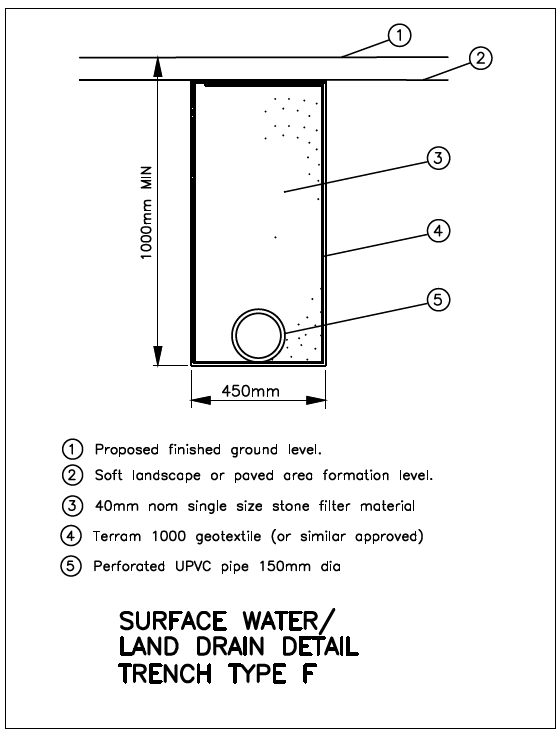
+2 We installed a perimeter drain all the way around our build, going to below the foundation level. There were numerous seams in the clay with water constantly running through them.
-
New heating for terraced house in London
IanR replied to Ferdinand's topic in Central Heating (Radiators)
As we are talking "facts". At "close to freezing", my HP is still pushing a COP of over 3. The drop in COP from a warmer outside temp accounts for the completely normal defrost cycle: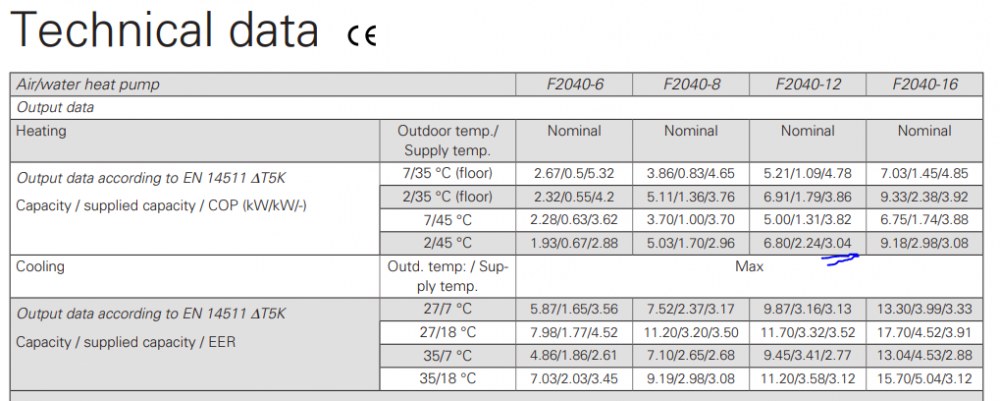
- 42 replies
-
- 1
-
-
- terraced house
- london
- (and 1 more)
-
New heating for terraced house in London
IanR replied to Ferdinand's topic in Central Heating (Radiators)
You've lost the argument, now it's time to move on... The Government is targeting 600,000 heat pump installs a year by 2028 and is putting the legislation in place to make it happen, whether you feel they are noisy or not. -
Its Use is therefore "Incidental to Residential", so adding a mezzanine that makes no change to the exterior of the building, would not fall within the definition of development, so would not require planning permission. Edited to add: Ref: https://www.gov.uk/guidance/when-is-permission-required Scroll down to "The categories of work that do not amount to ‘development’ " under the heading "What is development?"
-
I'm not exactly clear on what you are asking. Are you asking whether adding a mezzanine to an existing building, that involves only internal works, would not fall within the definition of development (as defined by section 55(2) of the Town and Country Planning Act 1990), whether it's a dwelling or an out building? If that's your question, then yes. (caveat, I'm assuming your outbuilding has a lawful use as residential) Even if its current Use Class is not Residential it will still be lawful, as long as the inclusion of the mezzanine does not stop the building from functioning in its lawful Use Class.
-
Yes, no habitable Mezzanine, just a ceiling over the ground floor. That makes it an easy decision then, remove them from the plans you submit and forget about them
-
Crikes, you've done a lot without having permission, that puts some pressure on you... If the LPA are unlikely to engage, I'd not change anything on your build yet, but re-submit planning without dormers and showing a cold roof, justifying the 1st floor ceiling structure, which in the future will become your mezzanine. Retain all fenestrations that were in the original building's 1st floor area that bring light in to that area. Maybe show a couple of light wells in the ground floor ceiling that indicate borrowed light entering the ground floor from the 1st floor storage area, to justify retaining the old/original fenestrations. Close off the stair way opening to mezzanine to no larger that a loft hatch. There is no need to show the structure of the 1st floor ceiling on your planning drawing, just minimum info showing ceiling position and thickness above, labelled as insulated. Submit your revised planning and keep your fingers crossed. If successful you could then submit an amendment to planning for the dormers, but I think this is unlikely to succeed without the mezzanine justifying them - Catch 22! Once the build is complete, you will be able to lawfully reinstate and use the Mezzanine, without planning, as it would then not be classed as development, since it would be internal works only. With the Mezzanine installed/reinstated and lawful, now is the time to submit a planning app for the dormers if you really want them. But you will have had to have removed them to finish the build in line with what you hopefully get permission for, and then apply to add the dormers to improve the functionality of the mezzanine. - The mez must already be in use before the planning app for the dormers is submitted. The LPA then has to consider the chance of loosing at Appeal what is "just" a minor increase in building volume, but they may have a good argument for you not having the dormers.
-
I think you are reading a whole lot in to my post that I didn't actually say.
-
If the dormers were not included on the original outbuilding, then their form on the new outbuilding is linked to the mezzanine, so it is quite possible that if you re-submit without the mezzanine being in use, they would probably say they are superfluous, and as they add to the size and volume of the new outbuilding, push-back on their inclusion. The material choice though isn't directly linked to the mezzanine, so if they have accepted your new materials, there shouldn't be a problem. How well does your LPA engage? If you know there will be a chance to discuss their issues during the consideration period, it may be worth re-submitting with the dormers included, but the mezzanine not in use, and be ready to update your drawings without said dormers, if they do push-back against them. It depends if they really don't like the dormers, and that is their priority reason for rejecting your initial application, or if they are avoiding setting a precedent for the floor area increase. You say you have engaged a planning consultant, are they not able to get you an informal steer on this? That's the whole point of paying for a planning consultant.
-
Not really, once the contract is complete and technician/SE/frame designer/architect has been paid for their service, I would expect to be free to do as I see fit with the CAD files generated by the prior engagement. The contract would of course have to be structured for this. Easy to do when the client is the hub and is engaging directly with each of the collaborative elements of the process, but more difficult if the client is contracting a turn key solution from one of those individuals, who is then engaging the other elements to deliver that solution.
-
It does high light the need to get it agreed before you engage your chosen technician/SE/frame designer/architect. For me, native CAD files (or a neutral file format as a minimum) have to be included for collaboration and as the final deliverable. Native CAD files are no different to manually drafted "Originals". PDFs are more akin to the blue-lines and sepia copies of the past.
-
Have you included changes to the exterior (from the original out building) that are intrinsically linked to the inclusion of the mezzanine? I suspect you may have. If so, then the inclusion of the mezzanine is "development" since it has altered the external appearance. Even if no exterior changes have been made to accommodate the mezzanine, I believe the fact that it is included/shown within the planning application for what is a development, it becomes part of that development, and so is included in floor area calcs. Is it possible the Council are not allowing the floor space previously provided by the original mezzanine to be considered, as it was not structurally capable of being a "floor". It does look like a storage area, rather than a floor. Are those "joists" capable of performing as a floor for their span, in residential building regs terms? If it could have passed building regs, without additional structural additions, have you proved that to the Council? Too late to get a structural report, if you don't already have one, but a submission by you of the joist size, spacings, span and a link to a reference that says that combination is acceptable should be sufficient. I thought LPA's have moved away from making judgements on floor area increases in favour of volumetric increases. I guess this is out of your hands, but volumetric increase is the actual impact on the surroundings, not floor area. If you are to resubmit an application, I'd steer the conversation towards volume of old v. volume of new in your Design and Access Statement. If you can't get around the floor increase issue, you'll need to re-submit without the 1st floor area being "used". Maybe it could be there, as storage, but without a fixed stair case. Then add it once the build is complete and outbuilding is in use. I suspect that the Council may challenge any exterior detail that was included for the Mezzanine, beyond what was in the original outbuilding.
-
Is it worth paying £9000 more for better U value
IanR replied to Happy Valley's topic in Windows & Glazing
£9K difference on a 160 sq m home seems more than just u value. Are you comparing like-for-like, apart from u value, or is one a timber/alu-clad and the other a aluminium frame, or something similar? I couldn't imagine there'd be that much difference between Rationel U 1.2 vs Rationel U 0.82


