
Conor
-
Posts
4165 -
Joined
-
Last visited
-
Days Won
12
Everything posted by Conor
-
 I decided to move my car trailer with the telehandler rather than get out of the cab and pull it.... Of course it dropped off the forks at the highest possible point. It did not end well for the trailer.
 -
Dial before you dig will tell you what utility companies have services in your search area, you can then go to them individually for maps of needed. But services to houses are notoriously unreliable.
-
Those U values don't sound right. For that size unit you'd expect to be around 0.8 for 3g.
-
So, the sink arrived yesterday. It's a brute. Seems very solid and good quality. It even includes the waste kit which wasn't advertised. Think we've got ourselves a bargain. The rectangular colander that comes with it seems more like a drainer and will do the job well. I cannot figure out why the hell the same thing from Franke/Grohne is nudging £1k.
-
Straight from the can or do you use a gun? Much better control and placement with a gun.
-
Very low risk as the fibre concentration is low and embedded in the resin/adhesive.
-
Attempting a straw bale, off-grid passive house in Somerset
Conor replied to Smallholder's topic in Introduce Yourself
Probably a regional thing then. -
Attempting a straw bale, off-grid passive house in Somerset
Conor replied to Smallholder's topic in Introduce Yourself
Do you have a source for the straw bales? Had some friends who wanted to build a straw bale house. The plot sale eventually fell through, but they were never able to find a source of the right spec of straw bale. All the modern bailers make them far too big. -
As above, you need a roofing or joinery contractor for the roof structure, and a company for the EPDM part. You might find a contractor that will do the structure and subcontract on the roofing guy and provide you a warranty for the lot. Insuring / mortgaging a 100% flat roof house won't be straightforward so a clear cut warranty on the system is essential.
-
Bathroom waste pipes and when are air admittance valves needed
Conor replied to Roz's topic in Waste & Sewerage
One AAV on the main stack is enough. Of you can, run the 110 pipe as close to the bath as possible, right to it preferably. -
Min screed thickness to level over hollow core slabs
Conor replied to cwr's topic in General Construction Issues
If you need structural screed the SE would have specified it on the drawings. It's unlikely unless you have high loadings on top (e.g. garage and green flat roof was only place it was specified for us) -
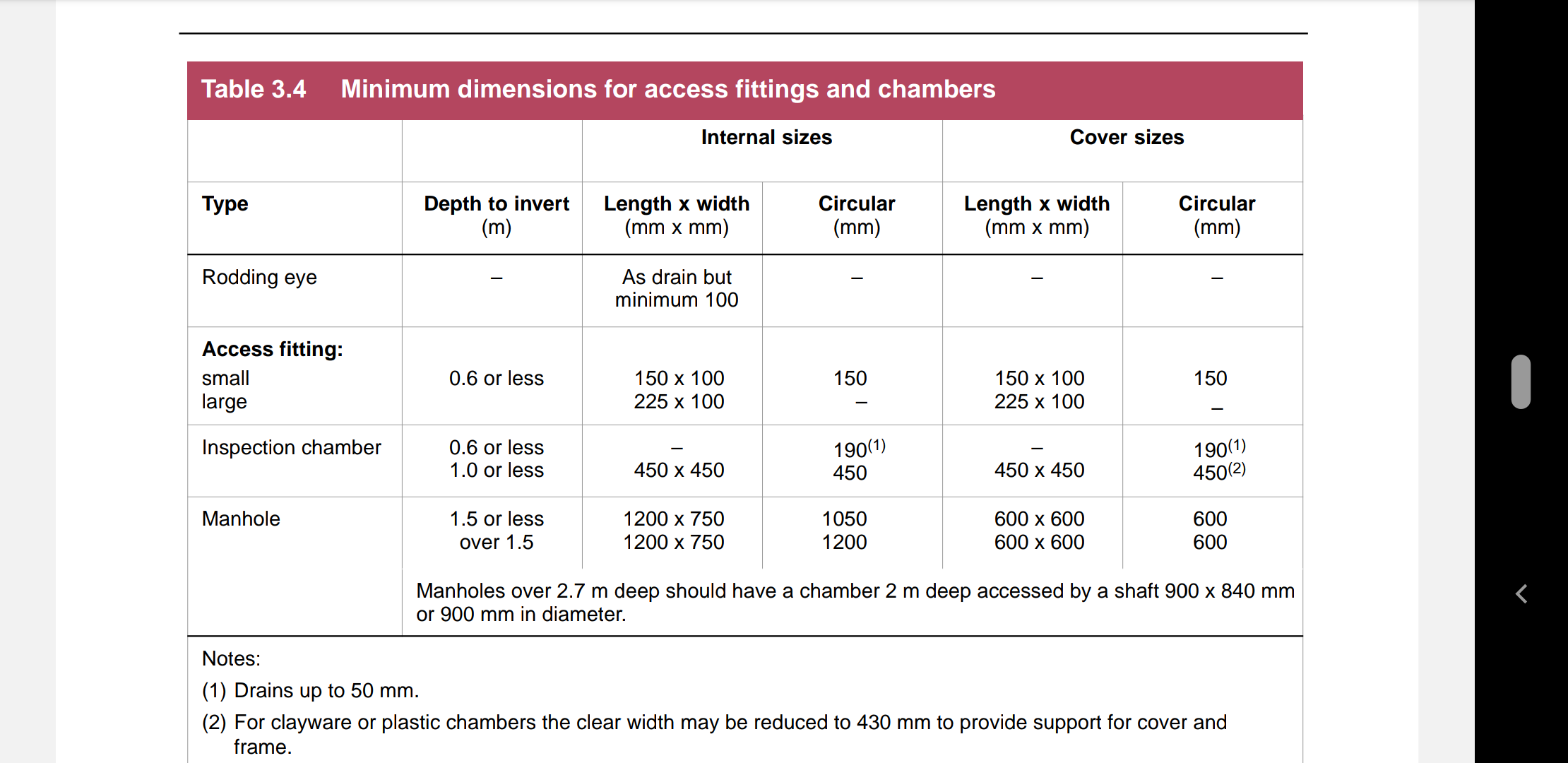
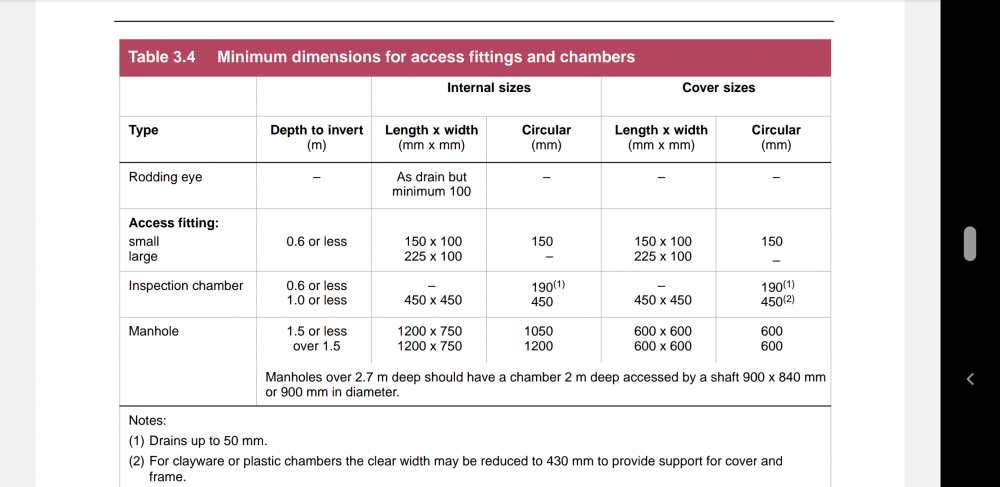
That's for an inspection chamber tho. You're creating a backdrop manhole, which should be constructed to allow, not deter access. I'd speak to your BCO to see what is expected.
-
Check the regs. I'm pretty sure you'll need to use a 1200mm ring for that kind of depth. We used 1200mm concrete rings and cut slot in midway up for the inlet. From the NI building regs:
-
That's one thing that's missing -a roll up drainer. We'd have to get one somewhere else.
-
We want a 800-850mm workstation sink in our kitchen, kitchen is being installed 6th December so need it fairly soon. Due to various reasons, we're finding it hard to find anything in stock that will delivery to Northern Ireland. And a lot are silly prices, £500-£900 kind of range, and not much in stock. We've spotted a KORVO sink on Amazon that ticks most of our boxes and is about half the price of anything else we've looked at. Any red flags? The steel spec looks just the same as a Franke, Grohne etc sink so I'm struggling to see why not? https://www.amazon.co.uk/gp/product/B08C7DQ61S?th=1
-
If it's advertised as floor insualtion, it'll be eps100. I got mine directly from Kore.
-
fix sliding door header directly to steels?
Conor replied to Tom's topic in General Self Build & DIY Discussion
Directly. (That's how ours were done, the company specified 5mm tolerance) -
For our basement, the builder used PIR below ground and we switched to EPS above ground. I've some bits to do that weren't done in PIR and I'm using EPS100 - absorbs less water than EPS70. EPS200 is the best option but I've already spent a grand on the EPS100 before I found this out!!!!
-
Thunderbolts. https://www.wburton.co.uk/product/m12-x-100mm-thunderbolts/ You'll need a half decent impact wrench or driver.
-
We used Conzio 60 tape around windows and air tight paint along the wallplate. We're also using air tight adhesive render beads on the outside of the frames, plus exterior water proof tape for the door blocks under the door frames on the outside.
-
Ply will swell and warp. I used 12mm OSB. Cheaper and a better job. We screwed at 200mm centres and a bead of adhesive. but that was render board which is much heavier.
-
One of those appliance trollies would work. I moved several lengths of kitchen worktop with mine. You can get a half decent one in B&Q for £41. Handy to have if you even need to move a washing machine or fridge etc. Do you have doorways to go through? You might have to shuffle through. https://www.diy.com/departments/mac-allister-hand-truck-250kg-capacity/1357679_BQ.prd Tho, you'll still have a challenge lifting it in place. Suggest you find an extra pair of hands for that bit.
-
Another thing to bear in mind is that the slab won't be at its design strength untill 28 days after pouring.
-
Why is my house so cold?!
Conor replied to Cognis0's topic in Energy Efficient & Sustainable Design Concepts
Go to B&Q and get a dozen rolls of loft insulation. Best couple hundred of quid and half day of work you'll ever spend. You want another 300mm on top of the joists. -
A touring caravan will have a low after pressure connection or pump, and a cassette for the waste. You don't want that hassle for a year +. A static caravan is basically like a house with standard type water and waste connections. Typically both will 16amp electric connections that you can take directly from your temporary site kiosk.