


Temp
-
Posts
10641 -
Joined
-
Last visited
-
Days Won
43
Everything posted by Temp
-
Welcome. Make sure to check out the VAT rules for houses that have been empty for either 2 or 10 years. They are moderately complicated in that different schemes apply. It's possible tradesmen should not charge you VAT or they should charge you a reduced rate. Some things like materials you might be able to claim the VAT back on. If you pay VAT in error to tradesmen you can't normally claim it back from HMRC so make sure you understand gefore accepting quotes. Don't move in before work starts or you loose the VAT advantage of an empty house. Starting work and then moving in is allowed.
- 1 reply
-
- 1
-

-
Just tiled my bathroom and debated if I should do walls or floors first. In the end I did this... I fixed a batten to the wall about 3/4s of a tile up from the floor around the room. Used laser level to set this. Tiled the walls from the batten up to the ceiling. Tiled the floor. When set, removed batten and cut bottom row of tiles to fit on wall. The batten wasn't exactly 3/4s of a tile up... Before I started I drew pencil marks and lines on the wall so I could be sure that things like the shower outlets and mixer wouldn't require holes to be drilled very close to the edge of a tile. Also to ensure I wouldn't need to cut very narrow strips of tile anywhere (eg at the ceiling). I also checked for the same issues horizontally.
-
Should be a rest bend at the bottom of all stacks. This.
-
Or do have the DPC 150mm up except at the door itself.
-
The DPM/DPC is meant to be 150mm above ground level to prevent rain splashing up above it. If you find another way to prevent it splashing it should be OK. Some people put a channel filled with gravel. Lots of example photos in here.. https://www.pavingexpert.com/splash_strips
-
Do we pay vat for the survey and setting out?
Temp replied to CalvinHobbes's topic in Surveyors & Architects
Land survey and setting out of the site boundary would be standard rated as needed for the Planning Application. Sometimes a level survey is needed for sloping sites. It would normally be needed by the architect so hard to see how it could be done as part of setting out the foundations. -
Depending on where things are located a screen of aluminium foil between the tx and car might be worth trying. Or perhaps fit the Tx with a more directional antenna? Think you can also get some stuff on the 863MHz band but check your burglar alarm doesn't use that band?
-
I think what you need to provide is a "protected escape route" from the loft to an outside door. So all the walls and doors that lead off that escape route need to meet the 30min Fire/FD30. Normally this is your main staircase so every door off the stairs and hall needs to comply. Also need linked smoke alarms.. https://labcfrontdoor.co.uk/projects/loft-conversions/what-are-the-fire-regulations-for-a-loft-conversion
-
I think I would press on with the Application. Presumably the BCO has written back with a list of info he needs? If none refer to the foundations you could ask him/her if it would be OK to dig the foundations while you prepare the other documents he has requested. He will want to inspect the bottom of the foundation trenches so you should add something like "..of course I would call you to inspect the trenches before they are filled". Flowchart in here page 12 says it must be a full application if it fronts a private street.. https://assets.publishing.service.gov.uk/government/uploads/system/uploads/attachment_data/file/901517/Manual_to_building_regs_-_July_2020.pdf
-
+1. Perhaps make one out of paper or card first to see how it would go. Too easy to cut off a bit of lead then wish you hadn't.
-
Clean the MVHR filters? I have seen clogged filters cause an MVHR to blow a 1A fuse implying it was drawing perhaps 250W. That would be about 0.25kW x 24 x 30 = 180kWH a month costing 180 * 0.34p = £60 a month.
-
I think oil can attack the adhesive of veneered doors.
-
How far is it from your house to the pole? Do they want to put another pole in? I think what I would do is similar to what we did.... Ask them to quote for just a phone line (overhead). Before they send engineers out to install it, run your own cable in a duct to the bottom of the pole with enough coiled up to reach the top and a few yards spare. When the engineers arrive show them your coil of wire and ask them if they can use that. In our case they had to make changes to the wires from the top of the pole to the nearest cabinet. Once they did that they forgot to send someone to actually install our line. When the Engineers finally did come to do that they were more than happy to just run our wire up the pole rather than overhead to the house. I would put both BT cable and a 3/8" poly draw rope in the duct. https://www.powerandcables.com/wp-content/uploads/2018/02/Cable-Laying-A-Cable-Duct-Laying-Guide-From-BT-Openreach.pdf There are various numbers for the BT cable. I think CW1128 (4 twisted pair) is the basic outdoor cable for use in ducts or CW1128/1198 is armoured.
-
Im not familiar with their Door Oil but if its a very thin low viscosity product like Danish Oil then perhaps their Poly-X oil might be safer ?
-
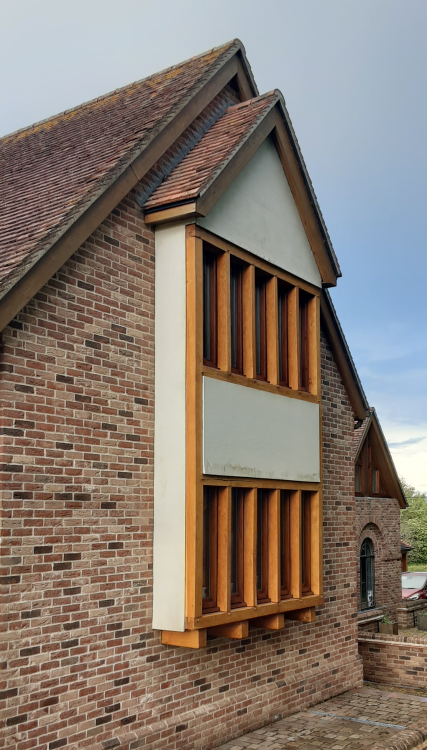
If you want new external oak to be a nice honey colour and stay like that I recommend one coat of Danish Oil then several coats of Osmo UV Protection Oil. The Danish oil will make the Oak slightly less white and more honey colour over a few days. The Osmo keeps it that way. If you just use Osmo I find it can look a bit too white. Dainish Oil on its own is a nightmare. Needs recoating every year, even twice a year sometimes so I don't recommend that. The Osmo is good for 4+ years. If you buy Osmo UV Protection Oil online some places have a 20% extra free. eg a 3L tin for the price of 2.5L. I just got a tin from.. https://www.decoratingwarehouse.co.uk/osmo-uv-protection-extra
-
new wiring, all sockets tripping charging a phone !?
Temp replied to connick159's topic in Consumer Units, RCDs, MCBOs
Hi @connick159, Those breakers work by comparing the live and neutral current to see if any has leaked away to Earth as that would indicate a fault. If the live is connected to one breaker and the neutral to another as @ProDave says then plugging in even a small device like a charger can causes live and neutral currents to be different enough to trip out the breaker as it thinks there is fault. Sometimes the fault is in the CU but its common when two circuits accidentally get connected together, perhaps between floors or where two way lighting is installed on stairs? Not all lighting circuits have a Neutral everywhere. The Neutral wire sometimes gets used as a switched live and sleeved red or brown. Later when a neutral is needed the electrician connects to the nearest Neutral available which turns out to be on another circuit and you get this issue. I'm not an Electrician (just an Electronics engineer) but I imagine Electricians have a methodical method of locating the two circuits involved. Perhaps by physically disconnecting all the wiring at the CU so that you can electrically check for connections between different circuits. Once you know which two are connected that should be a clue where the problem connection is. -
I think you just need to have the condition removed. eg Not replaced with anything.
-
SS Dowels instead of Mortise and Tenon joint
Temp replied to Wayne88's topic in General Self Build & DIY Discussion
I used some 20mm SS round bar to locate posts onto the top of brick plinths. Whole outbuilding is clad with oak using SS nails and screws. But I did use M&T joints where the posts meet horizontal beam. Its just traditional. Bought a Sorbee (spelling) chisel for the purpose. Green Oak is nice to work with. Just don't leave any steel tools on the oak, not even for 10 min break or you get black staining. -
PP with conditions - do I need to submit section 73 form?
Temp replied to JennyDevon's topic in Building Regulations
+1 When we built in 2007 you just applied to discharge the condition. Back then this just required a letter with the fee. The fee is per request not per condition. So it can pay to "save up" conditions and request to discharge them all at once rather than individually. When we applied to have them discharged the PO disagreed we had met one condition and wrote back to say that conditions 1 to 4 were discharged but condition 5 was not discharged. We made changes and reapplied to have condition 5 discharged which needed another fee. -
We have a B&B first floor and MVHR. Love it. The MVHR ducts run horizontally in the loft and down vertically into rooms so no horizontal ducts in the B&B floor. I think all the vertical sections are boxed in built in wardrobes upstairs. Never noticed a noise issue due to penetrations through the floor. The B&B company provided clips to fix battens to the underside of the beams to which the plasterboard is fixed. You just need to plan ahead so you don't have issues with the clearance for shower waste pipes. All of ours run in the insulation and screed above the B&B. Don't run vertical ducts too close to walls, the room vents are sometimes a bit larger diameter than the duct so the duct needs to be a few inches away from walls.
-
Cost of Landscaping. Does this seem a reasonable quote?
Temp replied to patp's topic in Landscaping, Decking & Patios
Check if they are pine or Oak. I suspect Pine because they don't appear to have itemised labour for building the beds eg level ground, trench for concrete strips, the concrete, cut and fix etc? Might be cheaper elsewhere but this is what Google found quickly.. Treated pine.. https://countrysupplies.uk.com/new-pine-sleepers-p-10977 100 x 200 x 2.4m £27 Oak.. 100 x 200 x 2.4 £40 https://www.oakviewfencing.co.uk/product/new-oak-sleeper?gad=1&gclid=Cj0KCQjw9deiBhC1ARIsAHLjR2CcYsUMQTiZbmC6N6jHl2pReOfIyRQaVDAqQqld43uoBL71l0oChesaAikLEALw_wcB but you may have to add delivery. As they are seats they probably should be "new" rather than real ex railway sleepers as the latter are treated with mild carcenogens. -
Because its been there more than 10 years it's too late for the planners to take enforcement action against the static caravan. To legalise the situation you could apply for a Certificate of Lawfulnes. However I would strongly recommend hiring a planning consultant to advise you on the best way forward before you do anything. Planners are aware of the tricks people use. For example if you applied for a CoL to change the site to Residential Use and a static caravan they might visit the site and decide that what you actually have is still agricultural land and you only have acquired a right to store a caravan on it. The fact that council tax has been paid doesn't necessarily effect its planning status. A planning consultant might advise you to do (or not do) things to the site and static caravan before going anywhere near the planners.
-
MVHR?
-
See points 7 and 8 in here it's very clear..
-
That's what a loft conversion does.

