


Temp
-
Posts
10690 -
Joined
-
Last visited
-
Days Won
43
Everything posted by Temp
-
When we laid our turf we promptly had a 10 days of sun and wind. It was a nightmare trying to keep it wet enough to stop it shrinking. We had to run two sprinklers and move them around every hour. If not big gaps appeared. I'd never lay turf when dry weather is forecast or without having sprinklers available.
-
If it was laid in February it will be well anchored down by now. Our 17 year old lawn is showing some yellowing and if we don't have some rain this week I'll be starting to water it in the evenings with a sprinkler from our rainwater tank.
-
I worry more about my angle grinder, particularly with a cutting blade.
-
Or at least staggered.
-
The cupboards in the wardrobe are too narrow to have rails for shirts and coats running parallel to the wall, would have to be perpendicular to the walls or use something like waterfall rails.
-
Ive just installed stone on the walls and floor of a bathroom. I used a trowel with a big notch to get a uniform depth to the adhesive. Eg spread a layer then use the notched trowel to get uniform height ridges. Lay stone and put a spirit level on top. Tap it down and level if necessary. Clean up any squeeze out around the edges.
-
If 40cm is too long I'd make a jig to allow one end to be strapped down with the other overhanging the end of a bench and use a chainsaw to cut them in half.
-
It essentially what we did but our main contractor knew from the outset he was fitting the windows. Remember the builder will have to pay the VAT on the windows and reclaim it/deduct it from any VAT he charges on other jobs.
-
If your soffit is something like 12mm WBP and the joists cut accurately you probably don't need the batten. Or you could fit noggins between the joists to provide support. Saves the batten depth.
-
Your main contractor won't put them through his books for nothing. You're expecting him swallow loss of interest on the money, the extra risk and paperwork. He might if you ask him to quote for fitting and pay him for the windows up front.
-
We opted for curtains. Google found this place offering blackout fabric blinds for triangular windows. Not sure about gaps... https://granddesignblinds.com/triangular?gclid=CjwKCAjws7WkBhBFEiwAIi1681Av6gzgrZ9oWAUtkg3soIejkRWPqd69CURF5g5nwalVKBjUsTj1fxoCNa0QAvD_BwE
- 1 reply
-
- 1
-

-
Decking: substituting steel for timber where possible?
Temp replied to tatmaninov's topic in Landscaping, Decking & Patios
Make sure you have photos of the decking before taking it down as the original might have needed planning permission. Main reason against steel will probably be cost. Oak might be bit cheaper? -
Check any air bricks/vents for the underfloor area are clear. Perhaps even add some if there aren't enough.
-
Wrong Sand - is it still ok for bedding mortar?
Temp replied to ChrisE92's topic in Landscaping, Decking & Patios
Perhaps use it to level the lawn instead? -
Dormers can look good or total pants. They tend to look worse when they have to be as wide as possible because the house is narrow and you need lot of insulation in the side walls. Big dormers both sides also have structural implications for the roof. Probably some steels in there. Looks like the house is a terrace? Adding a storey will therefore be more complicated as you are building on the party wall and the neighbours roof will abut the new wall. Complying with the Party Wall Act can also add some cost. If it was me I'd think about moving instead.
-
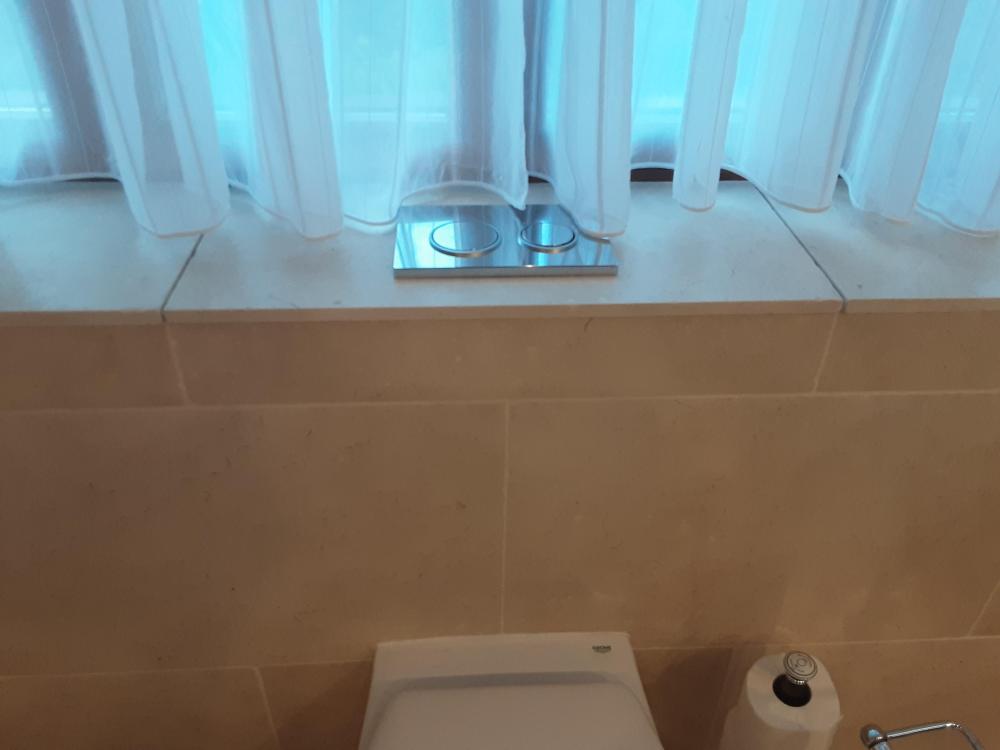
We used Hardie Backer board and stone photo above. Too heavy for young kids to lift and held down by the flush plate anyway.
-
That's also what I did. Used stone in both our bathrooms and was careful just to centre a 600mm wide piece on the pan. Stuck the stone to the removable bit of hardi backer board. Didn't bother to grout the joints either side but could do.
-
Think ours is an Eclisse. Its been awhile since we did ours but I think the end result is fine. Important things... Bear in mind the open width will be less for a sliding door because the whole door doesn't dissapear into the pocket. So you might want a bigger door? Pick a door handle early on because it's position and dimensions are needed to set the door stop. Eg to prevent the handle squashing your hand against the frame when fully opened. Use the right screws to fix the plasterboard to the pocket/frame. Don't over tighten. This is to avoid the pointy ends going in too far and scratching the door when you open it. If you can choose a light weight door. Easier to accelerate and decelerate it.
-
Try turning off the incoming main an see if other cold taps and shower continue working (more than just emptying pipes). If they also stop working they are also fed direct off the mains so what's their flow rate like?
-
Will the en-suite get a lot of use? We have a sliding pocket door on one of ours. They are annoying to open and close frequently. Hard to do quickly without banging against the stops. If yours is between en-suite and walk through wardrobe perhaps it would be left open most of the time thecen-suite is in use?
-
Is there water getting into the cavity higher up? Blocked gutters?
-
I know someone who built a nice 3000 sqft house. It cost them about £1.1m to build incuding the plot, everything. It's probably worth £800k.
-
Perhaps gang up with the neighbours and write a joint letter of complaint to the water co. Ask them to investigate. Does the house have a big cold tank in the loft and possibly pumps to boost the pressure for other outlets? Combi boiler or stored hot water tank?
-
Possibly. What time of year was it laid? The air is more humid in summer than winter so if it was laid tight in winter it will be under lot of stress come summer. That and a very hot floor due to sunlight would be my guess.
-
Electrical Charge Point for a new build
Temp replied to IronMike's topic in New House & Self Build Design
I think the requirement for houses to have charging points was introduced in June 2022. Thats when Approved Document S was introduced. So if the Building Control Application for your house was submitted before June 22 then you may not need one to meet the building regulations. If after June 22 then I think you do. However if the specification/contract for your house says it includes a charging point then I would expect one to be provided regardless.

