


Temp
-
Posts
10641 -
Joined
-
Last visited
-
Days Won
43
Everything posted by Temp
-
Our planners are changing the validation checklist for Full Planning Applications to add the following: Daylight/sunlight assessment Required where there is a potential adverse impact upon the current levels of sunlight/daylight of adjoining properties and/or of future occupiers of the proposed development A sunlight indicator test using the British Research Establishment’s ‘Site layout planning for daylight and sunlight – A guide to good practice.’
-
+1 This is all info that might be needed to design the foundations. See the key top right. Seems mostly self explanatory. Sway frames need to resist lateral loads as well as vertical so you shouldn't just sit those on block walls without care. They should be bolted down to something more solid like the strip foundations. Not all Architects are comfortable designing foundations. Many/most prefer to use a Structural Engineer.
-
+1 Yes if the studs (and any metal plate/pad) are wider than the beam, extra stud "brackets" wouldn't serve to locate the beam as they would be too far apart.
-
Thanks @MintSprint. Hopefully I'll never need to do one. Any idea how much a professional would charge?
-
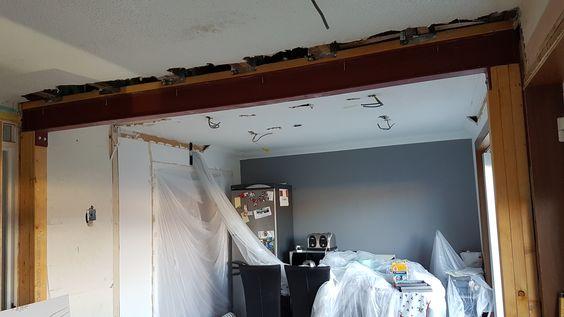
Not many photos out there but I found this one showing one method. I think they have chosen this method (brackets) to minimise the width. If your studs are in a wall I reckon fixing two taller studs either side so the RSJ sits in a |U| would also work.
-
Perhaps possible to replace the chrome waste with a regular plug on a chain type type and remove all the geberit lever mechanisim? Worth a look if you already have it. Not quite the same but we used wall mounted taps. We couldn't get the basin we wanted without a tap hole so used a waste pull to fill it up.
-
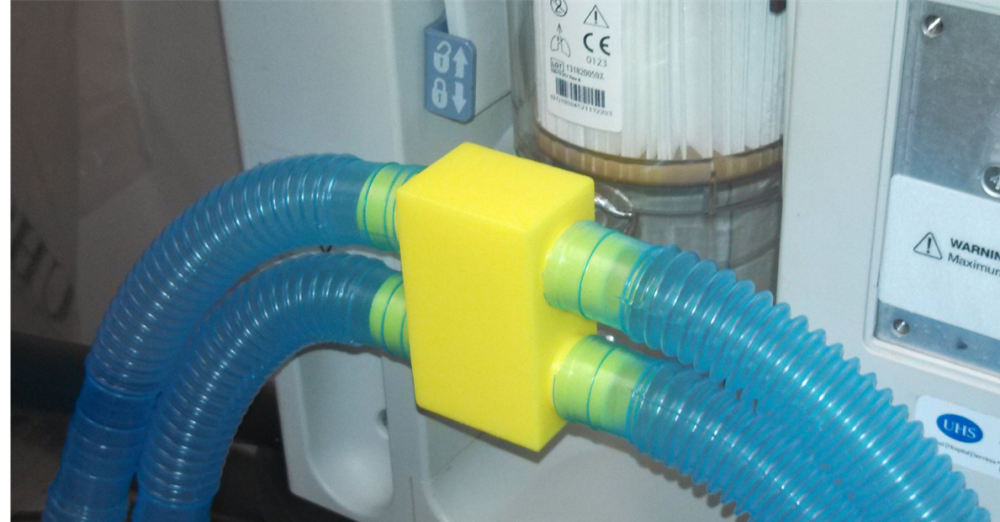
This look interesting. Its a manifold allowing four masks on one ventilator. Original paper published in 2015 in anticipation of a pandemic. No idea if it makes medical sense. Can't find the .stl anywhere. https://file.scirp.org/Html/2-1750025_49209.htm#ref10
-
Thanks, the interesting stuff is in the comments at the bottom. Problems such as copyright, patents and the need for medical grade materials get mentioned. Several 3D printer farms have already offered to help. Link looks interesting... https://github.com/brentjackson/OpenRespirator/wiki
-
What’s the best and simplest security system
Temp replied to recoveringbuilder's topic in Networks, AV, Security & Automation
If you decide to install a fake alarm I suggest you don't buy a fake bell box as pretty sure crooks recognise the fakes. I'd buy a real bell box and just not bother to connect it up. -
What’s the best and simplest security system
Temp replied to recoveringbuilder's topic in Networks, AV, Security & Automation
I believe the RIng can be used without a subscription but you don't get recording. You only get live video. At least that's what I've heard. There are alternatives.. https://eternallyconfuzzled.com/video-doorbell-without-subscription -
I wondered if those of us with 3D printers could print ventilator parts? All I can find is a news story about a company in Italy that had printed some part for a hospital.
-
Somehow I missed the original post. Normally when you perform an operation on something you have to select the bodies to perform it on. Doesn't it let you select both bodies?
-
Isolation - what will you do?
Temp replied to Ferdinand's topic in General Self Build & DIY Discussion
Well you never know.. https://cornishstuff.com/2019/09/17/lithium/ "This week MetAmpere, the first company to drill lithium exploration holes in the UK, described their test results from Cornwall as “staggeringly good”. -
40mm too short: the story of my life - now what?
Temp replied to ToughButterCup's topic in Waste & Sewerage
Obviously you couldn't just bend the black bit upwards to raise it 45mm but would a 15 degree bend get nearer or is it too much? https://www.screwfix.com/p/floplast-single-socket-bend-15-110mm/69177?tc=IB6&ds_kid=92700020972856688&gclsrc=aw.ds&ds_rl=1241687&ds_rl=1245250&ds_rl=1249404&gclid=Cj0KCQjw6sHzBRCbARIsAF8FMpWokdAwAdUbePMS7aWxbcygv6Ii3EhMTpDNsX8-T5Mz9CcMwqs7G5IaAu1lEALw_wcB -
What accidents have you had while DIY'ing?!!
Temp replied to mike2016's topic in General Self Build & DIY Discussion
I've got mostly minor DIY scars. Worst was when I fell off a ladder. I landed on a wood floor and was lying there unscathed, happy I had missed my tool box and thinking I'd had a lucky escape... when the ladder fell on me. -
+1 We have a mixture but in some rooms we have 80mm PIR insulation and about 60mm screed with UFH. Wish we had more insulation. Our favourite rooms have 21mm engineered oak flooring on battens with PIR between and no screed. The top layer of PIR has foiled covered grooves for the pipes that spread the heat. A system like that would allow a greater depth of insulation.
-
Google found.. https://cableductuk.com/700series.html?gclid=Cj0KCQjwpLfzBRCRARIsAHuj6qUTH6BdbeW5nGHVzZkM3BUnj4kD9oj_oCCIZok8hdaCzextaqjpfcMaAvFBEALw_wcB
-
Battens worked for me but I wasn't putting the tray in a recess. I think straps might be the way to go as @Onoff suggested. Would an engine hoist work?
-
+1 Howmany air bricks are there? If you have several along that side of the house I doubt it would cause any problems if that one was blocked, perhaps by filling the "trench" with large decorative stones or a planter box.
-
Soil pipe assembly: bottom up, or top down?
Temp replied to ToughButterCup's topic in Waste & Sewerage
That's what slip couplers are for :-) -
Exterior Beam and Block - OK to use pre-concreting
Temp replied to Adam2's topic in General Construction Issues
If you can't concrete it now how about a large thick tarp? Put some blocks on it to stop it blowing away. -
Well this was a long cup of coffee... It's common to try and exclude consequential loss but my understanding is it may only be enforceable with business customers unless the contract was specifically negotiated with you rather then being standard T&Cs. I believe you, being a "consumer customer", also have statutory rights under the Consumer Rights Act 2015 in that excluding consequential loss probably amounts to an unfair contract. https://www.citizensadvice.org.uk/consumer/somethings-gone-wrong-with-a-purchase/claim-compensation-if-an-item-or-product-causes-damage/ https://www.consumercouncil.org.uk/sites/default/files/2019-09/A_Guide_To_Consumer_Law_for_Businesses.PDF https://www.squirepattonboggs.com/~/media/files/insights/publications/2015/10/the-consumer-rights-act-how-does-it-impact-on-brand-owners/cra-article-for-consumer-brands-alert.pdf https://assets.publishing.service.gov.uk/government/uploads/system/uploads/attachment_data/file/450440/Unfair_Terms_Main_Guidance.pdf Reading on it appears they believe the exclusions of unforeseeable consequences would be ok but the exclusion of foreseeable ones would be unfair. If that gets raised I'd argue that the consequences of a leak were reasonably foreseeable by both parties! So looks like a pretty certain that a consequential loss exclusion is unfair when the buyer is a consumer. I'd get quotes for the repairs and send them a letter asking them to pay up before you do any work. Point out that clauses in contracts with consumers which use terms like "consequential loss" are considered unfair. I believe you have to give them the opportunity to fix it before you can get it done yourself by a third party and claim compensation. Give them a two week deadline to respond? You could probably also claim for your time locating the source of the leak but I think I would just point out that that by taking action to promptly identify the source of the leak, and removing sodden insulation yourself, you have minimised the possible damage and the cost to the rooflight company. I've also been reading something about the Alternative Dispute Resolution (ADR) Directive which provides an alternative to court action. I think TrustMark is an ADR provider. Perhaps find out if the rooflight co is a member and involve them?
- 48 comments
-
- 6
-

-

-
- roof
- rooflights
- (and 2 more)
-
Soil pipe assembly: bottom up, or top down?
Temp replied to ToughButterCup's topic in Waste & Sewerage
Bottom up. Ideally start from the sewer in the road (at least on paper so you know how high the rest bend at the bottom of the stack must be to get the correct falls all the way to the sewer). -
Loft conversion internal door requirements / spec
Temp replied to DC5's topic in Building Regulations
Oh bother, I didn't spot that bit. -
For the drainage stuff you may need to lift manholes in the road to find out how deep the sewers are. Then make a drawing working back to your house accounting for the fall in each length of pipe to calculate the invert level for each inspection chamber. For example if the sewer connection was 2m below reference level and the nearest IC on your plot was 40m away the bottom of the IC would be calculated as.. 1:80 fall over 40m = 0.5m so the IC would be set at 2m - 0.5m = 1.5m below reference (Thats not necessarily 1.5m below ground because the ground may slope). Repeat for each IC untill you get to the bottom of the stack.

