
ragg987
-
Posts
873 -
Joined
-
Last visited
-
Days Won
1
Everything posted by ragg987
-
I used thick MDF on one wall to hang the MVHR (I think was 28mm, cannot recall, the heaviest we could get). Logic was to minimise sounds transmission of the fans. We just emulsioned the MDF, which works OK other cracklines at the joints. I should have done the same with the opposite wall where the ASHP and pumps are hung, we ended up with using fermacell, pump noise is more prominent.
-
+1 intelligent insurance. We have timber with render and ICF basement. I purchased the policy through topcashback, if memory serves right the questions guided me through the construction types. The quote this route was a bit cheaper than going direct to them, plus I got about £30 cashback a few months later.
-
Indoor meter boxes - any regs applicable?
ragg987 replied to readiescards's topic in Regulations, Training & Qualifications
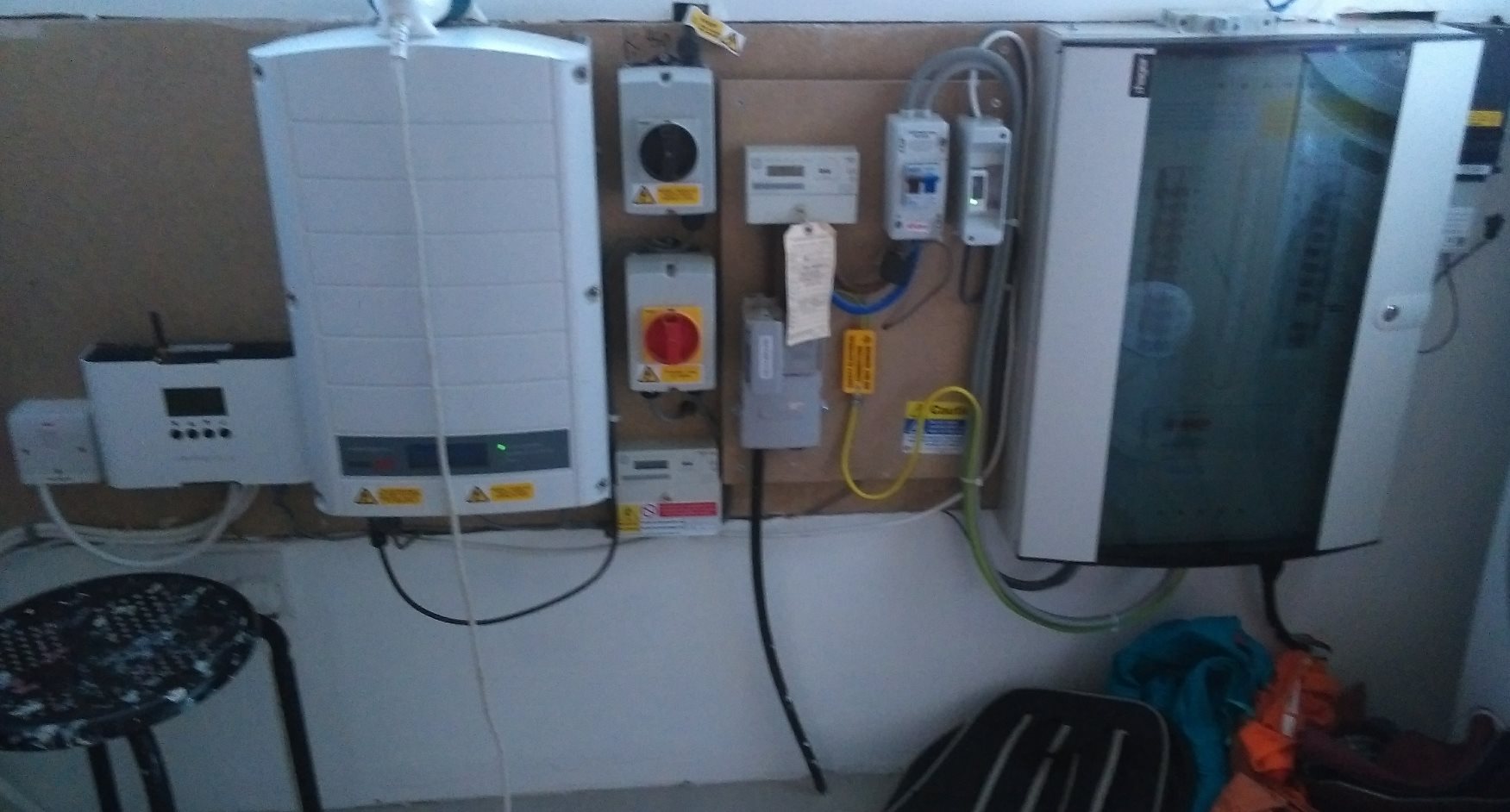
It depends on the DNO. Our supplier (UKPN) stipulates that all new supplies can only be connected to an external meter point, not inside the house, and require a regulations box (horrible grey fibre-thingy which I did not want on my shiny new render exterior)). I argued that ours was not a new supply but a move of an existing one based on demolition and construction, they conceded after a lengthy discussion and an appeal to a manager, and installed it indoors provided I gave space for maintenance at the supply point. Interestingly, they did not require a meter box and just wanted a bit of board to mount their bits on. Our supply is open in the utility room. From left to right: PV stuff: Immersun, inverter, isolators and meter Incoming mains stuff: termination, fuse, meter, isolator (note cable coming up through the screed from the basement, we came into the basement underground and used waterproof cement to close off and make it airtight) sub-meter for ASHP measurement purposes DB (Hager 3-phase unit but used for a single phase - this confused the DNO as they expected to fit single phase supply and saw a 3-phase box on site) controller for movement sensor lighting.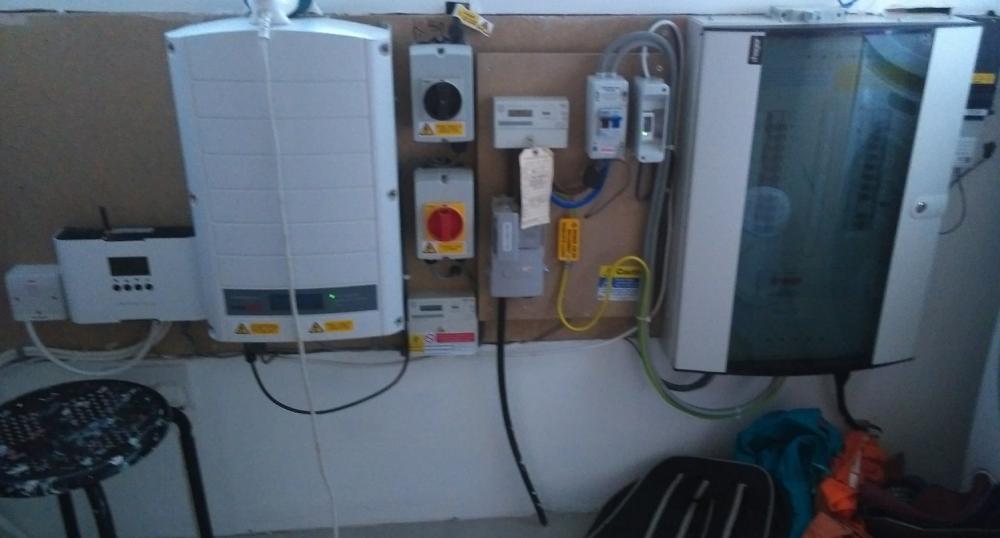
-
We used icf for the basement. Ground workers had never used it before so were learning as they went, with support from the icf manufacturer. Supporting the blocks is key, they need to be braced prior to pour. There is a risk of bursting despite the blocks having plastic bracing inside. No membranes, waterproof concrete called kryton. Also used their products at junctions e.g. slab to wall.
-
I like it - quirky and makes use of the space quite well. We are used to larger old houses in the UK, but in cities like Barcelona and Madrid a small new apartment is the norm. Would I live in it? No way could I afford it, and even if I could doubt I would like to live on a busy road like this...
-
We ended up with a large concrete tubes stacked underground for the soakaway - I tink it was about 5m deep and 1m across. Heavy clay with underground water (we had a well). Cost around £10k (from memory). This was after a hydrology report and drainage calculation which covered both basement and soakaway. Water stores are just that and not a substitute for a soakaway. @Russell griffiths, love the idea of a pond. I would have been interested in a natural pool but unfortunately our sloping land and available space made this idea impractical.
-
Sometimes nightmares are real: the insurance story
ragg987 replied to ToughButterCup's topic in Self Build Insurance
I tend to agree with @Alphonsox, I had similar incidents during my build (not insurance related but additiional costs due to architect or builder oversight) but decided that this was part-and-parcel of working with a team who were new to the technologies rather than on familiar bricks-and-mortar builds. Maybe a compromise would be to show the builder the evidence and ask him to fund the labour? And you have taken the hit through delayed timeline. -
Snag: shower trays not flat
ragg987 replied to Fallingditch's topic in Bathrooms, Ensuites & Wetrooms
Ours does not drain completely and leaves behind said coin size puddles, dry usually a few hours later. -
Have you got the "this is a small space" feeling yet? We felt that way as the slab for basement and then ground floor got laid - with no walls it felt far too small! Looks good and bodes well so keep the momentum up!
-
My mortgage company did not ask for too much detail. If memory serves right I submitted a simple spreadsheet which they asked me to summarise by key phases - e.g. cost to wall plate, etc.
-
That is right. We have 1800mm trays. On the tray with the shower head near one end (say about 1300 to end of tray, plan view) we get minimal splashing outside. On the tray with the shower head centralised, we get a lot of splashing outside. On this one I am thinking of putting a shower curtain using the steady bar as a rail. Amazing what difference 400mm makes!
-
If you get significant partial shading over the array (e.g. from your roof or chimney), or if you end up with multiple arrays, you may wish to look at power optimizers like Solaredge or Tigo. These permit each panel to operate at the optimal point. Slight increase in cost but might be worth it. I use Solaredge and also like the internet-enabled access it permits to monitor the array, inverter and each panel.
- 5 replies
-
- 1
-

-
- orientation
- west
- (and 3 more)
-
Number of factors to consider, apart from the aesthetics... (I agree with @ProDave about gable vs. hipped) Shading is a factor - e.g. consider trees and buildings both nearby and further away, and choose an orientation that minimises this. Also roof angle - about 38 degrees is considered optimal in Southern England. South facing will give maximum energy over the course of the year, and power output will tend to be focussed less towards the start and end of the day. East and West facing will give less output overall, but will extend the hours of availability of power. You are looking at a reduction of approx 20% in total energy. Note that in winter the sun tends to be more southerly so benefit of east or west facing is significantly reduced. Now if you are able to make use of the power (e.g. divert it to DHW or run your heat-pump, dishwater, washer etc) during peak generation periods, then you can have-your-cake-and-eat-it as this allows you to maximise consumption and export the minimum. If you do not get a smart meter, you have the option to be paid (FIT) on an assumed 50% export. One other factor is installation cost - you may find it is cheaper to put all the panels in one place compared to split them out over 2 or more locations. My view is to go optimal energy (South). You can model your exact scenario here: http://re.jrc.ec.europa.eu/pvg_tools/en/tools.html
-
I used the thermostat / controller from my ASHP manufacturer. It permits auto-heat off based on mean external temperature or auto-cool with a user-configurable gap in between. Simple 2-wire connection to ASHP.
-
I bought my 3G Fakro skylights from Europe for a big saving. PM if you want supplier details. GBP is weaker now so saving may be smaller if purchased today. Also got my VAT refunded for this under new-build.
-
New diesel and petrol vehicles to be banned from 2040
ragg987 replied to Triassic's topic in Environmental Building Politics
Surely switching out fossil fuel for electric drive is more about reducing pollution in cities and not about reducing overall emmissions? With electric the pollution burden is now moved to the electric generation rather than to the cities. So if the increased electric generation requires more fossil fuels to be burnt, we have not fixed it. Requires overview planning and solutions rather than single announcements. Having said that, having a target would certainly give focus behind which industry can align. -
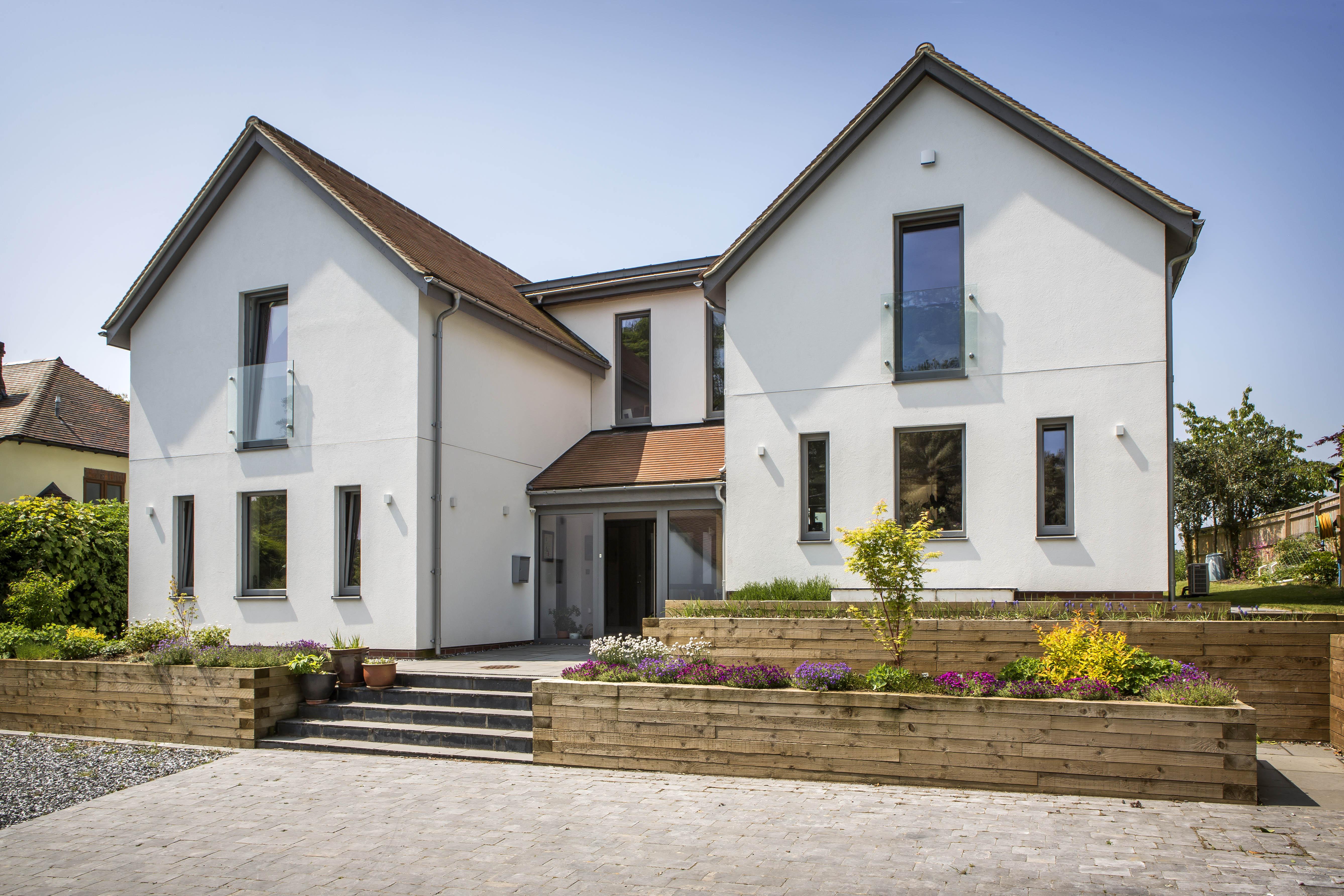
Aesthetics are a personal thing... We went with a silvery-grey or grey look for external "features" - guttering, downpipes, windows, soffits, eaves and partial zinc roofing. This is for a more contemporary white-rendered external with red brick slips bottom 300mm and some external timber cladding in one area, and red clay roof tiles. I like the clean look this creates - subtle yet the features are there. For me, black would be visually jarring and perhaps more suitable for a less contemporary exterior. YMMV.
-
Suffering from wind... again
ragg987 replied to ToughButterCup's topic in General Self Build & DIY Discussion
Is there some form of wind breaker you could consider - like sitting on a windy beach behind the break? My (very limited) understanding is that a solid obstruction is less desirable as it promotes turbulence, possibly difficult to predict, but something that "slows" the wind could be more effective - e.g. a hedge effect. I suspect providing a temporary barrier of this type is not going to be easy, and my creative juices are a bit dead, but is there anything on site already you may be able to use? -
Mix and match kitchen appliances?
ragg987 replied to Alexphd1's topic in Kitchen & Household Appliances
As long as you are ok with mismatched cosmetic finish, I see no reason why not. E.g. of you go for fitted oven and separate microwave then getting the same handles and front would lend itself to a clean look. But if units are not side by side (hob) or are concealed (dishwasher) then not a concern. -
A duct gives flexibility in case requirements change - data cables (alarm, ethernet) or electrical vehicle charging point might come into play in the future. My electrician said he would need a sub-panel in our garage for regs and we used an armoured cable from the main panel with 32A capability, plus a spare cable and 6-core alarm cable. I think we used 50/63 twinwall duct, it was buried about 500mm deep and final finish is block paving with vehicular access over. We left a rope in the duct for future pulling requirements.
-
Looking to come off self build mge and onto normal lender
ragg987 replied to Bitpipe's topic in Self Build Mortgages
There is another thread on vat reclaim. I got vat back for post BC materials. -
Looking to come off self build mge and onto normal lender
ragg987 replied to Bitpipe's topic in Self Build Mortgages
I went to a normal mortgage but with the same provider (saving in application and redemption fees). The only document needed was build control sign off. Same requirement for moving from build insurance to standard insurance. -
My experience is the same - I listed materials purchased after date of completion certificate and the VAT has been refunded. The notes accompanying the form do not specifically exclude this scenario - they just state a time limit for submitting the claim as 3 months after completion.
-
MVHR unit poorly installed options?
ragg987 replied to tomds's topic in Mechanical Ventilation with Heat Recovery (MVHR)
Flexi ducting is not always bad. The type that has concertina effect on the inside (like you used to get with tumble dryers) is very bad for airflow, though the type we used is lined internally so it has a (relatively) smooth bore and low losses. Have you checked the inlet and outlet for blockages (leaves etc), and also have you tried to replace the air filters? Also might be worth checking the heat exchanger for blockages (with care it is delicate). One other pointer, does your system need rebalancing? This is done by adjusting the room valves to achieve a balanced in- and out-flow, and also adjust for the fact that long duct runs lose more pressure than short ones. Requires an air-flow calculation and meter to do properly. -
Ah did not realise you could configure a GSHP like this. Agree the cooler and stable ground is a perfect dump for excessive heat - I guess this has the added benefit that you are charging the ground with heat which should improve the COP a bit in the winter.