

ragg987
-
Posts
873 -
Joined
-
Last visited
-
Days Won
1
Everything posted by ragg987
-
I take the view that these guys are working hard and it is important to provide the facility to warm up, make a brew etc (esp in winter). So I hired a 20' cabin with kitchenette one end and plugged it into the temporary builders electircal supply. Plus kettle, fridge, microwave, first-aid kit, fire extinguisher, table, chairs, most of this I had lying around rest I picked up some cheap stuff with intention of eBaying once done. Now that house is watertight and we have moved electric supply we use the house and the mobile hut got picked up today. For storage, it will depend on risk you are willing to take - i.e. value of materials, area etc. For the MBC portion of our build, we stored outside - low value and high weight / volume to nick, but once our garage was available we used that for higher value stuff like bathroom fittings. Our area is fairly quiet and peaceful, not sure I would do the same in a busy town.
-
Objections: the best invalid objection you've heard
ragg987 replied to ToughButterCup's topic in Planning Permission
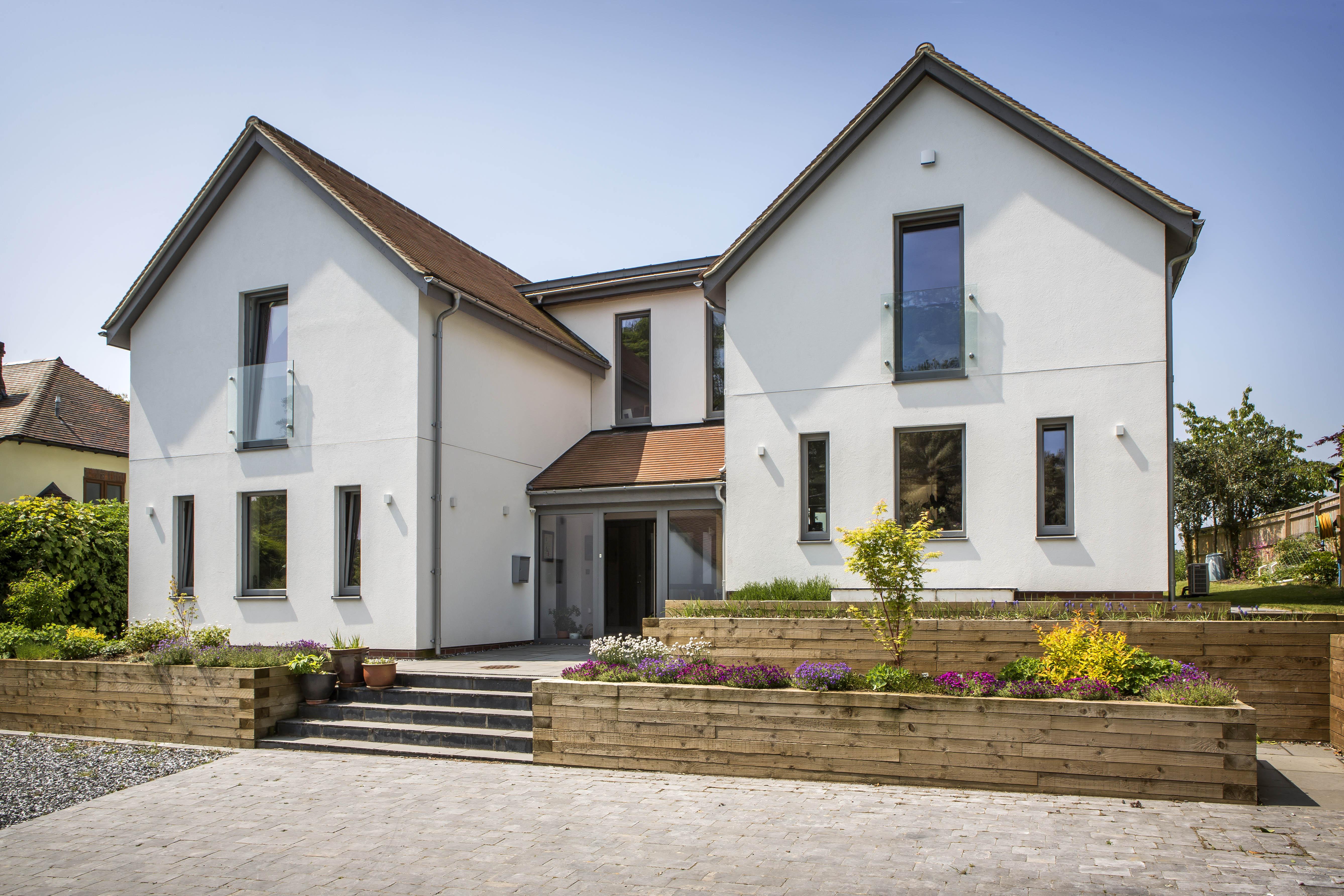
In the interest of balance, I want to chip in with my very positive experience. I took the view that there is a "chain of events" that leads to irrational objections, and that I would try to manage the chain to the best of my ability. Link 1: I spoke to the neighbours prior to planning application. Took them through the design principles and rationale, then through the possible impacts we had already taken on board like impact to their light, overbearing, street view, privacy etc. At this point we were left with minor concerns about aesthetics - as far as I was concerned these were immaterial for the application. Link 2: one neighbour was very supportive in the above so I asked them to say so once we got the application in. I believe this helped set the tone for subsequent responses. Link 3: I took the Chair of the Parish Council through the above 2 aspects. I could see they had a history of objecting to recent applications, so once I had pitched it I asked an open question "under what conditions would the Parish Council be willing to support such an application". I did not expect the PC to endorse the scheme completely, but I wanted to sow the thought so as to try and break from any canned response. Link 4: On the day of the PC meeting, I spoke to reinforce some key messages. Neighbours were generally supportive. So PC took the view that they would not object. Of course all these views are only taken into consideration, so the most important aspects was to ensure we worked with architect to take care of any real reasons that the planners might use to refuse it. We also took the view that putting in an informal application would be counter-productive as, once a planner had provided informal feedback, chances were this became a reason to beat us with later. Planning was granted with no request to change anything. Our new build is double the footprint of the bungalow it replaced. -
Aylesbury, Bucks. I decided to use 12.5 plasterboard for ceilings and fermacell on walls only - focus attention where the problem is - I dislike plasterboard for walls e.g. hanging anything up becomes a big job with an uncertain outcome.
-
10mm, I purchased 2 pallets so far with another 2 or 3 to go. Based on room heights, I ordered 2500x1200 boards to minimise cutting and wastage, 60 to the pallet.
-
I use FGF in Birmingham for my insulation, fermacell and external cladding boards. Great prices though delivery can take a while. I found web shops to be a lot more expensive.
-
Credit/Debit Reward Cards, Discounts etc
ragg987 replied to Ferdinand's topic in General Self Build & DIY Discussion
Some companies will also offer discounts for other reasons, usually to avoid fees associated with a card payment or late payments. Examples I agreed recently: 5% discount by paying by bank transfer in advance for a kitchen. Vendor agreed to take a £100 credit card deposit so I get additional protection. 10% prompt payment discount - i.e. cleared funds by invoice due date I will generally ask for a reduction if the deal is a reasonable size. The way I look at it, they can only say no.- 151 replies
-
- 1
-

-
- credit cards
- rewards cards
- (and 6 more)
-
The advise I have is different - the laitance slows down the drying process so I was advised to remove it after 1 week. Was also told that the removal could get harder if left on too long. So we scraped it off after 1 week and I hope that means it is drying faster now.
-
Pour is just under 3 weeks old now, so should be over that initial period where we should not dry too quickly. I am hoping to trim approx 2 or 3 weeks, nothing too aggressive. But more importantly, I need to have some certainity that the conditions are right prior to proceeding to finished floor. My concerns is that the manufacturers 50 days is under "ideal conditions", whatever that means. And every week in our summer is different from the previous one - I mean this week is completely wet and humidity is quite high. So far from "ideal", I think.
-
Ah great did not spot the for sale section. Shall visit that. Manufacturer does have a rate they specify, would take 50 days on my screed which I plan to accelerate with forced air changes and UFH. Problem is I do not know how effective these will be and how much time it would cut from the manufacturers time. Also, we have a basement that is much cooler than ground floor - I doubt it will dry out as fast.
-
Hi, can anyone recommend an inexpensive humidity tester for anhydrite screed? I believe something like this hood could work well, though I see at least one article on internet that it may not be accurate enough for anhydrite. https://www.tramexmeters.eu/hygrohood-with-built-in-sensor Prefer to keep cost low - after a few weeks of use it becomes useless to me, so over to eBay or similar to recover some of the cost. On that note, there must be a few of us who buy tools or equipment for a one-off build then it becomes redundant - worth creating a forum here for sale / exchanges? I hope to complete my build in a few months and will have a few items to dispose of. Rajive
-
"remeasure" procurement contract issue
ragg987 replied to ragg987's topic in General Construction Issues
Agree - hard lesson learnt ! -
Hi Nick, thanks for that tip - never seen CT1 before, from doing a web search seems it is a form of modified silicone. Shall get hold of some. One open question, I think partially answered - what to use in the junction between Amtico flooring and flush shower tray. Bette recommend silicone if it were tiles, perhaps is the same with Amtico? I am just a bit concerned that Amtico is not as rigid as tile so this may create a weaker joint if the Amtico is not fully adhered to the floor at the junction and is "flapping" around a bit. And I guess CT1 would be better here than silicone. Rajive
-
These look great, Nick. Can I just ask about some detail... We will have flush-to-floor shower trays (Bettefloor) and are considering Amtico or Marmoleum flooring, plus tiles on wall and boxing of baths. What did you lay below the Amtico? Aquapanel? We will need to raise the level to match the finished floor in adjacent rooms. How do you waterproof the junction between Amtico and shower-tray? Would a bead of silicone suffice, as with floor tiles? And how would you treat the junction between Amtico on floors and tiles on vertical surfaces? Silicone bead below the wall tile? If it matters one shower tray will be on ground floor, so anhydrite screed below, and the other will be first floor so we would cut out the boards as per your pictures for shower tray.
-
"remeasure" procurement contract issue
ragg987 replied to ragg987's topic in General Construction Issues
This may be a key point - "unknown unknowns as zero", in my case I would argue that the items were not unknown and should have been in the original BOQ. The job could not be done without some of these items (something I did not know at the start but know now). Thanks for your input. Case of buyer beware, I agree, just trying to make the best from where I am. Have a QS on the case. -
Hi there, looking for some input to this issue I am facing. I will keep the descriptions "vague" and avoid specifics. I signed a remeasure contract for some works without fully understanding the implications. Contractor is now claiming a significant variance to the quoted price and using the remeasure to defend the change, something I am not convinced holds true. Prior to quote the architects details were issued and contractor issued a quote on a proforma form. The form stated items, quantities and price per quantity, hence giving total price. Most of the line items in the form show quantity zero, hence price zero for that item. Some of the items show a quantity and hence a price. After job is completed, contractor has now "remeasured" and added quantities to some of the items previously marked as zero quantity. On top, they have increased quantity on other items hence increasing the price again. From my understanding, the remeasure applies where there is a degree of uncertainty at quote phase - e.g. as design is incomplete or the actual condition are not known (e.g. underground works). This does not apply in this case - the design was complete and scope of works fully defined - it was down to the contractor to convert this to a bill of quantities and price it up. My view is that if they stated a quantity as zero then they did not intend to use it at quote phase, not that they expected to use it but had not stated as such. Any thoughts on how I can handle this? And a caution to anyone about REMEASURE - tread with caution! (Apologies if this is posted in the wrong forum - seemed closest place for it. Perhaps we need a "Procurement" area?)
-
Structural Warranty Quotes
ragg987 replied to swisscheese's topic in New House & Structural Warranties
Not heard of CRL, I ended up with Buildzone after getting a few quotes and reading the cover provided. The "top-tip" for saving money is to combine structural warranty with build control. The inspections overlap and, in my case, adding BC cost an extra £200ish instead of about £1k if bought separately. Buildzone have been fine to deal with as have their subcontracted inspector. I had to appeal some decisions and a remediation notice and, in the end, all was fine. -
So it seems you end up masking and painting in 2 separate phases, would this negate any cost or time benefits compared to doing it with brush / roller at the end? Would be interesting to see what you find
-
Been on the 'phone to a couple of companies - one reckons 1 week to do our 330m2 floor area (rough estimate 1,000m2 walls and ceilings) would be 1 week, inc prep, if we want multiple colours, less if we go for uniform white. One concern is timing. To simplify the painting it needs to be done prior to second fix. Seems then that damage is inevitable as second fix, kitchens, wardrobes, door frames etc are fitted, and I suspect a manual patch-up of the damage is likely to be visible against a sprayed background. If painting is post second fix price of masking goes up. Anyone with experience on this aspect? Another interesting angle is spray plastering, as mentioned by one of the spray painters. Seems sensible to go the whole hog - any experiences?
-
First time ever I have been first to post a topic in a forum... Looking forward to the day we will have completed boarding and plastering and need to decorate. We intend to paint ceilings white and walls will either be white or specific colours in certain rooms. Question: is it worthwhile considering spray painting for this? Anyone with experiences or specfic recommendations? My thoughts are: will be faster to apply and also to dry ought to be a better finish? requires less paint? though any saving probably offset by additional materials for masking We can reduce masking requirements by avoiding any second fix like electrical sockets, switches, flooring, skirting etc - essentially a bare house. The house is relatively large at 330m2 (simple estimate is 1,000m2 of surface to paint) including a few longer walls.
-
Surely depends on what you know or can anticipate - as per Rumsfiled, some of this is in "unknown unkowns" for me (build newbie). Learning fast.
-
Hello all, I am pleased that we now have a new place to exchange ideas. Thanks very much to the sixteen. As an update, our build in Aylesbury is now watertight and we are progressing first fix, landscaping and on to the rest. Big day tomorrow - screed is poured, this is the last key aspect that (once dry) enables finishing works internally. Rajive