le-cerveau
-
Posts
524 -
Joined
-
Last visited
Everything posted by le-cerveau
-
 In reality it is over 100 "who cares". SAP is quite arbitrary and favors IMHO efficient gas heating in mediocre insulated houses, and puts a high weighting on renewable at the expense of efficiency.
 -
Page 11 of the ATTMA (The Air Tightness and Testing Measurement Measurement Association) Air Testing Standards for residential dwellings September 2016. https://www.attma.org/wp-content/uploads/2016/09/ATTMA-TSL1-Issue-3-Rev-0-2016.09.09.pdf
-
That is a loaded question! What is your current SAP assessment, House construction methodology, Insulation, air tightness, ventilation, heating system, hot water system, renewable...... We need more data to be able to give any advice. Generally, well insulated, reasonably air tight shell will have the most impact, plus if you have mains gas that helps (very counter intuitive). Renewable's also add to the score (ie lots of PV).
-
1 or 2 extract points in kitchen?
le-cerveau replied to j_s's topic in Mechanical Ventilation with Heat Recovery (MVHR)
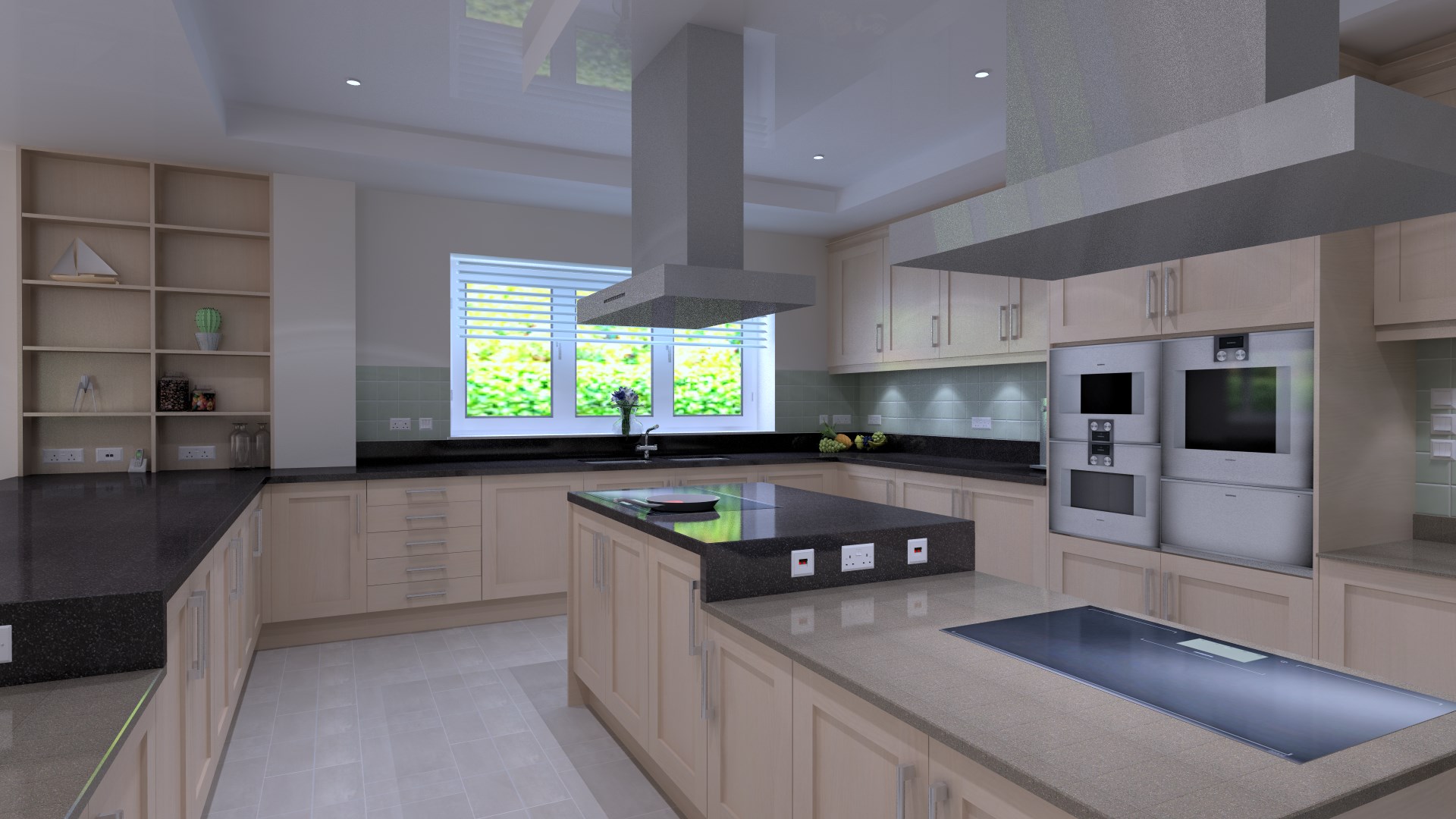
I am planning 2 extract points in my kitchen with 4 ducts (2 to each), but I have a 34m2 open plan kitchen in a 108m2 open plan area and a planned extract of 22l/s (80m3/h) due to house size. I will be having re-circulators over my hob also. I start the first stage install next month. Ground floor plan (showing ceiling plan suspended ceiling).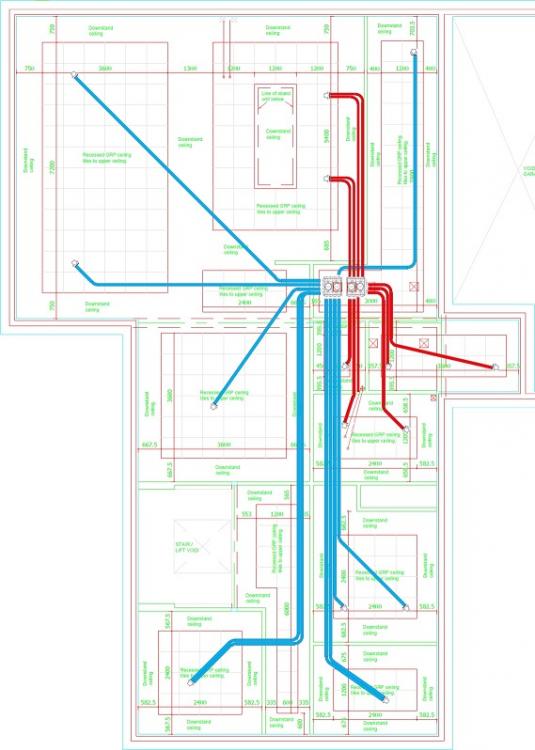
-
The issue with stranded is it is not recommended for PoE applications (other than the final connecting fly leads). The best advice is to use solid cable between sockets in the fixed instillation, and stranded leads between the fixed socket and equipment/switch.
-
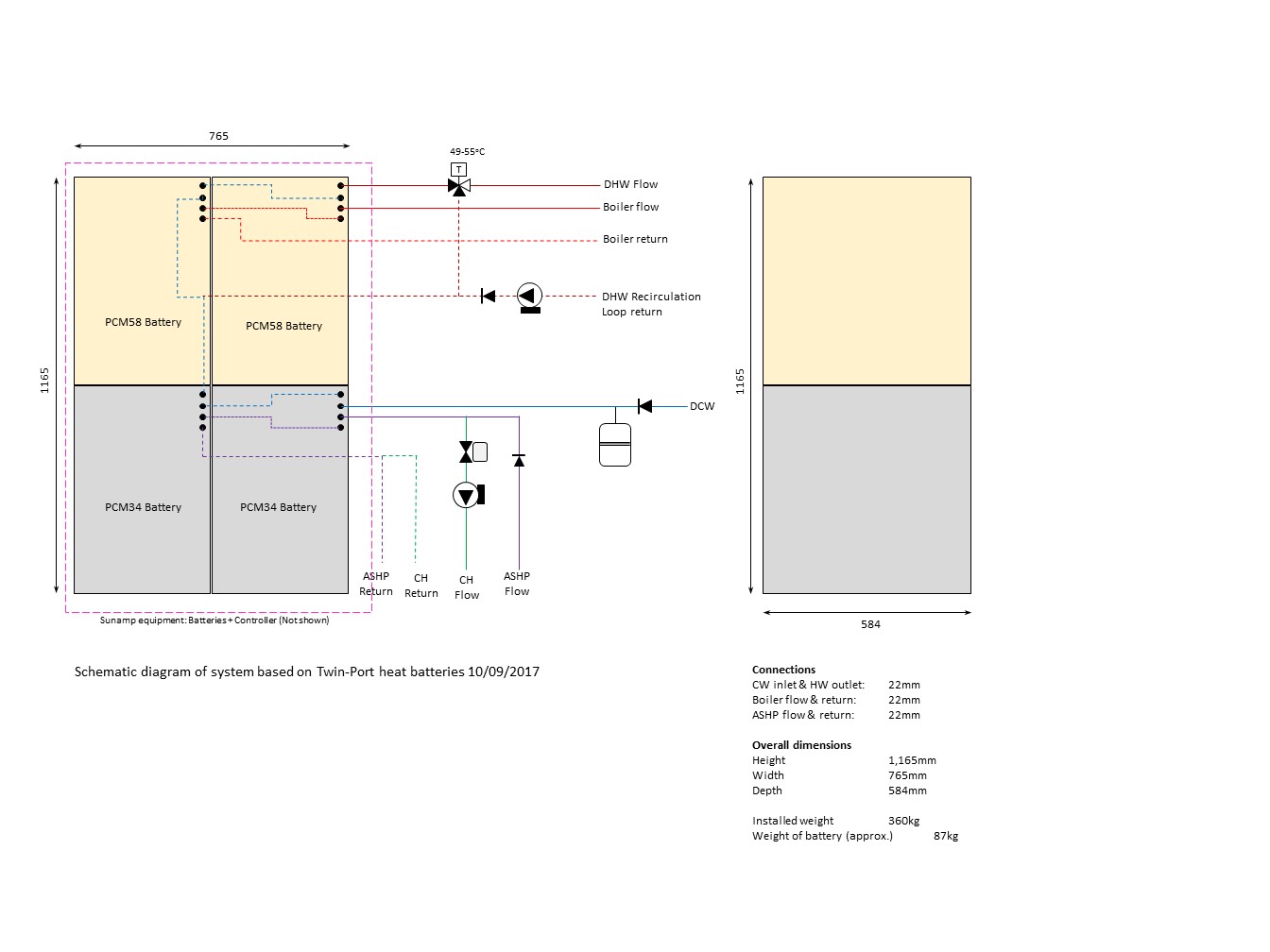
I have had an update from SunAmp who will now supply my equipment based on the new Dual Port (??) more when I know about it however here is the latest schematic.
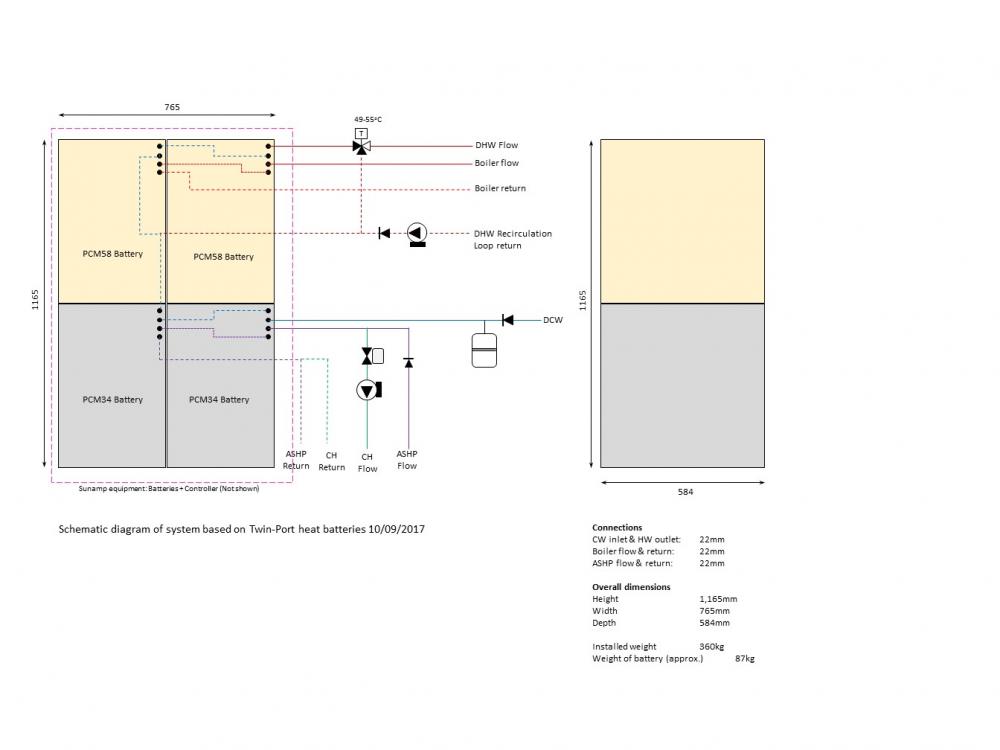
-
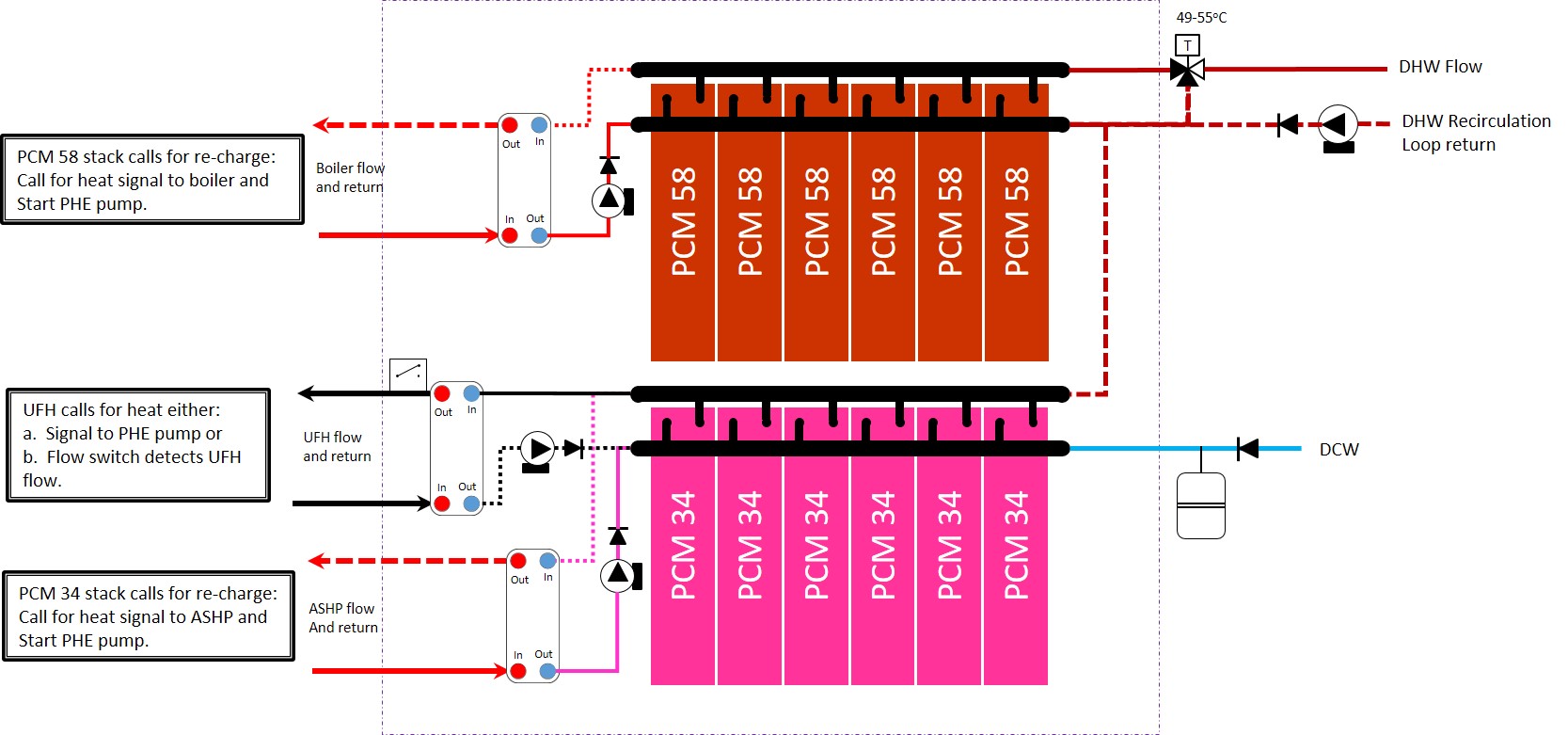
The big issue is hydraulic separation between potable and non-potable water. My setup keeps the water in the cells potable and uses PHE's to charge and take out the UFH circuit, for your setup if you keep the cell as non-potable you only need one PHE for your DHW, but loose the instant slug of warmer water, otherwise you will need 2 x PHE, one for ASHP charging and one for UFH take off.
-
I am installing a SunAmp Stack, but a bespoke one with dual temperature cells: The Low temp cells will be charged from the ASHP whilst the high temp ones from the boiler (I have mains gas). This allows mem to take the best of the high CoP from the ASHP for both UFH and DHW pre heat, the High temp (normal) cells will provide the boost. This is for a 5½ bed house allowing for 3 concurrent 12 l/m showers, and the capacity for fill a stupidly large bath. The diagram is the latest from SunAmp, they are building it at the moment, final details will be known in the near future.
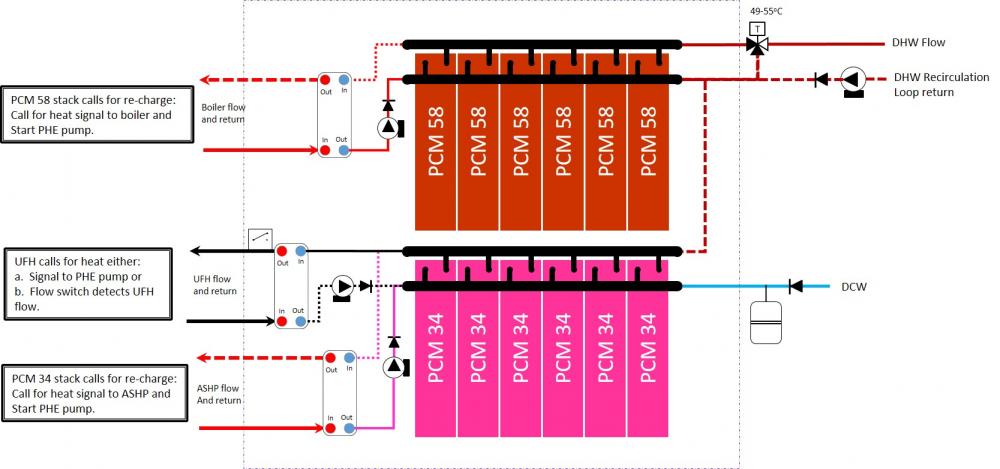
-
Bath Surround / Boxing In, and concealed pipework
le-cerveau replied to Onoff's topic in Bathrooms, Ensuites & Wetrooms
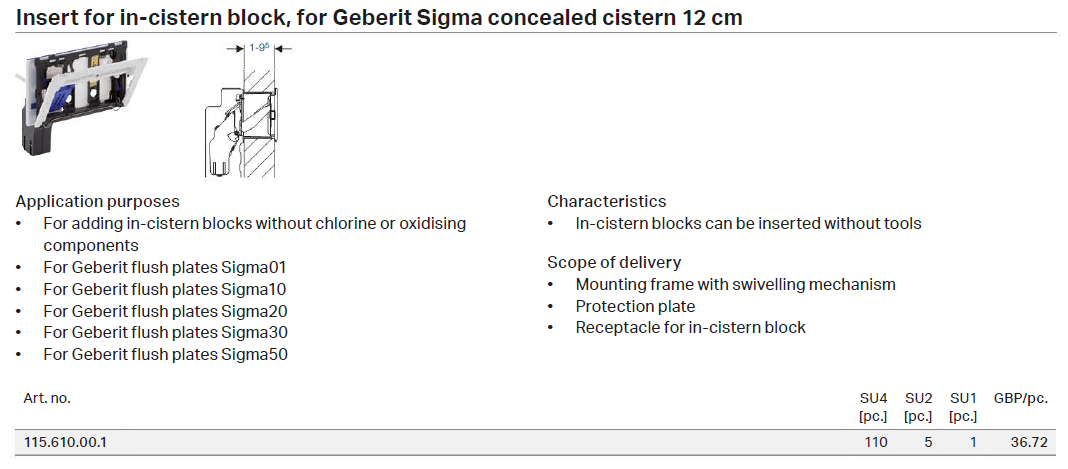
@Onoff, I have had a look at the specs and they are only for the Sigma cisterns and flush plates, the Kappa's are a different size! -
Bath Surround / Boxing In, and concealed pipework
le-cerveau replied to Onoff's topic in Bathrooms, Ensuites & Wetrooms
Geberit do an insert for the flush-plate that allows you to put blocks in the cistern: Stops constant removing of the flush-plate, just tilt and insert the block.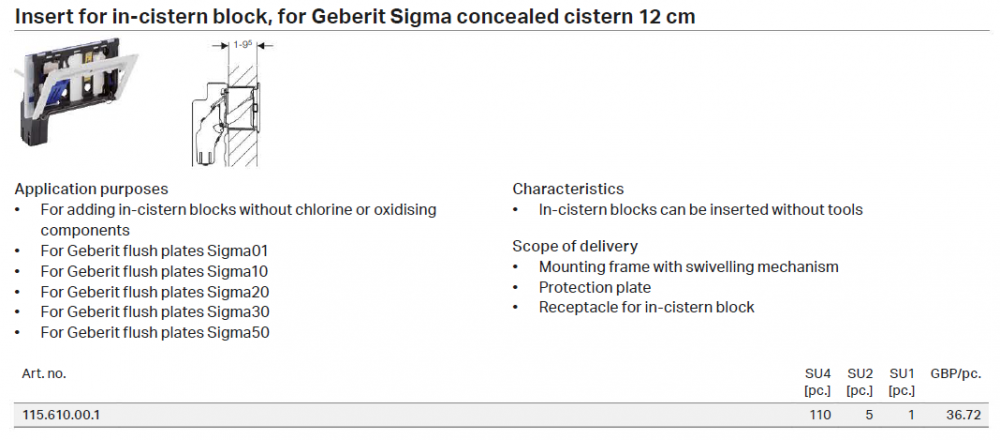
-
Bit late but I had a similar issue, but used the 45 degree rule (that doesn't exist) to show how my house wasn't overbearing, overshadowing and overlooking. See:
-
We used econekt who do both foundations and walls so the 2 lock together. WE have 250mm thick outer insulation, 150mm concrete and 50mm internal so 450 overall before finishes! The econekt foundation upstand is adjusted as appropriate.
-
Just a work of caution about pictures of tiles and even catalogues, having gone through the same process (for the bathrooms) we worked out what we wanted then went into Tops Tiles just to look at them and were warned by a very helpful chap (older) that the companies deliberately alter the colours in the catalogues to make them more appealing. You need to see tiles in the flesh to be sure that the colours are what you expect, especially with mosaics!
-
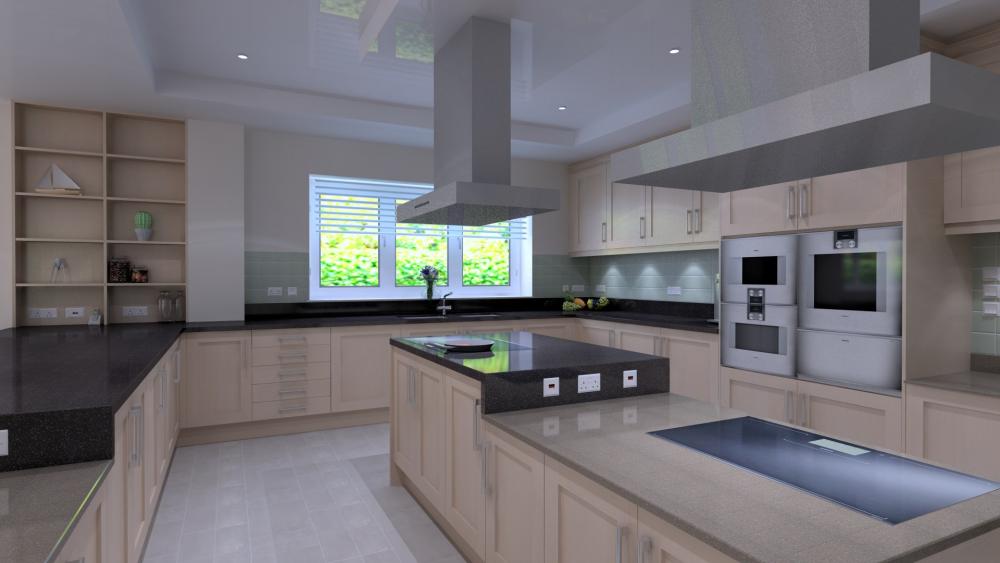
I will be, but above the Corian splash back where we are tiling up to the bottom of cupboards or around the window at the same height. There are some set in to the splash back on the island at the transition but I will be having a very nonstandard kitchen.
-
@pudding I see the biggest problem that you are using UFH with zones, where @JSHarris has a unified system with only one large zone. Your zone stats will close off the respective loops above the call for heat temperature so you will be unable to circulate the cool water. You will require a wiring re-configure to override the zones to allow a flow of water. So you will need a second stat in any zone you want cooling and when it is activate (call for cooling) it opens the zone valve in the same manned as a call for heat stat. Then you need to isolate the DHW system. Your GSHP may require re-configuring to allow you to access the ground loop (brine), however a quick look at the Valliant web site does not indicate that they have a cooling function (some manufactures provide additional cooling units). It may be easier to directly tap into the brine circuit before/after the GSHP and just insert a heat exchanger to take the cooling from, personally I would keep the 2 circuits hydraulically separated, otherwise it could get messy. I suspect this will require some considerable either plumbing and electrical re-wiring to work as you desire.
-
The Lake District becomes World Heritage site,
le-cerveau replied to Triassic's topic in Housing Politics
Concur that travel is a nightmare, 30 years ago I would happily drive through and it would be quicker, no I just go round, M6, A66 and would never consider going through. Traffic is up, speed limits are down (usually unnecessarily, but that is another topic). There is a slight off season, New year to Feb half term, but even that is disappearing. We also are just outside the National Park, which was a relief for planning. -
@jack Jack, you can retrofit the internet module, it just plugs into the service port (ebus), google Brink-Home-eModule. I think I will use generic CO2 sensors, either room or duct, or I could add them later.
-
It soon adds up: £800, manifolds, connectors and bits. £1260 for ducting, £360 for connectors, £690 for 36 ceiling adaptors (lots of runs), £400 for vent terminals, £860 for silencers and insulated 180mm duct, the list goes on. This is a VAT inclusive price so I will be claiming back £1800 at the end. I have a large number of ducts and terminals as I am limiting the system to 2m/s in any duct and 30m3/h in/out of any terminal, to limit any flow noise (completely over engineered).
-
@PeterW I am basically installing 2 systems so 2 x MVHR, 4 x manifolds, 400m of ducting and all the associated adaptors and connectors, 4 x roof vents and the associated insulated ducting, in a large house it soon adds up. The CO2 sensors are the Brink ones that plug directly in but they are just 0-10v proportional ones with a 24v supply.
-
I am finalizing my MVHR specification, having to self install, as there are no contractors who will fulfill my requirements (no surprise). I will be fitting 2 x Brink Renovent Excellent 400 Plus units with Ubink ducting. I have discovered that I can get internet connections for the MVHR units so I can do away with the 3 position switches/remote controllers and use a web interface/ app to control them. I will be fitting RH sensors in the extract ducting to auto boost the system, but I was wondering if it is worth including CO2 sensors also. The theory being that I could run the system slower than the building regs extract requirement with the CO2 ramping it up if required, the same as the RH. The building Regs extract requirement is the key as I have a large house 439m2 so this trumps any wet room extract rate. I have the following planned extract rates: 0 150m3/h Very low level for un-occupied periods. 1 320 m3/h lowest keeping room extract rates at BR requirements 2 495 m3/h floor area extract rate to comply BR 3 570 m3/h Boosted keeping the units within PH standards My original plan was to run the units at 1/2, depending on house occupancy levels with the RH boosting up to 3 as required, however with CO2 sensors I should be able to just let the system do it's thing. Do they work and are they worth it? (approx. £700 extra on a £10,000 equipment spend)
-
Recommended Garden Shredders, Please
le-cerveau replied to Ferdinand's topic in Landscaping, Decking & Patios
Exactly the same experience as @Triassic, I was taking down the leylandii that used to form our side border (30ft high) and shredding the branches, our neighboure lend us an electric shredder, and it was hopeless, so I hired a petrol driven one and it made mincemeat of the branches. -
Late to the discussion so to summarise: PoE (concerns), there are a many proprietary standards but 2 international ones: 802.3af (standard POE) good for about 13W 802.3at (POE+) good for 25W .at is backwards compatible with .af so if you have an POE+ (.at) switch it will power both types of devices. 25W is more than enough for most devices you want to power. Another issue will be the power the switch itself can push out, as 24 port PoE+ switch with 250W power and only push out full power on 10 ports (or less across more), so depending on what you are powering, you may have to buy the 500w version. This will be bigger and run hotter with noisier fans, so there some work to be done. You need to know how many of what devices you intend to run of which switches and work out your power consumption, ip cameras, AP’s, etc. Providing the equipment is up to standard you can run 100m of catx cable, that is end to end, so you usually work on 90m of structured cable (solid core socket to patch panel) the 10m worth of patch cables divided across the two ends (these can be stranded). As for network setup, if you have Gigabit switches you shouldn’t have issues but it may be worth physically separating the 16 cameras from the rest of the network. I would provide a 24 port switch for the cameras, you will need at least 18, (16 cameras, NVR and connection to the other switch, 6 spare) and locate this in the optimal position for the cameras. If the cameras need 15w each that is 240w just for cameras so possibly a 500w POE+ switch just for this. As for the house, don’t underestimate the number of ports you will need, (I am putting in 72). Put them in in pairs for redundancy, and you entertainment centre will require 4 minimum, (TV, SAT/Cable box, Blu-Ray player, Game console), internal AP (Access Points (Wi-Fi stations)), internal cctv?, home automation (MVHR, Heating, blinds,…….) You can also use it for the phone points so no internal BT cable, everything goes over the structured cabling (you just use adaptors at the phone end, and patch together all the sockets used for phone). If you have switches with fibre trunk ports, this is the best way to connect them together, but you can use copper, just make sure it is good quality.
-
@DeeI see it when I log on
-
@Dee edited with picture
-
I am at the other end of the spectrum as I have maintained BT and power on the site (demolish down and re-build), so I have a service cupboard at the site entrance. I have 2 high end Hikvision CCTV cameras on a pole connected to a NVR in the BT cupboard. The NVR is connected to the homehub, and kept accessible by a DDNS system. I can log on and stream live or look at the recordings of what has been happening. Essential as I am remote from the site and relying on my contractors/Architect/QS to keep me informed. It is interesting having a scan through each evening to see what has happened. The cameras are ELXIR so have good IR visibility and you can't fail to notice them, though I am sure some people think they are just dummies.