
le-cerveau
-
Posts
524 -
Joined
-
Last visited
Everything posted by le-cerveau
-
If you have European Tilt and turn (inwards) then external screens are not an issue, and the fact that hen whole pain tilts/turns gives you access to the screen. Below is a page out of the current Internorm catalog showing various options, yes they are nor cheep but worth it. I would question how well sealed you could get sliding windows like the ones they have in the USA!

-
Internorm do fixed, turn, sliding and pull down bug screens!
-
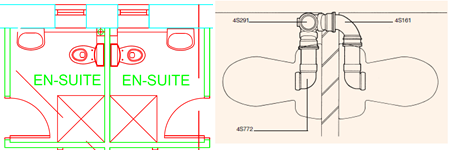
We have back to backed our kids en-suites to get over the issue of 2 toilets flushing through horizontally opposite wastes and will employ the layout shown below. These are Gerbrit Duofix frames with a 100mm stud wall between. The soil stack goes vertically down at the indicated point which may be your problem.
-
I will write about the install of my MVHR system, as this is something I have done myself (with help). Theo house is being built by my contractor, supervised by my Architect and QS (who is the CDM). As I am remote from the location I can only watch what happens on CCTV. When I was last there the old house was standing and we had disconnected the services. 6 Months later, I have a new house, Weather tight shell, Windows and doors in, sarking and felt on, and tiles and PV being fitted. I am doing the MVHR as I couldn’t find a company to design and install what I wanted so I did it myself. Had a slot in the schedule for me to work and got on with it. Internally the team were completing first fix joinery (all the stud work). This was the two-man team who are always on site and are doing the majority of the work, the company bring in others when required, but the two in the house whilst I was there are my main team. My design: This is my layout as planned, 2 x Brink Renovent 400 Plus units, 4 x Ubbink AE 24 port distribution boxes, 180mm insulated duct and silencers for the main runs and 350m of AE48C duct, 50m of AE34C duct with all the associated connectors and fittings. A total of 36 outlets/terminals….. Suffice to say it is a lot of equipment. It arrived on 8 pallets at around 1100 on the Tuesday morning. I sourced all my equipment from CVC who were/are great, arranging delivery slots, supplying additional equipment quickly, and I still have an outstanding order for the vent terminals and some other bits still to complete. I arrived on the Monday lunchtime after 6 days of traveling (not all to get there) and had a meeting with the site manager and the first thing we agreed on was to board out the plant room with MDF (as a final finish) so that we could install the equipment and be done with it (rather than approximately place it and then remove awaiting final plastering) This turned out to be one of the best decisions as work could be finalized and other trades could also finish work in there (First fix electrical could fit the 24 way 3 phase CU)… We also got the loft boarded out at this point to enable the first floor runs to be completed. On Tuesday morning the building team started boarding the plant room, starting on the wall that the MVHR units were to be sited as a priority, this was completed by the end of the day and then started on the attic boards. Once the delivery had arrived and I had checked it I had some initial work to do. First to install the acoustic insulation into the distribution boxes and trim the spigots to the 180mm mark and move 2 of them to the top for the ground floor. I the attached the first 2 silencers to the top mounted distribution boxes (Large jubilee clips (44-217mm) work perfectly). These would then be mounted against the ceiling with the silencers running up into the plant room. (the first floor is 250mm concrete planks and I am having a suspended ceiling to put all the services in). This is where having a builder with all the equipment to hand come in handy. One of the team then worked with me, the manifolds were fixed to the ceiling, simple concrete screws direct into the planks and then we started on the ground floor ducting. (I had pre calculated what ducts from what rolls, but that got altered on the fly when we had longer lengths remaining) The duct was run through the stud work and fixed approximately every 2 meters either with wood screws to the stud work or concrete screws to the ceiling. Rather than buying the Ubbink fixings £15.42 for 10, I used builders band £10.00 for 10m and plumbers felt £10.00 for 20m (you can probably get it cheaper) as the fixings. The above shows the 2 ground floor manifolds and you can see how the builders band and felt was used. We got most of the ground floor ducting done in one afternoon. The terminals were left dangling with about 1m to the previous fixing to allow them to be positioned by the plasterers when the fit the suspended ceiling as they will be positioned either in the centre of a ceiling tile or plasterboard (room dependent). Wednesday started out installing the MVHR units as the main ducts needed to be installed before the attic runs could be done, this also allowed time to continue boarding out the attic. The first unit was positioned on the wall and to support it extra noggins were installed behind the wall, easy when the stud work is still open: We mounted the second MVHR unit then measured and marked out the penetrations for the ceiling. Then the builders simply took down the ceiling boards, cut them out and put them, back up. The ducts then had a perfectly snug fit through the ceiling. The two silencers going into the attic had to be slightly compressed oval to fit due to a double joist. Images of the plant room with the MVHR units fitted. (already painted) Fitting the attic manifolds was a little more complicated, the supply manifold went as planned Here you can see the 2 x 90-degree bends attached to the silencer going into the manifold and all the ducts coming off. The exhaust manifold wouldn’t go in as planned and had to be rotated 90-degrees to fit between the truss webs, fortunately I had plenty of 180mm 90-degree bends for the final connections. Exhaust from below and side (one duct moved between pictures). All the exhaust ducts were relatively easy to run (crawling through the webs). 7 of the supply runs had to cross the attic and not wanting ducts in the main storage area, these were turned down to run along the joist space. On the supply manifold you can see 5 of the 90-degree elbows turning then down and below the left 3 (2 from the side and one of the front ) look like this from below: This was the plan, but on the far side as the came up beyond the truss webs (non-boarded area) I didn’t use the 90-degree bends on the far end just curved them into place. You can see the runs under the attic boards (incomplete) and moving off to the respective locations. By Thursday we had installed all the ducts and terminals (so 3 days with a builder and all the tools). We then decided to fix the first-floor terminals into their final positions (just plasterboard for first floor) so either screwing/banding them to rafters, screwing to the attic boards where available, or inserting small offcuts to attach them to. The decision was made to paint out the plant room so we removed the MVHR units and ducts, bagged the ground floor ducts and the builders sanded and filled all the screws. It was painted on the Friday (advantages of a builder and his contacts). During the week I realised I needed to order some extra circlips (not easy to get large ones) so I ordered them via CVC and also my RH sensors which were quickly delivered. I installed these into the units (whilst dismounted) not an easy task, very fiddly and not to be recommended on a unit that is already installed. And the sensor heads into a short length of 180mm insulated duct. On the ground floor units we had a short length connecting the silencer to the MVHR unit, but one was not planned for the first floor ones, however as the silencers are flexible and compressible I inserted a short length on top of the House supply and exhaust connectors for this purpose and inserted the sensor there. Sensors installed in insulated ducting (simply tie wrapped into place) I then just had to wait for my final delivery. I am planning to plumb my cisterns into the MVHR (Se the previous blog entry) however since then @Auchlossen has done a similar utilising 75mm ducting so I decided to go down that route (hence the roll of 75mm (AE34C) ducting) I did use it for some runs. I ordered 3 x OsmaSoil 3S094G 82mm Reducer to 50mm Grey 860749 to fit over the 75mm ducting and convert it to 50mm plumbing push fit. The plumber will do the rest as detailed in the previous blog. These fit almost perfectly. The first picture shoes one pushed up to the seal, the second one shoes one pushed onto the seal. They are very tight with the seal but will push on and make a good airtight fit. As part of my initial plan I purchased a HB vent terminal for experimentation, just to prove that these systems are interchangeable I fitted an offcut of 92mm (AE48C) duct into the HB terminal, no problem. So, when the question comes up can you mix and match, yes (within reason). On issue I see with the HB equipment is I am not sure how easy it is to unclip the terminals once in place as there does not seem to be a way to easily und the locking lugs. On the Ubbink equipment you can unlick them by twisting the red click ring until it disengages and then remove the duct! The roofers are currently slating the roof and will fit my vent terminals in the appropriate positions with a 500mm length of duct to protrude through the roof insulation. These will then be connected up to the MVHR ducts when a come back to do the final commissioning, fit outlet terminals and balance the system. (next year).
-

Joiner recommendations for bespoke passive front door
le-cerveau replied to willbish's topic in Doors & Door Frames
Yes, it does include the electronic versions. -
Joiner recommendations for bespoke passive front door
le-cerveau replied to willbish's topic in Doors & Door Frames
Internorm use the Winkhaus locks in their door series. -
Having just spent the last 2 weeks on site (main contractor doing the work) the main contractor had A2/A1 prints of the floor plans that they were working off (studwork). The electrical on site had A4 laminated sheets for each room and A2 layout of the floor. I had a walk round with the plumber prior to first fix and the main contractor provided him with hard copies of everything. I worked off my laptop whilst doing the MVHR install but that was the exception. Expect them to want to work in hard copy!
-
Joiner recommendations for bespoke passive front door
le-cerveau replied to willbish's topic in Doors & Door Frames
If you want electronic locks the Internorm doors are available with half electronic or fully electronic latch's, these are multipoint and passive, but expensive! -
Joiner recommendations for bespoke passive front door
le-cerveau replied to willbish's topic in Doors & Door Frames
Internorm will do doors to any size spec you want. I have a 1200mm wide 2235mm high front door, in a 1800mm wide frame (side panel). Thermal performance is 0.73 W/m2K, it is a HT400. You can put whatever glazing panels in you want. -
Cat 6 cable. Spare pairs to pinch for leds ?
le-cerveau replied to Nickfromwales's topic in Electrics - Kitchen & Bathroom
Depends on your setup. If you are limiting yourself to 100Base-T 100Mb then only 2 pairs are used, but if you are using 1000Base-T Gigabit (possible over Cat 5) then all 4 pairs are used. The risk is having a mix of standards. -
@Nickfromwales will give a more qualified answer, but for a 3 bath house (from your plans) 200ltr just won't cut it! One bath will kill the cylinder. Even with a powerful boiler to recharge it you will struggle if more than one bathroom is used at once. Go bigger if you have the space, but make sure it is well insulated and then get more insulation as heat loss is the biggest killer as @JSHarris will tell you.
-
That is what I am doing, why I have 2 data ports to all locations (more for some), The phones will just be plugged into adaptors/converters, and cross connected at the patch panel and then down another Cat6 line to the BT point. Also the internet will go up to the patch panel and into the switch. I can convert to a PBX at some point but as people say it is not just simple, and I would need to do the research. But I know it is possible just not simple and not cheap for an off the shelf solution with support.
-
For Cat 5/6, go for descent Cat 6, with a solid copper core. Plan on more than you think, at least one to each TV point and put one to each room (not wet rooms). No matter what people say about Wi-Fi, it gets overloaded and subject to interference and if you can physically connect then it is better. To connect all the Cat 5/6 together you will need to terminate them all in a patch panel in you central location (office) and then you will need a switch to connect hem all together. Depending on you requirements your ISP router may suffice (4 connections) at the other end of the spectrum (my house has 72 data points for 1 x 48 port and 1 x 24 port (PoE) managed switch). Sky Q is non standard Satellite signals, it uses 2 cables with non standard signals to the box (let Sky install) or very specialised distribution equipment Sky specific dSCR multiswitch, which can run over a single coax from the correct multiswitch and a quatro lnb, however if you don't fully understand it you will get burnt. (See the Triax TMDS 5x C Digital Multiswitch for Sky Q)
-
I am going with the Villeroy & Boch Subway 2.0 Direct Flush, as I managed to find a bad review of the Aquablade (in German) but no real praise. SO I will stick with the fairly safe option. It will be the same setup as @ragg987, so I will wait to see how the builder/plumber manages. Thanks all for the comments.
-
Have to say this sounds like salesman bull**it, knows nothing about your house and is just quoting from a standard formula from his playbook. As the others have said modern passiv type houses don't follow the norms, work it out for yourself and tell them what you require, not what they want to sell!
-
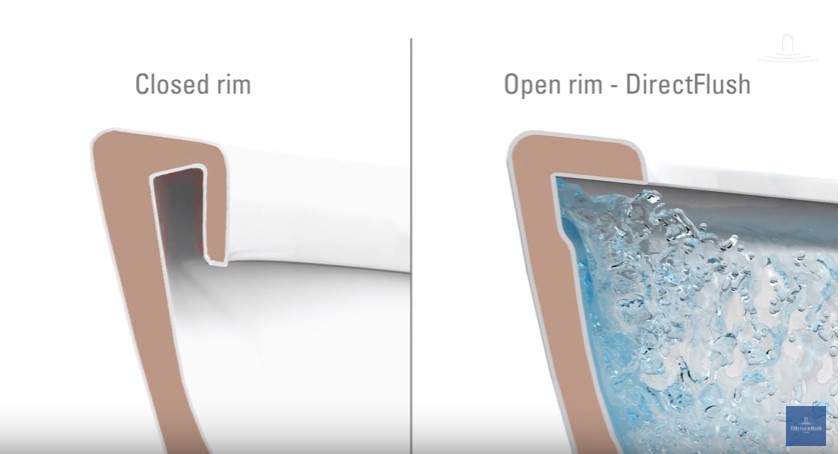
As we move towards the point of selection of sanitary ware I have been looking for the ideal toilet bowl. These will be mounted on Gebrit Sigma frames/cisterns so wall hung and I will need 6 of them! I like the concept of Rimless but worry about the splashing! However I have come across the following: Villeroy & Boch direct Flush: And the Ideal Standard Aquablade: The direct flush as the open rim to reduce/eliminate splashing, the Aquablade is a new concept, basically the next generation of the rim for better flushing. Does anybody have any experience, comments or other options?

-
Microwave size problem
le-cerveau replied to Tennentslager's topic in Kitchen & Household Appliances
@ProDave Gaggenau do build in Microwaves the BM450/480 series and the MBP 250 series, though they are horrendously expensive as i know as we are having Gaggenau ovens, only people who do side opening! -
@Barney12, For Geberit cisterns less than 90cm high you have 2 options, the Omega and the Kappa, both have a 82cm high version: Kappa Cistern 82cm.pdf Omega Cistern 82cm.pdf with the appropriate Duofix frame to allow a wall hung toilet: Duofix Frame for 82cm Kappa.pdf Duofix Frame for 82cm Omega.pdf Then select the flush plate from the chart that @Onoff included.
-
3 is the magic number
le-cerveau replied to NSS's topic in Energy Efficient & Sustainable Design Concepts
In the ATTMA guidelines it says that the test must be done a minimum of 7 times, 10 recommended, with a difference between each of less than 10Pa. So a comprehensive series. It also states that he initial pressure is to be 20pa or 5 times zero flow reading from the initial setup calculations. Did the tester do all the correct setting up, measurements and then steady ramp up? -
Without seeing plans it is very hard to comment. When I re-designed our house, bungalow to 2-storey, I deliberately included a proper lift with stairs going round it, but my mum is in a wheelchair so was the only option. (se the plans on my blog) I suspect you don't have that option without destroying the layout of the current house.
-
@joe90 Agree with the spare cables, but actuators cost money and add un-necessary complexity.
-
If you only have one zone, why the actuators? Won't you be running the whole thing together (as Jeremy does) or not at all, so surely the actuators are nugatory?
-
RHI up by a third (if you installed after 14 Dec 2016)
le-cerveau replied to richi's topic in Air Source Heat Pumps (ASHP)
The way I read it is, they are just ignoring the cooling, but it does talk about not using a duct heater as the 'heating' must be fully hydronic, so potentially FCU's could be an issue if anybody had/wanted one of those. This may be the issue as most ASHP installers don't want to consider UFH (cooling) but want you to have a FCU (condensation concerns), they then also run them as part of the heating system so excluding it from the MCS scheme. -
RHI up by a third (if you installed after 14 Dec 2016)
le-cerveau replied to richi's topic in Air Source Heat Pumps (ASHP)
Just had a look at the Sep 17 rules and it says that an heat pump may also provide cooling: "To be eligible for the Domestic RHI, all heat pumps must distribute heat using a liquid (normally through radiators or underfloor heating) to provide space heating, and may also be used for domestic hot water heating. They may also provide cooling. Heat pumps that distribute heat using the air are not eligible under the scheme." So the way I read it you don't have to have the cooling function disabled and "cheat the system later" -
Plant room extract.
le-cerveau replied to Nestor's topic in Mechanical Ventilation with Heat Recovery (MVHR)
I am putting an extract in our plant room, it makes sense as the room will generate heat no matter how well you insulate the tanks. Although the MVHR extract will not shift much heat it will take some and make an attempt to reduce the heat in there.