le-cerveau
-
Posts
524 -
Joined
-
Last visited
Everything posted by le-cerveau
-
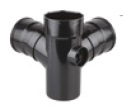
I will defer to the experts, but the question is all about levels. Can you replace the branch (in the vertical stack) with a corner branch something like this: and then you have the two runs? Yes it means getting into the stack, but may be the easiest way.
-
The gradient isn't the killer, you need a level bit at the top so the wheelchair user can then open door/ do whatever is at the top of the ramp, just try opening a door whilst holding your chair still on a gradient!
-
@RichS, House currently being built, so won't know for a while! We are keeping all level as my mother is in a wheelchair, and that is her main route into the house, she drive home, gets out of the car and rolls into the house. The house that was there before we demolished it, had the step and we had to create a ramp, that is a complete pain for a wheelchair user as they are going uphill and arrive at a door to be opened.
-
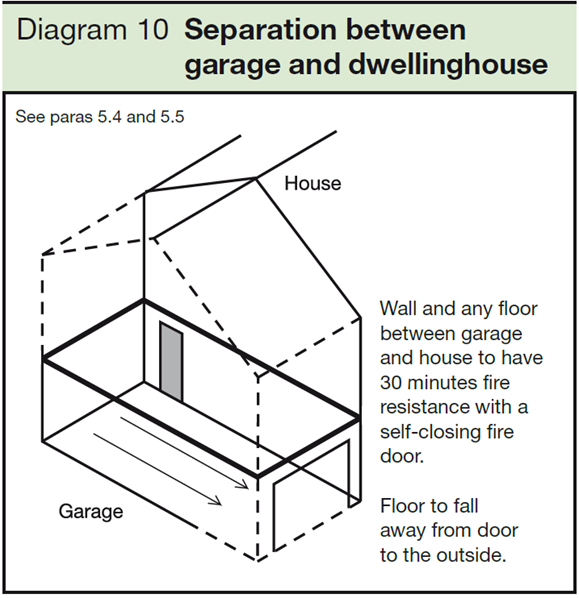
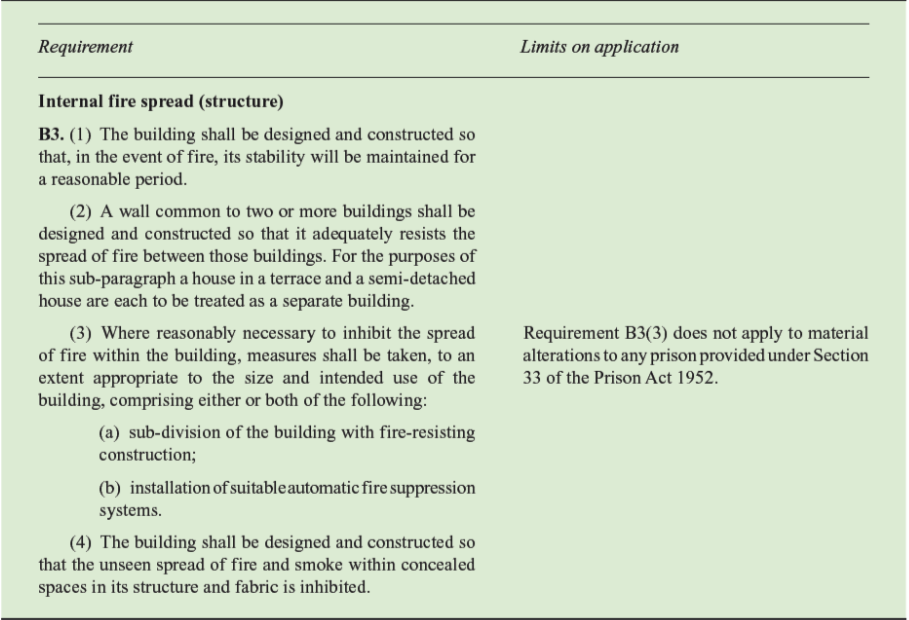
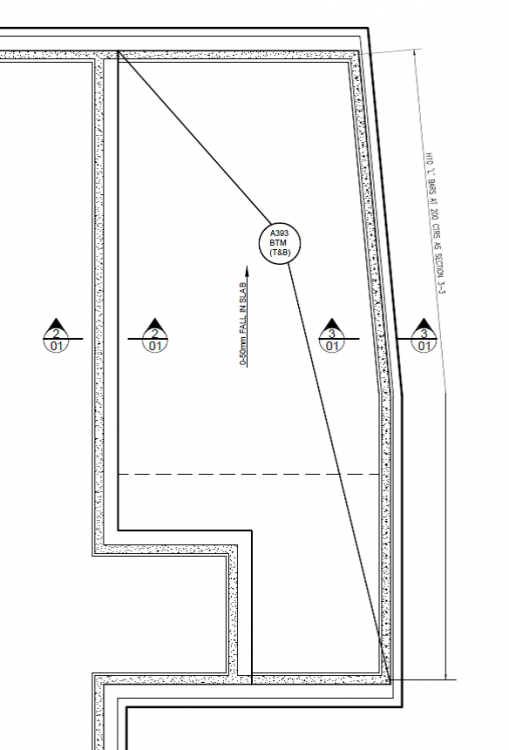
The enforceable statute is: This is interpreted as: 5.4 If a domestic garage is attached to (or forms an integral part of) a dwellinghouse, the garage should be separated from the rest of the dwellinghouse, as shown in Diagram 10. 5.5 Where a door is provided between a dwellinghouse and the garage, the floor of the garage should be laid to fall to allow fuel spills to flow away from the door to the outside. Alternatively, the door opening should be positioned at least 100mm above garage level. @Russell griffiths, you either have to have a step between the house and garage or slope to the outside garage door, this is what we have done: This has been accepted by building control. You can always argue it as the Building Regs are only guidance, but you have to prove compliance with the Statute (green bit at the start of the post).
-
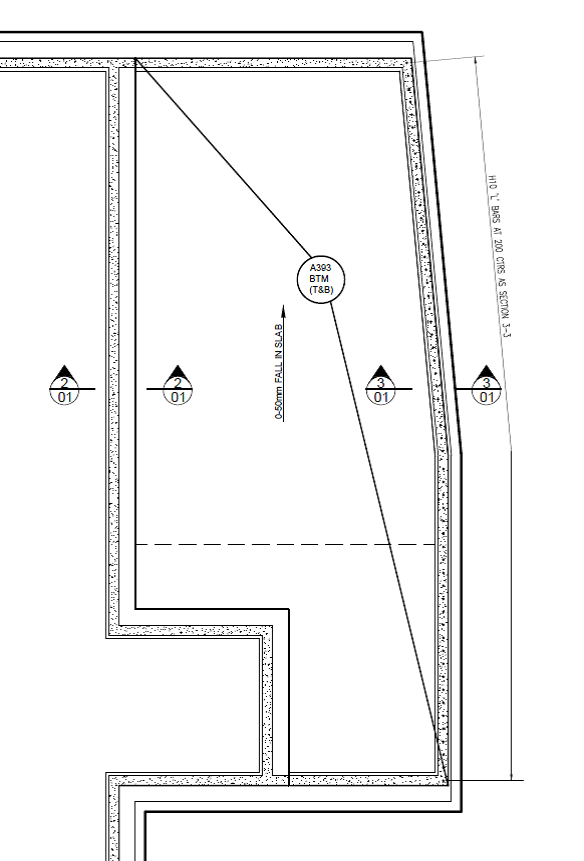
We have the same and have a 50mm fall in the slab towards the garage door over a distance of about 5m.
-

Another cheap 12kW Kingspan Aeromax ASHP
le-cerveau replied to Stones's topic in Air Source Heat Pumps (ASHP)
The issue is weather compensation only works for heating. A lot of us in Low Energy houses have/are using the ASHP as a pre-heat for DHW and just tapping the house heating off that. In this case you want a constant flow of around 40C for your pre-heat/(TS)/whatever you are using. -
The Akvaterm GEO AKVA 750 is 1050mm wide but you can specify detachable side panels (150mm thick each) so takes it down to 750mm wide. It is class ERP class B! However it only has a 22mm water connection
-
@Stones I noticed this, you can change the settings and put in a lower temperature to gat a more realistic prediction, though for Passive Haus certification they only design to 25oC.
-
Would appreciate some thoughts on plans please :)
le-cerveau replied to Kuro507's topic in New House & Self Build Design
A few initial thoughts, Bathroom door and stair opening, usually try and keep a good opening above the stairs so it doesn't feel like you will bang your head, does it work. Storage, as there is no attic where will you keep all you junk, it is inevitable, so plan for some general storage and them some. Services don't underestimate how mush space they require: MVHR (if going PassiveHaus standard you will have one with all the fittings) DHW storage and all the associated plumbing (make your Airing Cupboard a good size or there won't be space for any clothes) ASHP/Boiler location and how they feed everything else. The current Airing cupboard is close to the en-suite but remote from all the other wet rooms! Also how to feed it if the boiler is in the utility area. What direction are the large glazing units, solar gain issues in summer, plan shading now. Consider an entrance hall to insulate the main living area from the open door in winter. You like I have large spans on the ground floor, this may be a deciding factor on your construction method, if you want to keep it that open, it will require Steel/RJS/pre-stressed concrete, no matter how you look at it there is currently a 10m span one way or another, that requires engineering. -
My house (design, just starting build) had 12m spans in it. The only way to do it was to break up the spans with an RSJ (with a post in an internal wall) so that 8m concrete planks could be fitted, resting on the RSJ, so the max span is 8m of concrete planks onto the RSJ, which gives me the large spans. The Concrete planks are 250mm thick with a 30mm max camber in the centre.
-
Design and cost of hot water heating system
le-cerveau replied to volcane's topic in Other Heating Systems
I have the hydraulic diagram of the stack and you can't draw heat out of the stack for UFH: I am looking at this to see how I can re-configure my SunAmp specification.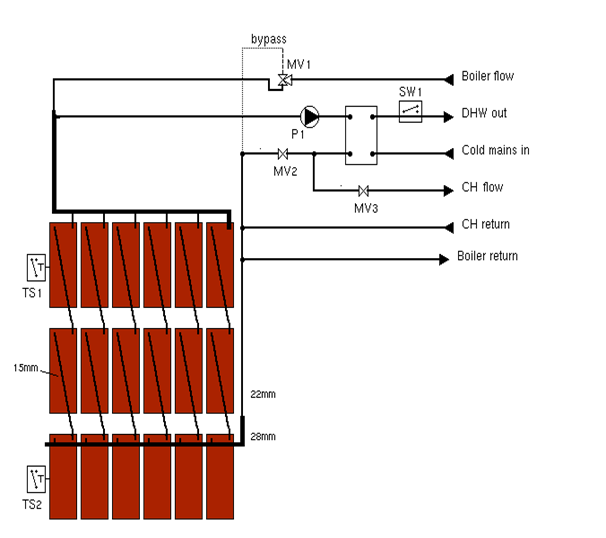
-
Tilt and turn inward opening windows - how to dress them?!
le-cerveau replied to readiescards's topic in Windows & Glazing
We got around one of the problems by specifying (yet to be fitted) the Internorm windows with integral blinds, so we just have the curtain dressing issue. This was partly because, 1, we like the idea of integrated blinds that don't collect dust and 2, at the flat we owned (now sold) it had tilt and turn windows and we had the same issue. The kitchen window we fitted the blind across the whole opening (and above so the window could be tilted and turned. Also the curtain poles were significantly longer than usual to ensure that the whole curtain could be pulled clear of the window. -
Just pipe it as any other waste. Having lived in many houses, some newish builds, that is the standard. The waste pipe is simply connected to a adaptor on the sink waste. In older houses that don't have a normal waste where the machine is going then it would be run outside to a gulley.
-
Gates?? CCTV, I currently have 2 IP POE CCTV cameras at my sight that I can remotely log into, actually I log into the NVR that they are connected to and can stream/playback... Today I was watching the Gas men disconnect the mains. The cameras are POE so cat 5/6 works, they plug into the NVR but a suitably powered switch would work. I watch on a PC/ipad, to watch on a TV you could either connect a PC/ipad to the TV via HDMI or if the TV is cleaver enough (smart) it may be able to stream directly from the camera/NVR
-
+1 One of the reasons I am going with SunAmp, is the uncontrolled heat loss (Heat gain in summer).
-
@volcane, I have a similar setup to you, low heating requirement, and high DHW requirement 5 bath house. I am getting a bespoke Sunamp Stack using a combination of PCM58 (the normal) cells and PCM34 (lower temp) cells, so using it as 2 separate systems the PCM34 is used to preheat the cold water (think Jeremy's buffer tank) and the PCM58 cells to provide the DHW top up. The PCM34 cells will be charged by an ASHP (low temp high COE) and the PCM58 cells a gas boiler (I have mains gas). If the HT Split ASHP you are looking at can do low and high temp you could charge each section from the respective flow to improve the efficiency of your DHW system. Warning this is separate from the heating circuit as the cells are charged via a PHE and discharge directly into the DHW system, to separate primary and wholesome water, so your heating circuit must be separate, you can use a separate system (as I intend) (see attached) Heating-DHW-Design.pdf I can pass more detail if requested.
-
How about going for a boiling water tap that provides DHW (Quooker do one I think), then just one tank at the other end of the house for normal usage.
-
+1 on PayPal (using amex)
-
ASHP Location - Pipe Heat Loss?
le-cerveau replied to Barney12's topic in Air Source Heat Pumps (ASHP)
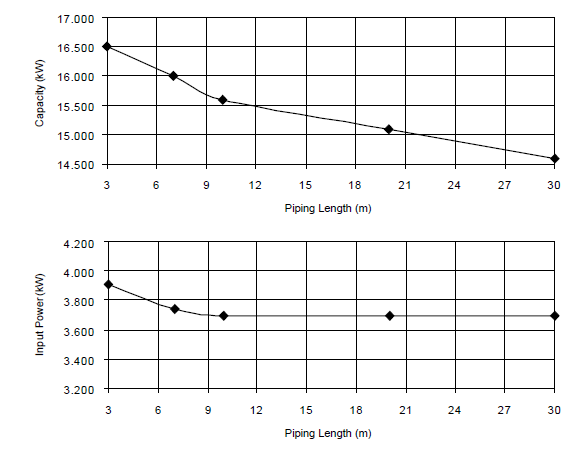
Are you using a Mono-block or Split? the impact will be different for each type. For a split there will be a drop off in performance related to pipe length (see the extracts from the Panasonic handbook below): Heating Cooling 7m seems to be the optimum length. If you are on a Mono-block, then it will be down to heat loss/gain in the pipework and that will depend on insulation, temp difference, flow rate..... This can be mitigated by (as you say) super insulating, keeping the flow temp as low (heating) / high (cooling) as practical and large a pipe as practical as losses are (generally) lower through larger pipe (less surface area by volume).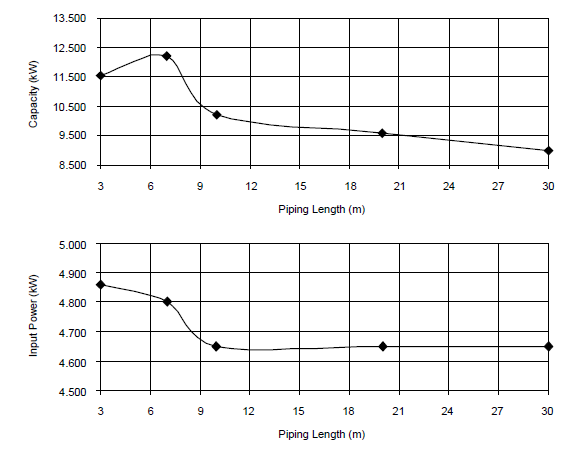
-
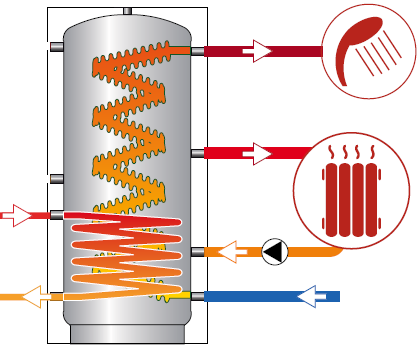
Surely what you need is a dual coil tank, something like this (example picture): Plumb the ASHP into the coil (shown on the left). DHW pre heat on the DHW coil (for the shower head read feed into UVC). UFH off the tank taps (radiators on the picture) limits the anti freeze in the UFH system. Reduces the DHW legionella issue as it is only the coil and separates it from the UFH so you can have inhibitor in the UFH circuit.
-
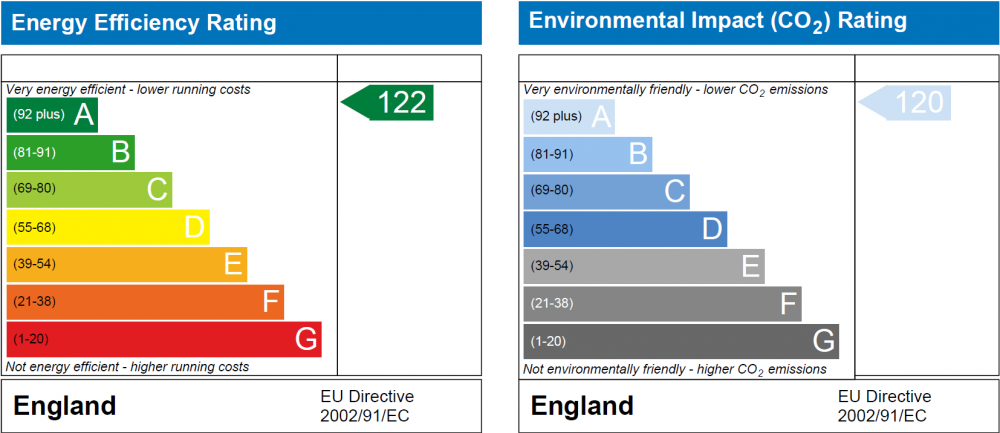
I now have my As Designed SAP grades ready for building control submission: Even better than my calculations and this is from the official SAP assessor! I am sure something will change (reduce the PV on the roof for example) but it is a good starting point.

-
This is a re-badged Mitsubishi Ecodan, and it looks like you have the bare ASHP with no controls. To provide the full heating/DHW control you will need a controller, probably the option that was on the website but not available. just get the Mitsubishi one FTC5, install manual here Ecodan_FTC5_-_PAC-IF062B-E__PAC-SIF051B-E_Installation__Operation_Manual.pdf, to get full control and do what you want. I suspect it will be a few hundred quid!
-
Oventrop do immersion thermostatic valves the 1140561 db_1140561_en.pdf is in the 20-50OC range, data sheet attached.
-
With respect to the ESBE valves, WUNDA have selected the ones in the 35-600C range, ESBE also do 20-43oC versions of the VTA322 (valve fitted 5 port manifold) so you could just replace the ESBE valve and then run your manifold at the lower temp. I have attached the Wunda data sheet M11 Standard ESBE Pumpset.pdf and ESBE VTA320_520_en_E_LR.pdf for the corresponding valves.
-
You can set most ASHP's to provide low grade heat (UFH, buffer tank) and High Grad Heat (DHW), it will have the facility to operate a valve to say where the heat is going depending on the demand, so plumb your UVC in as the DHW circuit and the TS as the UFH buffer tank. This a facility of most modern ASHP's.