


jfb
-
Posts
668 -
Joined
-
Last visited
Everything posted by jfb
-
I have a 70mm thick stud wall to insulate for sound. I also have a lot of 75mm rockwool sound insulation. Is it better from a sound point of view to just fit the whole 75mm in or I could easily cut in half for 37.5mm thick with an airgap? I seem to remember it is best to have an air gap and if I slice in half it will go twice as far. Presumably 50mm with a 20mm gap would be best but trying to work best with what I have.
-
thanks all. Just had electrician who will be signing off round and he explained things nicely. Its all going to be easier than I thought!
-
Lighting for downstairs is being done with circuit wire being brought into the switches not using ceiling roses. Essentially I'm using 1.5mm twin and earth for the main supply and 1mm to any bulbs. It runs radially from switch to switch. For the landing light I have a switch downstairs (S1) and a switch at the top of the stairs (S2) which need to be arranged in a 2 way fashion. Do i need both a 1.5mm twin and earth for the supply from S1 to S2 AND a 3 core and earth from S1 to S2? Or can it be done with just a 3 core and earth from S1 to S2? Thanks
-
Should fire alarms be on their own circuit? I presume so but presumably there is some benefit to having them off the lighting circuit as it makes it harder for an inhabitant to turn off the alarms due to nuisance beeps.
-
Additional electricity load on home with GSHP
jfb replied to 8Coops8's topic in Consumer Units, RCDs, MCBOs
Why are you wanting a gshp and not an ashp? Lot more effort for the gshp for little extra benefit I would say. what is the power consumption of the house at the moment (heating and water)? -
I like the idea of a couple of USB sockets higher up - am i right in presuming that one can run a couple of those as spurs off the main ring circuit?
-
Well at the moment I have a plug socket next to my bed behind a low cupboard and if I wanted to plug in a usb cable the cupboard needs to be 100mm away from the wall which isnt ideal! I like the idea of another socket to the side of any table. OOps - cant work out how to delete a post!
-
I guess the problem I have with my current bed is that to use, say, a usb charger the set of draws I have next to the bed has to be 100mm away from the wall which is just weird. I guess the old 4 way extension to the floor is another option! I like the idea of an extra plug to the side.
-
Do you mean you have a small gap between bed and table? my problem with that is that bed size might vary and I would normally put table/cupboard right next to the bed. I can see it working with a table but if a cupboard then everything starts sticking out!
-
I need to plan the position of sockets in the main bedroom. Not a huge room but there is an obvious place where a double bed goes and it would be useful to have sockets somewhere either side. A problem I have run into the last place I did was that if I put sockets say 500mm off floor and near the bed that side tables/cupboards can easily make it awkward to use these sockets. Any suggestions? Go above table top height? Go wider so avoiding any potential bedside furniture?
-
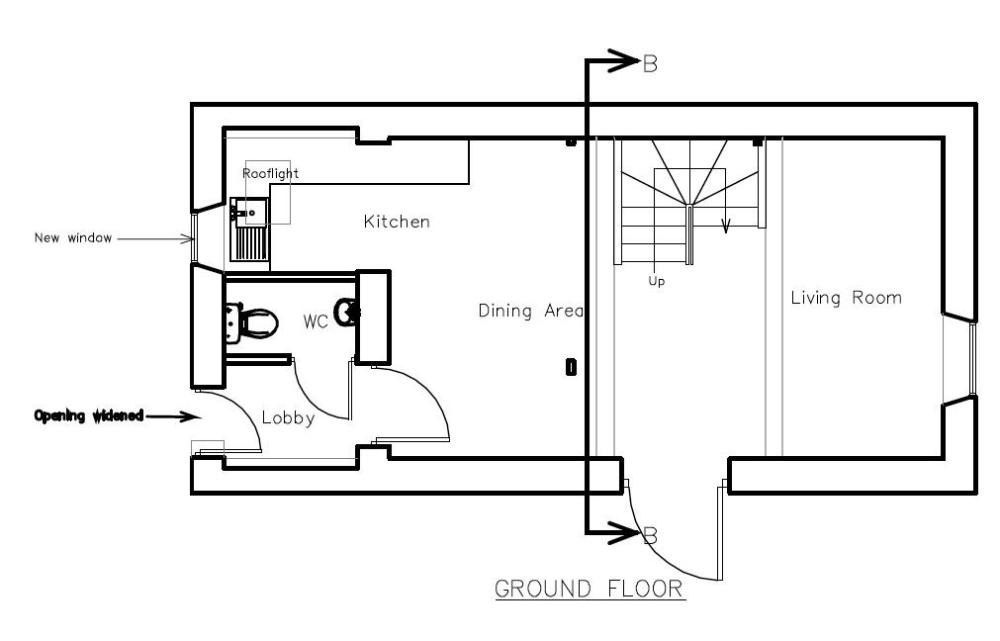
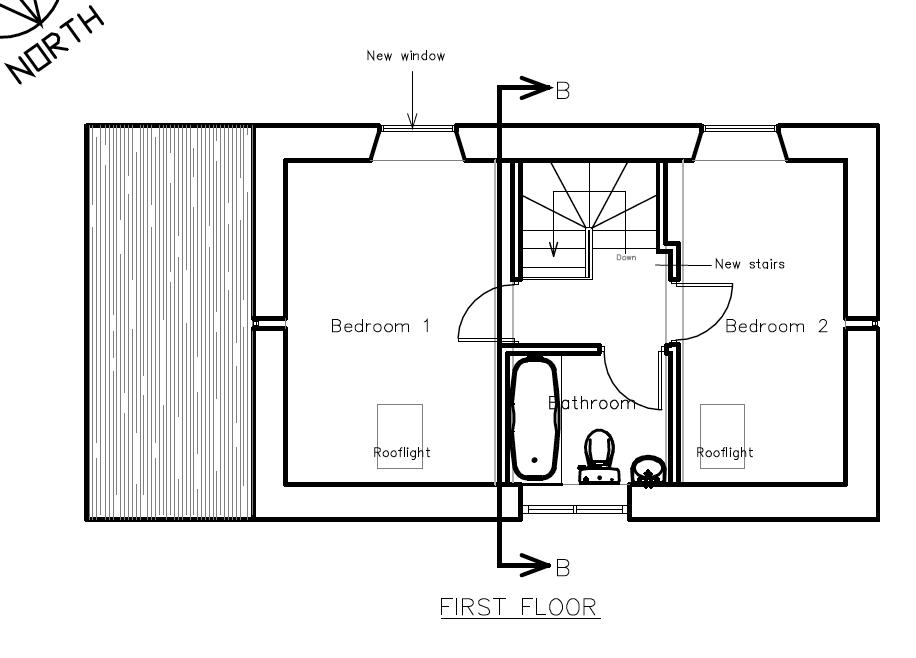
I think I asked a while back about this but cant find the thread. I'm wondering if my plan for alarms is acceptable. Its a small barn conversion (70m2 total) with an open plan downstairs (except for lobby/toilet) and 2 beds/bathroom/landing upstairs. Looking at the plans below I am planning on a heat alarm where the 'h' in kitchen is (downstairs - first image) and a smoke alarm in the landing at the top of the stairs in the second image. I am thinking that is sufficient - would that be correct? Is there a minimum distance a heat alarm should be from a cooker? Also - am i right in thinking it should be wired in 3 core and earth (1.5mm) radially on its own circuit?
-
Do you leave your boiling water tap on at nigh?
jfb replied to Adsibob's topic in Kitchen & Household Appliances
Does anyone know how well insulated they are? I mean if it was turned off how long before it reaches room temperature? -
Do you leave your boiling water tap on at nigh?
jfb replied to Adsibob's topic in Kitchen & Household Appliances
What would the temperature of the water be in the morning if you turned it off overnight? Room temperature? Surely it must be wasting energy to have it top up the heat overnight. I know nothing about Quookers and I can see the advantages of leaving it on (especially if that is how the manufacturers expect them to be used) but I can't see how you get round the point that it must be using more energy than needed if left on overnight. -
Limecrete or Concrete Floor
jfb replied to bontwoody's topic in Environmental Materials & Construction Methods
Seems interesting and well thought out. Be interesting to know how many land drain pipes they have coming out through the foundations and where it all goes. I'd also like to know the u value of the 250mm expanded glass - can't remember off hand what it equates to but I suspect not nearly as good as a similar thickness of EPS (and they also have a 100mm layer of sub base above the expanded glass to warm up) -
Limecrete or Concrete Floor
jfb replied to bontwoody's topic in Environmental Materials & Construction Methods
Well I guess that depends on how much it matters to you. -
Limecrete or Concrete Floor
jfb replied to bontwoody's topic in Environmental Materials & Construction Methods
Yes the internal render on woodfibre insulation boards (render behind the boards as airtight layer, boards fixed with no gap, then rendered on top) -
Limecrete or Concrete Floor
jfb replied to bontwoody's topic in Environmental Materials & Construction Methods
I had a similar conundrum for my renovation. In the end I went for EPS/concrete throughout and it has worked fine for me. Only slight downside has been a little bit of salts/discolouration on a couple of sections of render near the floor. My building wasn't particularly damp to start with if that is relevant. And it is combined with woodfibre/breathable wall insulation. -
I’ll have a look as it sounds good. As an aside, what size breaker/cable would be sensible future proofing for an electric car charging point?
-
As the title suggest - would it be viewed as good practice to put the kitchen lights on a separate circuit to the rest of the downstairs lighting circuit? It is a small 2 bed only 40m2 downstairs so not a huge amount going on. Kitchen lights only equate to couple LED strips under cupboards and some downlights. All open plan downstairs. Is it just to allow some light to be turned off if something trips a circuit?
-
Underfloor Heating, how should they be filled? Biocide?
jfb replied to revelation's topic in Underfloor Heating
If you are using an ASHP you will definitely want to add anti freeze - if you have a power cut you could end up wrecking the ASHP if the pipes freeze. -
Looking at a 6kw W60 R32 Ecodan ASHP as seen here with a pre plumbed cylinder: https://les.mitsubishielectric.co.uk/products/heating/domestic/outdoor/ecodan-r32-ultra-quiet-puz-monobloc-air-source-heat-pump Anyone know if, as with some of the other ecodan units, it is possible to flip a switch (or something like that) to enable cooling? I tried asking Mitsubishi and they didn't want to say or were arguing that using an ASHP for cooling was inherently inefficient (which surprised me - is there any truth in that?). If such a mode does exist and can be enabled can someone say what difference to the plumbing layout is required to cater for potential cooling (I seem to remember reading something on buildhub about this - something to prevent cool water going to the UVC presumably). And is a plumbing schematic that allows for cooling going to fall foul of any RHI/replacement incentive regulations and signing off Cheers all
-
Thanks for that - I’m happy to give them away as they were free to start with. Not going To use them so away they go!
-
Actually I am looking to sell/give away around 100 of them that I have had for a while and am not going to use! Thought it would be useful to know the actual type of tile.
-
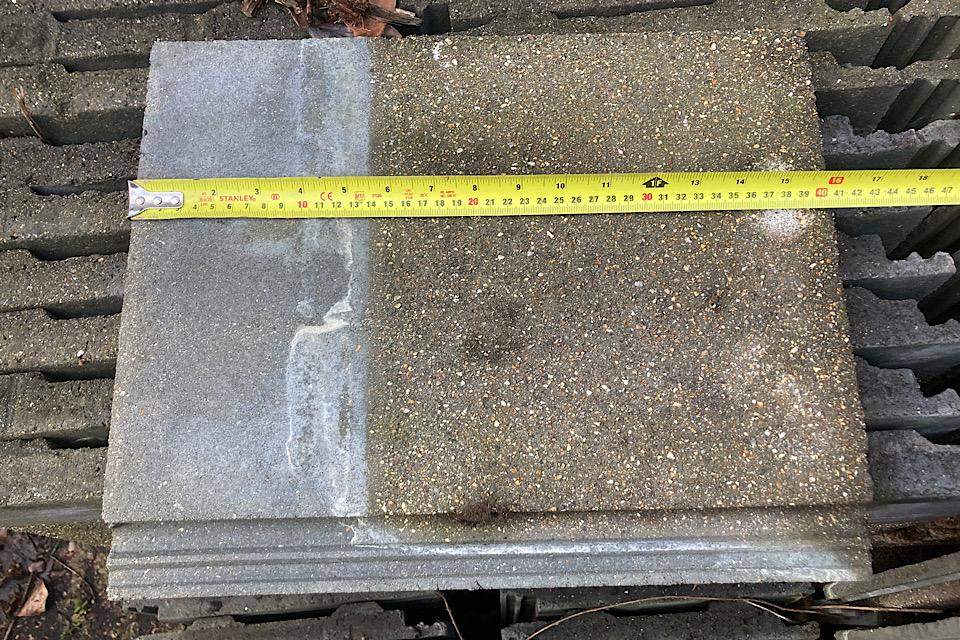
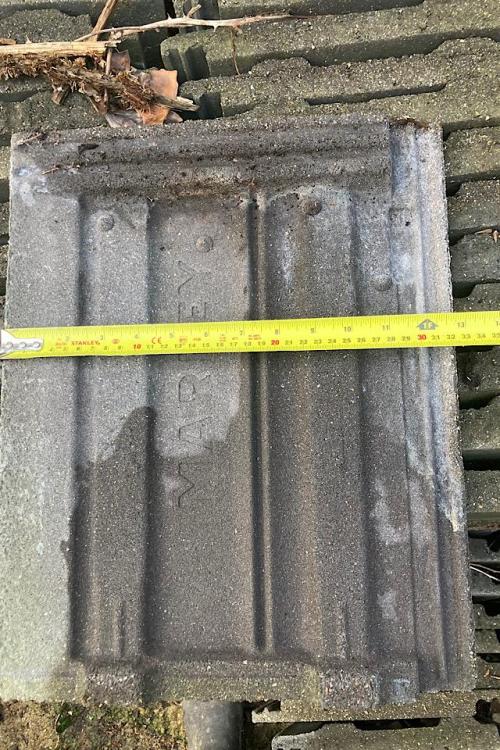
Anyone know what tile this is? it’s a Marley interlocking concrete tile but looking at most new stock they are 420 x 330 whereas these are 410 x 320 cheers
-
I don’t think a parge coat will make any difference to the air tightness of a decent joint.


