


jfb
-
Posts
668 -
Joined
-
Last visited
Everything posted by jfb
-
rental deposit when tenants sign contract for second year
jfb replied to jfb's topic in Housing Politics
Yes understood. And thanks a lot. -
rental deposit when tenants sign contract for second year
jfb replied to jfb's topic in Housing Politics
Thanks for the reply. Well we haven't signed a new contract yet but was thinking of the same year contract as before but with the different year on it. But I see the issue with regards the deposit/DPS. Don't really want to just let it roll over so maybe I should go for your idea of an addendum to the original contract. Might I be able to have a look at the addendum you use? cheers john -
rental deposit when tenants sign contract for second year
jfb replied to jfb's topic in Housing Politics
Thanks for the reply. Well we haven't signed a new contract yet but was thinking of the same year contract as before but with the different year on it. But I see the issue with regards the deposit/DPS. Don't really want to just let it roll over so maybe I should go for your idea of an addendum to the original contract. Might I be able to have a look at the addendum you use? cheers john -
rental deposit when tenants sign contract for second year
jfb replied to jfb's topic in Housing Politics
Just tried speaking to the DPS about it and they were not very helpful - said the deposit would roll over. But if they leave and try and get deposit back it would go to arbitration if we both dispute. No answer as to what that arbitration would conclude assuming they had signed the new contract (without additional deposit). -
Does anyone know where I stand regarding the deposit if my tenants want to sign a contract for another year. At the moment the deposit is in the DPS. Can I just sign the contract as normal, don't take any deposit and when it comes to it carry the deposit over ? I guess my worry is what happens if they decide near the contract start date to leave? Would they be able to get their deposit back if they had signed a contract for the new year (but not paid an extra deposit)? I guess I could add a note to the deposit section in the contract stating that the deposit will carry over.
-
Have you looked into compost loos? Not sure about the regulations surrounding them but it would be a much cheaper to install though you would have to consider how feasible it would be to deal with the waste and compost it down successfully.
-
No harm in squeezing a bit more leadmate into the gaps. Doesn’t look critical.
-
Anyone?
-
Just to be clear I’m talking about the black O ring that is at the bottom of the rings. The black bit at top of pipe is an insert.
-
Just having to deal with a leaky T joint and I am wondering if maybe the black O ring in the picture should be the opposite end (ie before the white plastic O ring that at the moment is the first to go into the equal T)?
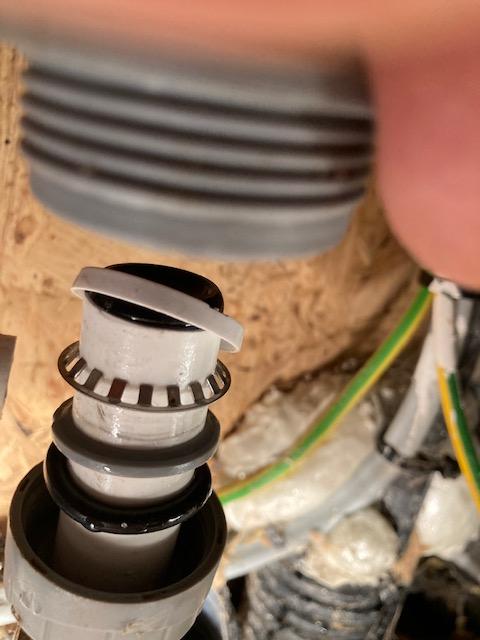
-
some good photos would probably help
-
Should be ok. Or a bit of mortar. check there is no way for water to get in at the top of the mortar as well as the bottom.
-
I would want to know what the buildup is. Maybe you could dig up a little bit (or even where one of the plants is coming through) and see. Should really have from top down, tarmac, hardcore, membrane. Find out the depths of the tarmac and hardcore underneath.
-
I really wouldn’t worry about trying to get the tiles pristine - character it is callled! regarding the damp it is a bit hard to tell but possible that water is getting in under the mortar flashing (white in the picture) where the porch roof meets the wall. You can just see some gaps under the mortar I think.
-
Filler like that never looks quite right. I tend to fill with mortar instead. not sure about the damp. Do you have a picture from the outside?
-
There are various different types of insulated render you can get - not sure how fire resistant they all are though. Tends to be quite expensive for the U value it gives but there might be something appropriate. Something like this (never used or heard of it before but seems to do well on fire resistance): https://proofshield.co.uk/products/internal-external-wall-insulating-plaster/
-
sorry if this has been asked before but why do you want gutters? Its not like the rain is going to run down onto the front deck - its all going off to the side.
-
Ok thanks Jack
-
Jack - couple more questions! My installation involves both supply/extract ducts terminating upwards into two pitched roof cowls. I know now that ideally the ducting would slope down to the main in/out penetrations but that wasn't really feasible here. Is it possible that is compounding the issue with condensation tracking down from the roof cowl? (my ducting is all insulated EPS ducts all inside the thermal envelope and there isn't really any sign of mould in these ducts its just in the unit itself) Having made the fix to yours have you been able to confirm that it is working in your case? Cheers John
-
Thanks for the diagram. Very helpful
-
So you mean something like a thin bit of corex (or thinner I guess as its already tight fitting the heat exchange in) that extends over to the side with the drain? (the right side of the unit in my picture). That makes some sense. I noticed another problem over the winter. I could hear the fans working hard and when I looked I found that the insect mesh on the ubbink roof cowl had iced up. Crazy that I was recommended a cowl with insect mesh that is far from accessible. Anyway I think I will have to try and remove the insect mesh in situ and rely on the MVHR filters to stop this happening again. Appreciate the help Jack.
-
not yet! just in discussion with my original suppl;ier
-
Regarding a heating source (sorry haven't read whole thread so assuming no water heating) - assuming it is a airtight/ well insulated why wouldn't you just use a small electric heater rather than the expense of an ASHP/GSHP. I had a SIPs built office similar size that I just used a small heater in and it was plenty.
-
why don't you tile it to the same level as the step?
-
Builders opening for multi fuel burner
jfb replied to Craigbillo's topic in Stoves, Fires & Fireplaces
Seems pretty straightforward to me - already has a decent bearing. Just take out the two courses below and make good. If the lintel is wood I would have thought you could clad the underside with some hardibacker or something like that. I used hardibacker as the register plate for my burner. But it looks like concrete lintel to me.

