


jfb
-
Posts
668 -
Joined
-
Last visited
Everything posted by jfb
-
Pretty sure that’s a no
-
I’m confused why you say this with no details about the build quality. A house of 400m2 seems very unlikely to work with a 5kw ashp unless it is a passive build maybe. Particularly if hot water use is high. agree with ashp over gshp though.
-
Make sure the builder uses the correct screws and glue. I didn’t use enough glue to my cost so as soon as the builders are doing it make sure they are.
-
I believe you won't be able to get the RHI unless the whole dwelling has had a completion certificate from building control and has an EPC. It's not just about getting the heating/dhw/ASHP commissioned. There should be a new system replacing the RHI (£5000 per install) which you may be eligible for but it is all uncertain at the moment and even the ASHP installers/suppliers don't know how it will pan out yet.
-
Then don't I’m not sure you are helping your cause Coops
-
My understanding is that you should never use soldered joints and should ONLY use compression for Lpg. I’m not a plumber so don’t take my word for it. My plumber didn’t know. correct me if I am wrong. if I’m right though it does beg the question of whether OPs plumber he is looking to sign off is competent. Is he Lpg registered?
-
As the title suggest I am looking to make my driveway less bumpy. It is a non tarmac driveway with holes ranging from small to large (5 metre diameter up to a depth of 150mm in the middle). What would anyone suggest I use? Type 1 ? Tarmac planings I am a little reluctant to use? Limestone of a certain size? I am planning on using a whacker not a roller. Cheers
-
I agree it is a complicated topic! Is there not a difference between airtightness and vapour permeability? They would seem to be closely correlated - EPS (open cell) would appear to let both some air and moisture through. But a lime render can be viewed as airtight but vapour permeable. (Not quite sure how that works though!)
-
Am I missing something but EPS isn’t airtight itself so why would you want to tape it? Or at least shouldn’t the airtight layer be somewhere else?
-
Now I haven't read her speech and of course it is easy to pick holes in the argument but lets look at one fact - since privatisation about half as much money has been dished out as share dividends by water companies (over £50 billion since 1991) as spent on improving pipes and treatment plants. This has been made possible by reaching an overall debt of around £50 billion. This debt has been used to pay for dividends and not capital infrastructure as the latter has come from customers' bills. So maybe there is a way for our water supply to upgrade the infrastructure without doubling the bills.
-
I'll throw a curveball out there! Have you considered woodfibre board? What is the state of the inner walls? Original render and reasonably flat? Or bare stone? I've done a few buildings with it and it has been very successful - render behind boards provides very good continuous airtight layer. Haven't gone beyond 80mm thickness of woodfibre board for worries of interstital condensation. You would need a plasterer happy to work with lime render though you can get easy to use bagged mixes for the finish coats if you want to spend more than using sand/lime. No need for a ventilation gap that is hard to achieve yet a breathable buildup.
-
If you are rendering over ideally get some scratch marks into the render you have done to give the final coat a key. Might have gone off too much by now though!
-
I’ll give it a go. Cheers nick and dave
-
How old is it? Brushed or brushless? About 7 years. Pretty sure it has brushes. I wasn’t seriously expecting help on getting it mended but you never know!
-
My makita chop saw has stopped working - fancy mending it?!
-
I’m not sure he should. Maybe best to do your own research.
-
10m
-
Good to know Dave thanks - I suspected as much. A technical question you might have an answer for Dave - after some advice I have installed 22mm pipework from where the ASHP will go to the UVC (10m run). It is a small place (70m2, well insulated, MVHR) so I was assuming I would be able to do with 5kw ASHP or similar and that 22mm would suffice. After speaking to one company they insist on 28mm pipes but their heat pumps are larger and modulate down. Have a made a mistake with my pipe sizing or should I be ok?!
-
I'm just trying to clarify about what is involved in commissioning an ASHP. I understand that unvented hot water tanks need a G3 sign off. For the ASHP does commissioning concern correct sizing in planning stage and then what after install? I ask because some have mentioned the ease of DIYing ASHP installs (assuming not going the RHI way). I phoned a plumber who used to be MCS registered and says that while he can do the work he wouldn't be able to do the commissioning and he lets another company do that. What exactly is it that is required? In particular what is actually required if not going the RHI route? What is to stop me having a plumber install the UVC and ASHP without any particular accreditation apart form G3 compliance? thanks
-
Are the joists the right spec for 600 spacing? Have a look at the span tables to check.
-
So that you would see the 20mm DPC overlap from underneath? great suggestions everyone thanks.
-
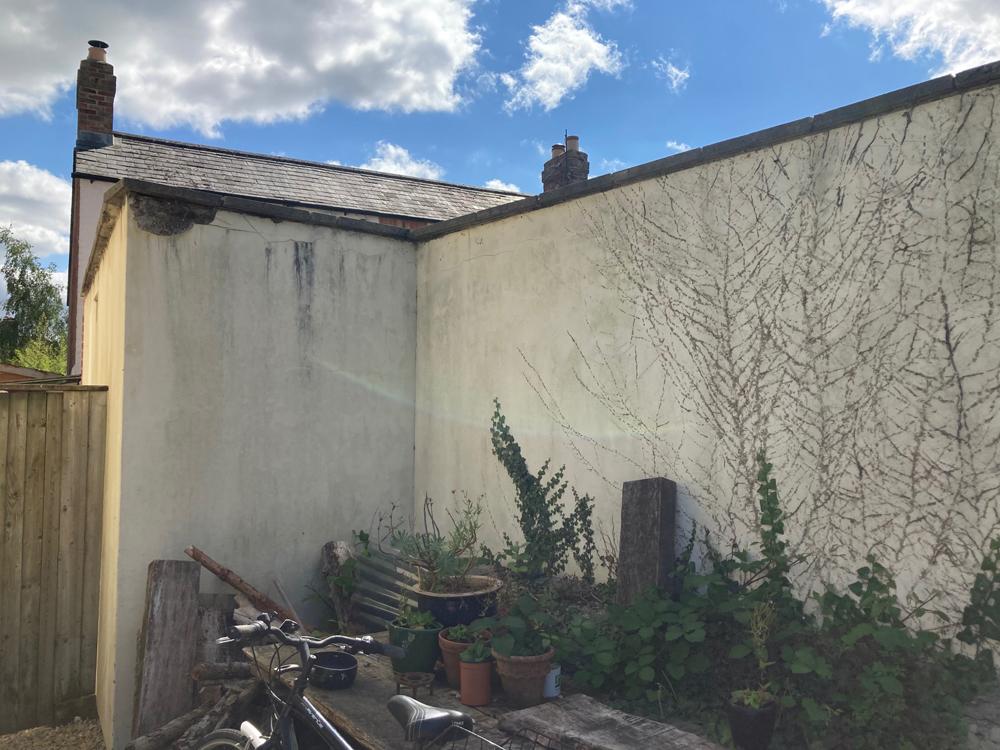
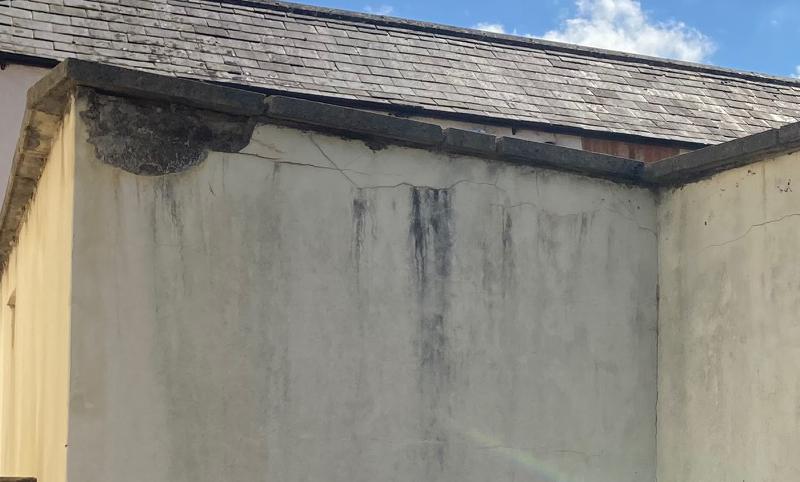
I'm trying to help out a friend with a wall. Plan is to lift off the coping stones and relay to stop water getting in to the wall from above. Looking at the way the black streaks start at the crack near the top of the wall in the second picture it suggests water is getting in from above and then exiting from the crack. Render below the cracks feels very solid while above sounds slightly hollow. Once the coping stones are back on would it be best to replace the blown render above the crack and then repaint over the lot? Will there be issues with discolouration when painting over and what can be done with the section where the climbing plants have left their mark? An option could be to try and remove all the render and redo but I can see it being a nightmare to get all the render off. What about going over the whole wall - is their some sort of preparation that would allow rendering over the whole wall?
-
services trench Services under a stone building
jfb replied to saveasteading's topic in Barn Conversions
I wouldn’t bother trying a core drill. For that width you really need someone who has all the right kit to do it. much easier to dig out. -
Same question? Off top of my head. - higher temperatures needed reducing efficiency - if replacing radiators for oversized to reduce temp needed then a significant cost and possibly unpopular if it means losing more usable space - Ufh costs a lot to retrofit and needs insulation to be effective so larger cost - issues with electrical supply on larger properties, possibly smaller ones too (to be fair I don’t know how easy to overcome this is) - capital costs of replacing boiler for ashp - waste of embedded energy of gas boiler if replaced before its’ usable life span - finding space to fit new hot water tank if replacing combi boiler
-
Accepting the danger of appearing like a Dave apologist I feel like some responses to his original post are attacking the messenger rather than dealing with some of the issues. the idea that we can just switch over from gas boilers to ASHPs en masse is deeply problematic. It is the sort of idea that could become government policy without really dealing with some of the issues. Draughty and poorly insulated old housing stock is not an ideal fit for heat pumps. Nor are new builds that scrape through building regs at best and at worst wouldn’t pass if we had a building regulation system fit for purpose. Solutions to these problems are not straightforward but surely they have to include better building standards/regulation and decent incentives for upgrading housing fabric. Clearly we need to make the switch to heat pumps and reduce reliance on fossil fuels but this can only happen if government can think longer term and actually grapple with the issues. The message of reducing energy use rather than just switching to a ‘clean’ energy source needs to be hammered home and built into standards/incentives. Fabric first.


