


jfb
-
Posts
668 -
Joined
-
Last visited
Everything posted by jfb
-
Surely you can temporarily take the ducts off so that you can rule them out as a problem
-
Silicone render at night with lights on. Is this normal?
jfb replied to Piggybagpop's topic in Plastering & Rendering
They are still there if you look closely. Render finishes a bit higher -
And what about the cost of the plumber? How much would most people be charged?
-
Wood stove (for cases of great cold) or not?
jfb replied to Garald's topic in Stoves, Fires & Fireplaces
Yes -
Can this be wired into a 13a plug?
jfb replied to CotswoldDoItUpper's topic in Electrics - Kitchen & Bathroom
Indeed, the fact it runs on 230v doesn’t say how much power it uses -
IWI Wood fibre alternative build up using OSB or Woodwool
jfb replied to George's topic in Heat Insulation
Sorry, not sure what you are asking/suggesting? I think I am just saying that it seems very relevant whether the shower is upstairs (they often are) or down. If upstairs then I wouldn’t worry about internal walls. -
IWI Wood fibre alternative build up using OSB or Woodwool
jfb replied to George's topic in Heat Insulation
Why the airtight membrane after the boards? Normally the render behind the boards would be the airtight layer and so no need for a membrane. also less worry about penetrations for electrics. What membrane were you thinking of? I’ve done a couple of house renovations with the buildup you have suggested and have been happy with the results. They were both full renovations with floor dug out and insulated/new slab with Ufh. Harder to get the detailing right if done bit by bit but you seem on the right track (like making sure the IWI goes continuously up the wall at ceiling/floor level). -
IWI Wood fibre alternative build up using OSB or Woodwool
jfb replied to George's topic in Heat Insulation
I stand corrected. How about if the shower is upstairs - did you think to ask that? -
IWI Wood fibre alternative build up using OSB or Woodwool
jfb replied to George's topic in Heat Insulation
What area of external wall are we talking about? Internal walls don’t need to be breathable so you can use whatever suits (moisture board, hardibacker ). If it is only a small area I’m not sure I would worry too much about it (especially if upstairs room). Could even skip the wood fibre and just use insulated plasterboard or something similar. -
I would ignore building reg minimum rates and just see how it goes by reducing the basic rate. You’ll probably find you can keep it comfortable at a much lower rate.
-
Thanks for the reply. At least I can use it with a tray underneath at the moment!
-
Cost of airtightness retrofit?
jfb replied to anonymous's topic in Energy Efficient & Sustainable Design Concepts
Also be aware that if you get below a certain level (3 ach/hour I think) you should have mechanical ventilation. That isn’t an easy retrofit and probably not something to worry about depending on the test score and work you undertake. -
My LG washing machine is leaking from directly underneath the machine during the end of the wash (spinning I guess). It has an access point at the drain that is clear of debris and it is draining ok. No obvious filter to check. Anyone know what might be causing it?
-
I wouldn’t use a membrane in clay. Can clog up the membrane. Could put membrane on top if soil on to of that.
-
I have a preplumbed cylinder that will have to be G3 compliant. what is the end result from the plumber - a compliance certificate like an electrical installation? what if I fell out with the plumber (it hasn’t happened) and the install was complete but the certificate not forthcoming? Can another plumber look over an install to confirm g3 compliance cheers all
-
Presumably because an ashp is more efficient at heating water! At least that is the theory
-
It does seem mad doesn’t it. Let’s hope it’s easy to use!
-
-
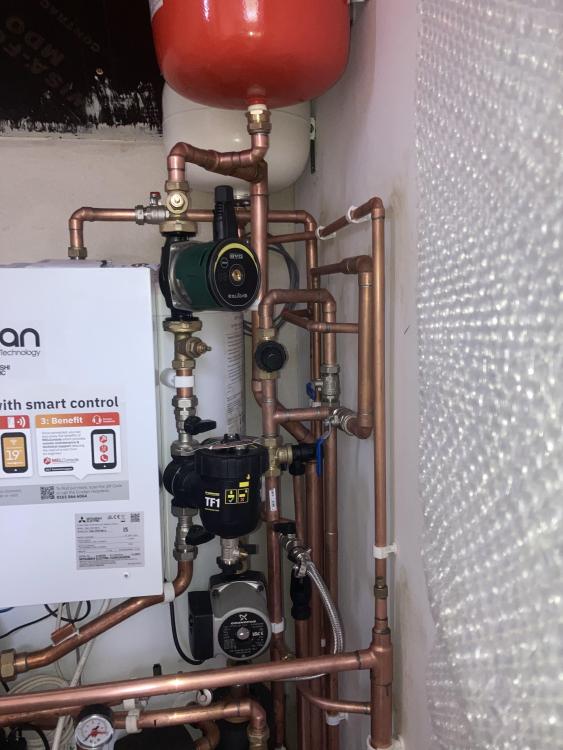
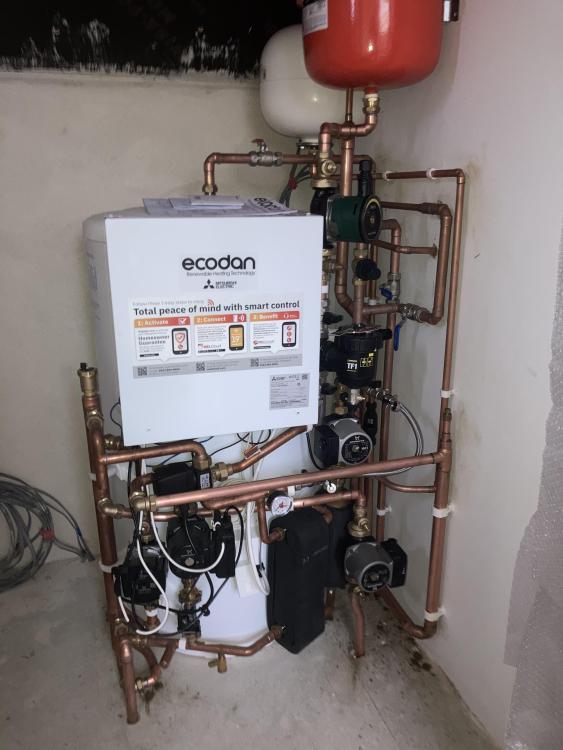
Just had my pre plumbed cylinder hooked up. any glaring errors in the install or does it seem ok? lagging is going on tomorrow.
-
ill go with walk on glazing instead
-
thanks all
-
Well it is going to need insulating wherever it goes so why not here
-
Blending valve needed for UFH manifold with Ecodan pre plumbed set up?
jfb replied to jfb's topic in Other Heating Systems
I can see the logic of this, thanks I had originally been hoping to do without rads upstairs as it should be well insulated/airtight but went with them to conform to spec needed for any hope of getting the grant available. I had been thinking that I might get away with just one temperature for UFH and rads as well (they are oversized) but maybe I am delusional about that! I'll speak with plumber and see what he has to say. -
I remember reading elsewhere that a blending valve is needed (best practise) for the UFH manifold in an ASHP setup (might have been you saying it Peter!) My set up is Ecodan PUZ-WM 6kw ASHP, pre-plumbed cylinder with FTC6 controller. UFH heating in one zone downstairs and large rads upstairs as a second zone. No buffer tank, low loss header included on the cylinder. I bought an UFH package that includes a blending valve for the manifold. My plumber started work today on the install and he said that no blending valve is needed as the pre plumbed cylinder does all the modulating down to the desired temperature. Is he right?
-
I have some BT duct 54mm popping up out of the ground that I want to run two data cable from one building to another (not asking BT to do it at the moment). How best to have 2 cables coming up out of it and to seal it properly? Cant seem to see anything obvious that is designed for it.



