Jenki
-
Posts
836 -
Joined
-
Last visited
-
Days Won
7
Everything posted by Jenki
-
 Yes no problem.* *Assuming joists are specified correctly,and the flooring material is in good condition.
 -
On clear days I can see those mountains all the way from Nairn to Fraserburgh, and as you say 180 Deg the Northern lights. I love living here. Looks fantastic by the way 👏
-
Lessons learned from last ready - getting ready for cold snap
Jenki replied to Conor's topic in Air Source Heat Pumps (ASHP)
@Nick Laslett, I'm no expert, so can't comment, it's was probably 0 when I installed. And left it running overnight as it wasn't insulated very well. I was using the UFH with the immersion so wasn't worried about water in the UFH plus the house hasn't dropped below 13deg once it was wind and watertight. -
Lessons learned from last ready - getting ready for cold snap
Jenki replied to Conor's topic in Air Source Heat Pumps (ASHP)
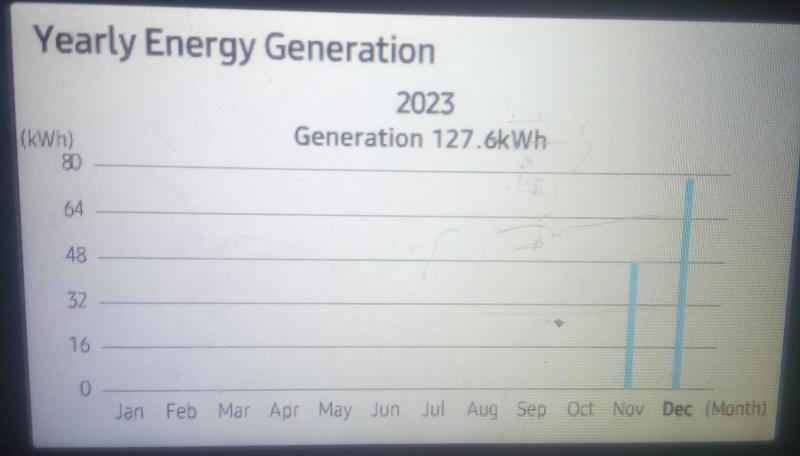
Jumping on this thread as it's opportune. I've just got my Samsung Gen 6 running, I've got so much other stuff to do it's just working. My COP is rubbish. Any quick tips on settings to assist? Currently DHW is set to 43,as the showers / bath not working yet. So just hand washing and showering in the static 🥶. I've set the temp on manual external thermostat to 18.5 . 90sqm UFH on manual at the moment the house is ok, great really, as we're working on it temp could be classed as too hot. It's probably the worst time to look at settings as we've had negative temps over night for 3 or 4 days and some days hovering around 0. But the COP is 2 I will get to spend time looking at this, just not yet, so any quick setup tips would be appreciated.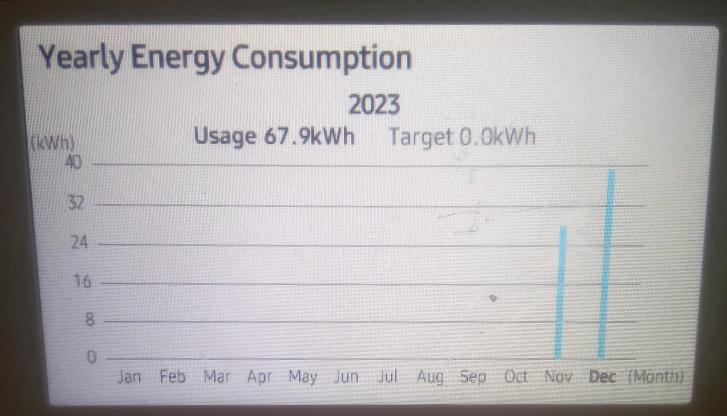
-
you are indeed "I am absolute b*llocks."
-
I saw that, but did you fit the tap to the osb and then position it? or did you fit the OSB to unit then fit the tap? I've done installs where they would not let me fit the tap to the worktop, so its good to check you can fit the tap if the worktop is in place. (You may have done this, but thought it might be helpful to confirm)
-
@Pocster Good thinking. have you tried to install the tap with the OSB in place? I found with most worktop fitters (assume your having some solid worksurface) wont allow you to mess around installing the tap, they just fit the top and leave you to it after they have left.
-
If its undermount and the worktop will overhang the sink. i.e. you wont see the top of the sink, then I would be tempted to straighten it, (hammer and or mole grips). How you support will depend on the worktop. you can bond some support and the sink to most worktops, but I prefer some form of cradle to hold it all in place, you can incorporate this cradle into the shelf below, my preferred option. Edit:: Front to back usually 50 - 60mm from worktop front edge but try to even it out.
-
I think you will need batteries or your winters are going to be 24/7 diesel genny chugging away. Fogstar DIY batteries are a good solution- and on my future shopping list...
-
Screws through the back panels for me, then you've an easy removal if ever needed. glue some filler pieces in place to stop the back panel bowing when the screws are sent home, just measure the panel (18mm)+ gap and add 15mm (assuming the back panel is 18mm) and select the correct screw length.
-
It's on its way back, should be there today, no refund yet, assume they want to see it, as it was sat outside for 6 weeks while they tried to help I've gone for the Samsung 5KW. managed to get the control kit new off eBay for half price so helped ease the extra cost, plus they do a coastal version.
-
To be honest everybody is quite far from me 🤣
-
That's the solution I used - great minds 😉
-
I'm waiting delivery of my ASHP, so reading your posts thinking I might be removing the TMV I installed. Also looking at your temp gauges see another Arduino project added to the list. ( I've got a mock up to show flow and return at the cylinder, flow and return outside at the ASHP, and DHW and Buffer temps, might add some more probes for the DHW.) Just need the ASHP delivered and to get it working.
-
Found this🤔tacky? Or this On the stone front, we wanted some Caithness stone for the exterior door cills, so popped up to the quarry, there was literally 1000's of tonnes of stone sat on pallets everywhere, went in and said I'd cut to size if I could find suitable pieces and they told me all the pallets were for orders(can't believe that) and if I wanted to order the leadtime was around 6 months. Walked away with tail between my legs.
-
I like a self leveling laser level to cast a line around the top of all the units. You find if you move a standard level around the top of the units it changes. With the Lazer you can average out the errors in the units, and it's so easy to level front to back at the same time .
-
unfortunately, this is true, but the old adage of you don't know what you don't know means even if they have care, and they try, if they don't have a fundamental understanding it will still be a shi*show. Any one can be a builder..... Self builders have so much more invested in the process I'd be stunned if anyone is 90% happy with the whole process... To qualify we've done all ours so far, and I'm still unhappy with little bits😂
-
Off topic... Cracking view
-
Time will tell.... Fingers well and truly crossed.🤞
-
It is important, but it will depend on the fittings. Some are female so you can use a brass nipple in between the elbow and shower outlet. The nipple( threaded bar with a hole), and be cut to length and filed flat to seal against rubber and fibre washers. Others have a separate fitting that screws in to the elbow and o rings to seal against the outlet. When fitting these I always get the parts on site and make the decision from there BEFORE installing the pipework. Post pictures of what you've got and help will follow.😉
-
When reading about ICF, I think @FM2015?described check reveals and window cills extending beyond the frame all help with keeping water out. As I fitted the frame from the inside ( to push up against the EWI on the sides and top) my cills finish flush with the side of the frames, so there is a gap which needs sealing. I used airtight foam, and silicon, but on the two windows I had issues with, I must have left a small gap, which the rain and with the assistance of 50mph winds pushed the water in. (I think the problem area was where the frame sits on the cill and has a small gap for face draining) I'm thinking If I'd fitted the cill first with horns, I could have sealed this first with better access, then the frame after. But that would then have meant screwing through the frame into the cill, and I judged this would not be a secure a fixing. I was concerned that the only seal between the frame and cill is silicon and a small upstand of UPVC on the back of the cill. It seems ok now. So I've stopped worrying about that and on to the next concerns🤣
- 14 comments
-
- 1
-

-
- the windy roost
- icf
- (and 1 more)
-
Electrical first fix in an ICF house
Jenki replied to Meabh's topic in Insulated Concrete Formwork (ICF)
You can also get double sockets that act as WIFI repeaters. I've gone simple with mine, but have added cat6 to the TV and desk area. I'll put a socket repeater at either end of the house. Just in case. -
The main reason for skirting boards is to creat a nice finish , board up to ceiling, packed at bottom, then skirt to finish. I'd see the main issue getting a nice finish at both ceiling and floor. I can't comment on if the Fermacell will wick any moisture from the concrete.
-
Skim? Plastering onto plasterboad with a skim of multi finish as opposed to tape and joint. I'm no plasterer, but there was lots of water, and the messiest part of the build.
-
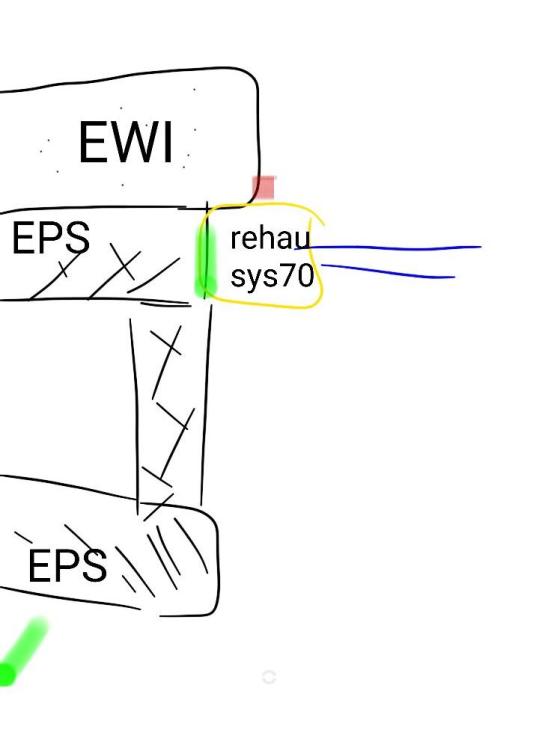
@Iceverge Under slinging the PIR helped with the airtightness ( I hope) I increased the wall height to give me room for the PIR and service cavity, still leaving me with 2400 ceiling. Poor sketch ...>>>> I went for triple glazed rehau Sys 70 UPVC. I've not drawn the cladding. The EPS is the ICF, to close the cavity I used 6x2 timber, the frames we're strapped to the timber. I couldn't put horns on the cill, and I wish I could have found a solution, but I had to screws the cill to the frame from the bottom. So could not post the frame from inside with the horns on the cill. This is, I fear a weak point. I did have some driven rain (50mph winds), on 2 windows, come in prior to the cladding, but this is resolved, but came from this area.