
ProDave
-
Posts
30861 -
Joined
-
Last visited
-
Days Won
427
Everything posted by ProDave
-
Okay, I have got to the bottom of the problem. Having had a look at the Raspberry Pi inside it, it's plain to see that there is no memory card plugged into it. No memory card = no software for the Pi to run. The wifi is (will) be provided by a usb "WiPi" adaptor plugged in. I am now discussing the missing memory card issue with the supplier......
-

Spot the Pipeline
ProDave commented on AliMcLeod's blog entry in A house! A house! My kingdom for a house!
Rather than a stepped wall, I would just rotate the house a few degrees clockwise so the wall aligns with the new edge of the exclusion zone. Or is there a planning condition saying the front of the house has to be exactly parallel with the road? -
Right, after wasting several hours, I have made a startling discovery. My laptop is connected to thin air. Remember the W10 lappy would not connect, but the Ubuntu one claims to have connected, yet the only address that responds is the assigned DNS server 10.42.0.1 Well the startling discovery is the ubuntu lappy still "connects" even when the heat pump is unplugged. The other suspicious thing is in the data listed by the nm-tool command, it gives the "strength" of the heat pumps wi-fi as 100, yet the BT home hub, even right next to the lappy only manages 79. So I have concluded the wifi in the unit is not working, and ubuntu has been playing games with me.
-
The cheapest membrane I could find was the Protect Barriair at a shade under £100 per roll. I bought most of my air tight tape from Germany or from ebay to get it well under £20 per roll. But still spent what seems a silly amount on tape. For window reveals you need the tape with the split backing paper like the Airstop stuff I recently bought. You can do it with the normal tape but it's hard work to get it neat with just a small amount of tape on the window that will get covered by the plasterboard.
-
Air blower treatment plants - power consumption.
ProDave replied to ProDave's topic in Waste & Sewerage
I installed mine myself so was looking for supply only. -
This is the email I have just received from technical support
-
The only bad comment I had was from our immediate neighbour to the East. that's where our static caravan is sited. We hadn't even started the build and he was asking "how long is that caravan going to stay there?" I tactfully said until the house is built, quietly omitting to say I had got planning for it to remain forever as a garden outbuilding (not for habitation after the house was complete) It's irrelevant now as not long after he passed away. The house has since been sold and the new owner has no problems with what we are doing.
-
I found a linux network problem solving page and it prompted me to try "nm-tool" which reports IPV4 Address 10.42.0.1 Prefix 24(255.255.255.0) Gateway 0.0.0.0 I then tried nmap again, this time searching for all ports starting 10.42.0.0 It reports the only "host up" is 10.42.0.1 all the rest are "host down" I can ping 10.42.0.1 but trying to open in with a browser says "refused to connect" iwconfig tells me it is connected to "heatpumpdash" Frequency 2.412GHz Cell:FA:BA:82:9B:57:D6 tx power = 20dbm retry long limits:7 RTS thr:off Fragment thr:off Power managment:off irda0 No wireless extensions lo No wireless extensions eth0 No wireless extensions
-
Air blower treatment plants - power consumption.
ProDave replied to ProDave's topic in Waste & Sewerage
I got several prices on line, then the local Travis Perkins came in lower. -
And how would I find that information in ubuntu when it's connected? I have tried a network cable and it made no difference.
-
Yes it acts as its own wi fi access point, at least to start with. So I disconnect the laptop from the BT bub (even tried turning off the BT hub to be sure) and you find and connect to the heat pump's AP (called heatpumpdash) I downloaded and tried nmap on the ubuntu PC. Then I scanned the IP range 192.128.10.^ instead of saying no device or no response, for each address it tried it said "cannot find route" or something similar. which seems to imply it cannot find a DNS server? As I said before the ubuntu pc claims it has connected to the AP, but the W10 pc tries and fails to connect to it. I have to go out to work today so no more playing until this evening.
-
I have powered it up this evening, trying to log into its settings. I can get the Ubuntu laptop to connect to its wifi network, but when I try to go to 192.168.10.1 which is where it says the user interface is, I get address not found. I will have to contact them and see if someone has powered it up and changed the address. In the mean time does anyone know a tool for linux that will scan your network and find anything connected? The windoze 10 laptop won't even connect and the inbuilt diagnostics in W10 are useless. In fact I find W10 useless often refusing to connect to a plain ordinary BT hub, then half an hour later deciding it will connect after all without you changing anything.
-
Yes the item is new (it has one small scratch to the paintwork) And the ebay listing says 7 year warranty, so I must print that listing as proof it was offered with a warranty. Perhaps if EBAC have ceased manufacturing them, it's an end of line item. I won it for £375 and it cost £80 to get it shipped here on its pallet. Interesting that article mentions a "quiet mode" so perhaps there is some mechanism to vary the fan speed. I will power it up shortly and have a look at the user interface via wifi.
-
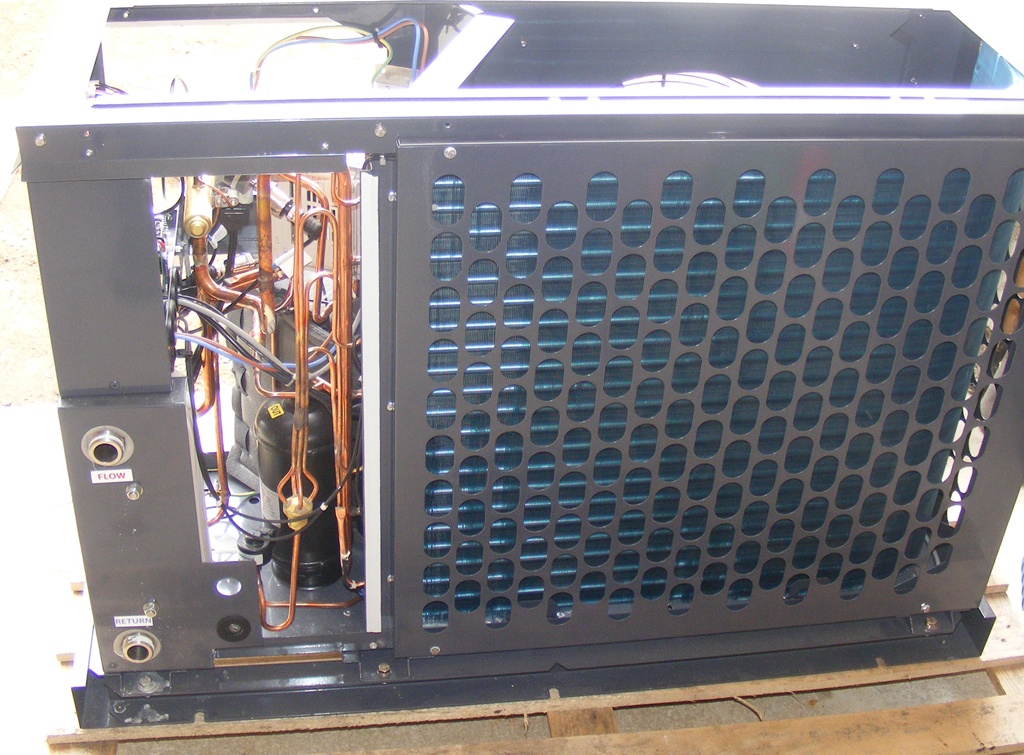
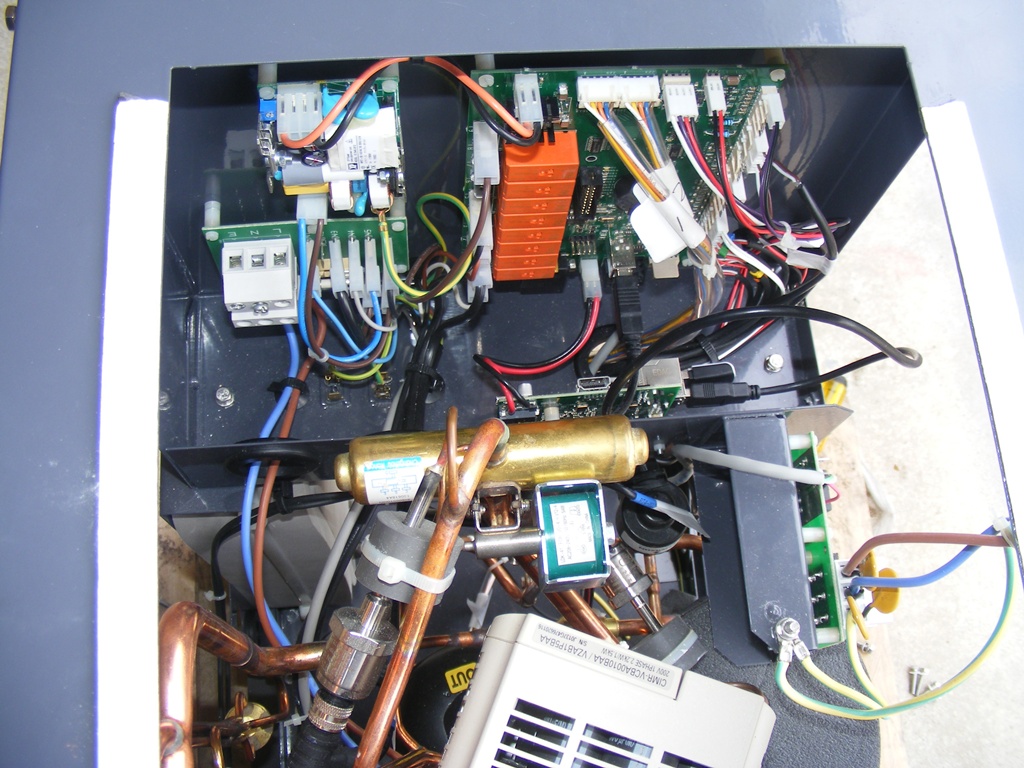
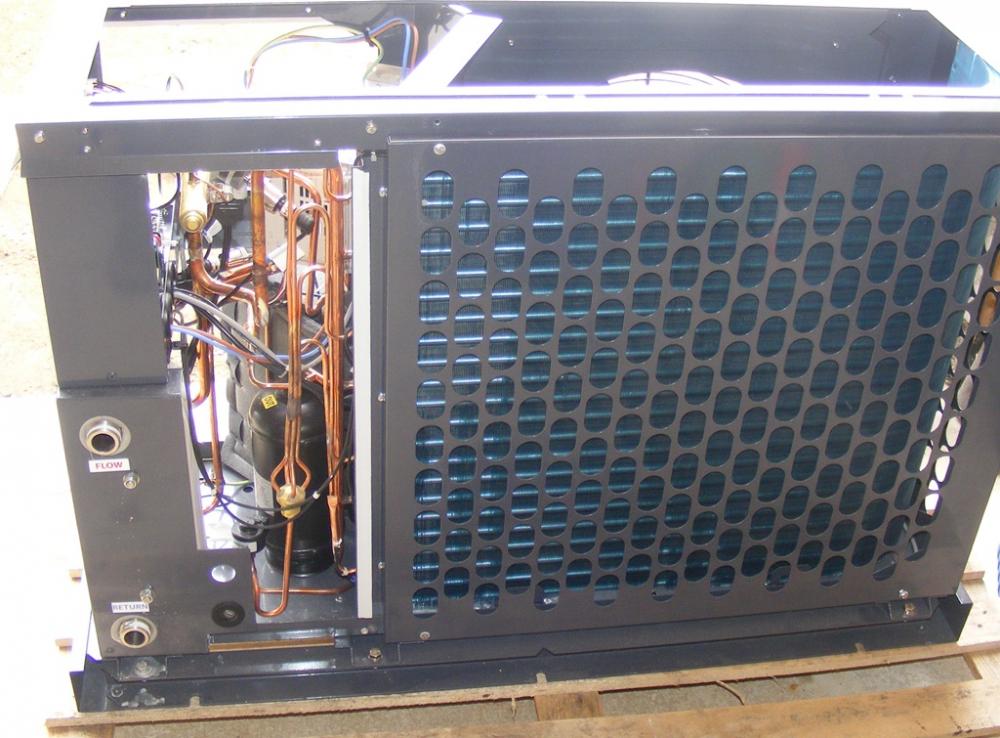
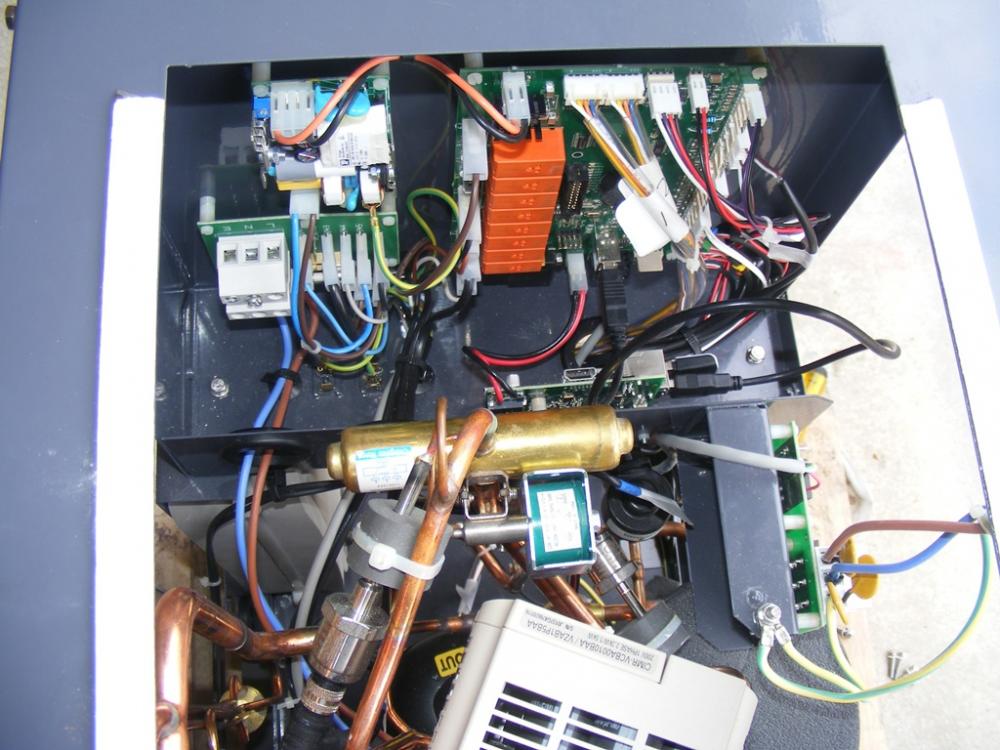
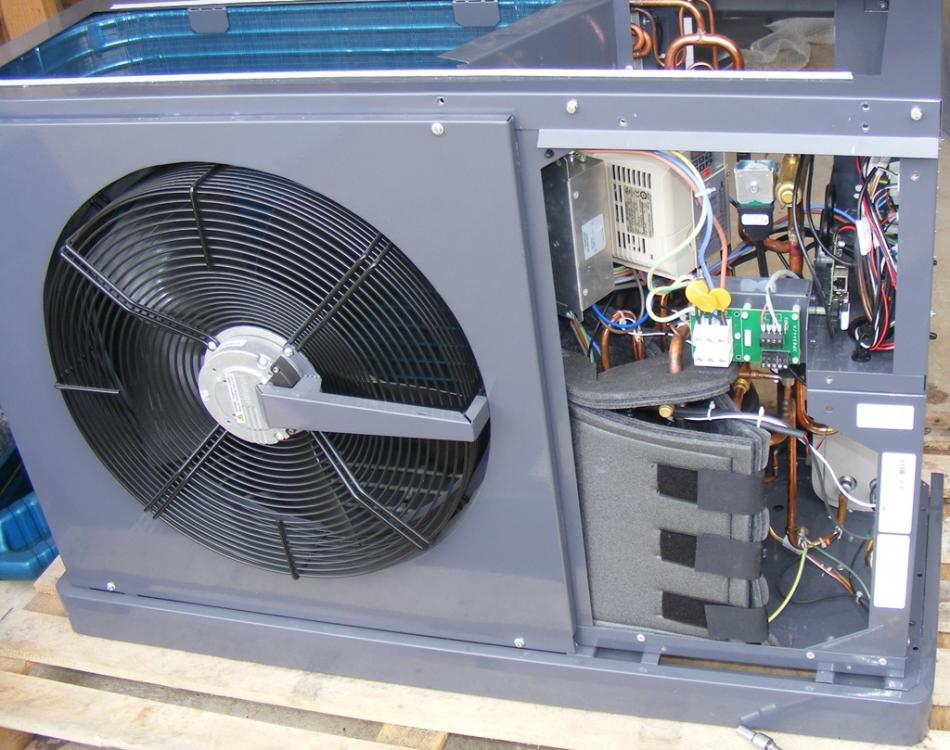
I have just bought myself one of these AEC heat pumps, so I am making this thread to discuss it, and in due course (will be some time) report how well it works. First off, AEC seems to stand for Ambient Energy Collector. It claims to be UK made, but the only references I can find about it on the internet, are the website of the dealer I bought it from. Why did I choose this one? Because it was going cheap on ebay. I only had a couple of hours notice of the end of the auction, not enough time to do any research to find out much about it so I put in a silly cheeky cheap bid and blow me down I won it. It arrived this morning. It's model number is AEC-5CG. It came without a printed instruction manual, but this page gives the units specifications and a link to download the installation manual. http://www.webportal-solfex.co.uk/Catalogue/Heat-Pumps-HP/Heat-Pumps/AEC/AMBIENT-ENERGY-COLLECTOR-5kW-WHITE-AEC-5WH One of it's features is an inside termination box to connect all the heating controls and a couple of sensors. This connects to the heat pump with a 4 core cable, which I suspect is using CAN bus. This means to connect the outside unit, all that's needed is power, this 4 core cable, and an ethernet cable. I have taken the covers off and taken some photo's. It will be interesting to see if anyone recognises any of the internal parts from other makes of heat pump. A few observations. Inside is a label that states the manufacturer is EBAC Ltd from Newton Ayrcliffe and gives a model number H10A5-1BGR-SF but googling that revealed nothing of relevance. At the heart to control it is a standard looking Raspbery Pi There is a wifi interface built in and you can log in directly to the controller. All setup is done from a web interface including things like setting heat compensation curves. It can also be hard wired to your network and even accessed remotely if you want to. The standard wiring schematics show connection for heating up to 3 zones, and a hot water heating circuit, each one controlled by it's own 2 port valve. The unit also wants to be wired to the immersion heater in the hot water tank. They say this is to once per week heat the tank to 65 degrees (the heat pump only heats the HW to a max of 48 degrees) That might complicate using a solar PV divertor for the immersion. One last observation, the compressor appears to be driven from a variable speed drive, but the fan seems to be direct via a relay, meaning the fan will run full speed all the time, which is a bit disappointing from a noise point of view. I will add to this thread as I find out more, but it will be some time before it is connected and commissioned.
-
Hi Ben As Peter has mentioned, I have a (almost) conventional timber frame with a 10mm thick wood fibre cladding and render straight onto the wood fibre board. The system is described here http://www.greenspec.co.uk%2fdownloads%2f%3ffilename%3dpavaclad1.pdf&usg=afqjcnhzc6lrtooxtnhnayrqcv6moscmmg/ The benefit is that as well as providing a suitable board to render onto, it is also adding more insulation, and particularly important to a SIPS build that insulation has a low decrement delay (in rough terms means it only reacts slowly to external changes in temperature) Most of the foam type insulation used in SIPS has a fairly high decrement delay. You might need to run it past the SIPS supplier or a structural engineer to ensure the SIPS panel structure can support the additional weight, and check the structure has sufficient racking strength to stand alone with no brick or block external skin (in my case, the structural engineer specified two layers of OSB on the frame to give sufficient racking strength)
-
The self build policy will cover the digger.
-
Discount Offers of the Week
ProDave replied to Ferdinand's topic in General Self Build & DIY Discussion
I bought the Lidl mini 12V cordless drill in January for £24.99 Last night I was driving a screw in with it and there was a bang and a puff of smoke and it stopped. It was the battery that had failed. I opened up the battery for a look and as well as containing the cells, there is a circuit board with some power components on one side and some surface mount IC's on the other. I could not see which had let it's smoke out, but it certainly smelled like an exploding semiconductor. I did some research and found a site selling spares https://www.kompernass.com/index.php?route=product/category&path=1059 Where I could have bought a new battery for £13.50 but decided against it. I don't like things that have over complicated electronics that are prone to failure. So I have just taken it back for a refund. Shame as it was a good little drill for it's size. I have just ordered a new pair of batteries to resurect my trusty old Ryobi drill that has been flawless in operation and does not stick silly unecessary electronics in it's battery packs. I got them from County Battery who are by far the cheapest I could find. https://www.countybattery.co.uk/ -
A hidden gutter?
-
An interesting twist to this saga. There was a cladding fire on a high rise in Scotland in 1999. Following that there was an enquiry, and the result was the building regulations were changed with the new regulations coming into force in 2005. As a result, no high rise buildings in Scotland are thought to be at risk. I wonder if the enquiry in England will ask why was this information not shared (perhaps it was?) and why were English building regulations not similarly tightened?
-
I see from the news that so far 100% of the buildings tested have failed the fire tests There are 600 buildings identified to be tested. Once isolated case of the wrong insulation being used on 1 tower I cuuld understand as negligence or criminal. But it is now beginning to look as though none of these insulated cladding systems are going to pass the tests? Is this a case of the regulations have been tightened since they were originally fitted, or has the whole industry been ignoring the law for some time? This story is going to get bigger and bigger (and very expensive for someone, probably the tax payer)
-
This has to be one of the most hilarious threads of all time. Nick certainly has a way of calling a spade a %^% shovel !!!! We used to call them "turd choppers" I can certainly agree they are noisy, and like a waste treatment plant with moving parts, I would not volunteer to service one of them. Ever considered a composting toilet for the basement?
-
I can't advise on paint, but for cleaning, when I last did this on a 1930's pebbledashed house, I used a pressure washer to clean the wall and remove loose paint. then just painted over what was left with something cheap from one of the sheds.
-
I am going to regret asking this, but what's the knackered tea tray on top for?
-
There is another "god awful" type of trim to avoid. One sold to us by Topps Tiles when we did our last bathroom. It's a trim that fits to the wall before the tiles go on. It doesn't create a "gutter" so on the face of it, it should be okay. So why is it god awful? Well the edge that touches and seals to the bath looks just like a white bit of trim. But, it is a different material. Over a period of time, the white edge turns yellow, and it curls up away from the bath leaving a gap. I would never use it again and can't believe the manufacturer does not know this happens and it is not fit for purpose.
-
I lost count of how many people told me we had put the frame up "inside out" because with our build method, the OSB racking layer goes on the inside of the frame.