
ProDave
-
Posts
30861 -
Joined
-
Last visited
-
Days Won
427
Everything posted by ProDave
-
 At the moment no. It's not the self building that is the issue, it's the sale of the old house. With the depressed demand and consequent depressed prices, selling a house is not something I wish to repeat in the near future in any shape or form. In fact looking back, I have (with one lucky exception) always had trouble selling houses. So at the moment my thinking is I will leave this one on a box.
 -
Another "what's the correct name" plumbing question
ProDave replied to ProDave's topic in General Plumbing
As I say, mine is the "compact" version with almost no water plumbing in the ASHP. I have to insert a pump, flow meter, auto vent valve, and magnetic filter in the connecting pipe work. Now here is another thing. The manual tells me the warranty will be void if I do not have a magnetic filter. Now correct me if I am wrong, the magnetic filter is to remove ferrous particles from the circulating water. I could understand that if I was using steel radiators or there was a steel or cast iron boiler invlolved. BUT I am using copper pipe, Pex Al Pex UFH pipe, brass manifolds and valves, a stainless steel coil in the HW tank, and I believe the PHE in the heat pump is stainless steel. Pray tell me just where these ferrous particles are going to come from. Another unnecessary expense? -
Another "what's the correct name" plumbing question
ProDave replied to ProDave's topic in General Plumbing
You are not selling it to me. So far I would need an expansion vessel, a non return valve, and over pressure blow off valve some isolating valves, a fill loop and a gizmo to pump the antifreeze in. Vs a £20 header tank and a tank connector. For no appreciable benefit, more work to install and more to go wrong. If only I can find this bottle type header, otherwise a standard 4 gallon header is starting to look attractive. -
So not long back one arm of government said we need to build more houses and we will relax the rules etc etc. Now we have this, effectively saying more national parks = much harder to get planning to build the more houses we need. There is nothing like joined up thinking in government, and THIS is certainly not joined up.
-
Another "what's the correct name" plumbing question
ProDave replied to ProDave's topic in General Plumbing
Don't tempt me, I have seen plenty of those when searching for the real thing. They tend to be pressurised which is not what I want but a small hole drilled in the cap will sort that. -
Another "what's the correct name" plumbing question
ProDave replied to ProDave's topic in General Plumbing
Okay, I have never done a pressurised primary (yes I am a bit of a dinosaur) So tell me just HOW to I get the antifreeze in? With presurised you fill from a fill loop off the mains water, but that won't get the antifreeze in? With a header tank I just load the header with antifreeze and fill it from that, simple. But it still IRKS me that I have seen the item I want (this plastic header bottle thing) in use many many times but I just can't find one anywhere to buy because I don't know what it is called. MY ASHP is the "compact" version, which basically means it has no water plumbing inside it. It is literally the 2 ports of the PHE protrude through holes in the back and that is the only water connections to it, so no not really any chance to get extra plumbing stuff inside it. -
Another "what's the correct name" plumbing question
ProDave replied to ProDave's topic in General Plumbing
I like the simplicity of a manual fed gravity feed & expansion. If I go pressurised then that's another over pressure / over temp valve and another D2 pipe to get out of the building and discharge somewhere. -
Another "what's the correct name" plumbing question
ProDave replied to ProDave's topic in General Plumbing
This is the sort of thing that comes up for "dosing pot" https://www.ebay.co.uk/itm/Flamco-mild-steel-dosing-pot-3-5L/183242350344?hash=item2aaa185f08:g:fbcAAOSwS-Va6B0B What I am after is way way simpler. It's a clear (or semi clear) plastic bottle. the bottom is open to a pipe and the top has a cap (with a vent) to top it up. It is literally a very small header tank that you manually fill with antifreeze mixture to keep it topped up. Out of desparation I could just use a 4 gallon conventional header tank and not have it connected to a ballcock, but you can;t see the level. Just about every heat pump system I have seen uses this arrangement, but I just can't find the damned thing for sale because it probably has some bizarre name that has nothing to so with header or tank or vessel. -
Once the "house" is finished I recon another 2 years, to build the car port. shanty town of various sheds, bridge over the burn, 3 wire bridge over the burn for fun, zip line, decking, then perhaps a chicken coop and chicken runs. Then all the stuff I have not yet thought of.
-
Yet again I am struggling to find what I want because I don't know what it is called. For a closed circuit heat pump circulating loop filled with antifreeze, I see these not filled from a conventional header tank, and usually not sealed and pressurised. Instead they seem to be fed from a "bottle" that sits on the top of a pipe and forms the function of feed and expansion. You top it up manually and it is usually clear so you can see the contents Well I have searched loads of plumbing sites and I am buggered if I have been able to find one. It would help if I knew what it is called as "fill bottle" "header bottle" etc is clearly wrong.
-
Jewsons were charging me £7.61 +VAT per sheet at the back end of last year. Perhaps our proximity to the Norboard factory helps?
-
Up here rendered garden wall don't do well before frost gets in and the render bursts and falls off. House walls never seem to suffer like this I assume because they never get so cold, and have a proper DPC to stop it getting damp behind the render (which I am sure many garden walls do not) I would build it in blocks, point it well, and paint it.
-
Help to find a thread please.
ProDave replied to Moira Niedzwiecka's topic in General Self Build & DIY Discussion
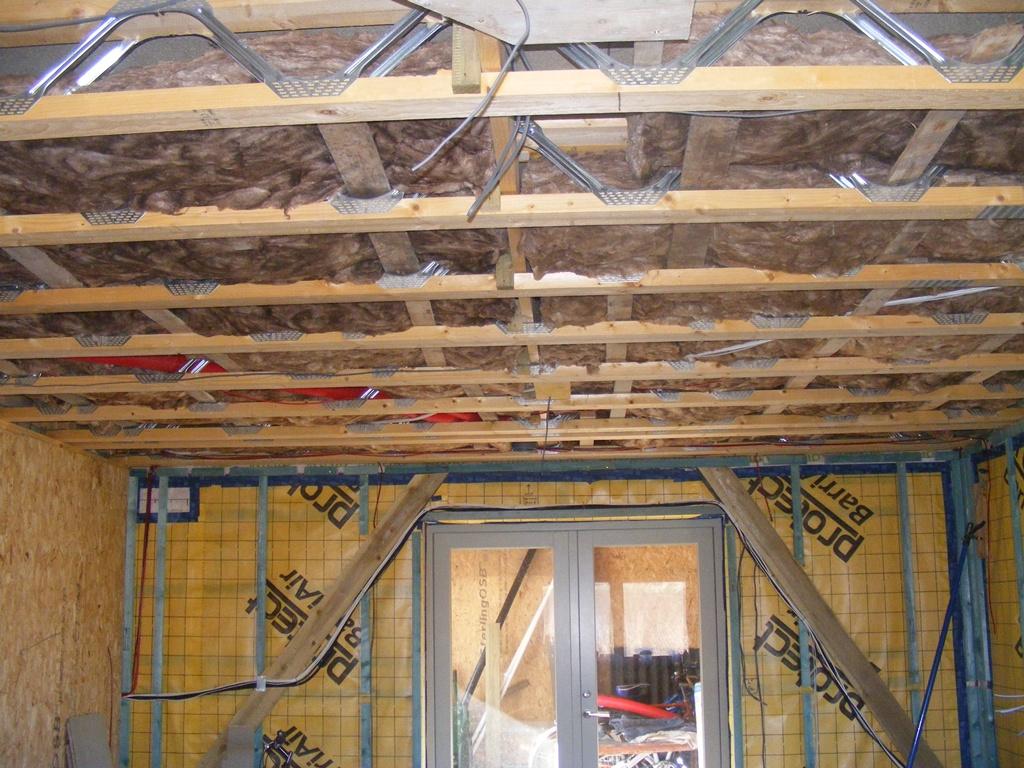
Yes I used (cough) old bits of pallet wood slotted through the joists to hold the insulation in place. I wanted to keep the insulation from touching the plasterboard, just in case one day I need to add extra cables and I will stand more chance of threading a wire through if the insulation is not down on the plasterboard. I put my insulation above the mvhr vents -
Still struggling I have found this https://www.ebay.co.uk/itm/new-4M-ARMAFLEX-HIGH-TEMP-solar-copper-MDPE-pipe-tube-A-C-Insulation-lagging-UK/122801904482?hash=item1c97905b62:m:mQh2N7BMledKQZKkAMSS2CQ That's flippin expensive. (I need about 6 metres so that one would not be long enough) BES don't have Armaflex or that other one. I keep finding "Class O Nitrile insulation" but it doesn't mention outdoor use https://www.bes.co.uk/class-o-insulation-tube-7-8in-x-25-mm-x-2-m#product-details-tab Would that one be okay if I did as @newhome suggests and wrap it in aluminium tape?
-
Se will the nitrile rubber survive the tendancies or rodents to eat anything vaguely plastic? As always it's knowing the trade names. You would think the sellers would refine their search engines so this comes up when you search for "outside insulation"
-
Help to find a thread please.
ProDave replied to Moira Niedzwiecka's topic in General Self Build & DIY Discussion
Do you mean sound proof insulation? Not posted before but this is mine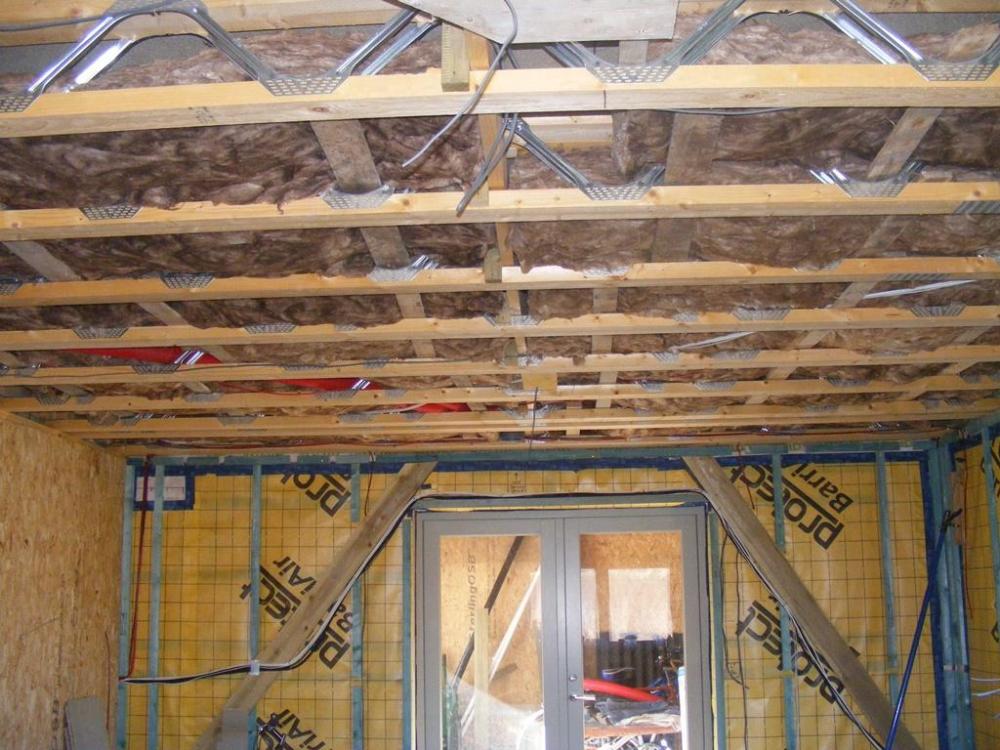
-
To insulate the pipes from the house to the ASHP All I seem to be able to find is the normal foam stuff. I can't believe that will be any good outside for long, and the mice will eat it anyway. I want something properly rated for outside use, that won't turn to dust and won't get eaten. All the usual outlets, the sheds, BES etc don't have anything. Bhe best I can find is this, but it looks pathetically thin. https://www.ebay.co.uk/itm/EXTERNAL-INSULATION-FOR-USE-WITH-PEX-AL-PEX-COPPER-PLASTIC-PIPE-10-METER-LONG/142498377460?hash=item212d90aef4:m:mK9vmX0SOEaVH7M3-B-diAA What do the rest of you use? why is it so hard to find?
-
Hi, I trying to find out if mdpe pipe inserts are universal
ProDave replied to rob dayglo's topic in General Plumbing
Mdpe pipes work with brass compression fittings. I used the brass 25mm in 22mm out stopcocks. Some on here don't like them, but I equally dislike the copper adaptors if you instead use an mdpe in / out stopcock. -
Bank Holiday fun: the cherry on the cake!
ProDave replied to Dreadnaught's topic in General Self Build & DIY Discussion
It has to be the location. Why else would we be building a house less than 100 metres from the last house we built 15 years ago? But this time it is better than the last one, we get a view of the mountains to the West of us, which is made a feature in the views from the kitchen / diner windows. The previous house was robbed of those views by trees in the neighbours garden so we only got to see farmland and relatively low hills. -
Standards: guidance from the NHBC
ProDave replied to ToughButterCup's topic in General Construction Issues
We found some interesting differences between Scottish building regs and NHBC guidelines, so much so that we had to tell one of them we would do something one way, then tell the other we would do it different. We always did it the building regs way in case of conflict. -
Shop around is your answer. My Air source heat pump cost me £455, I have just bought all the downstairs under floor heating kit for £502, and the hot water tank was the expensive bit at £875 That's the heating and hot water system all bar the pipe and some valves for £1832. How much is a combi and your radiators?
-
"working out" a budget UFH manifold controller
ProDave replied to ProDave's topic in Underfloor Heating
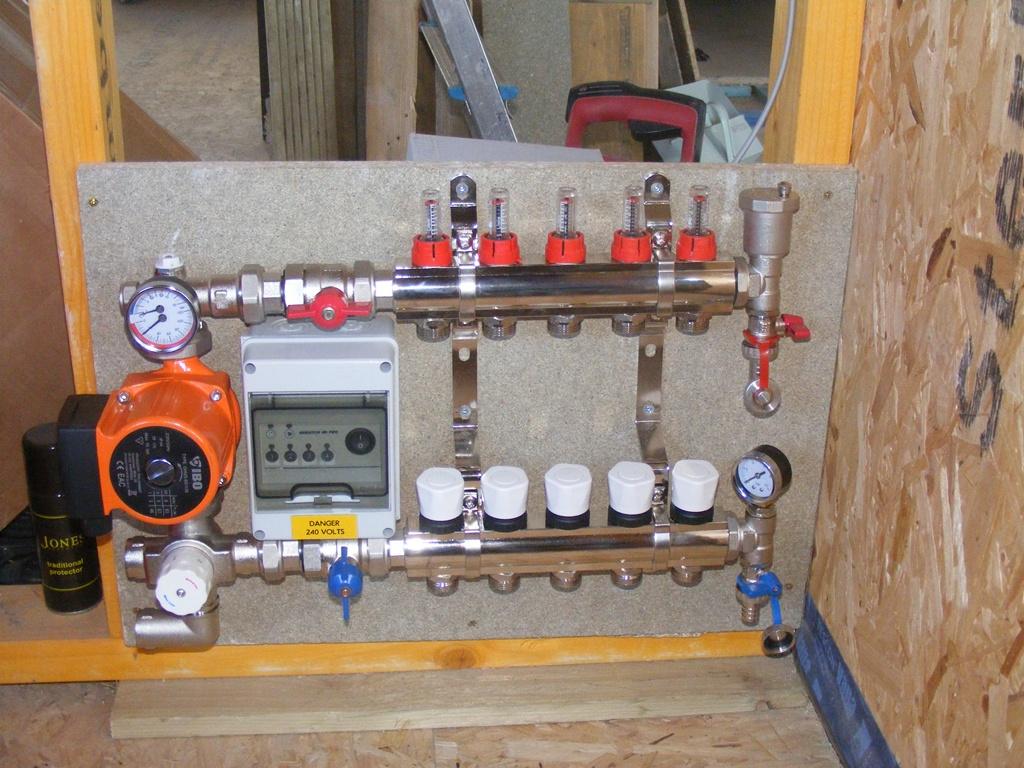
I will almost certainly use the one I have just bought for the downstairs manifold. Now I have put it in a spare DIN rail enclosure, it is such a perfect fit. Then I will use the one from @newhome with the yet to be bought manifold for upstairs.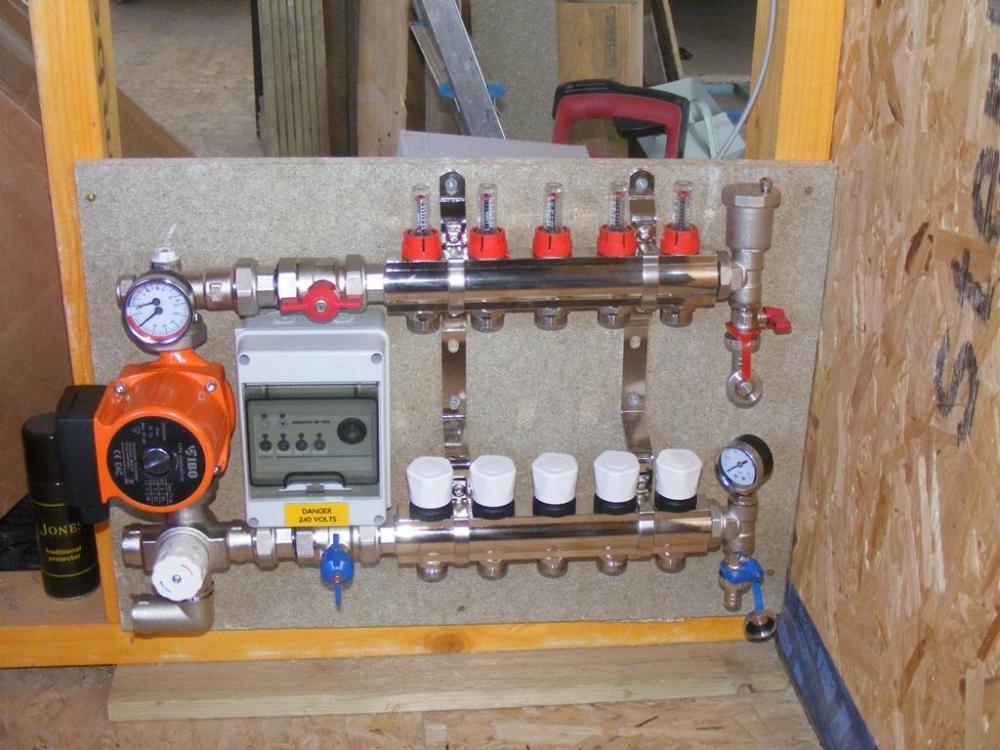
-
"working out" a budget UFH manifold controller
ProDave replied to ProDave's topic in Underfloor Heating
I only need 1, I will use the one I have just bought for the other. There will be 1 manifold and 1 controller on each floor. They will operate independantly possible even on at different times so there is no need for them to link together so it matters not that they are different. I have not bought the upstairs manifoild yet so that too may end up different to the downstairs one. -
The DiseqC switch comes before the LNB so the LNB would know even know, let alone care, it was fed from a switch. The only theory I can come up with is it's quite a long length of cable from the house to the dish about 30 metres, and I wonder if the old LNB consumed more power and was causing a volt drop issue stopping the switch from seeing it's signal and switching, and perhaps the replacement is lower power? It was an OLD LNB it has been on that dish for 15 years, and it was by no means new when I got it then. It's replacement is a modern one, no more than 10 years old.
-
There is a time and a place for a wood burner. In a town or city or the bottom of a sheltered valley may not be it. But up here in the sparsely populated Highlands, where neighbours are not close, and it's nearly always windy, they really are not a nuisance to neighbours. Of course any law passed will be based on regulating their use in Central London, then be applied equally everywhere.