
ProDave
-
Posts
30862 -
Joined
-
Last visited
-
Days Won
427
Everything posted by ProDave
-
Might still be possible with different or trimmed down beading.
-

Any way to terminate this Brita 3rd outlet/pipe?
ProDave replied to JohnBishop's topic in General Plumbing
Find out what size it is and buy a blank plug. This is a random example for an 8mm plug https://www.ebay.co.uk/p/2211717247 -
"Coal Hole" Is that a bricked up window the the side where coal used to be tipped in?
-
All they have said is you cannot erect the fence under permitted development / lawful development certificate. Your 2 choices now are just do it and hope, or apply for planning permission and if that is rejected consider an appeal.
-
Returning a used washing machine?
ProDave replied to Dan1983's topic in Kitchen & Household Appliances
Look up the model number to see what it is. At the very least it will be a condensing dryer so won't need an air vent (wasteful) and the condensed water will just go down the drain. -
What energy rating is your HW cylinder?
ProDave replied to Adsibob's topic in Boilers & Hot Water Tanks
I have the Telford Tempest heat pump cylinder so I suspect the same rating as your if I cared to look it up. I find in practice the heat loss is low, no part of the tank ever feels warm to the touch, but I only normally store hot water at 48 degrees so the heat loss in 24 hours will be less than what they state as they assume a much higher storage temperature. What is VERY important with any cylinder is insulate ALL the pipework connecting to the cylinder very well. That means good thick insulation and neat joints that are at least taped so no gaps. without insulation or with poor insulation you will lose more heat from the connecting pipes than from the cylinder. -
What happened to all the soil that came out of the big hole that was dug to fit the new tank? That is what you would normally use to landscape bits like this.
-
Returning a used washing machine?
ProDave replied to Dan1983's topic in Kitchen & Household Appliances
So you paid for a washer, and you got a washer - dryer for the same price? And you are unhappy? Just don't use the dryer functions if you don't want to. Don't make a problem and more stress when there is no need. -
Problems with how to finish reveal with aluclad windows
ProDave replied to cbk's topic in Plastering & Rendering
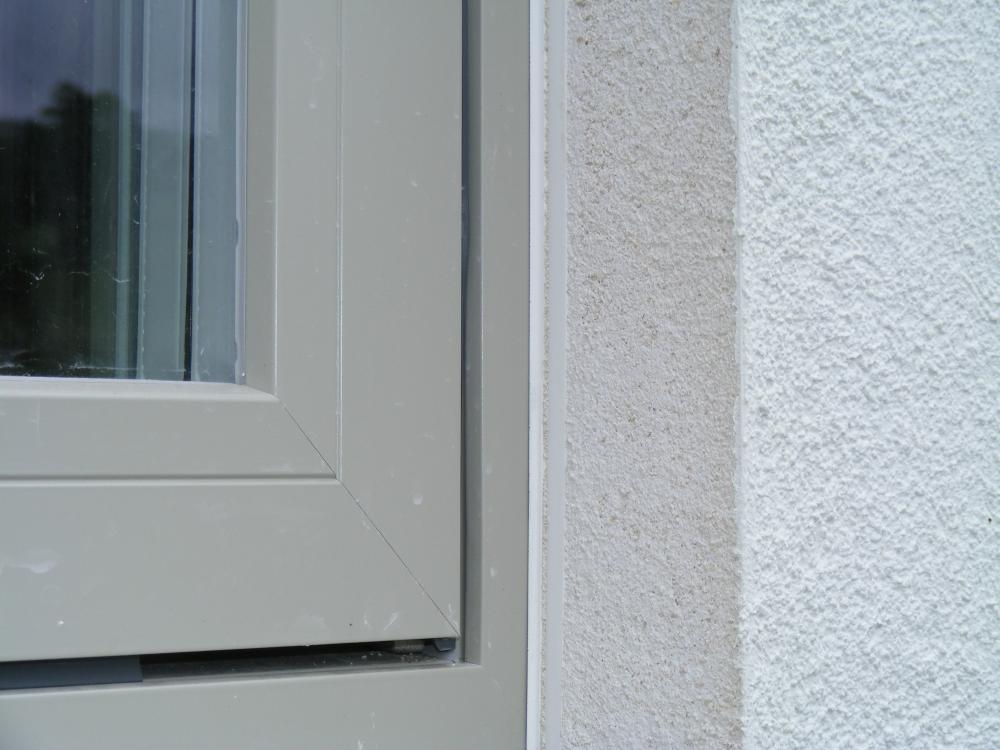
I broke every rule in the book. This was discussed at length with the renderer. The basic principle is you do not want render or anything else filling the gap at the side and even worse if render or similar does go down the gap, it could then bridge the gap between the aluminium and the timber. So by fitting a render bead, then rendering up to that bead, you have not breached the gap and it can drain to the bottom. This is not official advice, but the Rationel rep did visit afterwards and did not bat an eyelid or tell me it was wrong.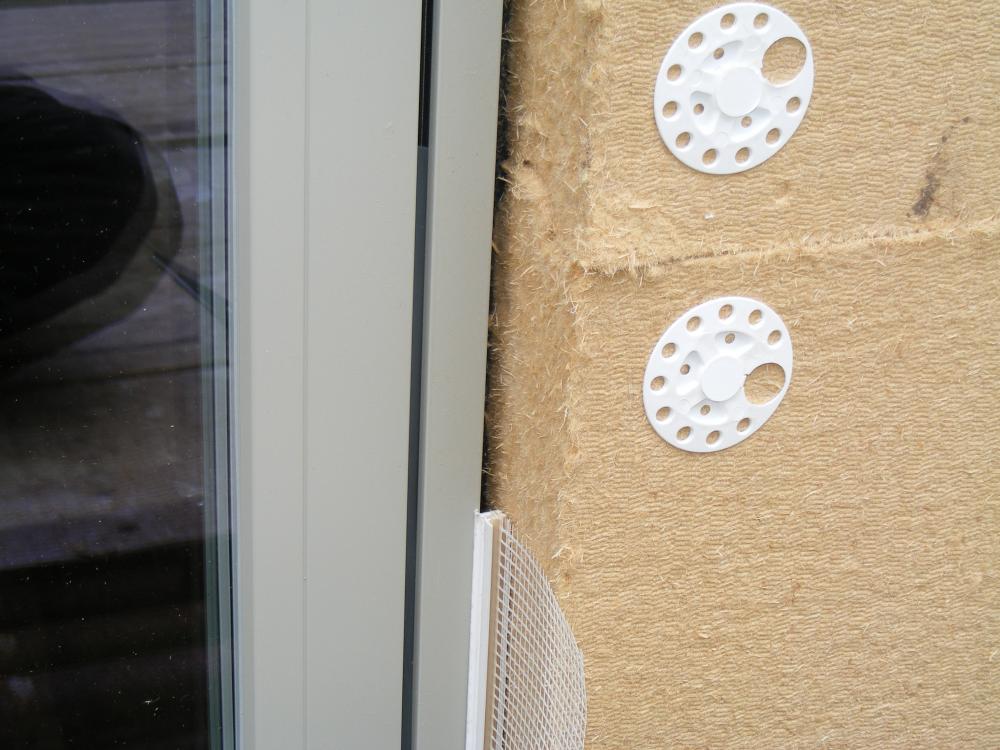
-
You may have identified the behaviour for your meter, but in respect of the red light I don't think there is any standard. I have seem them solid red when exporting and I have seen them flashing when exporting (but not counting up on the import register) My present meter shows solid red when exporting and the meter reading display now alternates between the reading and rED Meaning Reverse Energy Detected. A scheme devised before solar PV became common to alert the meter reader to the fact someone had been naughty.
-
Well double check and see if turning that back up again turns the boiler back on? You see there are 2 white cables coming out of the bottom of your grey box on the tank. Follow the left hand one very carefully, (they are cable tied together) and tell me if it goes into the switch on the wall or the rectangular box on the wall below it? No criticism intended @PeterW for not getting exactly the correct manual. S plan wiring with 2 port valves does not need hot water off, that's only Y plan with a 3 port mid position, so only using 2 connections from the thermostat is not necessarily "wrong"
-
Further thought: If turning down the red thermostat in the blue round thing really did shut off the boiler then the electrician has messed up and got the immersion and control cables the wrong way round. Please confirm exactly which thermostat does turn the boiler on and off and until you have done that, do not try turning the immersion heater switch on.
-
The red dial in the middle of the blue round thing is the immersion heater thermostat, NOT the cylinder stat for the boiler. That should make no difference to the heating. Yours appears to be wired / constructed differently to the manual @PeterW posted. you have TWO tank thermostats for the boiler. They are both mounted in that metal plate at the top. The right hand one has a dial 1,2,3,4,5 and that is the cylinder thermostat that will shut off the boiler when the tank gets up to temperature. It currently looks to be set to setting 4. that is the one you want to turn down while it is running to see if the boiler then shuts off. The other one to the left is the safety cut out. In the event of the main thermostat failing and the water getting too hot, that will trip and the red button will pop out. You can usually reset that by pushing the red button in again.
-
^^^ Peter's post above also shows it is the left hand thermostat that is the cylinder thermostat for the boiler, and that is the one you want to turn down to a lower temperature, say 50 degrees. (the right hand one is the thermostat for the immersion heater) So run the system so the hot water is on. Turn that left thermostat down until it clicks, then the boiler and the pump should stop. If it does that, then chances are it is wired correctly. You should also hear the motorised valve spring shut when the thermostat clicks off. The cylinder thermostat should always be set lower than the boiler flow temperature.
-
The one that cause "discussion" was where the gas pipe exited the meter box, ran about 8 metres along the wall before entering the property. The gas fitter would not accept my earth wire clamped next to the entry to the house so we ended up with the ludicrous situation of the earth wire running along and cable tied to the gas pipe just so it could be terminated inside the meter box.
-
+1 That earth rod is not there just to earth the gas pipe, it is there to earth the whole house so fix it ASAP.
-
a source of endless argument between gas men and electricians. Our regs say within 600mm of entry to the building (without saying if that is 600mm inside or outside of the entry point) I do wish they would bang their heads together and agree a common set of rules.
-
I would chase the plumber before it's too late. you need him to fill in and sign the comissioning sheet, either the one supplied with the cylinder or the generic version. Certainly in our case building control wanted to see that along with the gas safe certificate and electrical installation certificate. Hopefully it is all wired properly and you just need to adjust the cylinder thermostat.
-
A good argument for being all electric and one standing charge. Or Oil or LPG for heating with no standing charge.
-
Have you got a leak? third pipe from left front row.
-
The thermostat probably is connected. The bottom grey box appears to have 2 wires coming from it. One goes to the switch, that is the immersion heater feed. the other wire goes into the wiring centre, so that is almost certainly the cylinder thermostat. Take that bottom grey cover off and take a close up photo of what is inside. Plumber is as thick as mince. It should cut out when the cylinder thermostat reaches it's set temperature which will cause the motorised valve to close and the "call for heat" to the boiler to stop. Your "smart" controller is just doing the job of a central heating time programmer. The top grey box is probably a second immersion heater, not in use.
-
+1 to that. Unscrew the covers and I bet you will find a thermostat dial under there. Set it to 50 degrees, plenty hot enough for hot water and that leaves room for solar PV to heat it further. There will be 2 or more dials, work out which one is the cylinder thermostat dial, that is the one that needs to be turned down. The immersion thermostat needs to remain higher. Post a close up picture of what is under the two grey covers.
-
More details, photos of valves, and other controls on or around the cylinder etc? Why not just turn the HW boiler heating off, and only turn it on manually if there is not enough sun?
-
Not for me, I fixed so have deferred my next outrageous increase until March, so will get most of this coming winter before being fleeced even more.
-
Please tell us your electricity supplier, as mine charges me almost £1 for 3kWh