


Gone West
-
Posts
4668 -
Joined
-
Last visited
-
Days Won
20
Everything posted by Gone West
-
That's really crap. I lost faith with Gumtree last year after some scamming buyers tried to rip me off. I don't use it any longer.
-
That sounds like a good setup for a well insulated floor. I like hearing about more simple systems. AIUI normally with a gas boiler there is a buffer tank to prevent short cycling and blending valves etc. How did your plumber get around those problems?
-
Of course when the floor is well insulated then the losses will be less. As the level of insulation decreases the losses increase and then the floor temperature will have to be higher to counter the losses. As long as people are aware that UFH should only be acceptable with a well insulated floor and isn't always the most suitable form of heating. Then of course there are the costs to be considered. Not everyone is willing or able to install their own ASHP and UFH components and it can be an expensive exercise to provide the small amount of heat required in a well insulated house.
-
We have 300mm insulation under the concrete slab and warm air heating which keeps the house at 23C. The slab is always going to be very close to 23C unless of course the sun is shining on it when it can be warmer. With bare feet it will feel cooler because we have porcelain tiles all over the ground floor but if you had for instance cork tiles it would feel warm. I disagree. UFH is an inefficient way to heat a house. However much insulation there is under a slab a certain proportion of the heat is lost to the ground. I agree it has advantages over radiators in freeing up wall space, but there are alternatives.
-
Hi Rod, welcome to the forum. Sounds like you're getting well stuck in. Good luck with the rest of the project. Plenty of blogs on here to give you some ideas.
-
Yup.
-
As some will know we use a Genvex Combi 185LS compact unit to provide DHW, ventilation and warm air heating. This unit is ok in our small house but there is now an Austrian company producing a larger version with two EASHPs and a larger DHW tank. It will warm or cool air with one ASHP and heat water with the other. Don't know the cost, but probably high. Pichler PKOM4 Combi Unit.pdf
-
We had the first Isoquick installation in England and it is a very simple system. It can only get spoilt if the concrete is badly laid. See my blog for details . I can't see any reason it can't be done DIY.
-
I'm pretty sure there should be some form of anti-slam on the jamb. Glass hitting metal isn't going to end well.
-

Is it a Septic Tank or just an old Cesspit?
Gone West replied to Dave and Helen's topic in Waste & Sewerage
Probably, at some point, had a hole knocked in the bottom to let it soak away. Seems a common practice. -
Isn't the white cover there to hide the screws and act as an anti-slam device? Unless I'm seeing it wrong. On mine there is a vertical foam rubber strip for anti-slam.
-
Borage is a great herb to grow although if the conditions are right it can take over a little by self seeding. When I were a lad living at Wrotham Heath it used to grow wild in our back garden and regularly had slow worms and adders in amongst it. We grow it because the bumblebees love it.
-
I've not seen the frameless version. As @Barney12 did, I just screwed the jamb to the stud with roundhead screws.
-
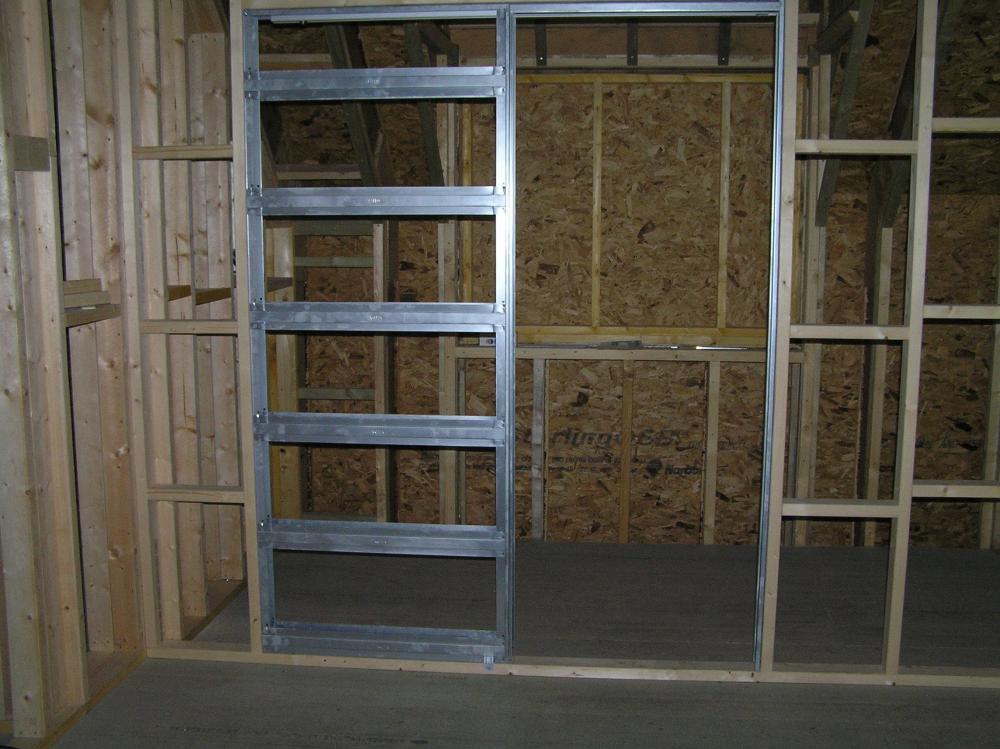
IIRC when I fitted mine many years ago there was a metal lip on the edge of the frame that the plaster board slid behind. They may well have changed the design since then though.
-
We found out that the only operation OpenReach will carry out for nothing is an overhead line removal. We had our line removed before we demolished our old bungalow.
-
We've got horseradish growing wild in the verge opposite our house. It's been there for years and keeps spreading. I certainly wouldn't want it in the garden.
-
If you haven't seen this book, it's a good read, Wendy swears by it. https://www.amazon.co.uk/Jekkas-Complete-Herb-Book-Horticultural/dp/1856267806
-
How far are current Building Regs from Zero Energy House?
Gone West replied to Ferdinand's topic in Boffin's Corner
They don't need to keep changing the regulations, Part L isn't too bad. If they improved airtightness to 1.0ach and mandated MVHR it would be ok. The problem lies in the quality of the construction and the inspection process. -
What accidents have you had while DIY'ing?!!
Gone West replied to mike2016's topic in General Self Build & DIY Discussion
I've ended up with two ridged discs in my neck which causes constant background pain which intensifies when I have to hold my right arm above my head or lift heavy weights. So that's simple I just take it easy. -
It's all @Oz07 doing.
-
To be fair it does say that particular knife shouldn't be used for removing beads and to use one of these instead. https://www.windowware.co.uk/don-carlos-pallet-knife https://www.windowware.co.uk/index.php/catalog/product/view/id/31354/
-
@ProDave or @Jeremy Harris may have some ideas for testing the compressor. I bought our Genvex Combi 185LS direct from Denmark at a very reduced price compared to Total Homes and they also sell spares. https://www.sundthus.dk/
-
Removing old fence post concrete
Gone West replied to Moonshine's topic in Landscaping, Decking & Patios
We had a similar problem when we replaced one of the fences. The installers had kindly put the posts in 600mm deep and put around 150mm of concrete at the bottom of the hole. When the posts broke at a later date they didn't replace them, instead they concreted a chunk of angle iron to the post and strapped the two together. As a result we had to dig out two lumps of concrete for every post. The only way we could do it was with a spade which was a real pain for 25m of fencing.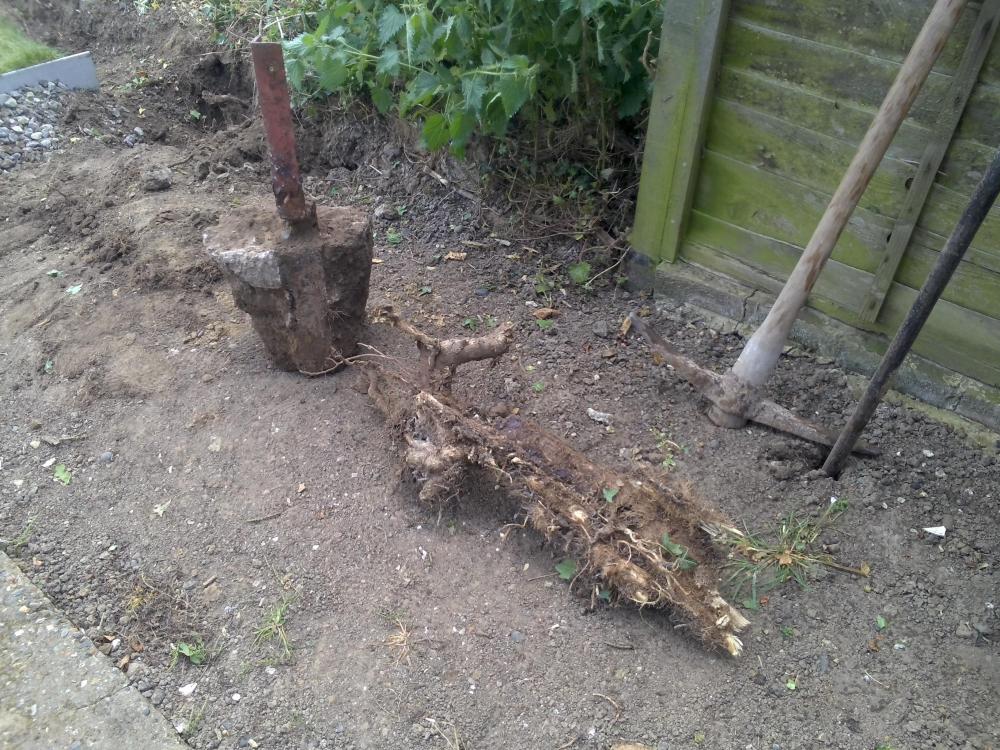
-
Do you like your kitchen sink?
Gone West replied to Bored Shopper's topic in Kitchen Units & Worktops
We have soft water and we have been using two black Schock sinks for the last two years. Wendy was going to buy the proper Schock cleaner until she saw the price and she uses, yes I know gender stereotyping, Ecover bathroom cleaner. It keeps them looking black without scratching the surface. -
WiFi Speakers Not Wired for Sound
Gone West replied to Ferdinand's topic in General Self Build & DIY Discussion
I've now received an apologetic email from Sonos stating they will not be bricking legacy products. We heard you. We did not get this right from the start. My apologies for that and I wanted to personally assure you of the path forward: First, rest assured that come May, when we end new software updates for our legacy products, they will continue to work just as they do today. We are not bricking them, we are not forcing them into obsolescence, and we are not taking anything away. Many of you have invested heavily in your Sonos systems, and we intend to honour that investment for as long as possible. Whilst legacy Sonos products won’t get new software features, we pledge to keep them updated with bug fixes and security patches for as long as possible. If we run into something core to the experience that can’t be addressed, we’ll work to offer an alternative solution and let you know about any changes you’ll see in your experience. Secondly, we heard you on the issue of legacy products and modern products not being able to coexist in your home. We are working on a way to split your system so that modern products work together and get the latest features, whilst legacy products work together and remain in their current state. We’re finalising details on this plan and will share more in the coming weeks. Whilst we have a lot of great products and features in the pipeline, we want our customers to upgrade to our latest and greatest products when they’re excited by what the new products offer, not because they feel forced to do so. That’s the intent of the Trade Up programme we launched for our loyal customers. Thank you for being a Sonos customer. Thank you for taking the time to give us your feedback. I hope that you’ll forgive our misstep and let us earn back your trust. Without you, Sonos wouldn't exist and we’ll work harder than ever to earn your loyalty every single day. If you have any further questions, please don’t hesitate to contact us. Sincerely, Patrick Patrick Spence CEO, Sonos



