


Gone West
-
Posts
4668 -
Joined
-
Last visited
-
Days Won
20
Everything posted by Gone West
-
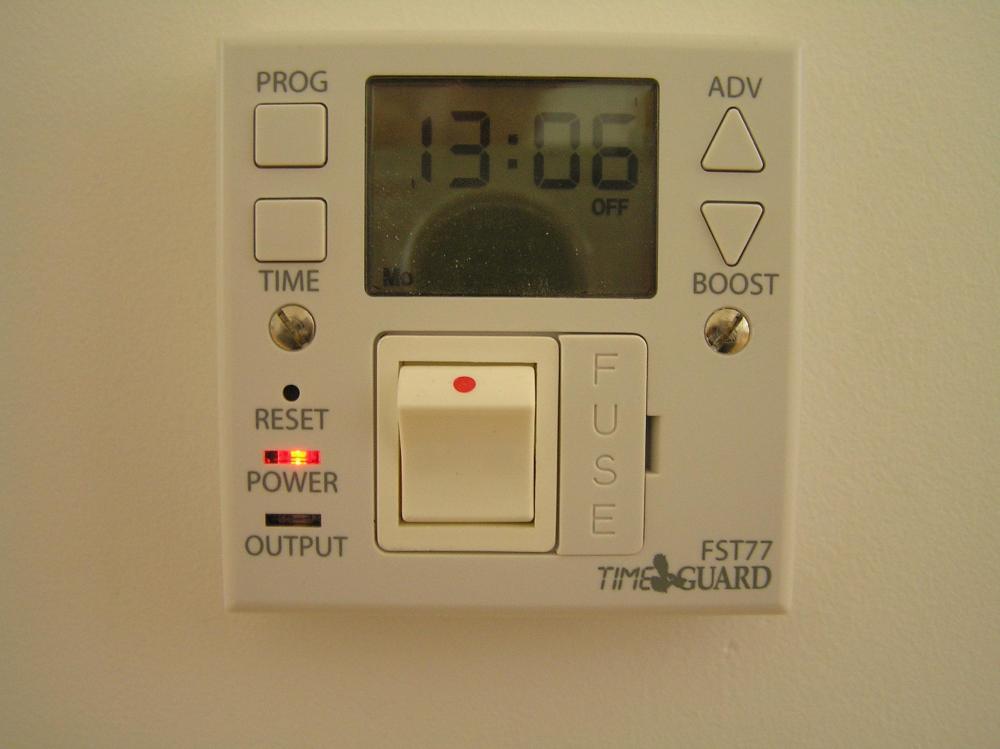
This is mine in a well lit room without flash. Mine are a few years old now.
-
I have one of these fused spur timers on the wall outside the bathroom doors. https://www.tlc-direct.co.uk/Products/SMFST77.html I have these on the electric towel rails. https://www.geyser.co.uk/terma-moa-chrome-thermostatic-element-for-radiator-or-towel-rail You can hide the wiring with these. https://www.geyser.co.uk/geyser-chrome-cable-masking-cover-for-sim-elements
-
This is good for small areas. https://www.wilko.com/en-uk/unibond-whiteteq-expanding-foam-500ml/p/0457575
-

New build - confused between timber & i-stud
Gone West replied to osmononame's topic in Timber Frame
I have a 350mm portal timber I-beam framed house where the standard spacing is 600mm centres but because it's a portal frame this does vary. Our frame is insulated with Icynene spray foam and with external Rockwool insulation gives a U vaue of 0.095W/m2K. You have to consider whether decrement delay is of much interest which will depend on where you live. The climate and micro-climate of your site will determine the importance of decrement delay to your build as will the rainscreen materials and wall construction. We live on a relatively open site near the sea and as a result there is at least a breeze every afternoon and there is very little surface heat build up. -
A friend of ours designed their own house and had it built by Touchwood Homes and were very happy with it. It was built using timber I-beams and glulams. We designed our own house and worked with a timber frame company and SE to build a portal timber I-beam framed house. Although as @Patrick has said it is more challenging to design than a standard timber frame but it is easier to design out thermal bridges.
-
Hi Joe, welcome to the forum. Feel free to reduce your load of questions.
-
I would fit one where you have indicated.
-
Think I'll have to disagree with you on that one.
-
I have a 110mm AAV on top of the main waste pipe in the centre of the pipe runs and a 50mm AAV at each end of the 50mm pipe runs which join each side of the main pipe. One for the bath end and one for the ensuite shower end. It's just a bit of redundancy in case there is a problem.
-
1. Should be higher than highest waste although some makes work below that level. 2. I have one 110mm AAV and two 50mm AAVs. 3. Can do, I've got mine at ends on pipe runs. 4. Doesn't need to go as high as loft. I have mine behind false walls in with concealed cisterns.
-
OK so now we know where to blame...
Gone West replied to MikeSharp01's topic in Environmental Building Politics
The problem is, the workmanship is poor, so that in reality the B rating for newbuilds is not really of that standard, and it is the poor workmanship that needs to be addressed. -
Welcome to the forum. Have you tried pushing a screwdriver into the wood to see if it is rotten? Unless it's been soaked for some time it's probably just discolouring.
-
Interesting mix of units. Which do you prefer working in? Although well into OAP years I now struggle with feet and inches whereas my mate converts metric to imperial before doing anything.
-
OK so now we know where to blame...
Gone West replied to MikeSharp01's topic in Environmental Building Politics
If we move away from standard brick and block construction towards panelised houses built in factories it would be easier to remove poor workmanship. -
We have a Genvex Combi 185LS compact unit which provides MVHR, warm air heating and DHW using an EASHP. IIRC it weighs 210kg before plumbed in and over 400kg when full. It requires a base suitable to support 500kg/m2, not really suitable for a loft installation. Nilan are another company offering similar products.
-
We used Sovereign SX70 white woodstain in the 90s internally and externally on all the windows and doors. It was very easy to use and it never peeled or cracked. It gave a nice satin finish. They may have changed the recipe since then of course.
-
First Quote is in - ASHP
Gone West replied to canalsiderenovation's topic in Air Source Heat Pumps (ASHP)
There a lot of SAP assessors who can be accessed online and they will want copies of the plans and other information. It will probably cost IRO £150 based on what we paid. This is the first company that came up on a search list. https://www.buildenergy.co.uk/what-are-sap-calculations/ -
First Quote is in - ASHP
Gone West replied to canalsiderenovation's topic in Air Source Heat Pumps (ASHP)
Can't you get an as designed SAP done which should give you an idea of the EPC? -
We have appealed twice and had the band reduced in both cases. It's a simple process, which they may well challenge, as they did with our first appeal. It went right to the line with them dropping out of the tribunal process with only a week to go before the hearing.
-
Plumbing for Dummies: who's the Dummie?
Gone West replied to ToughButterCup's topic in Waste & Sewerage
I used Floplast and never had any problems will seals distorting etc. The important thing is that the pipe ends are chamfered and to use a smear of silicone grease on the pipe end before assembling. -
Any experience of the GS200 small ASHP?
Gone West replied to DamonHD's topic in Boilers & Hot Water Tanks
There will be convection but some of the rising heat should be lost through the trickle vents in the windows upstairs so hopefully it won't be too hot. The problem is that trickle vents can be affected by the wind and it's difficult to know how effective they will be at any particular time. I wouldn't have thought that the ground floor will end up being cold though. It will probably mean tweaking the number of trickle vents that are open on both floors to obtain the best balance. -
Any experience of the GS200 small ASHP?
Gone West replied to DamonHD's topic in Boilers & Hot Water Tanks
Yes there would be a degree of passive stack effect but how much would depend on the total area of the trickle vents. It would cause some probably noticeable draughts. We use passive stack ventilation in the summer to cool the house by opening the bathroom roof window. It can be very effective. Sorry re-read your post and the answer is no. -
We've got a Dymo LetraTag and have ended up using it far more than we thought we would.
-
I've got a backdoor bender : help me mend it please.
Gone West replied to ToughButterCup's topic in Doors & Door Frames
Worked for us. IIRC we sandwiched the existing panel with 6mm ply although I can't remember the grade exactly. -
I've got a backdoor bender : help me mend it please.
Gone West replied to ToughButterCup's topic in Doors & Door Frames
We had catflap in our old bungalow back door which we didn't want. I took the catflap out and fitted a piece if thin plywood on both sides, painted it and it was still fine when we demolished the bungalow fourteen years later.


