Jeremy Harris
-
Posts
26430 -
Joined
-
Last visited
-
Days Won
360
Everything posted by Jeremy Harris
-

Framin' ridiculous innit?
Jeremy Harris replied to ToughButterCup's topic in General Self Build & DIY Discussion
A friend of mine had two sets of boxes fitted when he built his house, one set was Part M compliant, the other was where he really wanted them, higher switches and lower outlets. He covered the unused ones with lining paper and just base coated all the walls for the completion inspection. Once the house was signed off his electrician came back and fitted all the switches and outlets in the papered-over boxes, with the now unused ones being filled and painted over... -
The chip I used seems to be obsolete now, and finding a DIP version of a similar chip may not be easy (I've not looked for a few years now), but there may be some around. Pretty much all the electricity meter chips work in much the same way, and have similar interfaces, so it shouldn't be too hard to find one. An alternative might be to get an additional meter installed. The Elster A100C is a really good option (around £30) as it has an optical serial data port, that constantly outputs power, current, voltage etc. The data protocol is documented, so it's relatively easy to just stick an IR receiver on the meter port and get all the data you need. This link has details about doing this: http://openenergymonitor.blogspot.com/2012/08/reading-watt-hour-data-from-elster.html This link has a bit more on the protocol used: http://abatis.org.uk/projects/rdmeter.html Edited to add: I found the A100C datasheet, which has full details of the data transmitted etc: A100C_Operating_Instructions.pdf
-
inlet pipe to hot water tank constantly flowing
Jeremy Harris replied to vivienz's topic in General Plumbing
Looks like the red knob is the pressure relief valve, and from your description it sounds as if it is letting by. Opening a tap would reduce the over-pressure and so reduce the flow from the valve. Assuming this hasn't operated because the tank is really being over-pressurised, then it may be that the valve has got some muck on the seat. Usually you can turn the red knob through about quarter of a turn and it will manually open (against a spring) so it may be worth trying this, in the hope that you can get it to seat back down and seal (sadly they often leak a bit after they've opened once). Failing that, then I'm afraid it will need more serious investigation. It may be that the PRV is operating because the incoming water pressure is too high, and in that case a pressure reducing valve may need to be fitted (unless there is already one). Here it would be normal to fit a pressure reducing valve in the supply to the water cylinder, so it might be worth looking for one and if it has a gauge seeing what the pressure is. The reduced pressure should be around 3 to 3.5 bar normally, any higher than that may be a cause for the PRV to operate. -
Hard to say. The pack would probably have been in better condition, as it would only have been charged as a part of the hybrid mode, by the car, so the depth of charge and discharge would have been heavily limited. My last Prius Plug-in didn't seem to suffer any degradation at all over the five years I had it, though, after ~40,000 miles it was still delivering much the same EV range as it was when I bought it, despite having been charged twice a day every weekday, plus at least once every weekend. It seems that EV and PHEV battery packs seem to be remarkably reliable, as failures seem pretty rare, and degradation is lower than I would have expected it to be. One reason may be that EV battery packs don't get cycled as much as other stuff with lithium batteries. I find that I'm only charging the i3 once a week, if that, so it sees a fair bit less cycling than something like a modern mobile phone.
-
I built my excess PV diverter using an electricity meter chip to measure true power accurately, sensing the supply voltage and phase via the power supply transformer for the unit and sensing current magnitude and phase via a clip-on current transformer. It's been working well for a few years now, and is documented here: https://picaxeforum.co.uk/threads/photo-voltaic-immersion-heater-power-diverter-safety-warning.24286/ I've since altered this slightly, by adding an 868 MHz wireless link, so that instead of directly switching a solid state relay this unit has been rehoused in an IP65 case and outputs serial data via the wireless link to a second switch unit inside the house, which turns the SSR on and off to control power to our water heating system. This unit now also broadcasts power consumption every ten seconds over a second 433 MHz wireless link, which enables stuff in the house to either display data or use it for any purpose (I'm currently sitting writing some code for an intelligent car charge unit, so that I can charge my car at a variable rate depending on excess PV generation).
-
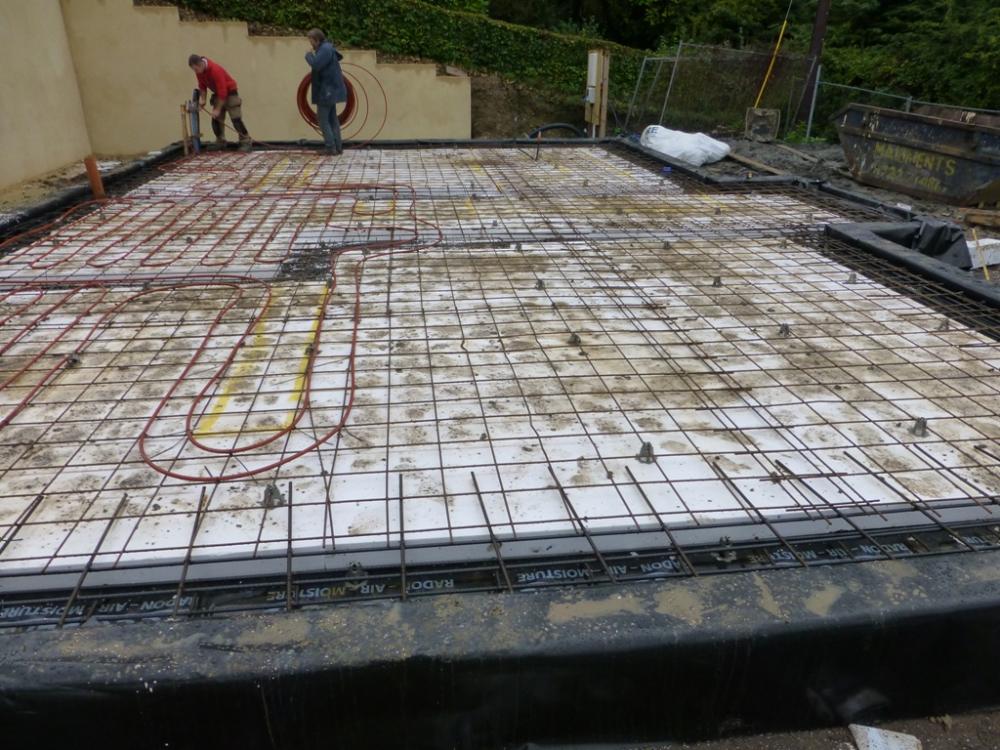
Ours is the same: BTW, the "little holding things" are called chairs
-
I believe this loophole is about to be, maybe has been, closed, as loads of PHEVs were being purchased solely to get the low BIK, then never being plugged in. I looked at a 2 year old Prius Plug-in before Christmas, that had done about 20,000 miles, yet when I flicked through the dash display I found it hadn't been charged since new. It turned out it was an ex-lease car, so presumably there was no incentive for the previous "owner" to ever charge it. On the subject of ex-lease cars, since the V5 changed to not show the previous owner, plus the switch to cars having no service record book (or even handbook) it's now a bit of a faff to get the history of a car, without having to pay for it. I don't mind buying an ex-lease car, but would like to know who the previous owner was.
-
I'd second the observation above about the ludicrous price of fitted wardrobes etc. I planned one for our bedroom, but binned the idea when we got the first quotes in. I built a walk-in wardrobe/small dressing room for around 10% of the price I was quoted for a smaller fitted wardrobe, and my cost included an oak door and frame, plus hanging rails, shelves, drawers, shoe racks etc.
-
It's not actually my definition, soft water is defined as water that has a low concentration of ions, in particular calcium and magnesium: https://en.wikipedia.org/wiki/Soft_water and water softening is defined as a process that removes calcium and magnesium cations: https://en.wikipedia.org/wiki/Water_softening By their own admission, the water that comes out of this unit has the same amount of calcium and magnesium as the water that went in, therefore it has not been softened by any definition in common usage. Invention definitions in order to (deceptively, in my view) market a product seems just wrong, to me. Companies like Combimate can be open, honest and transparent, as are pretty much all the dozens of companies making ion exchange water softeners.
-
A Timer Switch for Megaflo tank?
Jeremy Harris replied to JoeLondon's topic in Boilers & Hot Water Tanks
I recently fitted one of these from Screwfix: https://www.screwfix.com/p/lap-7-day-digital-immersion-timer/1804r Reasonably good value, and works OK, with a nice clear display. Only slight downsides are that the terminal screws aren't that robust, IMHO, and the cable clamps are a bit too close to the terminals, so a bit fiddly to fit in a confined space. OK if installed with care, though -
Here it seems to be pot luck as to whether building control ask for an MVHR commissioning report or not. I've heard some here say they didn't need one, I was told I did need to provide one, but I have a very strong suspicion it was just filed without being looked at. The regs here say that one needs to be produced, and they give a recommended procedure for producing one in a supplementary document (the Domestic Ventilation Compliance Guide: https://assets.publishing.service.gov.uk/government/uploads/system/uploads/attachment_data/file/456656/domestic_ventilation_compliance_guide_2010.pdf ), yet I rather think this is just ignored by a lot of building control bodies.
-
I can't upload a .xls file here, as the forum won't allow it, but I've just edited the extension and changed it to .txt to upload here for you: Simplified costing spreadsheet - 050421014.txt You will need to save the file, then edit the extension back to .xls to be able to open it in Excel.
-
There's a couple of points worth noting. The first is that, as mentioned a few times here, the building regs ventilation rates for continuous mechanical ventilation tend to be a lot higher than needed for most well-insulated and sealed houses. The PH ventilation rate is a better guide, and tends to be a lot lower than that given in Part F. Also, when calculating rates from Part F, then it's worth noting that usually the whole house ventilation rate exceeds the sum of the minimum extract rates for specific rooms, so although the 6l/s, 8l/s and 13l/s figures for extracts are a useful guide when it comes to getting the ratios right when balancing the system, in practice the whole house ventilation rate may well require a higher overall extract rate in order to comply with the regs. It's well worth running through the requirements in Part F, using your house dimensions, in order to see whether you can just rely on the specified room extract rates, or whether the whole house rate will dominate. Once the MVHR commissioning and balancing has been done and submitted to building control (they may or may not ask for it, though), and been signed off, there's no good reason to maintain the whole house ventilation rate at the level in the regs; often there are significant advantages in turning it down. The section in building regs that applies is Part F, tables 5.1a and 5.1b, with the associated notes.
-
Welcome to Buildhub. There's a fairly simple cost spreadsheet for our build in this blog entry: http://www.mayfly.eu/2014/04/part-twenty-nine-some-details-that-may-be-of-interest/
-
Senior was the highest pay band for planning officers on the spreadsheet, so I assumed it probably applied to the planning officer running the department. Didn't seem to me to be a lot of money, given the stress related to the job. Having sat in a few planning committee meetings it seemed to me that being a planning officer was being between a rock a and a hard place. Applicants put pressure on them from one side, politicians put pressure on them from the other side. Not a job I'd have done for £32k.
-
Mine had a plethora of problems. The electrics played up all the time (contact cleaner and much wiggling of connectors needed to clear computer-indicated faults). The boot always leaked, trim would randomly fall off, the limited slip diff bearings failed at around 15,000 miles (a non-warranty repair that was damned expensive), plus numerous other niggles, including the built-in phone choosing to work or not work randomly.
-
Depends. Ceiling mounted "mushroom" terminals/air valves (like these: https://cvcdirect.myshopify.com/collections/ceiling-valves/products/conus-airvalve-125mm-1 ) need to be spaced away from walls as they draw, or supply, air around the periphery. Around 300mm to 500mm is a reasonable spacing from walls. Non-"mushroom" terminals/air valves, that have a directional front grille (like these: https://cvcdirect.myshopify.com/collections/ceiling-valves/products/turn-airvalve-125mm ) can be fitted close to walls, if ceiling mounted, or can be fitted to walls (we have these in our bedrooms, fitted into walls).
-
Like me around 28 years ago. I'd wanted an XJ-S for years, so saved all my flying pay for several years and managed to buy a 2 year old one, which, as I transferred my (free) personalised plate to it, could have been mistaken for being newer than it was. Suddenly people started treating me as if I was loaded, and refused to accept my explanation that I'd saved up for around 6 or 7 years to buy the car. The car turned out to be a heap of garbage, anyway. It was one of the Jaguars made shortly after Ford took over, so things went wrong with it all the time.
-
Not sure about the others, but planning officers don't seem to get paid very well. I investigated (via an FOI request) the high cost of making a phone call to the planning officer before submitting an application (they wanted to charge me £90 for a ten minute phone call). The LA sent me a spreadsheet with the salary range for planning officers as a part of their response (this was in 2012, so 7 years out of date, but we've had a pay cap on the public sector for most of that time). IIRC, a senior planning officer was on about £30k, which isn't much, given the hassle they have to deal with every day, not to mention being used as scapegoats by councillors who make planning decisions that are not based on planning policy.
-
FWIW I specified the actual window dimensions on the drawings, and the frame was then built to these plus 5mm all round as a fitting tolerance. The window supplier did send a chap around to confirm the actual opening sizes before they made the windows, but also had me sign their production order, by each individual window drawing, to confirm the dimensions they were planning to use were correct. Even then they stuffed up, and delivered one window that was 400mm too wide. The fact that I'd kept a copy of the signed production order was invaluable in proving that it was their error.
-
Framin' ridiculous innit?
Jeremy Harris replied to ToughButterCup's topic in General Self Build & DIY Discussion
I think the problem is in the nomenclature. Should be "centres" this side of the Atlantic... -
The end of the gas hob..??
Jeremy Harris replied to PeterW's topic in Kitchen & Household Appliances
From the governments point of view, parking dings earn revenue, as people pay to get them fixed, which both creates jobs and gains VAT revenue, so unemployment comes down and the exchequer gains income tax plus VAT. There's a perverse incentive to make parking spaces smaller, both from government and from car park owners, as smaller spaces = more spaces = more revenue. -
How hot will it get in the attic?
Jeremy Harris replied to laurenco's topic in Lofts, Dormers & Loft Conversions
Do any of the roof lights get direct sun? If so then I think you'll find that it will get very hot up there on sunny days, as it takes very little solar gain to raise the temperature, just a couple of hundred watts is enough on a warm day, and roof lights, especially ones with a high inward transmittance (2G worse than 3G usually in this respect) can easily add maybe 500 watts or more each in sunny weather, if facing the sun. If you do have roof lights that are likely to get direct sun, then I'd suggest looking at fitting external shutters/blinds, or perhaps having the external pane coated to reflect heat outwards. Well worth doing a careful over-heating analysis, as when I did this on one of our preliminary designs (from an architect) that had four roof lights I found that there was a high probability that the bedrooms would reach around 30 deg C in sunny weather. -
Yes. I would probably have tried to get an extra pair of Sunamp PV cells to double up the capacity, in the same way that @TerryE has. That would definitely have been a better option, not just because it would have worked perfectly, but also because the additional Sunamp PV cells are a lot lighter than the UniQ, so would have been a lot easier to get upstairs.
-
Help with kitchen renovation/ 1st house.
Jeremy Harris replied to zoothorn's topic in Bathrooms, Ensuites & Wetrooms
That's a pretty amazing transformation, looks great.