


Jeremy Harris
-
Posts
26430 -
Joined
-
Last visited
-
Days Won
360
Everything posted by Jeremy Harris
-

Converting towel radiator to electric
Jeremy Harris replied to oranjeboom's topic in Bathrooms, Ensuites & Wetrooms
None of ours have been thermostatically controlled, and they don't seem to get too hot, certainly not hot enough to burn. The ones we have now are wired to a time switch controlled circuit, so they come on for a couple of hours in the morning and again in the evening. -
You're probably less grumpy than me about this; I'm getting sick and tired of having to reset the bloody controller every day, just to be sure we can have hot water for showers the next morning. It's a wholly unacceptable state of affairs, IMHO. Sunamp aren't saying, but I think I can guess pretty much what the problem is. I've read up a fair bit on managing phase change material heat storage and one of the biggest challenges is finding a way to evenly heat the PCM, such that all of it can be changed from solid to liquid. As it melts, the PCM tends to get a bit clumpy, with lumps of solid mixed in with the liquid. Much like ice melting in water, the relatively poor thermal conductivity of the solid makes it hard to determine accurately when all the solid has melted. This problem is worse in the reverse direction, when lumps of solid PCM are floating around in liquid, as there's no way to be sure if any particular temperature sensor is surrounded by liquid or solid at any time. With a direct electric heating element, there is the added risk that the heating element could locally overheat the PCM - it will be permanently damaged if heated above about 120°C. In the Sunamp PV this problem was solved very elegantly, by using a hot water charging circuit. This charging circuit couldn't get much above 100°C even under the worst fault condition, and it was relatively easy to just control the temperature in the charge circuit such that it stayed at around 65°C. It didn't matter if all the PCM was in liquid form; heating it to around 65°C was always safe, so the charge control system didn't need to do anything more that work like a hot water tank thermostat. If the charge loop was below, say, 60°C (not sure what the cut-in temperature was, could have been as low as 55°C) then the unit would accept charge, if it was at 65°C the unit would stop accepting charge. Nice and simple and it ensured that the unit would always make the best use of any excess PV generation, just like a hot water tank. The UniQ eHW has been "value engineered" and the hot water charging circuit has been removed. In addition, a poorly designed control unit has been implemented, that can only very crudely sense the temperature in the heat cell. Because this temperature is a pretty poor indicator of state of charge (due, I strongly suspect, to the "clumpiness" problem) then the controller isn't able to detect when discharge starts, and so makes a massive error and holds off charge until the cell is around 50% discharged (this is, apparently, a variable threshold, according to Sunamp - suggests they don't know whether it's 50%, 40% or 60% to me). The daft thing is that the unit has, I presume, been engineered to safely work after a power cut, which has the effect of resetting the controller. I'm simulating a power cut every morning, as I accidentally discovered that the power-off reset got the unit to accept charge. I'm assuming this is safe, because of the above guess about it being engineered to cope with power cuts OK, but have no confirmation of this. When I've tried to get clarification from Sunamp I've just been given the party line about the 50% threshold maximising PV charge, which it quite obviously doesn't at all, all it does it allow the hot water to run out.
-
Both the ePV and dPV seem to be new designations that weren't around when I replaced our Sunamp PV towards the end of last year, and until now I'd never heard of these versions - maybe someone at Sunamp is sorting this mess out at last (be nice if they communicated this a bit better, though). The options available when I bought our Sunamp UniQ eHW were: Sunamp UniQ eHW Sunamp UniQ eHeat Sunamp UniQ eDual Sunamp UniQ HW+i Sunamp UniQ HW+iPV Sunamp UniQ Heat Sunamp UniQ Dual Sunamp UniQ +LTHP The Sunamp UniQ 9 eHW I have is supposedly optimised for PV and was the only unit available that could charge at 2.8 kW from either the grid or diverted PV, at DHW temperature (58°C). The controller I have is the PV specific version, the UniQ_SBC_01_PV. I've got a lot of experience of dealing with Sunamp, as I was one of the very first to take the plunge and install a Sunamp PV, back in 2015. There were no Sunamp installers at that time, so I spent a long time exchanging emails and on the 'phone with them getting up to speed on all the installation and technical details, such that Sunamp agreed that I was competent to install and commission the unit.
-
I fully accept that when I bought the Sunamp PV towards the end of 2015 I was definitely an "early adopter". That unit had some minor teething troubles, but these were quickly ironed out and it performed extremely well, and I fully accepted that back in 2015 I should accept a few glitches, as the product was barely into production. Notably, the Sunamp PV always accepted charge if power was available, and the charge loop was below the cut off temperature; there was none of this daft "wait until half the charge has been used before allowing a charge" business. It also had very useful status lights on the side, so you could tell at a glance what state it was in (charging, waiting for charge, fully charged etc). Fast forward three years and I chose to spend more money with Sunamp to "upgrade" my old Sunamp PV to their new, higher capacity, "mature", Sunamp Uniq. "Upgrade" is entirely the wrong way to describe this unit, though, as although, in theory, it has about double the capacity of the Sunamp PV, in practice it's controller is so deeply flawed that that additional capacity can't be used a lot of the time. What's worse, is that the way the controller introduces a long delay before allowing charge to start means that charging opportunities are regularly missed, making it unfit for purpose, if the intention is to try and charge it from excess PV generation most of the time. In fact, it's so deeply flawed that any sort of limited time period charging, such as charging from E7, could very easily result in the unit not charging. I'm not alone in having problems with these units, either. The poor quality of the cases has been noted here, and is an ongoing problem that doesn't really seem to have been solved, even if it is mainly cosmetic (although how many people would accept a bulging hot water tank?). There are other issues being reported too. How many people on this forum that have a Sunamp (one of the newer models, not the older Sunamp PV) are 100% happy with it, I wonder?
-
Sadly this isn't the case. There is no option to enable the controller (any controller) to switch on power to the electric heating element until the controller has guesstimated that the heat cell is ~50% discharged. I've been through all the possible options and settings and had them clarified by Sunamp, and the ~50% discharged, before accepting any charge, threshold is something that's common to all electrically heated units. The iPV version is a dual model, that has the ability to be heated by both hot water from a boiler, plus diverted excess PV. In essence the control logic, as far as controlling the heating from PV is concerned, is much the same as the eHW, except that I'm not 100% sure that it has the "cold start" routine, where it pulses power on and off when heating from cold, I think it may well rely on there not being an excess of power available from any PV diversion, hence the <2 kW or <2.5 kW limit (the manual confusingly quotes two figures). I also seem to recall that the heating element in the iPV has a lower power rating. This is only hinted at in the manual, where they state clearly that only the eHW has a 2.8 kW heating element and that the i models have "standby electric heating elements". I agree, they could, and should, offer enhanced controller functionality for those whose primary requirement is to heat hot water from excess PV generation. Shame they don't, although my controller hints at this by having a clear label stating that it is a UniQ_SBC_01_PV, which strongly implies that it is a PV capable unit, and that's borne out by it having the PV option in the menu (which is set).
-
Exactly mirrors my experience with a kitchen supplier. He refused to accept that my CAD drawings were accurate, I insisted that they were, and anyway, I wasn't asking them to fit the thing, just supply the units. Had some friends around the weekend before last, who have recently had a kitchen fitted. They remarked that we had no infill panels anywhere, and I just said that I'd designed the finished dimensions of the kitchen, allowing for the thickness of plasterboard and skim, such that the units would all fit exactly (in fact there's a ~2mm gap, which is hidden by the splashbacks, but I reckon 2mm is "good enough for government work").
-
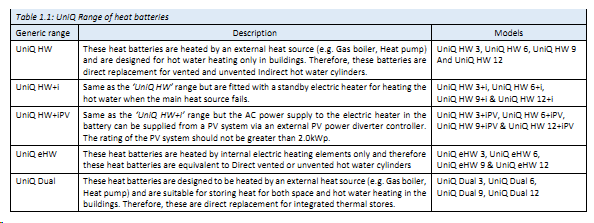
The snag is that the iPV model will only work with small PV systems, < 2.0 kW: Anyway, the controller I have is clearly labelled as being a "UniQ_SBC_01_PV", so there's really no valid excuse for it not reliably charging from PV, or the early morning off-peak boost charge (it fails to charge from either at times, hence the reason we've run out of hot water). Note that the unit I have is specifically quoted as being "equivalent to Direct vented and unvented hot water cylinders". It isn't, though, at least until the refusal to accept charge when there is available charge capacity issue is resolved. BTW, the PV setting is just an option in the controller, and is set for my unit.
-
Welcome. I hate to say this, but it very much looks as if your roof is the cause of the problem, by being partly over your neighbours land. They could have made you cut your roof back to the boundary line, as you've got no real right to have anything overhanging on to their land. I'm not sure if you might, possibly, be able to claim that you had adverse possession of that narrow strip where your roof overhangs, but TBH I doubt it. Might be worth getting a legal opinion, but the chances are that any such opinion may not be of any practical use to you. Also worth looking in your title to see if you have a right of access for maintenance for that area, although I'm not at all sure that it would help much if you have, given that your roof unlawfully extends over on to your neighbours land. The intrusion over your neighbours land should really have been picked up prior to purchase as an issue that needed to be resolved by the vendor, but given that it's only such a small intrusion it's easy to see why it wasn't spotted. I think all you can do is be thankful that your neighbour hasn't forced you to cut your roof back to where it should be, and try to manage things as best you can.
-
The Sunamp Uniq eHW doesn't really care where the power comes from, as it just has an electric heating element in the bottom of the heat cell. There's nothing included in the Sunamp controller that I can see that does much in terms of optimising it for use with PV, if anything it does the opposite, in that it will happily sit all day refusing to accept charge, despite there being capacity available, as the controller is too dumb to be able to take advantage of PV generation when it's available. The pity is that their older product, the Sunamp PV, didn't have this serious limitations, and worked very well indeed. At the moment, the Sunamp UniQ eHW range are far less reliable or effective if you want to use excess PV generation to charge them, than a conventional hot water tank and immersion heater, as at least the immersion heater will allow the tank to be heated whenever it's cooled down a little bit. The Sunamp currently has to have lost ~50% of it's stored capacity before it will accept any charge, which is a major problem if you wish to make best use of excess PV generation when it's available. Yes, I could use a wired-in timer to automatically reset the Sunamp controller, and have one here that's ready to install. I've been holding off from fitting it, really because I've been waiting to see what Sunamp come up with to fix this problem, as I'm reluctant to just modify things at this stage. I've heard rumours that there is some improvement to the Sunamp controller in the pipeline, although so far have had no confirmation that these are true, or that Sunamp will roll any improvement to the controller out to existing customers.
-
Looking for electric system/combi boiler advice please
Jeremy Harris replied to MrM's topic in Boilers & Hot Water Tanks
Sadly, many new builds aren't anywhere near as airtight or well insulated as they should be. Have a read of these two papers: https://www.aecb.net/publications/publication-author/paul-buckingham/ https://www.aecb.net/still-taking-disgraceful-approach-build-quality-waving-goodbye-energy-savings/ -
Welcome. Sadly that seems to be the standard response from Sunamp; the "won't accept charge until 50% discharged isn't a problem" line. I can assure them that it is, as we've run out of hot water because of this problem, and will continue to run out of hot water unless I remember to go into the services room and turn the power on and off, in order to reset the Sunamp controller and make the damned thing behave. There's no problem with running a cable 20m to the Sunamp, perhaps slightly easier to configure if you opt to run a separate cable for it, as that way you don't have to rely on using a wireless PV diverter (although a wireless PV diverter should be able to work over that distance OK), but can use a (slightly cheaper, perhaps) hard-wired one.
-
All down to supervision and cross-checking by me, I'm afraid. I did put the exact location of everything coming up through the slab on the drawings that were part of the ground works contract, with allowable position tolerances, but the contractor thought I was crazy in stipulating such precise positions. On his last day on site I insisted we get the total station out and accurately check the position of everything. He grudgingly obliged, and I was happy things were OK, but the soil pipe ended up being mighty close to the inside face of the North wall, and caused me about a days work to chip around the slab and get enough clearance to move it maybe 20mm. My fault, the tolerance on the position I put on the drawings (+/- 40mm) was too great, it should have been about +/- 20mm. All positions were referenced to a fixed post, with a marker, at the corner of the plot.
-
Grasslin Towerchron QE2 Controller
Jeremy Harris replied to Onoff's topic in Boilers & Hot Water Tanks
At ~20 years old the chances are that the 10µF 63 V electrolytic capacitor, between the relays, may have dried out and caused ripple on the supply. I had this happen on an old time switch about 4 or 5 years ago, and just replacing the capacitor fixed it. The life of capacitors like this is around 10 years or so, so it's done pretty well to last this long. -
As a note of caution, you are not allowed to run power cables in the same duct as telecommunication cables. Best to have a duct for each service that comes up through the slab. As @lizzie has pointed out, it is your responsibility to get all these services coming up through the slab in the right places; as I mentioned above, accuracy in getting these spot on is critical and it's one of those key interface areas where you need to be certain that the people running the ducts and pipes in (often the ground works team) have got them all in exactly the right location.
-
Best bet is to have all the pipes/ducts run under the sub-base and then come up vertically through the insulation and slab. It needs very careful laying out to get all the services in exactly the right location, plus ducts need to be run with gentle bends, so things like MDPE water pipe can be pulled in OK (or in our case a fat three core power cable).
-
We certainly find that summer isn't a problem at all, as the higher angle of the sun, combined with the roof overhang, shades the main glazing OK. The problem is Spring and Autumn, when the sun is lower and can shine under the roof overhang and more deeply into the house. This weekend and today have been pushing our indoor temperature up to an uncomfortable level, and have meant using active cooling. Today our air cooling came on about mid-morning and stayed on all day, finally shutting down at around 5pm. Even now, when the house has had no heating since last Friday evening, I'm sitting here typing this with a room temperature of nearly 24 deg C. The last couple of days have been a bit unusual, so much so that the garden was awash with mayflies floating up and down this afternoon, as they've hatched en mass from the stream alongside us. Someone needs to tell them that they aren't supposed to hatch until May...
-
Small shredder advice?
Jeremy Harris replied to Jeremy Harris's topic in Landscaping, Decking & Patios
The very best thing you can do to a Leylandii.... -
How much space for a sewage treatment plant?
Jeremy Harris replied to Kernow's topic in Waste & Sewerage
It's a very grey area, as Part H is pretty vague when it comes to the requirements for treatment plant soakaways, and the EA aren't a great deal of help either, in my experience. In theory there's no good technical reason why the effluent from a treatment plant shouldn't be treated in the same way as grey water, as there's no requirement for tertiary treatment. I found that it really comes down to the flexibility of the EA and building control in the particular circumstances. In our case BC were very understanding, and although Part H says that a treatment plant must not be within 10m of a watercourse, our BI said that it was silly to enforce this when the EA had given us a permit to discharge to the same watercourse. -
I went around our frame and sealed up every small external gap I could find with expanding foam. The main areas where I found small gaps were along the eaves and verges, although I'm not sure that they were worth bothering to seal up, really, as the blown cellulose forms a pretty good airtightness barrier. One thing I did add was additional external insulation along the verges, in the overhang ladder frames. I did this to help reduce the natural geometric thermal bridge that is present at any angled junction. Again, I'm not convinced it was worth the effort, but I had some cans of foam and offcuts of foam insulation, plus a week of spare time with nothing much else to do, so had nothing to lose. Well worth stapling membrane over any exposed timber, though, if only to help prevent insects getting in.
-
Small shredder advice?
Jeremy Harris replied to Jeremy Harris's topic in Landscaping, Decking & Patios
I can't say I blame them. I find the blackthorn worse, as if one of those spines end up in your finger it seems to cause a heck of a lot of inflammation. Normal gardening gloves seem hopeless, so I dug out a pair of deerskin working gloves that I picked up in Idaho years ago. Pity they don't seem to sell the same sort of really tough gloves over here, or if they do, I've not seen them around. -
Small shredder advice?
Jeremy Harris replied to Jeremy Harris's topic in Landscaping, Decking & Patios
My main problem is that the stuff I've pruned off is pretty spiky (hawthorn/blackthorn) and also takes up a lot of space (won't fit in the car). Using loppers to just cut a few side branches off so the stuff will fit the shredder is easy enough, and I can just put the chips down on top of the existing chips that I've laid over the weed membrane. The cost of the shredder is less than half the cost of a skip... -
It's just run-of-the-mill stuff for most frame companies, and they should just include whatever structural stuff is needed in their design, including steels, if needed. You just need to watch the thermal detailing carefully, as it can be tricky to reduce thermal bridging where you have steels poking out from the main structure.
-
You almost certainly do not want much solar gain. I'm sitting here in a house that's at 24°C with the cooling system running to try and keep the temperature down. I have the blinds down on all the South facing windows, and the temperature of those blinds is around 35°C at the moment. That's with solar reflective film applied to the outside of the glazing. Our heating hasn't been on for the last three or four days at all.
-
Definitely possible, we were building timber framed houses 500 years ago with first floor cantilevers of this sort of size. Needs careful detailing, though, as the potential for poor thermal performance under the cantilever section will need some thought. That section of "floor" will have a much lower potential temperature underneath it in cold weather than the ground floor, so will need both a decent level of insulation and careful design so as to reduce the impact of thermal bridging.
-
Small shredder advice?
Jeremy Harris replied to Jeremy Harris's topic in Landscaping, Decking & Patios
That pile above looks as if it would be around ten years worth of stuff from our, relatively newly planted hedge!
