Jeremy Harris
-
Posts
26430 -
Joined
-
Last visited
-
Days Won
360
Everything posted by Jeremy Harris
-
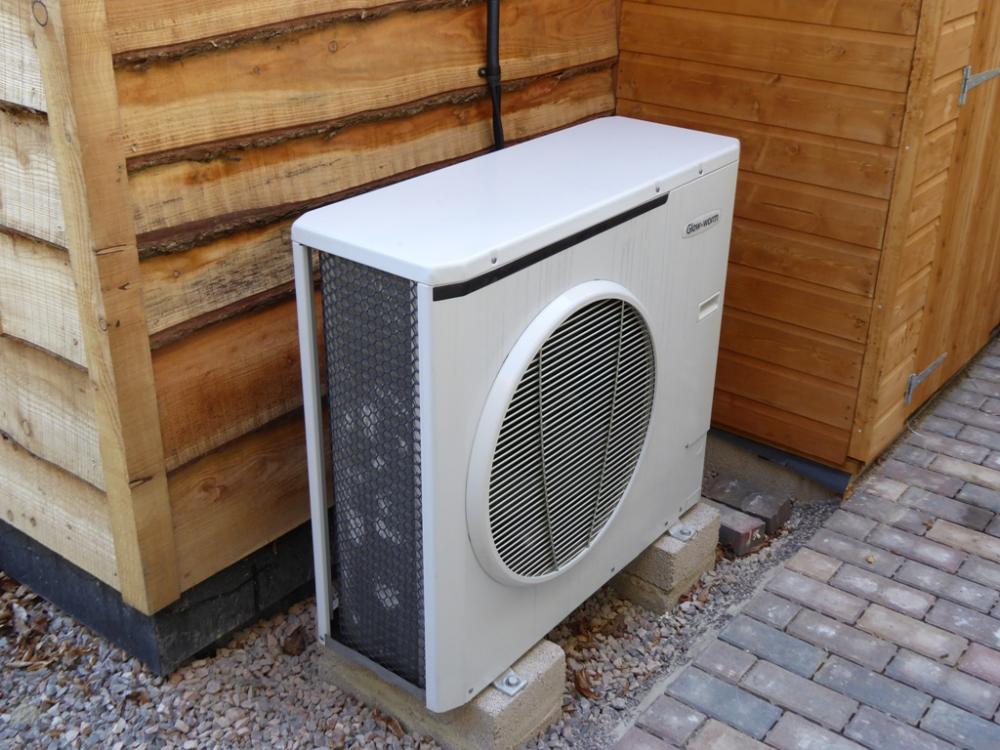
Our ASHP is in the corridor along the North face of our house, situated on the corner. Behind it is the big retaining wall, around 3m high and around 1.2m or so from the face of the ASHP . In practice it seems to work fine in this location, but rarely needs to run at anything like full output, so that probably helps. This is what it looks like, with the water treatment plant shed next to it, poking out the back of the house:
-
I've looked into this a while ago, as we are prone to power cuts here and the new build is 100% electric. All the advice I had at the time was to buy a petrol inverter generator and convert it to LPG, so that you don't get any problems from fuel going stale or gumming things up. I've not got around to it yet (it'll probably take another power cut to spur me into action!).
-
It probably depends on how hot your UFH is going to run at. Ours never goes above 23 deg C, and that's a lot cooler than a tiled surface would be with the sun shining on it. I think a lot of tile manufacturers and supplies assume that UFH is going to run at 30 deg C plus, which isn't likely to be the case with a well-insulated and reasonably airtight house.
-
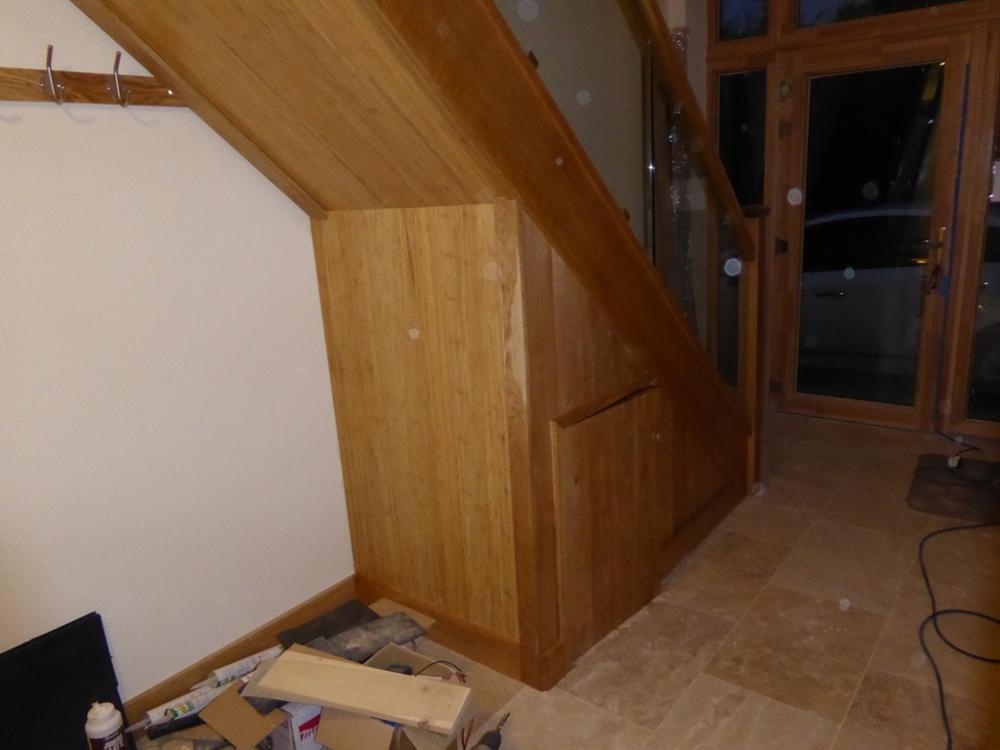
Very well, in fact most people assume the flooring is oak as well as the doors etc, as the colour is very close indeed to the plain oiled oak finish. I lined the underside of the oak staircase with left over bamboo flooring, and used some left over oak skirting to make a small cupboard, so you can judge for yourself what the match is like (sorry about the photo - it was my old camera that had got dust inside the lens):
-
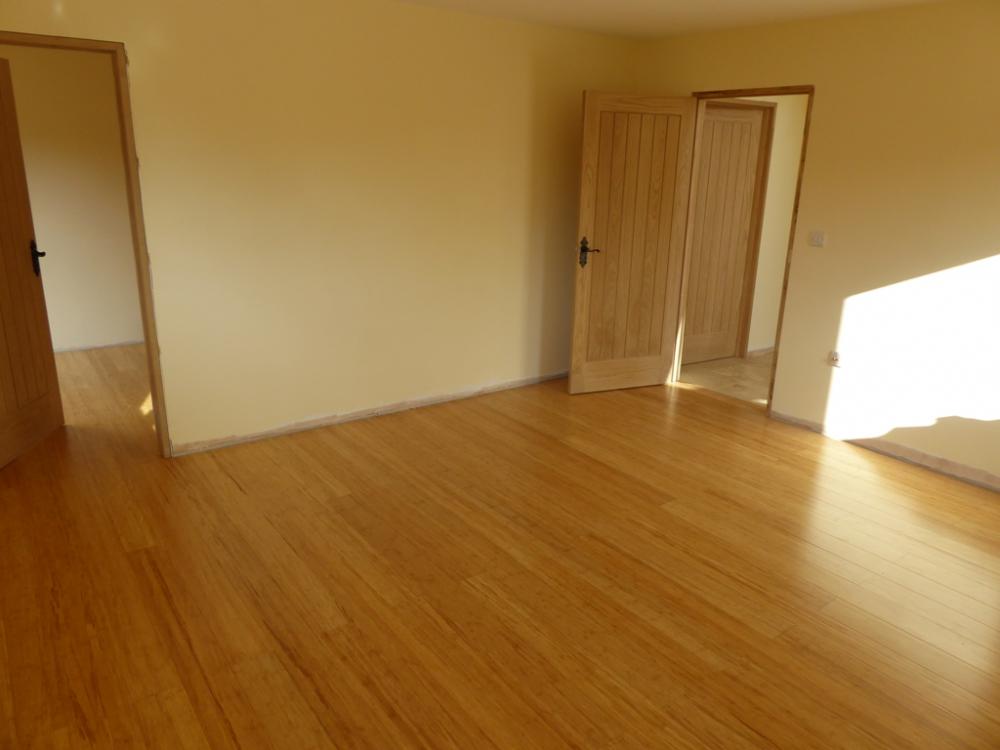
I've laid plan strand woven bamboo to the whole first floor (except the bathrooms) and about half the ground floor. I'm exceptionally pleased with it, as not only does it look good but it is very hard, and so withstands knocks without marking. I bonded ours down with Sikabond 95, expensive, but very well worth it as it massively increased the stiffness of the floor and has made the first floor, in particular, feel rock-solid. Bonding also helps with heat conduction, if you're fitting UFH. We bought our bamboo from the Bamboo Flooring Company, and they were good to deal with. We had one box damaged in transit and then sent a replacement straight away, with no quibble at all. Not that expensive either, for what you get, I thought. We used the cheapest plain strand woven, and this is what it looked like before I fitted the oak skirting and architrave:
-

The Great Thermal Mass Myth................
Jeremy Harris replied to Jeremy Harris's topic in Boffin's Corner
There's an easy test you can do with insulation, all it needs is for you to touch it. If it quickly warms up when you hold your hand on it, it almost certainly has a low heat capacity (think EPS, for example). If, on the other hand, the insulation takes some time with your hand resting on it before it starts to feel warm, then the chances are it has a high heat capacity (or it may just be a lousy insulator!). It's noticeable that wood fibre and cellulose don't "feel" like good insulation when you're handling them, they feel cooler and don't heat up very quickly. They are pretty good insulation materials, but they also have a moderately high heat capacity (a lot higher than, say, EPS). -
The Great Thermal Mass Myth................
Jeremy Harris replied to Jeremy Harris's topic in Boffin's Corner
As I mentioned above, though, heat capacity on its own isn't a great deal of help, unless the material is sufficiently thermally conductive to allow heat to transfer in and out of it at a rate that is consistent with being able to regulate the temperature of the interior of the house. This is one reason why the general rule of thumb on the impact of added heat capacity suggests that it is only the internal surface layer that has a really significant effect, and that anything that is deeper than around 100mm from the surface has almost no effect at all. What is clear is that if you have a house where the insulation is on the outside (which is generally a good thing in terms of increasing the thermal time constant) then that insulation not only has to be effective in terms of having a high thermal resistance, but it also has to have a relatively high heat capacity, as the combination of the two increases the decrement delay. -
The Great Thermal Mass Myth................
Jeremy Harris replied to Jeremy Harris's topic in Boffin's Corner
I think the most useful parameter overall, in terms of perceived comfort, is the thermal time constant. This is the time it takes for the house internal temperature to change in response to any change in the external temperature, in essence. Say your house was at 21 deg C and during the night the outside temperature dropped to 0 deg C. If the house has a long thermal time constant then it will be only a fraction below 21 deg C in the morning, with no heating, as the combination of the rate of heat loss, the heat capacity of the internal components of the house and the thermal conductivity of those internal components, will combine to release heat from the internal structure at a rate that is close to the heat loss rate, so the internal temperature doesn't drop much. Exactly the same thing happens the other way around in summer, when it may be hotter outside than it is inside. The ability of the materials inside the house to conduct and store heat will tend to keep the house internal temperature from rising during the hot part of the day. The main things to watch are that the insulation used has a long decrement delay (there's a good explanation of that here: http://www.greenspec.co.uk/building-design/decrement-delay/ ) and that the materials inside the house have a high heat capacity and a reasonably good thermal conductivity, so that they can not only store heat, but that heat can flow into, and out of, them at a rate that is fast enough to maintain an even temperature. In general, a house that has a long thermal time constant may have virtually no diurnal or seasonal temperature variation, and so be at a comfortable temperature all year around. -
The term "thermal mass" comes up time and time again on building related forums and discussions, yet as a parameter it has one notable feature - it does not really exist. There is no such thing as "thermal mass" and never has been. Mass is a simple physical property, in simple terms it's approximately how much a given volume of something weighs at the surface of the earth. This, in turn, depends on the density of the material. For example, here are some densities for some common building related materials, in terms of the weight at the Earth's surface for a 1m square cube of the stuff (1m2? Brick ~ 2000kg/m2 Concrete~ 2400kg/m2 Plaster and plasterboard ~ 2700kg/m2 Water ~ 1000kg/m2 Structural softwood ~ 550kg/m2 Typical hardwood ~ 700kg/m2 Granite ~ 2700kg/m2 On its own the mass of a given volume of material isn't that useful for working out how much heat it would take to either raise the temperature of the stuff, or for it to give off heat as it cools down. What we need to know is the specific heat of the material, expressed as the amount of heat energy (called sensible heat, which can be measured in Joules, J) needed to change the temperature of a certain mass (lets say 1m3 to match the data above) by 1 deg C (or more correctly a deg K, but it's the same thing for this purpose). So let's list the same materials as above, with the amount of heat energy we need to put into increase the temperature of 1kg of it by 1 deg ? Brick ~ 840 J/deg C Concrete ~ 880 J/deg C Plaster and plasterboard ~ 1080 J/deg C Water ~ 4200 J/deg C Wood ~ 1700 J/deg C (This is an average value, as the true range is dependent on variety, with a wide range, from 1200J/degC/kg to around 2300J/deg C/kg) Granite ~ 790 J/deg C So, if you want to create a house with the highest "thermal mass" (i.e. Heat capacity per unit mass, if that's a reasonable way of trying to define this unknown term), then here is a list of materials, with the highest heat capacity for 1 kg at the top, and lowest at the bottom: Water Wood Plaster or plasterboard Concrete Brick Granite You may well spot a few odd things here. The first is that you cannot build a house with water (but you can include water as a heat distribution or storage system). The second is that concrete, brick and stone aren't great materials in terms of storing heat for a given mass. Surprising, isn't it? Even more so when building professionals keep harping on about the virtues of so-called "thermal mass".
- 122 replies
-
- 4
-

-
- thermal mass
- heat capacity
- (and 4 more)
-
Almost finished passive house build
Jeremy Harris replied to Jeremy Harris's topic in Introduce Yourself
It'd probably take as long to find a way to do it elegantly as it would to just do a cut and paste job, TBH, as I have to edit the blog text in places and remove a few things and add some more text and perhaps a drawing that's my copyright now, due to the changed circumstance. -
Almost finished passive house build
Jeremy Harris replied to Jeremy Harris's topic in Introduce Yourself
That's this evening and most of the weekend free time taken up then................... I'm taking the view that anyone who wrote comments to my old blog and got replies from me will not object to them being replicated here. I can't see an easy way of putting them in as "proper" replies, but intend to just copy them across as flat text at the bottom of each blog entry, much as they would have appeared on the other place. If there are new comments then they can use the normal comments system on here and I'll presumably get the same sort of notification -
Almost finished passive house build
Jeremy Harris replied to Jeremy Harris's topic in Introduce Yourself
Ian, can we start populating blogs now? If we can, then I can do all the cutting and pasting needed over the next few days to copy mine over before launch -
Hi, I'm Jeremy, just finishing a passive house build on the West Wiltshire/Dorset border. I'll have our build blog up on this forum shortly.