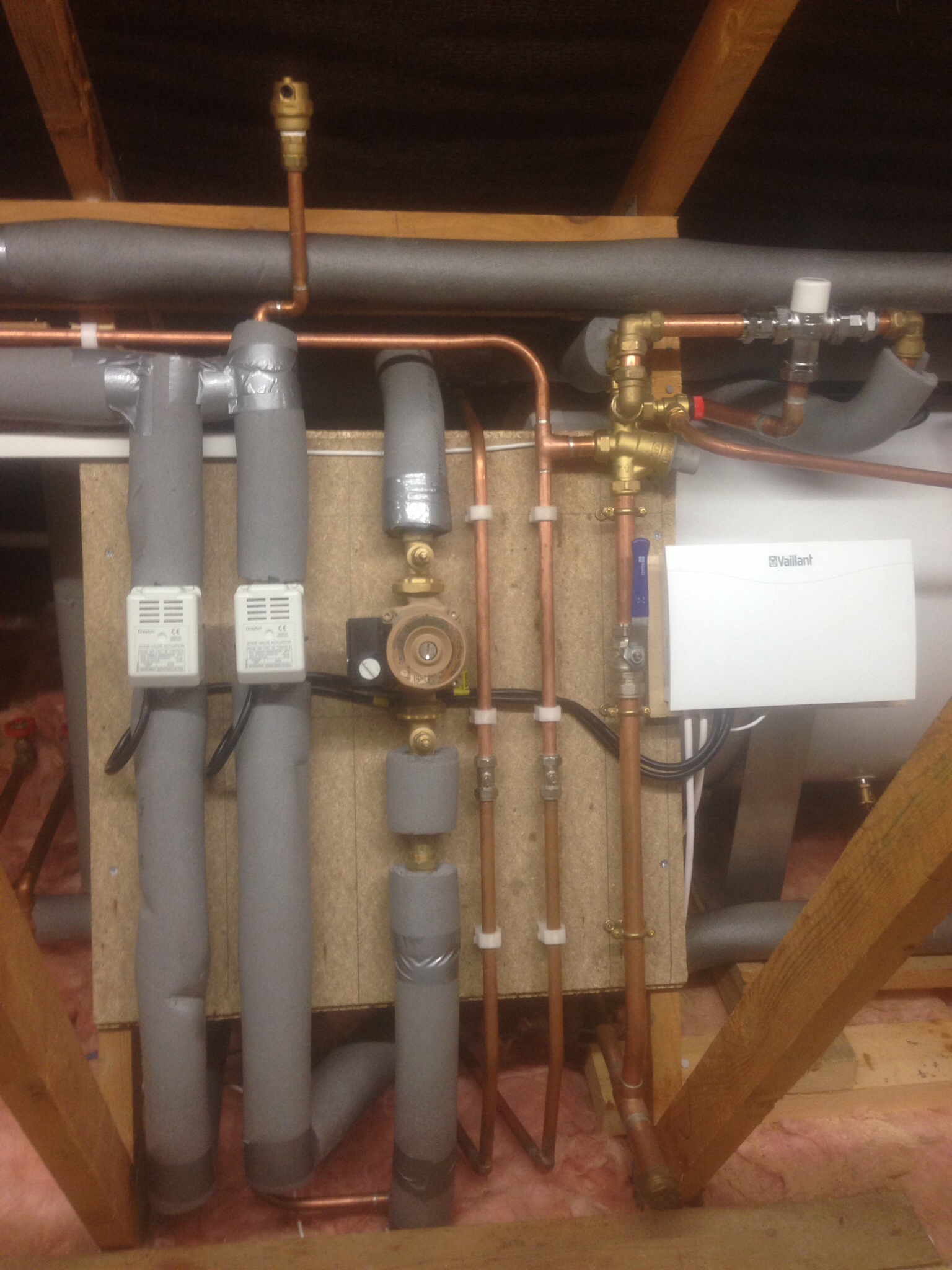

Nickfromwales
-
Posts
31390 -
Joined
-
Last visited
-
Days Won
346
Everything posted by Nickfromwales
-

Wetroom - Forget it Pal. Damn and blast it
Nickfromwales replied to ToughButterCup's topic in Bathrooms, Ensuites & Wetrooms
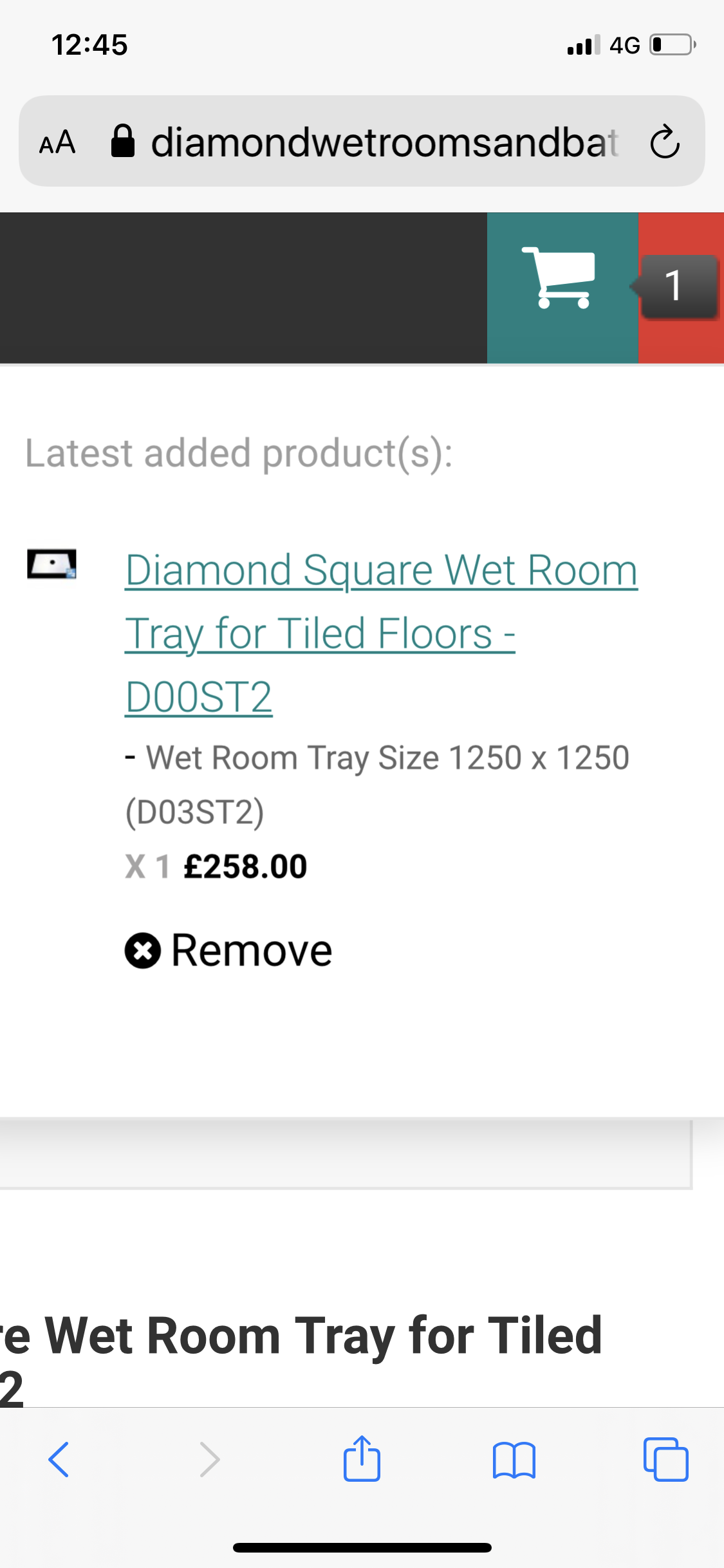
@AnonymousBosch I see 900mm as one dimension, what size wet area are you allowing? 900x900 is a very small area if you aren’t intending on fitting a screen / cubicle of any sort. As far as your other woes, I don’t really see this being much of an issue unless there’s something I’m missing..... Diamond Wetrooms do a reasonably priced 900x900 wetroom former which is cheap enough, and GRP so no issue with mosaic ( Wedi products can compress when applying point pressure on small mosaic ) and require little in the way of accuracy of the underlying works as you can bond them down into wet adhesive to set them level prior to fixing down firmly with mechanical fixings. I’d recommend a 1200mm or 1500mm area if you’re going to all this effort. £258 for that 1250 square. Hire a concrete grinder to remove 30mm of existing floor area to accept the perimeter of the tray and happy days. “You can do it, Deeds” ?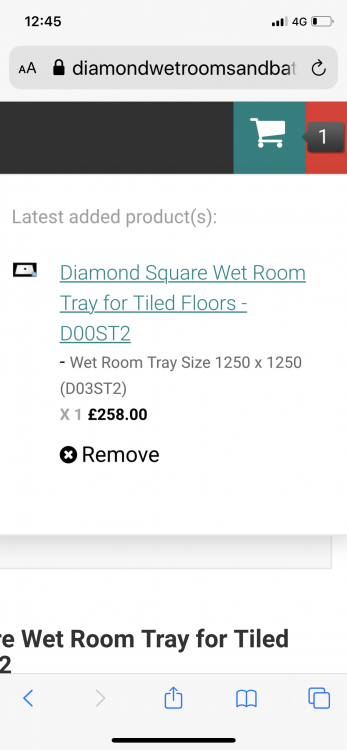
-
Structural Steelwork Support On Passive Slab
Nickfromwales replied to davidc's topic in General Structural Issues
Yes, as long as ring beams are observed at those points. Studs get stacked in multiples where they support a steel, and the timber transfers the load to the slab. Commonplace in TF structures. -
Should also read “visible” as compression on gas is less than preferable.
-
@PeterW Can you skim over FC as is?
-
@Visti @Russdl The router will be your friend. On the downstairs ceilings, when affixing to the underside of the pozijoists, please do yourselves a huge favour and router 3-5 mm squares out of the back of the FC boards where the joists hangers are God ( please select as applicable ) help you if you don’t, as sanding back the jumps / humps / bumps on the ceilings where these rigid unforgiving boards have been used, will be a bitch. Best of British chaps, @Russdl, Chuck those screws in the bin mate FFS !!! If they have no purchase in the resilient bars you’ll end up with cracks and a life of filling and painting ?.
-
Prevent leaks from wetroom?
Nickfromwales replied to sendu's topic in Bathrooms, Ensuites & Wetrooms
He does come from a rough area.....? -
Skirting tiles.
-
25 years for me so you get grandfather rights over me lol ?. When you stand in a bathroom and look directly down the wall to the floor, on one of my tiling jobs, all you see is tile. The grout line that’s left when you tile the floor afterwards, and I have had to do it that way a few times, isn’t acceptable to my OCD, plus under grouting ( under the last cut wall tile ) vs grouting the gap between the cut floor tile and the existing bottom wall tile isn’t cricket. If you silicone over that on one of my jobs.....you’d be sacked on the spot too ??. My bathrooms are as near to ‘silicone free’ as I can get them. Hate the stuff. A lot of the tiles these days can be bought to compliment wall - floor junctions. So if the grout lines are to go down one wall / through the floor / back up the opposite wall, on both the parallel and perpendicular grout lines then tiling the floor first is absolutely the only option. Antinox or 4mm plywood will give ample floor protection.
-
A TS with a 22mm DHW coil gives LOTS of DHW flow, but I have gone to 28mm when combined with either an accumulator or a damn good cold mains. I have only ever fitted coil types so have no experience of TiT versions sorry. Can’t say I like the idea though as the heat transfer rate in the coil version is excellent, whereas a) the TiT version probably needs time to recover and b) it’s only 80L......
-
Maybe. But..... I wouldn’t fit multi panel as it’s a ticking time bomb. I did a whole house ( all bathrooms ) for an Ebuild member and indeed tiled the floors / fitted shower trays first, then scribed the Mermaid panels with a router, and dropped the bottoms of the panels into a 1/2” bead of clear CT1. The excess that displaced after pushing the panels down and home was removed by wet wipes and CT1 Multi Solve spray and I’ll bet my left testicle that they’ll be watertight until I snuff it. Jobs as good as you make it ?
-
any ipad users here? I need some urgent help with email
Nickfromwales replied to ProDave's topic in Boffin's Corner
KISS -
Not on my shift mate ?. Always floor first and then tile up and away. The only time I break that rule is if it’s mosaic in a specific area and I’ll then size the opening to take full sheets of mosaic. If you’ve tanked and sealed properly you don’t have to panic about that detail. It is preferable but not life or death. I’ve done enough “grief free” wetrooms to know ? A true Wetroom install should be OK to use WITHOUT EVER TILING IT, remember that and you’ll be fine. ?
-
any ipad users here? I need some urgent help with email
Nickfromwales replied to ProDave's topic in Boffin's Corner
Put the gmail app on and just use that directly ( is what I do ). -
TRV’s don’t need to be “smart” just £10 a pop and you’re cooking on gas ? There are open source intelligent / smart options available, and IIRC @DamonHD has such a system available. Send him a PM for details. I’d try that option first VS the buffer chop & change and see if the cycling reduces enough to not be problematic. One towel rad could make all the difference as you can include the volume in all the connective pipe work too.
-
As you’re looking to be buffering kWh’s of heat and not looking to add volume per se, then you really would benefit from a sizeable buffer tank, eg minimum 100L but preferably 200L tbh. A super insulated vessel is recommended unless it can be sited to utilise the waste ( latent ) heat loss beneficially eg in an airing cupboard or strategically positioned on the ground floor to contribute to local heat requirements. A low loss header will do very little to improve things as they’re normally utilised to attain hydraulic separation ( vs a dedicated buffer ). Your best bet would be to have the radiator zone valve always open whenever UFH is selected, and have one strategic radiator on manual valves as a bypass / heat loss radiator. You would again need to have that allocated where it would be advantageous / not a nuisance ( airing cupboard or bathroom towel rad(s) for eg ). The boiler will quickly heat up a small buffer, and then you’re back into the flames from the frying pan.
-
The Gledhill provides your DHW though, so it’s a thermal store not a buffer, it just buffers as a by-product
-
You can’t if it’s a combi I as it’ll need it’s full kW rating to produce DHW Producing heating actually requires a much smaller energy input vs firing up to produce DHW. That’s a 40kW high-flow ( that refers to hot water production not heating ) combi do you cannot do anything to reduce its max output capability or it’ll give warm not hot water.
-
Is the suction side fed from a dip-pipe? If the water level gets low enough when the pump is at full wallop there is a risk of sucking in air and water not just water. Even so, if the pump is at the source then this should not be problematic as water will eventually get through. Is the pump ‘man enough’? FYI Air admittance valves AAV’s will let air in as well as out, so could add to your problems instead of curing them.
-
Have you fitted a non return valve ?
-
It's taken about 3 years for my registration to complete!
Nickfromwales replied to DamonHD's topic in Introduce Yourself
Hi Damon. Good to see you posting here. Apologies for the glitch. -
GSR’d fitter required if the case you have to remove to get access to the duff part forms part of the air / flue / combustion chamber. Look for any notes in the MI’s that state any disturbed seals need to be replaced. I would concur that it’s a PCB fault as it sounds like a relay has gone grotty and is allowing voltage through when energised but not when in the ‘normal’ state.
-
Just bin the thing. If it went anywhere near prematurely it’s probably down to continuously rubbing against a surface imperfection on the inside of the vessel. Move on and don’t waste time / money, they’re just too cheap to buy / replace.
-
MVHR on landing
Nickfromwales replied to moldy's topic in Mechanical Ventilation with Heat Recovery (MVHR)
The noise comes from the unit itself in most cases. I’m routinely fitting Brink units atm and they’re really well respected ‘in the industry’ as the weapon of choice ( when PH certification levels of quiet are the requisite ). Brink do a range of bolt on ( manufacture specific ) silencers now, so I’m going to trial those and see how they compare to the normal / knee-jerk flexible acoustic attenuators in real life. Current ones I’m fitting in a high-demand dwelling are the box attenuators which are a metre long !!! Bloody big game of Jenga currently going on in that plant room ! Compare apples with apples here though, as some MVHR units have integral heat pumps for auxiliary heating / cooling, which are noisy if not high - specification units, or standard MVHR units with just heat recovery which are very quiet out of the box. -
Maybe to remove metal from a cold ventilated space? Even though they’re not in ‘direct contact’ maybe it was a wise precaution.
-
Choosing a consumer unit
Nickfromwales replied to ToughButterCup's topic in Consumer Units, RCDs, MCBOs
As long as it’s metal and CE marked them it should be fine. Fitted plenty of “double-decker” CU’s in the part.