
Nickfromwales
-
Posts
31362 -
Joined
-
Last visited
-
Days Won
345
Everything posted by Nickfromwales
-

Plinth/Skirting - How should this get finished ?
Nickfromwales replied to Spinny's topic in Kitchen Units & Worktops
And it should look symmetrical with the finger gaps both sides too (imo). -
Should I ditch the installers and DIY my ASHP?
Nickfromwales replied to jimseng's topic in Air Source Heat Pumps (ASHP)
For warranty, perhaps. Get the wifi dongle and Panasonic can dial into it remotely and commission it, with some basic info from you. Iirc you’d need the plumber to register for a trade account (just an online registration) on the app to facilitate this. -
How to - insulate and air seal this….
Nickfromwales replied to BadgerBodger's topic in Heat Insulation
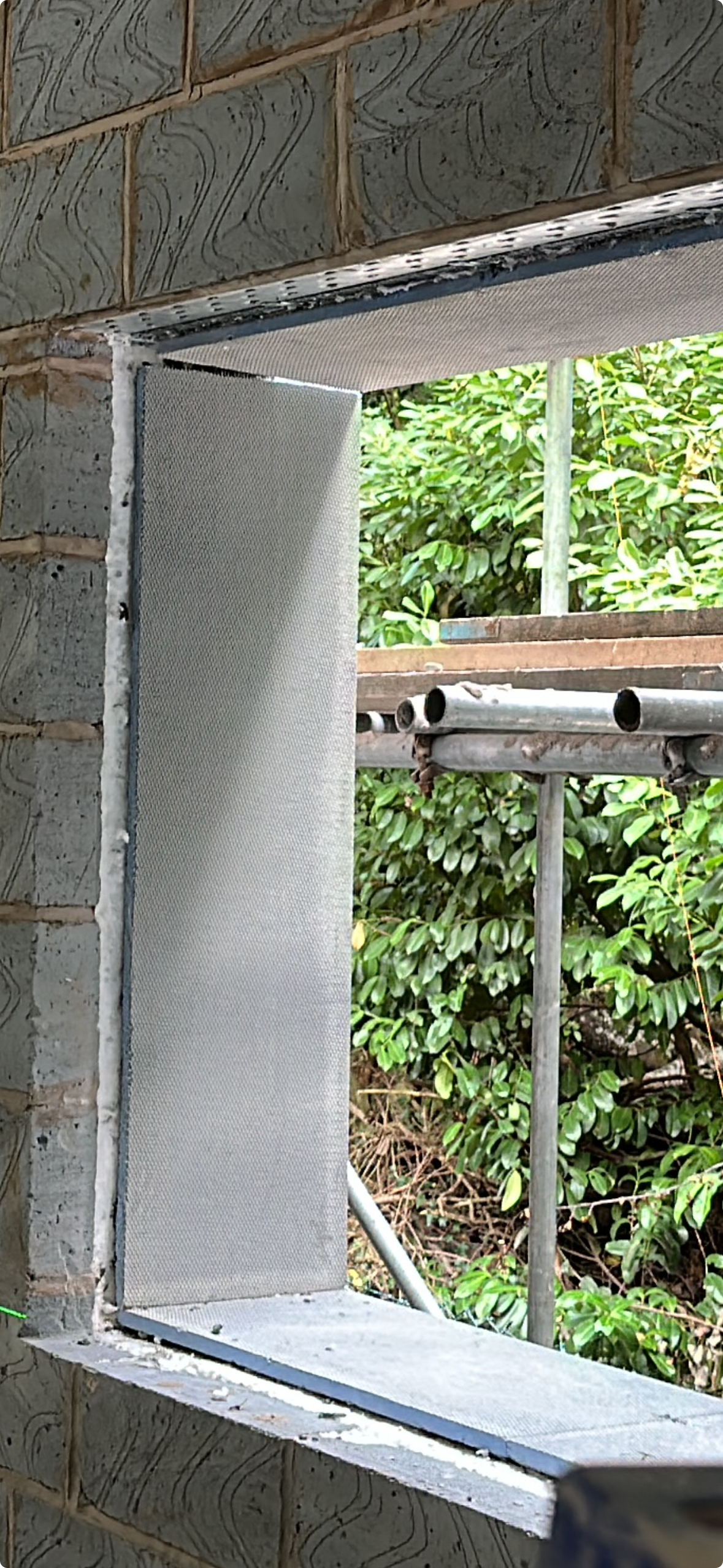
Indeed. Client had ordered the windows way too soon, so in those pics you can’t quite tell that I had to take a 12” disc cutter to all the outside walls, to enlarge the openings by 25mm to accept those boards. Was a total clusterfeck when I arrived, hence such drastic measures were necessary. -
I may need to look for a new job 🤣
-
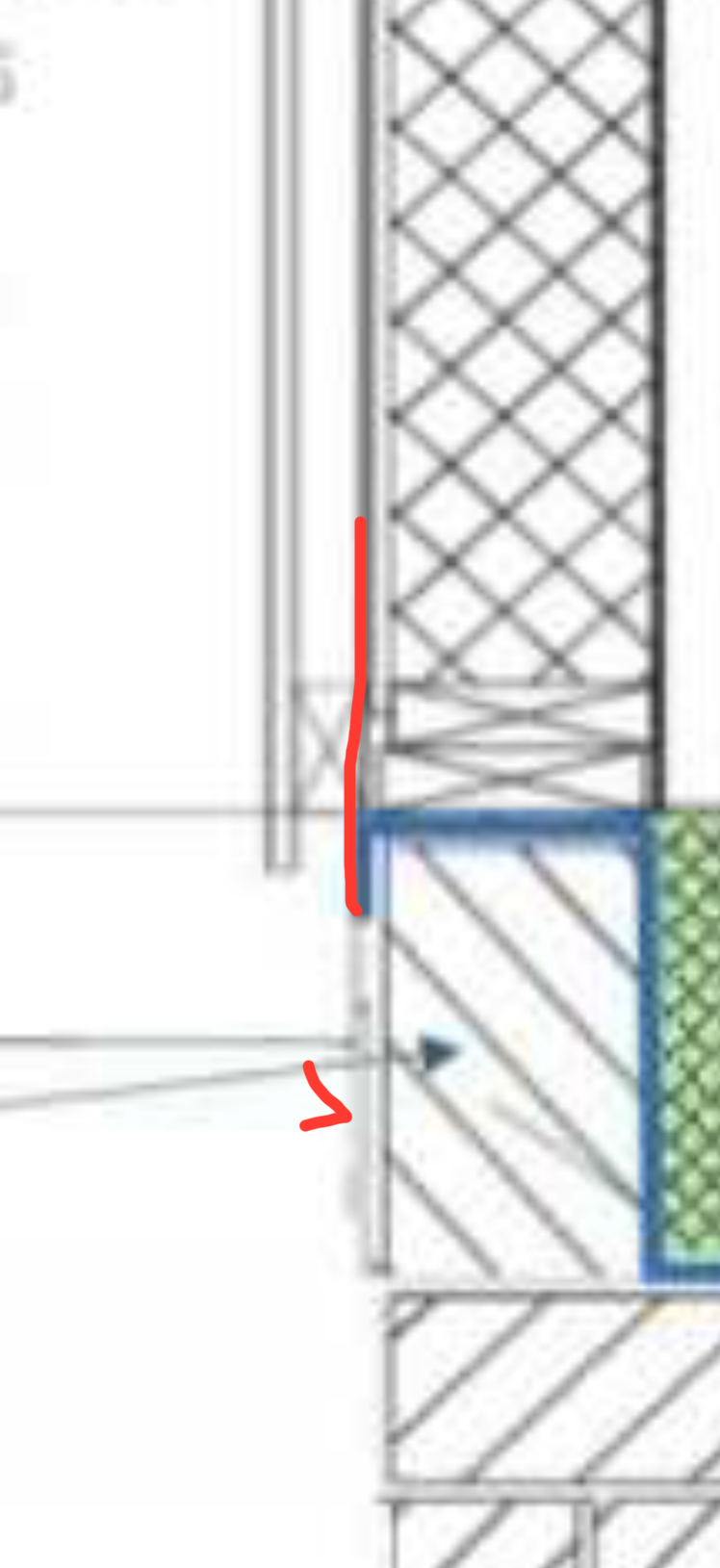
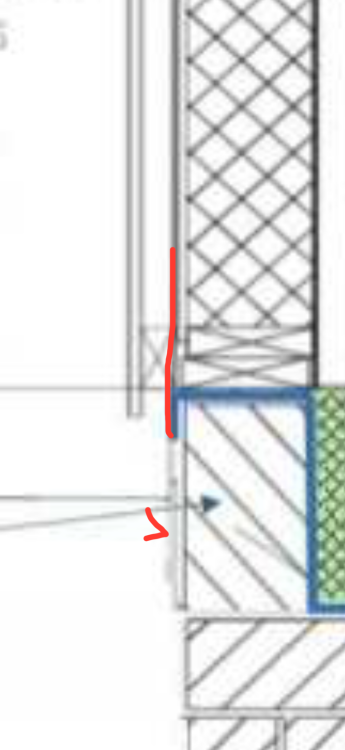
You should also install 150mm wide DPC across here too: This protects the sole plates from water ingress, should anything get in behind and sit on the horizontal counter batten. I got chatting with Darren from MBC when he was on site doing the pre-airtightness test, test, and offered up this great bit of info, which he says is often overlooked; I conveyed this to the client and it was agreed in an instant that this was a good idea and to run with it. As it’s horizontal I’d recommend a 100mm tape along the top edge of the DPC strip also. Sole plate is the first point of failure if details are overlooked, and are ‘fatal’.
-
This should all land firmly in the lap of your Principal Designer, usually your architect, as they are covered by PI insurance and are the ones who would underwrite the solution as robust (60 years service life is typical from most reputable TF providers).
-
Fine silicone finish by Norrsken
Nickfromwales replied to Selfbuildsarah's topic in Windows & Glazing
Phone them first? They should state if this is post render or pre, pre being fundamental sealant and defo not silicone -
You can’t run cables in insulation. You’d want a couple of rows of common bricks, up to the height of the insulation, and then Marmox thermal break blocks on top of those, or cut the thermal block down to suit.
-
Yup. iBox’s to date have mostly been 3/4”, which I fit a 3/4 x 1/2” bush into, then a 15mm x 1/2” male adaptor. Not used 22mm on a shower for a long time, and that was a Chinese monster shower / steam cubicle thing with 30 odd jets and a 16” rainfall head; fed from gravity and a 3bar 22mm Stuart Turner twin impeller pump. Shower internals and shower heads etc can only cope with so much lpm flow rate & pressure, done some where the rubber nozzles start popping out
-
UFH - Supply and Return pipes...
Nickfromwales replied to Mulberry View's topic in Underfloor Heating
Send me a PM if you’re stuck. It really doesn't need to be this hard . -
UFH - Supply and Return pipes...
Nickfromwales replied to Mulberry View's topic in Underfloor Heating
It’ll be running such low temps that it won’t matter imho. Balancing on the manifold is fine to get flow rates fettled in, and after that it should be plenty good enough. I’ve never done loops by room, and I only make overall adjustments for changes like this (200mm cc or 150mm cc or 100mm cc) for different types of heat sources. The only time I change loops per room (or space) is for adding tighter loops in bathrooms, or for hallways where the area is open to the 1st floor etc and needs a little more ‘oomph’. -
UFH - Supply and Return pipes...
Nickfromwales replied to Mulberry View's topic in Underfloor Heating
Plus, it’s just dogshit (pretty pictures). -
Inspection chamber diameter reduction
Nickfromwales replied to BotusBuild's topic in Waste & Sewerage
There must be, as it would need to take a modular access cover. Ring them on Tuesday and ask for a solution. -
How to - insulate and air seal this….
Nickfromwales replied to BadgerBodger's topic in Heat Insulation
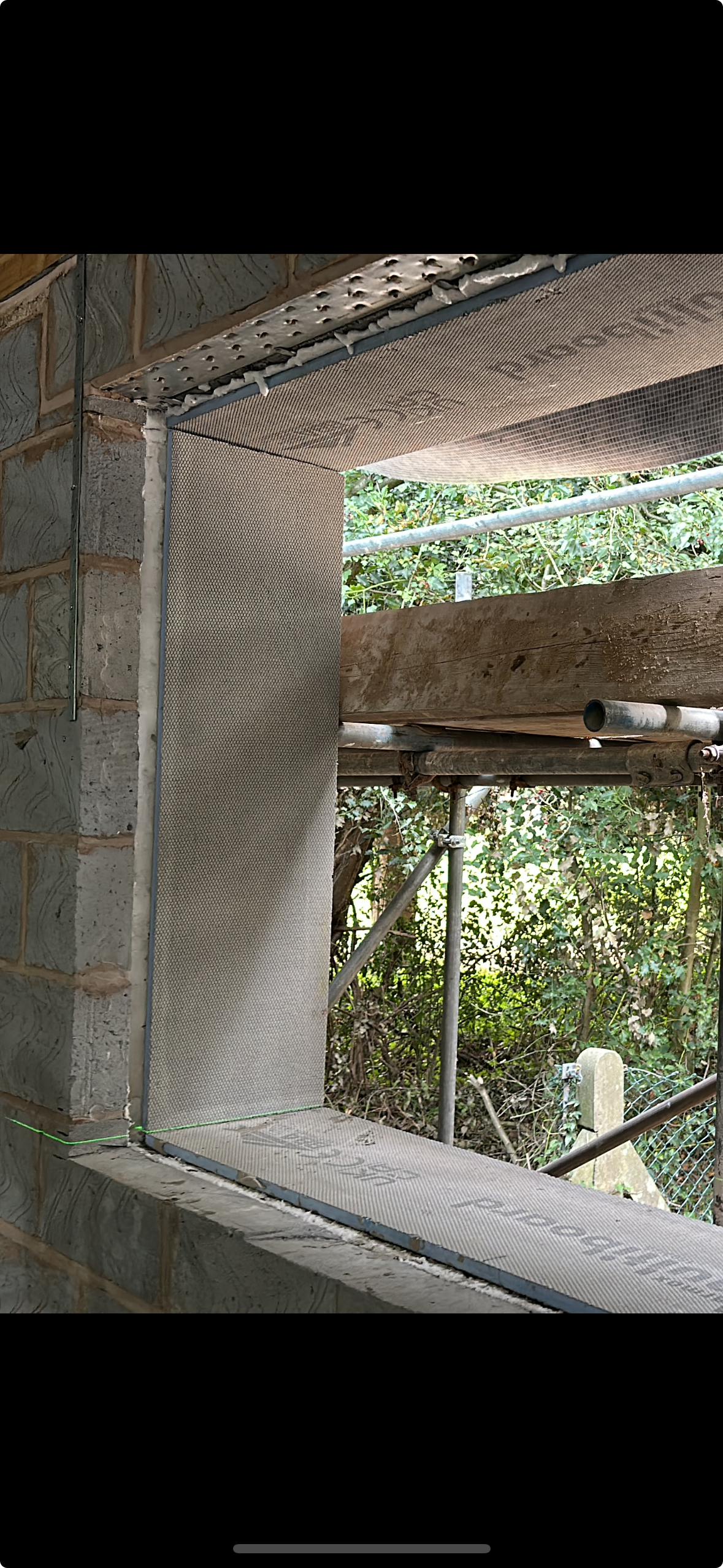
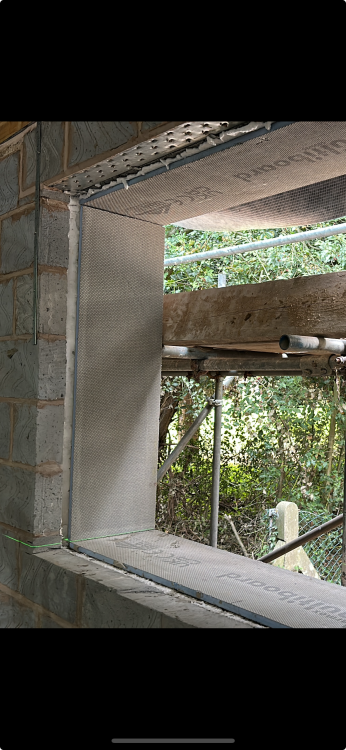
This is one masonry project, an EnerPHit type of standard. 20mm boards used, and still retained the 10mm that Norrsken asked for. Done with tile adhesive, and stuck on there like shit to a blanket. I flew these through prior to the windows going in, so they created frames for the EWI to be dressed into. These projected out around 160mm, for 150mm EWI + render etc, as you can see in the next pic with windows in. You can use tile adhesive with complete confidence, it’s remarkably good for this application, and way better at staving off damp bridging.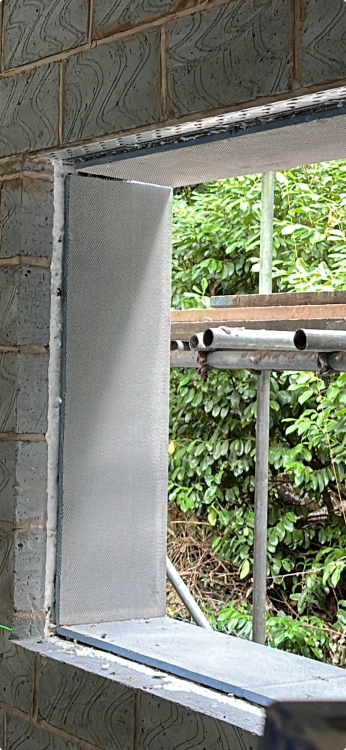
-
How to - insulate and air seal this….
Nickfromwales replied to BadgerBodger's topic in Heat Insulation
Yes, it seems to grab and hold, and never let go. Dry line adhesive seems to just go off and then you can knock the board off without any real effort. Extended or standard set adhesive will give you 2 hours of open time, so whatever you do, do NOT use rapid set!! -
UFH - Supply and Return pipes...
Nickfromwales replied to Mulberry View's topic in Underfloor Heating
I've seen some odd designs in my time, but this one is way out there..... The red and green loops that head off to the utility, just outright barmy. This is 1st year apprentice stuff, sorry, not great. -
UFH - Supply and Return pipes...
Nickfromwales replied to Mulberry View's topic in Underfloor Heating
Wtf?! -
Inspection chamber diameter reduction
Nickfromwales replied to BotusBuild's topic in Waste & Sewerage
Price is horrific, but shop around. https://www.drainagesuperstore.co.uk/product/axedo-600mm-to-350mm-inspection-chamber-restrictor-ring.html?clickref=1100lDp3y34Q&reqid=73079187&affid=1694&app_clickref=1100lDp3y34Q -
Yup. Hep2o do a pushfit 15mm x 1/2” male BSP, or you can get the same in compression.
-
How to - insulate and air seal this….
Nickfromwales replied to BadgerBodger's topic in Heat Insulation
Silicone has a very short service life, and tapes & foams are for airtightness, mastics etc are for sealing and weather-tightening etc. Mastic sealant such as CT1 or (cheaper option) Stixall for fundamental frame sealing, then you tape / foam to get airtight. As you’ve boxed yourself in very, very tightly with the windows etc completely filling the spaces I would mask the windows up with about 8-10mm on show, and mastic seal to get your AT in check, smoothing this to nearly nothing. Remove masking and leave to dry for 24hrs minimum. Then when using the tile adhesive you apply a full bed, up to and over the mastic, and whilst that is still wet you dab the reveal boards on, pushing them tight up to the frames. Use stop beads to ‘picture frame’ the reveals to the frames, and skim to those to get sharp, straight, consistent lines. -
Communicating with trades. Any tips?
Nickfromwales replied to flanagaj's topic in General Construction Issues
Using great people who know what they're doing, and actually GAF. From wet concrete late March ‘26 to moved in for Xmas ‘26 (with some areas incomplete but survivable) is my goal for current high-spec MBC build. I’m on site full time, both grafting and as principal consultant in charge of trades / quality control / sequencing etc etc. Defo can be done, but requires parting with money. -
Garage floor paint/resin/epoxy resin
Nickfromwales replied to BotusBuild's topic in General Flooring
A temporary solution whilst we were suffering from this heatwave 😂 -
Air source heat pump DHW cyclinder
Nickfromwales replied to Glenn Crawford's topic in General Plumbing
Chat with Trevor at cylinders2go, mention my username and the forum and you’ll get a discount. Don’t pay a premium for fairy dust! These are stainless steel coke cans with a 3.3m2 coil inside, and an immersion. Basic, robust, lifetime warranty (he sells Telford stainless units) and all you need. I have fitted nothing but Telford for over 20 years, bombproof units. -
How to - insulate and air seal this….
Nickfromwales replied to BadgerBodger's topic in Heat Insulation
Just dot & dab them on, using flexible, extended set tile adhesive, as I did for a previous similar project. Forget shims / screws, you'll be there forever trying to get all those reveals and heads plumb / level / square etc. -
Tap tails, connection advice please.
Nickfromwales replied to crispy_wafer's topic in General Plumbing
https://www.screwfix.com/p/flomasta-bush-1-2-x-3-8-/87443?tc=ET2&gclsrc=aw.ds&gad_source=1&gad_campaignid=19822796606&gbraid=0AAAAAD8IdPwQZBOItCyNOiPYIeLoUTMr7&gclid=CjwKCAjw48TUBhBREiwAK0GnQTocxspmCzoWiV6N86YMT8tqXHO1K3CyZz4fOaSskoRb_BOf3XF3zhoCqPEQAvD_BwE ?