jfb
-
Posts
646 -
Joined
-
Last visited
Everything posted by jfb
-
What does it say on the tin?
-
I've used hydraulic lime bags that are well out of date and they have been fine. Never had much success with out of date bags of multi finish! Goes off much too quick.
-
Securing PV panels to shipping container
jfb replied to NWGEAR's topic in General Self Build & DIY Discussion
why can't you weld them to the container? -
Could I just go for a basin trap with built in AAV as I will have some issues getting an AAV behind the toilet? I think I hadn't quite clicked that an anti syphon trap is essentially an AAV.
-
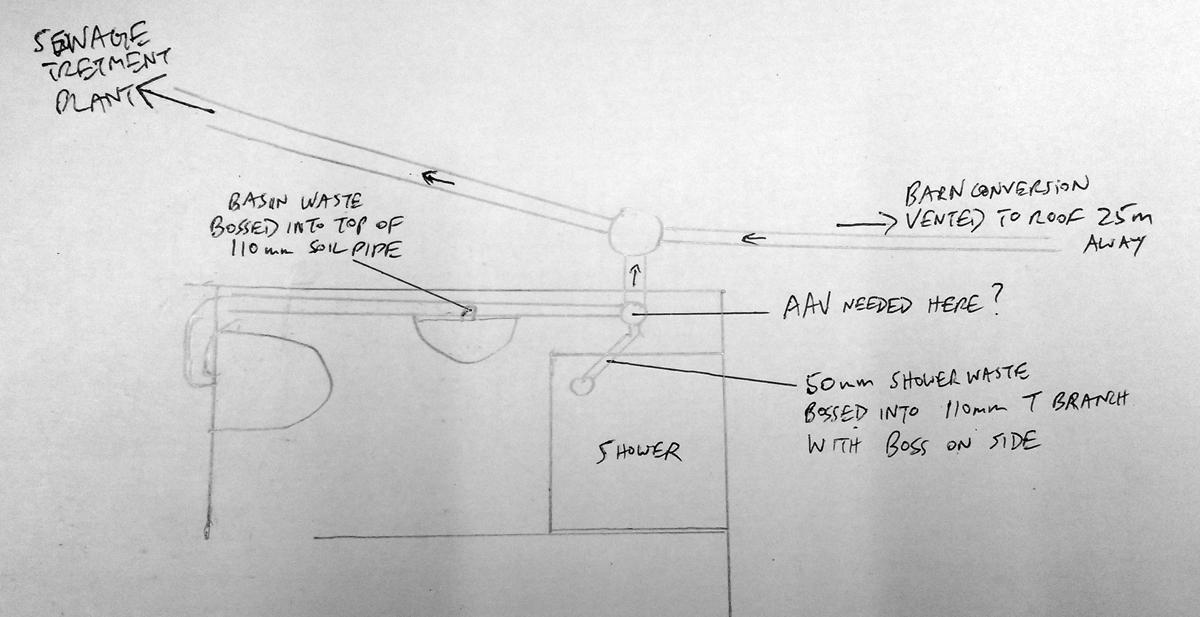
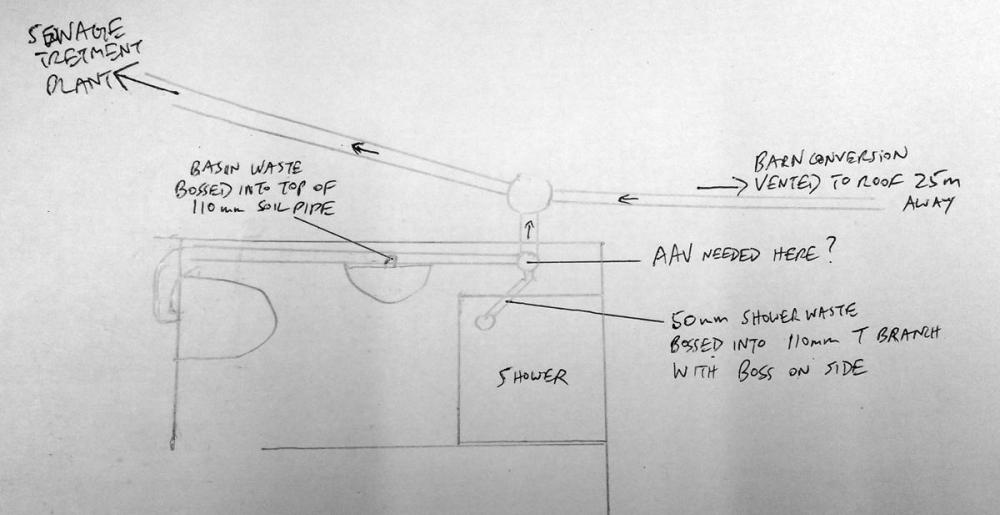
I have a small shower room in a small outbuilding/office with waste plumbing as in the drawing. It goes to a sewage treatment plant and this is vented at the end of the run through the roof of a barn conversion about 25m upstream of the shower room/office. In the interest of the toilet not sucking water out of basin/shower traps is my best option: 1. fit anti syphon traps to both shower and basin 2. fit an AAV - if so where should it go? can it go where I indicate on the drawing or should it be closer to the toilet (upstream of the shower and basin) 3. Fit all the above. 4. Don't bother with any of them - it will all be fine!
-
As punter suggests - much much trickier to retrofit.
-
Sips should be reasonably airtight as a build method without going the extra mile . I would just plan for Mvhr from the outset and make sure it's as airtight as you can get.
-
I would mix up a dryish hydraulic lime/sand mortar and point that in having taken out any existing loose mortar. Finish with limewash to match existing. As Jeremy asks - do you know if the existing brick infill panels have the original lime mortar? And is the paint a limewash or a more modern paint that might not be breathable?
-
interesting point. I'll have to check the electric situation. I have a 16mm feed about 40m from the 3 phase d/n it is coming from. Only plugs, lights and electric heater so I guess bigger than 8.5kw might be possible.
-
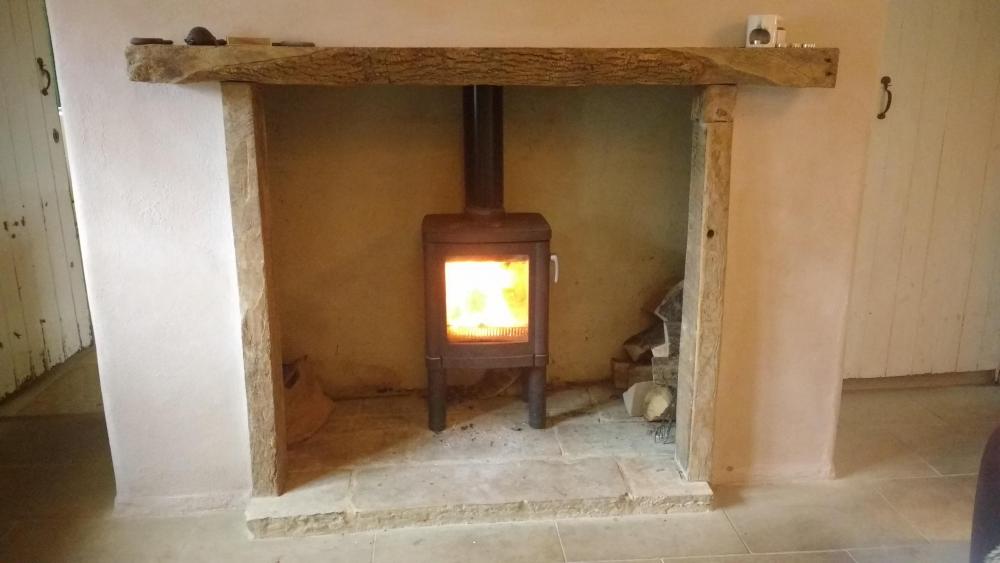
I used some stone that came out of a floor I dug up and a render finish.
-
thanks everyone I think I'll go find me a triton
-
Anyone got any view on the different electric shower manufacturers? Going to have an 8.5kw shower in a guest space. I've used Gainsborough showers before but have had to replace main unit fairly often. Triton, Mira, Bristan.......or are they much of a muchness? Anything to look out for?
-
No extra cost for standing charge or per kw for my 3 phase. But there was already a 3 phase account set up on a weird tariff. Don't know if setup cost might be greater for new account than single phase. Definitely go for 3 phase if you can I reckon.
-
I assumed you can't put a boss on a swept bend and it is mucked in anyway so couldn't get a strap around it if I wanted to. Hence trying to work out the lowest place I can get the shower waste in above the bend.
-
I don't think I have the height to get the shower to floor level. The bend ifits very closely to the existing pipe/inspection chamber just outside the building so no room to drop in a boss any further down. There is no stack to speak off just the bend into the inspection chamber.
-
thanks temp - i'll have to have a closer look at the measurements when I get a chance. I had assumed I would need a small step up to the shower which is fine - I just want to keep it to the minimum. When slab and swept bend were put in a while ago the plan didn't include a shower. I appreciate that 50mm of insulation isn't much but it is an insulated limecrete slab already. And yes the swept bend has a female socket in the room so that helps.
-
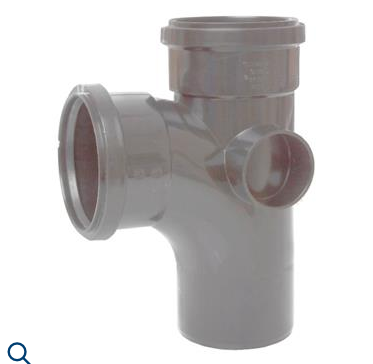
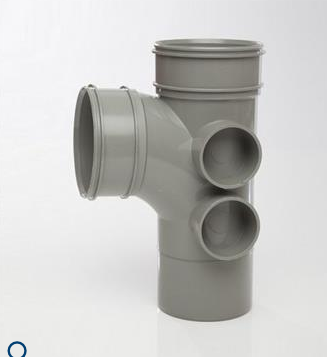
I have a toilet and shower in a small downstairs room with a 110mm swept bend finishing 35mm over the top of slab. On top of slab I have 50mm insulation and 25mm tiles. Can I use a 110mm 92.5 single branch 92.5Deg 2 Boss like this with the toilet pipe into 110mm and shower waste into boss at same level? What about using one like this with the shower waste entering below the toilet waste? Is that allowed by building regs or is there too much danger of toilet waste entering the shower waste?
-
I am getting ready to do the floor for a small outbuilding/office with a small toilet/shower room. It is an old barn with solid walls and the floor build up so far is an insulated limecrete slab (expanded glass sub base and 100mm limecrete). For the shower room I was thinking of laying some 50mm battens down and infilling with some 50mm EPS i have spare. Then gluing and screwing 18mm ply to the battens, then PVA the ply and finally ceramic or cork tiles on top. One sheet of ply will be big enough for the whole room. Does this sound sensible? Could I get away with not fixing the battens to the limecrete floor?
-
How far is the neighbours house from the building/workshop? If you are making noise then sound proofing might be a consideration. My instinct is that rather than reroof I would start again. Permitted development limit on outbuilding size is 30m2 so this is larger already. I wonder when it was built and if there has been any planning discussion about it.
-
Nobody beats Thames Water for incompetence in my view!
-
Old Cottage Restoration + Extension Project
jfb replied to JulianB's topic in General Self Build & DIY Discussion
I think it was a few things. I had a few architects come around at the beginning and one who had some experience of renovations of this type suggested a concrete floor for cost reasons and after a general assessment of the house not being too damp as it was. He also pointed me in the direction of cheaper woodfibre boards than I was considering. (he was Charlie Luxton from a programe called 'Building the dream' if that means anything). I think it is undeniably cheaper to use a concrete floor as it uses more conventional materials (I was comparing limecrete and expanded glass sub base against concrete slab and type 1). Also I had quite a large area to do so used a pump for the pour which might be possible with limecrete but not as straightforward. It did also leave the floor finish more open as you don't have to think about permeability of tile/floor finish. In fact for a new extension to the house I ground the concrete slab down for a polished finish which wouldn't have been possible with a limecrete slab. I also read up on some issues with UFH and limecrete floors. I would say that my place isn't in an exposed situation so that is to my advantage. I ended up with 60mm steico woodfibre board and 20mm on window reveals. In theory the 60mm of woodfibre board doesn't meet building regs but my thinking is that the more insulation the higher the risk of interstital condensation. I suspect this wall buildup performs much better in practice than theory might suggest. Room size is also a consideration when using IWI. MVHR is another thing that I wasn't 100% I was going to install but the more I read the more I decided to go with it. Also I think the architect had the assumption that it would be necessary. I did go pretty overboard with airtightness detailing in the end and got a reading of 1 ACH/hour so I am glad I went with MVHR. Overall I have been very happy with the results - house temperature remains very stable without much heating needed and we have barely used the radiators upstairs.- 74 replies
-
- 1
-

-
- cottage
- resoration
- (and 3 more)
-
Old Cottage Restoration + Extension Project
jfb replied to JulianB's topic in General Self Build & DIY Discussion
I don't think this is true. My stone walls have lime render (as flattening layer and airtight layer), wood fibre board, lime render, limewash. Breathable both ways and airtight. I also went for a concrete floor with 200mm EPS below with a DPM under this. Also some French Drains around the perimeter. Initially I had looked at limecrete floor (and in fact did install a small limecrete floor in a small outbuilding) but was persuaded not to. Seems to have worked well.- 74 replies
-
- 2
-
-
- cottage
- resoration
- (and 3 more)
-
I would cut the foam back a little and fill with lime. It is what I have done on my house with wooden windows and stone walls and it has been fine. Looks like pretty large gaps in places so you would use a lot of mastic if you go that route.
-
Zoot yes I did mean using 10 or 20mm insulation instead of the 50mm. I didn't mean going back to the bco to try and get the OK for that. Just when you rip up the floor after he has visited you could easily put the thinner insulation down before the wood. The only cost would be what it costs to buy as it will take minutes to install as the floor is coming up anyway. It will still make a worthwhile difference. Remember that with insulation there are diminishing returns for greater thicknesses of it meaning the first milimetres provide the most benefit. Not sure if this is clear but make sure when the flooring goes down for the final time that you glue all the joints.
-
You can get 20mm and even 10mm sheets of xps insulation if the ceiling height is really important. Something like this. https://www.thefloorheatingwarehouse.co.uk/acatalog/Warm-Pro-XPS-Insulation-Board-XPS_Pro.htm And I have to say that this thread has provided some vintage back and forth between you and Peter!