


Marvin
-
Posts
2389 -
Joined
-
Last visited
-
Days Won
3
Everything posted by Marvin
-
Just a thought.... You need to consider what will protect the ASHP from freezing and add antifreeze to the water... Good luck Marvin
-
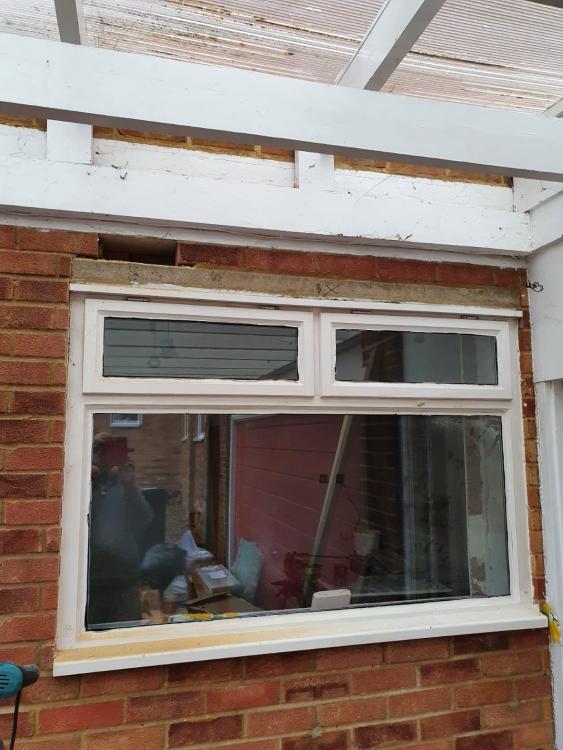
Any one who doesn't know what is wrong with this picture needs to learn some basics.
-
The existing loft insulation irritated the .... out of me. Mainly because I needed to change a lot of pipes in the loft and the roof is only 22.5 degrees and the fluffy was very thick. What with the 150mm insulated MVHR pipes (190mm thick) 2 high and a roof at 1300 ish it was too cramped. Anyone looking at the ducting photos will see the loft was bare. Before insulating, the bungalow was loosing 87% of the heat through the roof because the rest is so well insulated. Gonna have to turn the ASHP down a bit .. Now started replacing with this stuff.
-
The existing loft insulation irritated the .... out of me. Mainly because I needed to change a lot of pipes in the loft and the roof is only 22.5 degrees and the fluffy was very thick. What with the 150mm insulated MVHR pipes (190mm thick) 2 high and a roof at 1300 ish it was too cramped. Anyone looking at the ducting photos will see the loft was bare. Before insulating, the bungalow was loosing 87% of the heat through the roof because the rest is so well insulated. Gonna have to turn the ASHP down a bit .. Now started replacing with this stuff.
-
- 1
-

-
- non-irritant
- supersoft
- (and 1 more)
-
Might be a bit of a challenge as usually the cover goes down over the plug and cable to give it water protection. If the face of the cover was flush how would the cable come out?
-

MVHR Installation Issues
Marvin replied to Nickw1982's topic in Mechanical Ventilation with Heat Recovery (MVHR)
Yes @Nickw1982 the external stone is a great shame and needs sorting but not before altering the distance between the inlet and outlet. -
When is "4 metres" not 4000mm?
Marvin replied to ProDave's topic in General Self Build & DIY Discussion
It not about being perfect - unless your anal. It's about practical and skill. -
Yup! 5mm gap is enough to squirt foam in! Makes a hell of a difference. All Form. No Function! Yuck!
-
If the screws are going into the external wall then stainless steel. See if you can squeeze some foam filler in any big gaps. Frame sealant between external wall and external edge of window frame. Inside same but use caulking or what anyone else recommends.
-
Yes, well, of course, you wouldn't use only hot water either, but worth finding out how much water you are using. My 1400mm high tank can go from 25C at the bottom to 60C at the top.
-
so in 10 minutes 240 litres of water? Your gonna need a bigger tank...
-
Yes ASHPs are different and this is one thing I have had to consciously change in behaviour: If the hot water needs heating then heated at the warmest time of the day. House heating and occasionally cooling on 24 hours at low level. Not like my old gas central heating at all!
-
+1 Is @Fraser Lamont saying he wants to take the middle wall running down the centre of the building away to sort the floor?
-
My guess would be either an electrical element - immersion heater is on somewhere or the hotter hot tank water is flowing back to the ASHP when the heating is on or, if you have a buffer tank, when starting up the hotter water in the buffer tank returns to the cold ASHP, or the warmer water in the heating pipes enters the ASHP when first turned on, or something else, and all explanations give by other more knowledgeable people than myself! The only way to offer up suitable explanations would be to know when it happens, how long it happens, what is operational when it happens and what the temprature differences are. M
-
A couple of further questions that will help with understanding the set up... Floor area of the house Volume of the hot water tank Do you have MVHR Do you have PV Are all the pipes fuly lagged? Hot water when on cost alot... how much power was being used? Good luck M
-
Putting a ridge in the patio seems to me to be complicating things...
-
Patio drainage without soakaway?
Marvin replied to ashthekid's topic in Landscaping, Decking & Patios
I understand the distance is now 5 metres from a building... The regulations state that a rainwater soakaway must be located at least five metres from the wall of a building and at least two and a half metres from a boundary. This is to prevent subsidence of the wall and to stop rainwater on your property from flowing into your neighbour's garden. Check out Labc soakaways. M -
The web site pavingexpert.com is an excellent source of information. Do you have details of the type of sandstone being used?
-
Hi @HJB If the old patio was stable then type 1 on the existing sand seems OK to me. However I would want the old sand compacted before the type 1. I would want to have the grass removed where the patio is to be extended and dig down to the same level as the bottom of the sand used on the existing patio, again assuming old patio was stable, and compact the type 1 bringing it up to the new level. Surely you want the rain water to fall away from your building? So drain run between patio and grass... Good luck Marvin
-
More of the same... When insulating the ducts I noticed that the top of the MVHR was not insulated so I have installed flexi conduit on the cables ready to throw fluffy over the top. This is the inlet pipe running under the ridge. 150 diameter with insulation held on with cable ties An installed air damper in red. More about these later.... Water coil with thermal lid. Lid made from PIR. Lids off: The coils had no condensation drain so I installed one in the bottom. I cut the bottom 100mm PIR layer so the bottom if the box falls both ways to the corner with the drain and painted the bottom with a protection coat of metal paint. White 22mm drain pipe sticking out with temp cap off. Water trap still to be fitted... Side view of MVHR unit. Note the black "Summer bypass" with the white block on the side
-
Well that's done my head in....
-
Can't then vent through side of wall.
-
List of equipment being installed
Marvin commented on Marvin's blog entry in ASHP, MVHR, PV and EV combo
Hi @Sandybay Yes the system is 5.12kW max. We had to apply to our Distribution Network Operator (DNO) for permission even though the system will be limited by the CT clamp to a 3kW feed into the grid because the system has the ability to produce over 5kW. we are still waiting for permission. The DNO advised that a decision may take 3 months!!! CT clamp. Yes this irritated me for a while. As I understand it, a Current Transformer (CT) clamp, can measure the current (wattage) flowing through the cable it is attached to. In this set up it will measure the current passing along the cable in between the consumer unit and the main electric meter. As the AC power goes through the cable the coil in the CT clamp produces DC power. The power runs along the CT clamps cable to the inverter. The inverter can work out how much power is being sent into the grid. When more power is potentially able to go into the grid than the level set the inverter restricts the power output. When using the inverter it works out which way the current is flowing; otherwise it would register the current coming from the grid, however some other devices don't and the CT clamp need to go the right way. Good luck Marvin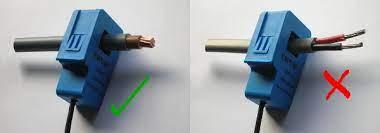
-
Typically: Galvanised Truss Clip 47 x 110mm toolstation, screwfix etc... about 50p each. Good luck Marvin
-
I'm sure someone here has. I unfortunately just did a bit of renovation..... so this is just a bit of a prompt.


