Marvin
-
Posts
2389 -
Joined
-
Last visited
-
Days Won
3
Everything posted by Marvin
-
You are far closer to the truth than you know. I fixed the small one: Time to catch the water.... notice the colour.... : and the results: Wait! What's this?: The water in the top of the radiator was clear, but the water running below is rich with antifreeze...


-
This is the other one: If no one else has had this problem then I must be wrong? Yes it full to the top. Yes the lower half is running freely and hot.

-
I believe that the solution is to lock off both sides of the radiator, drain the contents from the bottom and pour it back in the top. If I am right surely someone with a heat pump has had to do this before. Hi @dpmiller But you would think it was a possibility.. . No. It worked perfectly fine for 2 years. Both of the towel rails.
-
The radiator has been running for 12 hours in its present condition. It is the first time in my life I have seen this happen. I can only guess the reason and no one has come up with (possibly) the right answer yet. You have to think of something completely different. I am waiting for someone who has had this happen to respond so no-one thinks I'm mad.
-
Hi @ToughButterCup No. And I confirm that there is no air in the top of the radiator.
-
Hi @joe90. Thanks but I understood exactly what @nod was saying and usually he would be right. Having been corgi registered in my time I would know all about air locks.... There is no air lock.
-
One of the aformentioned. and yes I am supposed to be decorating the room for Christmas ?

-
Hi @nod. I can quite catogorically say there is no issue with either water circulation or air in the radiiator. I confirm the towel rail rad is full of water from the top to the bottom. The hot water enters the rad on one side and exits on the other but only heats up about half way. I know you think it's a air issue but it is not.
-
-
Nope radiator completely bled.
-
Nope. Full of water bottom half fully functional as a radiator.
-
My Towel radiators are definitely full of water. They are quite hot up to about half way up. Why?
-
Ok, insulated how? Loft insulation - how thick? Cavity wall insulation? Floor insulation - how thick? Do you have trickle vents in the windows. What is the approximate floor area (upstairs and downstairs) in square meters. What emitters (radiators or underfloor heating?) are you thinking of using? A lot of people who contribute on build hub have masses of experience so its good to listen to it all. @TW9 has one of the answers which would save you space, but its as my brother says, its not if, but how much. Good luck M
-

is this normal carpet fitting procedures? HELP!
Marvin replied to TryC's topic in Wood & Laminate Flooring
Not if the beading is big no. As usual @ProDave really points out the big picture.. -
is this normal carpet fitting procedures? HELP!
Marvin replied to TryC's topic in Wood & Laminate Flooring
Our 80-20 twist up against skirting sealed to the floor for air tightness. No concerns from fitters.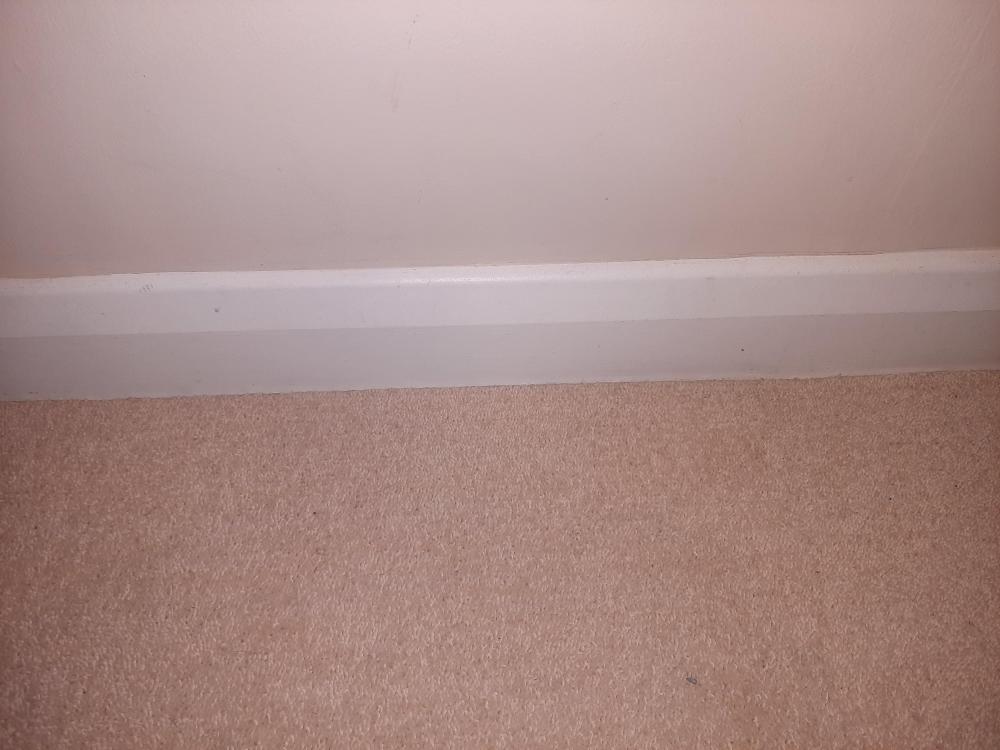
-
This is what I am working towards...
-
List of equipment being installed
Marvin commented on Marvin's blog entry in ASHP, MVHR, PV and EV combo
Hi Adam We completely renovated our bungalow in 2018, but with no mains gas ran an LPG bottled gas boiler. We know exactly how much we used and pretty much when as the bottles needed changing. We oversized our radiators at the time because we were not sure how good our insulation and airtightness would be. We have about 100 square meters of floor and used about 35kWh per m2 for heating and we estimate about 2 to 3 kWh a day hot water. I have a 206 litre vented hot water tank, with a salamander CT50XTRA pump (1.5 bar) giving middle power water to two showers in the bungalow. often sold with) unvented cylinders. The ASHP uses a coil in the cylinder so it would not effect your hot water pressure. 22mm copper all the way up with as few bends as possible , and the hot pipe insulated all the way. Having now run the ASHP for about a month, I would say that there is a lot of understanding required to know how to get the best out of a system. We have not finished playing with the emitters (radiators and coils) yet as were running it through coils in the MVHR as well. I believe the first two most important things when considering ASHPs are the thermal resistance and airtightness of the building and correct calculation of the heat loss. Once you have this then you can move on. Good luck Marvin -
Not really having much information to go on when installing an ASHP on my flat roof, we decided to go ahead anyway. Questions that arose were about things like will it blow over, can the warm roof take the weight, can the warm roof take all the vibration, will it wear away the EDPM, is the condensation OK to go into the soakaway, is there much maintenance required, how heavy is the ASHP, can we get it up there, can we get the power up there, will the control cables reach where we want them, can we drill through the roof to get the pipes into the utility room without going through any services, can we waterproof the water and cable pipes to the EDPM, can the pipes be insulated. Well we couldn't find definitive answers to all these questions but we decided to do it anyway. So far, if we were to install it again, I would add to the list auto vents to both the flow and return pipes just before the ASHP as one has not been enough, and fitting later is a pain in the ... M.
-
Hi Mike. 1. This raises lots of questions as to the suitability of your property to have an ASHP and or separate hot water. Whilst none of our business it might be good to share some details. There are so many alternatives for secondary hot water that without knowing things like what you want it to do - showers? Baths? 8 people? and so on that you could end up putting the wrong thing in. 2. Sure, you can use ASHP for heating only. 3. No. Good luck Marvin
-
Thanks everyone. I already have a good coat of insulation. I think that I will use some of the offcut edpm from the flat roof and cable ties as I may need access later. Thanks @Russell griffiths Never heard of self amalgamating tape before. Looked it up - definetly going play with some of that! Oh another day, and another thing I didn't know I didn't know. ?
-
Hi Has anybody any recommendations for an external sticky tape to fix to further lagging to external ASHP pipes? the only ones I have used doesn't "stick like the aforementioned" but is "the aforementioned" In full sun in summer. Thanks Marvin
-
Water coil installation into MVHR
Marvin commented on Marvin's blog entry in ASHP, MVHR, PV and EV combo
The coils have been positioned as near to the room inlet valves as practical so the heating/cooling from the coil is not effected by the loft temperature too much. I expect to get results from the heating side in a week or so. Still messing about in the loft. M -
Ok @ProDaveI'll let you know in May.
-
Agree totally @epsilonGreedy. However as part of a group of various electric producers it should be included. Also with several tidal installations around our coast line, it would be a more balanced supply because, as I'm sure you know, the tide doesn't rise at the same time of the day all around our coast.
-
Well it would except for the mains