

ProDave
-
Posts
30862 -
Joined
-
Last visited
-
Days Won
427
Everything posted by ProDave
-
Do you have to have bi folds? With this issue and their know air tightness issues, why not consider a pair or even 3 lift and slide doors? I know you can't open it all, but it might solve the issue?
-
The GW should be working to the designed drawings, not making it up and adding his own "features"
-
Our SE initially specified Wind Posts, 4 of them in each corner of the TF. It looked to make the foundations a lot more complicated with a reinforced concrete cast upstand for them to bolt to and it looked like it would have some thermal bridging implications. So I questioned him as I had never seen that in a domestic timber frame before. His answer was because we have no brick or block outer skin, the building needed more racking strength than a normal timber frame. He came up with an alternative solution which was to use two layers of OSB with staggered joints to give a stronger racking layer and that is how we have built it. Talk to your SE to find out why he specified them and ask him for alternative solutions.
-
Yes it's "ongoing" There is an old saying, you can have cheap, quick, or good, but you can only have TWO of those. You really won't build for under £1000 per square metre and will only get that low doing a lot yourself. Your budget is going to be tight or you are going to be busy. What's wrong with living on site in a caravan. I have done it (twice) as have many others. It's "character building" (especially in the coldest Highland winter for many years)
-
I just bought an MDPE check valve.
-

Airtightness and first fix
ProDave replied to dnoble's topic in Environmental Materials & Construction Methods
It is how I usually do it for the reason already stated. Not everyone agrees. One build I did, the joiner building the house just would not accept I could do that, to the point we had a stand up finger wagging argument about it. I don't normally get worked up, be he was basically trying to physically stop me drilling the studs to run my cables through. You avoid penetrating the VPL by nailing the cable clips to the sides of the battens. -
Definitely yes in my experience. Scottish Water do a "track inspection" before they will authorise connection. My advice is connect ONLY a short length of pipe connecting to the site standpipe to make that inspection easy. Then you connect the house later when it is built with no further inspection.
-
Airtightness and first fix
ProDave replied to dnoble's topic in Environmental Materials & Construction Methods
Safe zones run vertically and horizontally from every accessory. All my sockets are wired horizontally around the room from socket to socket. As long as there is one socket on each wall you can go right round the whole room. Leave a little bit of slack cable in each leg, and at any time in the future you can cut another hole in the plasterboard and add an extra socket anywhere you want to. -
Airtightness and first fix
ProDave replied to dnoble's topic in Environmental Materials & Construction Methods
That cable running horizontally from the socket under the window is in the safe zone created by that socket. It then turns upwards and runs up alongside the window to a 1G back box, so is in the safe zone created by that accessory. Nothing wrong with that at all. -
Which kerbstones for driveway entrance flood prevention.
ProDave replied to epsilonGreedy's topic in Driveways
We have a similar situation. The camber on the road means surface water from the road runs down our side. When it gets to our plot, the first thing it encounters is an acco drain section piped straight down to the burn. This works well but is prone to blocking with grit that runs off the road, and in summer weed growth, so it needs regular cleaning out. A bit like @epsilonGreedy I need a second line of defence. And my plan is when we get the top layer of tarmac laid, to form a slight "speed bump" into that where it joins the road, so any water running down the road that gets past my drain, will not run down our drive but will carry on down the road (to become next door's problem instead) -
That's the McAlpine one ordered. TS were happy with me just paying the additional cost of the McAlpine one. At least the big name on line suppliers like that are usually pretty good at resolving problems.
-
Thanks, that's the one I will go for then. Sounds like the same arrangement as the one I have, you pull the seal off, cut to length and put the seal back on.
-
I did use lube. That is not the issue. a part that should have clicked together in the factory and never ever come apart, came apart. I like the idea of the McAlpine one, BUT can it be shortened (like this one can) I had to cut about 2" off this one, it is designed to be able to do that. If that is possible with the McAlpine then I will definitely choose that one. I need the length to be 290mm from the centre of the pan spigot. Oddly such a vital measurement never gets quoted when you try and buy one. That was what made me choose this one as I knew it could be shortened to the length you need.
-
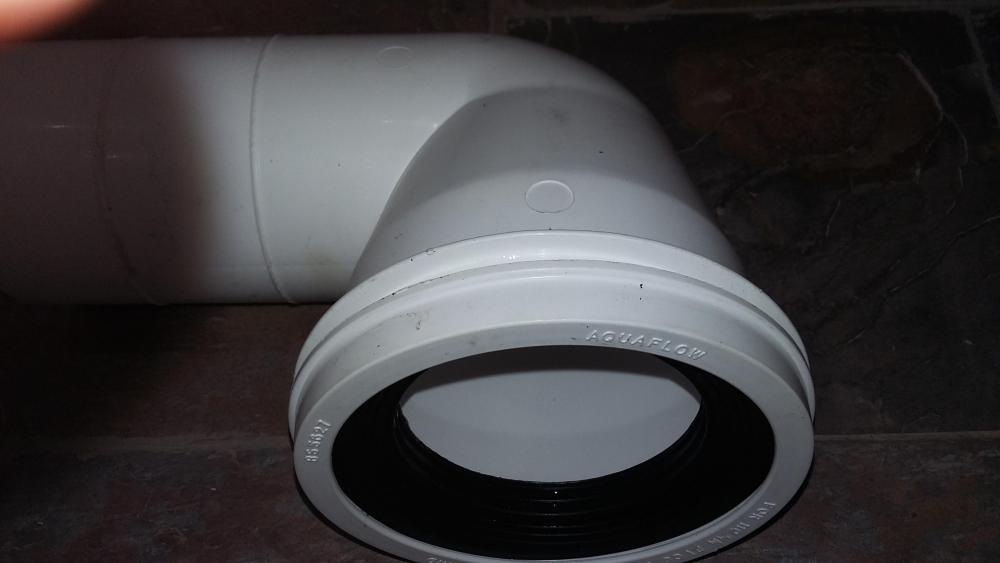
A simple WC pan connector has just fallen apart. This drives me nuts that you cannot trust a simple fitting like that to be reliable. This is for the WC in our combined utility / downstairs WC. I removed it several weeks ago to fit the UFH and tile the floor. I am now putting it back. Having had previous trouble with re using a pan connector and it not sealing very well, I bought a new one. This one from Toolstation https://www.toolstation.com/900-pan-connector/p37429 So I have just fitted the pan, and it all was going very well, it fitted with no problem. Then as I was starting to connect the cistern I heard a dull "POP" noise. The Pan connector has come apart: I am not sure if it is clear, but this is the bit that seals over the pan spigot. The rubber ring is held in place by a white plastic ring that clips onto the main body of the pan connector. Only mine came unclipped and now will not stay clipped in place, even when not connected to the pan. Utter $h!te. I seem to have 3 choices: 1: just to get an identical replacement and just hope I had a "Friday afternoon" model and the next identical one will be totally reliable for the next 20 years. 2: To get a different one to replace it. The only other one TS have is this one https://www.toolstation.com/wc-pan-connector/p82081 which they are out of stock of anyway. 3: To solvent weld the ring on and hold it with G clamps while it sets. The B*****d will never come off again. What does the panel think?
-
Charging points (rate of installation)
ProDave replied to Temp's topic in General Self Build & DIY Discussion
Yes, widespread use of electric motorcycles would massively reduce congestion and pollution. -
I would do this completely differently. Dig up the floor now, and lay a temporary timber suspended floor with the boards just screwed down. Then as you do each room you lay it's UFH pipes in one go straight to the manifold. Only when the whole lot is finished remove the timber floor and concrete / screed it. The timber floor may be there a while...... Why not make it a permanent timber floor?
-
So pay the lowest one then?
-
Charging points (rate of installation)
ProDave replied to Temp's topic in General Self Build & DIY Discussion
If we (as a nation) were really concerned with the environment, we would look at car usage as well as car type. Just changing for a less polluting car is not the answer, unless we also do something to reduce our car use. I don't know the solution but travelling to and from work has always been by far my biggest usage and those are the journeys we need to reduce. I am still not convinced "transport" is the big villian in pollution. It is without doubt an easy target and a convenient thing to blame and demonise and easy to tax to the hilt in the guise of "solving" the problem. But our previous house used to burn about 2000 litres of Kerosene each year, that is roughly twice as much as the petrol my car burns in a year. Yet we don't see domestic fuel taxed at road fuel rates and we (so far) hear little about domestic fuel usage. We have "solved" the domestic fuel problem by building our new house to be low energy, so now the new house does use a lot less fuel than my car, so our next step logically now is to change the car. I wonder just how long before we really start to hear sensible proposals to really reduce domestic fuel usage, and that must be two fold, reducing heating requirements (better insulation etc) AND cleaner forms of fuel for what heating is needed. -
Fixing a back-box onto fresh air (well, nearly)
ProDave replied to ToughButterCup's topic in Power Circuits
Then as above a big load of bonding plaster, mix it up thick and it should set pretty quick. -
Charging points (rate of installation)
ProDave replied to Temp's topic in General Self Build & DIY Discussion
That would be perfect if such a facility was widely available. and I agree the motorway services need a kick up the backside to make it so. I also hope the "VHS Vs Betamax" argument will be solved and all cars will be able to charge at all charging points.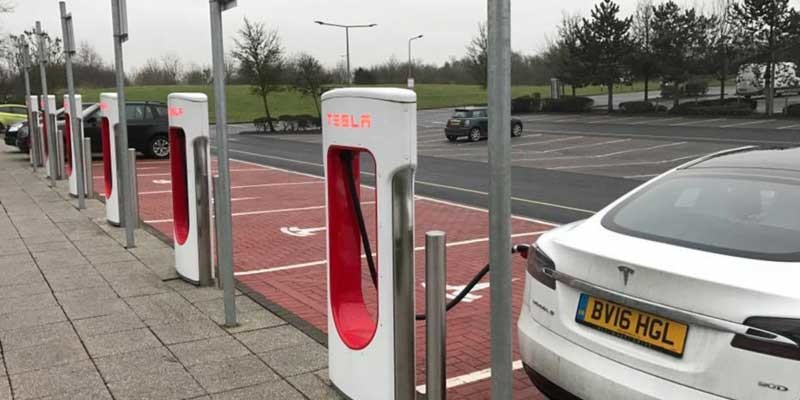
-
I don't think connecting them to the same vent is allowed, you are likely to get air from one room blown into another. So 2 outside vents I am afraid.
-
Fixing a back-box onto fresh air (well, nearly)
ProDave replied to ToughButterCup's topic in Power Circuits
Silly question: Are you plasterboarding the wall? Or "plastering on the hard?" -
Charging points (rate of installation)
ProDave replied to Temp's topic in General Self Build & DIY Discussion
Where to charge is an interesting one. I am sure if I had an EV most of my day to day use could be dealt with by home charging. It is when we go away on holiday or to visit relatives that fast en-route charging will be needed. e.g our short break last week was about 400 miles door to door. So both the outward and return journey would have need an en-route charge. This is where you would think motorway services would step up to the mark and provide ample charge points to recharge your car in half an hour while you have a coffee and a break. But what I hear is many of the motorway charge points don't work, and knowing motorway services prices they would be expensive (we actively try and avoid buying petrol from them for that reason) You would think independent cafe's and restaurants that are close to motorway junctions would be installing lots of fast, cheap charge points, and encouraging people off the motorways. Exactly the sort of thing that could work if there was a national directory of all available public charge points. I presume some sort of directory must exist already? (if not is damned well should) Destination charging is another issue. Where we stayed last week was a budget self catering and we opted for free on street parking. There was no public EV charging that I saw nearby, and a budget outfit like this that does not have off street parking cannot install charge points for use by it's guests. It would be sad if owning an EV forced us to pay more for accommodation just to get somewhere with off street parking and a charge point. -
Are you saying the amount you receive in FIT payments is different to what you are quoted? You will have been given an estimate, based on estimated generation as calculated by PVGIS. you actual payment will be based on actual metered generation, which may be different, and may be significantly lower if there is any shading to the panels. Also the FIT rate may have changed between your quote and your system actually being installed. Unless the system is faulty and some of the panels are not working, then I doubt you have any claim in this respect.
-
I wired a straw bale house several years ago. It was a timber frame, twin stud a bit like a larsen truss with the bales between the inner and outer frame as the insulation. My recollection was getting the straw cut, dried and baled, then keeping the bales dry ntil needed was a major logistical exercise. I think you need to have a very good reason to want a straw bale house. All I could see was it was a lot of extra work and cost, and ended up with thicker walls, just to get a house you could build with better modern insulation for a lot less cost and with much thinner walls.



