ProDave
-
Posts
30862 -
Joined
-
Last visited
-
Days Won
427
Everything posted by ProDave
-
Yes and it seems from a few posts above that the DNO's have said a big fat no to such a system. Great shame. Well that explains why you don't see such a system for sale anywhere.
-
That is just stupid DNO logic that an inverter designed for 3.68kW output could produce 10kW output. It might for a few seconds before going bang. Even a simple 16A circuit breaker in the output would trip if it exceeded 3.68kW by much. Funny how they accept circuit breakers to stop you drawing too much from the grid, but would not accept such a proven reliable device to stop you exporting too much. Something needs to change to allow more schemes like that to actually happen.
-
Poetry does not need to rhyme When our daughter was younger I attended with her some function in a nearby community wood for parents and toddlers. One of the tasks set was to compose some poetry about the wood. Well I am not a poet, never will be, so to try and prepare for this task, we walked around the wood a bit writing down notes about the sounds we heard and the things we saw. This was just random things like "the sound of an ice cream van in the distance", "A robin singing in a tree" all stuff like that just written in the order it happened. We "won" for the best bit of poetry and I was told it was a beautiful piece.
-
Does someone make a system where you have a large, say 10kWp solar PV array, connected to batteries, then an inverter, with the inverter output limited to 3.68kW? That would allow the over sized array to charge the batteries during the day and discharge over a longer period at the maximum G98 rate, thus allowing a larger array to be (loosely) grid connected.
-
A self builder here paid £11K to have two 11KV 3 phase spans undergrounded and the new supply to his new build including supply and fit of a pole mounted transformer. That was about 8 years ago so I would not expect it to be nearly 4 times as much now.
-
More than once, the neatly folded up spare tissue in my back pocket has come to the rescue.
-
About £85 for a refill here in the expensive north. when i tried to get a new one from Calor, they wanted to charge me a stupid rental charge so instead I went to the local Flo Gas supplier who gave me two new ones just for the cost of the gas.
-
Where is the kWh price heading in 2022?
ProDave replied to epsilonGreedy's topic in General Self Build & DIY Discussion
So are the multi rate tarrifs not restricted by the cap? I was considering switching to Go myself late last year, it would have given at the time a marginal saving in the daily charge and the day rate plus the 5p night rate. Looks like that would have been a bad move after all, and makes me very wary of these smart meter related variable tariffs. I will be digging my heels in and refusing a smart meter for as long as I can. -
Ducts for wires through external insulated walls?
ProDave replied to Dreadnaught's topic in Timber Frame
Put 20 or 25mm PVC conduit through the wall, sealing both ends to the timber. Later once you put the wires through, seal that at both ends to maintain your air tightness. -
MVHR pipe height change
ProDave replied to Pocster's topic in Mechanical Ventilation with Heat Recovery (MVHR)
If it is a head height over stairs issue, then assuming the pipes tight against the lower ceiling at the point of the "step" gives enough height, then the pipe only needs to "rise" at 42 degrees, the steepest angle of a staircase. So no need for really tight bends, just strap it to conform to that. -
I would quote the power as 5KVA, it's electrical power they are interested in, not heat output power. Soft star, starting current 5A and no more than 2 starts per hour.
-
What was the KVA rating of the supply that they originally quoted for?
-
WHAT did you tell them about the ASHP you propose to use? DNO's get very worried about direct on line start heat pumps due to the very large starting current. As soon as we told SSE that we were using a low power inverter driven heat pump with soft start, all their concerns disappeared. For similar network reasons we were only offered a 12KVA supply, so we accepted that. You could power UFH direct from the grid, and it would consume roughly 3 times as much power as an ASHP, which is not exactly helping the situation and will cost you more and put more load on a creaking infrastructure.
-
Why do you not just go to a broker and seek to re mortgage with a new lender for the existing mortgage amount plus what you wish to release?
- 31 replies
-
- 1
-

-
- equity release
- second charge
- (and 2 more)
-
10 Year Rule and immunity under the 4 year rule.
ProDave replied to ToughButterCup's topic in Planning Permission
Okay, so the "building" can remain on site. But what was the planning USE of the caravan when first sited? I seem to recall but lack the memory to be accurate that it was allowed as a site office. This could be an important point, because if it was allowed as anything other than a dwellinghouse, then the change of use issue has not been dealt with by the LPA. It does seem like the LPA are no longer bothered about enforcing removal, so it does sound like it is time to hit the press. And I would STILL be contacting building control, to see if now that the planners have classed it as a dwellinghouse, you think it does not comply with building regulations for a dwellinghouse so see if they will take any enforcement, as that is a completely separate an new avenue to explore. All the time it was a caravan, it was exempt from building control, but (should have) become of interest to building control when they started building the dwellinghouse inside it. -
Introduction and Potential Lake District Renovation Project
ProDave replied to memnoch's topic in Introduce Yourself
Re the access issues, I would buy a 4WD probably a twin cab pickup and a decent trailer. Then have a word with the house slightly down the lane that appears to have a large parking area to see if you can negotiate permission for deliveries to be offloaded there and you then shift them up the last bit with your truck and trailer? Offer ££ for the privilege if necessary. -
10 Year Rule and immunity under the 4 year rule.
ProDave replied to ToughButterCup's topic in Planning Permission
So this could still be a lengthy process. The owner could apply for a lawful development certificate. When that is refused, he could apply for planning permission for the "dwelling". When that is refused he could appeal the planning refusal. Only then when the appeal is dismissed could the council take enforcement action? -
And the price vs pre Covid?
-
10 Year Rule and immunity under the 4 year rule.
ProDave replied to ToughButterCup's topic in Planning Permission
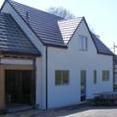
Well to keep things simple. From the outside it looks like a caravan. it does not look like a dwellinghouse. Therefore if there is a dwellinghouse hidden inside there, it must have been concealed as you do not see the dwellinhouse from the outside. Another tack then. What is the time limit for building control enforcing action against a structure that has been built that does not meet building regs? It is certain that this dwellinghouse would net comply with building regs for a number of reasons, so I would be making sure they were aware of this construction and perhaps they might enforce it's demolition? Local press might be fun. If only to name and shame the council into doing something. I don't see the motive argument. The guy that built his house behind a stack of hay bales could have claimed they just happened to be there and it was not his intention to hide the house. The firepalce and fire hazard argument does not stack up for me either. If you just wanted warmth, it is perfectly possible to install a wood burning stive inside a caravan and it remains as a caravan, still on wheels and still moveable. This is just someone trying to be clever and game the system. I hope he is happy living in his tiny sub standard dwellinghouse. It can't be much wider than about 8ft inside now it is blocked up.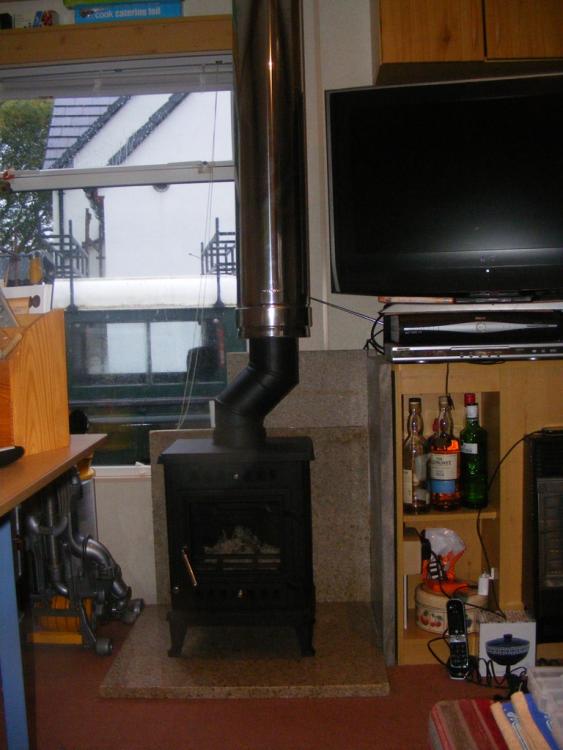
-
10 Year Rule and immunity under the 4 year rule.
ProDave replied to ToughButterCup's topic in Planning Permission
Can you get a closer view by getting up close to the trees, to show if the brickwork is visible going down to the ground below the caravan? On face value, it still looks like a caravan, so everyting I am seeing at the moment says it's a caravan with a house concealed inside it. -
10 Year Rule and immunity under the 4 year rule.
ProDave replied to ToughButterCup's topic in Planning Permission
Have you brought the cesspit and the pollution it is causing to the attention of building control and the Environment Agency? Definitely the EA should be taking action. -
The only trouble with replacing it, is that lock will then have a different key to the rest of them.
-
I found on the vaulted ceilings the PB lifter was less useful than a flat ceiling. Ours was similar height, just over 4M to ridge, 45 degree pitch. What I did was screw some temporary bits of wood at the bottom to slot the bottom end of a board in, then you just have to hold the top end of the board while you get a few screws in. Then more temporary bits of timber to make the next slot for the bottom of the next board etc. Then did the same for the plasterboard. Easy job for 2 working from scaffold (Kwikstage in our case)
-
Mid way through build project, strength and stamina required
ProDave replied to Bullseye's topic in Introduce Yourself
A self builder needs to think positive. Look at what you have achieved, rather than concentrating on what is still to do. Once you get part of it habitable and move in, that will boost your confidence and be a high point of the build. -
Airtightness testing before doors in?
ProDave replied to Adam2's topic in Mechanical Ventilation with Heat Recovery (MVHR)
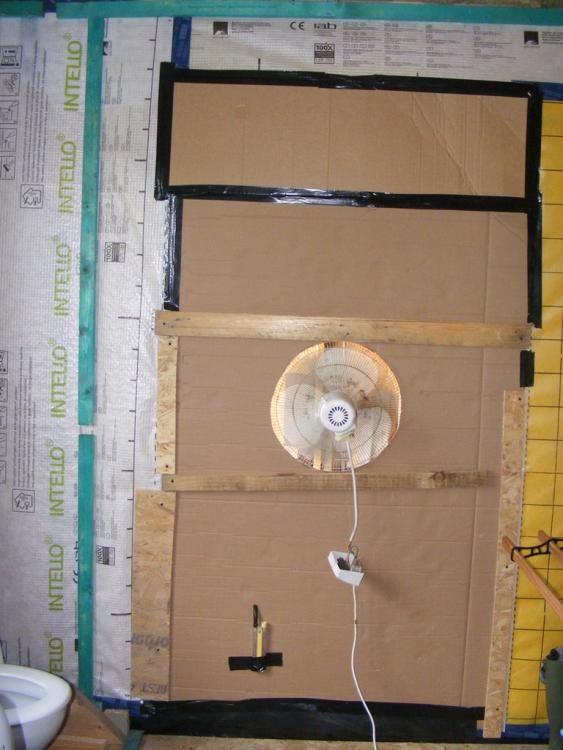
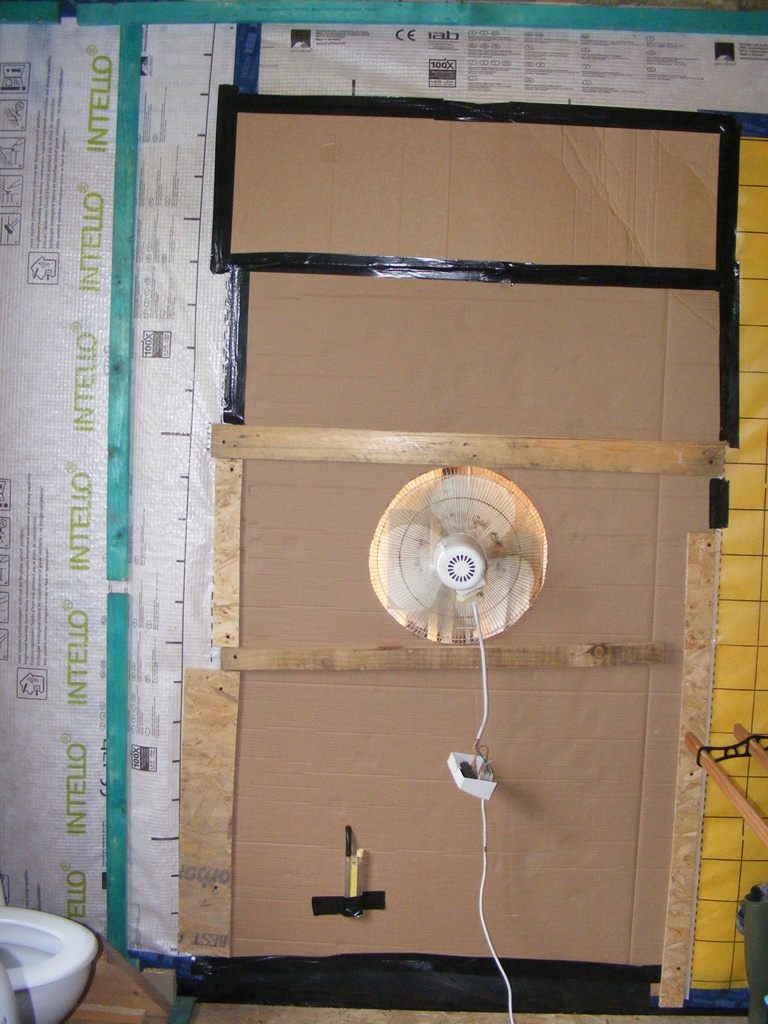
Another vote for a DIY blower door. I made mine out of a substantial sheet of cardboard, lots of tape and an old office desk fan as the blower. You won't get a reading of air tightness but you will be able to go around and find any leaks and deal with them. Set it up so the blower extracts air so any leaks will be blowing in and be easy to find.