Carrerahill
-
Posts
2122 -
Joined
-
Last visited
-
Days Won
10
Everything posted by Carrerahill
-
Fully hand cut roof, basically a 6 x 6x2 purlin roof on 4 no 8x2 main timber trusses - no joists, it is a cathedral style roof. The span was 4.8 as the trusses sit on concrete block piers which are also straighteners for the main walls. So although nominal width is 5m it is less at the columns and used 4.8m timbers with 150mm bearing I did my own calcs with assistance from the SE who used to work with us I can't remember it all off the top of my head but static loadings were about 1.2tons per side spread over 4 trusses etc. etc. plus the gable end support itself which took a portion of the load it worked out pretty good + snow and wind it was close but came in on target. Been up for 2 years, interestingly I was looking at the roof the other day checking for deflection in the main trusses and got the tape out, all good, I think in 2 years the mid point of the truss has maybe dropped a few mm but they were crown up and therefore now sit deadly straight.
-
I've just spilt my coffee! HOW MUCH?
-
I built a 6.2 x 5m garage in 2018 - only paid for a brickie. Dug out the area for slab with JCB which was £150 for the weekend (also other garden work) 40 tons of hardcore - some virgin some 6F2 (recycled) which was about £200 Some scrap timber and new timber for the forms £50.00 Drains (bottle gully in middle of slab etc.) £50.00 Rebar mesh £150 DPM £30 Concrete C40 250-200mm £840.00 Block, sand and cement delivery £450. Brickie to build £250 Roof timber £400 Membrane £50 Russel Pennine tiles, 420 of £300 Electric roller shutter 3 x 2.2m with remote control etc. £700 Facias, soffit, gutter etc. £120 Rear end cladding for roof gable £100 Front end timber cladding for roof gable £120 Side door - free from a Merc dealership renovation. Locks, hinges etc to suit above £50.00 Dry dashing materials inc. beads/bellcast about £350 Electrics - I had a new 8 way Wylex metal consumer unit from a skip, so cable, metalclad sockets and 3 LED non-corrosive battens (which I also acquired) £100. So I think it was about £4460. So £143.87 a meter.
-
It looks like it! A bit of an afterthought in the design department I think! My only comment would be, apart from yes it's a bit poor, given it's proximity to the glazing, are you likely to stand on it in use? Once you have got it all installed and working for a while, I'd be tempted to silicone it down with a couple of blobs. Just enough to lock it in place and that you can pry it back up.
-
I went through all of this. The decent installers wanted to supply and the installers happy to install only seemed to know less about it than me. Result, I installed it myself. Unless you have gone for borders and things, it is easy if you are handy and can carry out building and joinery tasks well then you will manage this. Even if you have gone for borders and things I would suggest you just practise a bit. It is gluing plastic to a floor at the end of the day. I can talk you through the process I used and the materials I went for.
-
Firestop! where does it go in a timber framed house?
Carrerahill replied to Triassic's topic in Building Regulations
Top of the cavity, corners, around windows and doors, and every 10m vertically in a wall (or whatever your LABC want to see or drawings etc.) As for ventilation your vent layout should take into account the compartmentalisation of the cavity with the firestops and be laid out in such a way to ensure it is still ventilated. I added lots of weepers to my outer wall, your cladding so a bit different but you will find a way. -
You can’t build here. There are no shops nearby.
Carrerahill replied to Jaqueslecont's topic in Planning Permission
Tell them you will have an electric car and charge point! This is madness, look at all the future ghettos that are being built on scraps of poor land miles from anything by the big builders - not even a school that close but hey, build 500 new homes and put a bus stop outside it and it will be grand! -
My advise would be to get away from the capsules, we had a Nespresso but the wastage associated did play on my mind and recycling scheme is no good really. This opens up your choices so much more. You might get a little 250g bag of some beans in a coffee shop to try or order in bulk but it just lets you get away from mass produced coffee roasts. I buy 4-5Kg of coffee beans at a time now for about £25.00 and that lasts about 2-4 months depending on use, Covid increased consumption. Bean to cup has so many benefits - I empty the grounds directly into the garden, it adds no particular nourishment to the ground but acts as a filler, I tip it on general beds or at the based of tree's - when raining I literally open the back door and fling it over the lawn and it washes in! We have one of the Delonghi machines from John Lewis - just over 2 years old now - My brother has a similar model and my parents they all love them. I love it to bits and I am mainly a tea drinker! I think I will go for one now actually!
-
Using Blauberg Bathroom extractor fan - PIR or Humidity sensor?
Carrerahill replied to MikeSmyth's topic in Ventilation
Humidity in my opinion possibly with an override switch. PIR means this blinking thing will spin away every time you go in. -
Why has my shower burnt out?
Carrerahill replied to dangti6's topic in Electrics - Kitchen & Bathroom
Just a bit of tri-rated cable of the correct gauge will sort it, however, I fix EVERYTHING and I would not think about fixing this - bin it - too far gone on the casing. Although, knowing me I would keep it and make it into a hot water device for the garage or something. -
Why has my shower burnt out?
Carrerahill replied to dangti6's topic in Electrics - Kitchen & Bathroom
To be honest it probably won't trip - nothing was taken beyond normal operating characteristics. That connection/wire went high impedance, it got hot, very hot has been getting hot for some time, some additional energy will have been dissipated as heat at the joint but it was clearly not going particularly overcurrent, say it was on a 40A MCB - the shower is maybe a 7kW that is only about 30A so there is capacity before the MCB current would be reached, however, a 40A MCB will not automatically trip at 40.1A - it could go as high as 120A for a half second, or 100A for .75s or 60A for 4 seconds etc. (it depends on the tripping characteristics) or it could sit at 45A for hours, the characteristics of an MCB are largely to protect cables from overheating (the most extreme being fire!). You got away with it because the appliance is not used for that long relatively speaking and the casing will be able to withstand this (albeit it was melting). The next level of protection is an RCD - well there is no fault here that would trip an RCD (yet - it may have developed). Arc faulty protection - relatively new to the market, very few installed nationally, however that would have stopped this as it looks like there was some good arcing and sparking before it totally failed. -
You will be grand. If they moan just say UFH - then when they come to inspect say it's under the floor, just warming and leave some pipes and a TRV sticking out a floor in a cupboard!
-
I've just had a quick look through section 6.3 of the Scottish building handbook and there is no stipulation like this. The only stipulation is that the system should be energy efficient and capable of control for optimal efficiency. (Note it says "capable" thus the nonsense boiler installers give you about how you NEED controls is just not true).
-
How to install uPVC windows in timber frame clad wall
Carrerahill replied to Ben100's topic in Windows & Glazing
Onto our timber frame we had 50mm x 50mm treated timber firestops, we brought the windows out flush with these, we had a block outer skin so the block came up to the front face and then render right up to the uPVC. -
3 days is how long you should wait if you are going by a civils/structural guide.
-
Quite. LA's I deal with are all pretty quick as the SE's in the LA only usually have about a 2 week lead time, I suspect things may be different in England. A bit like tips, I have never in my life queued to enter a tip in Glasgow, Edinburgh, Scottish Borders or the Highlands. Population thing.
-
Do a proper set of SE drawings and calcs and you can submit that without a SER - that is just a silly fee payable "club" which acts like a certificate to confirm all is well. BC will take full design packages and check them over and accept or reject until they are happy. People have got caught up on the SER train and need to stop wasting money on it when they have already paid for a structural design. We don't do SER.
-
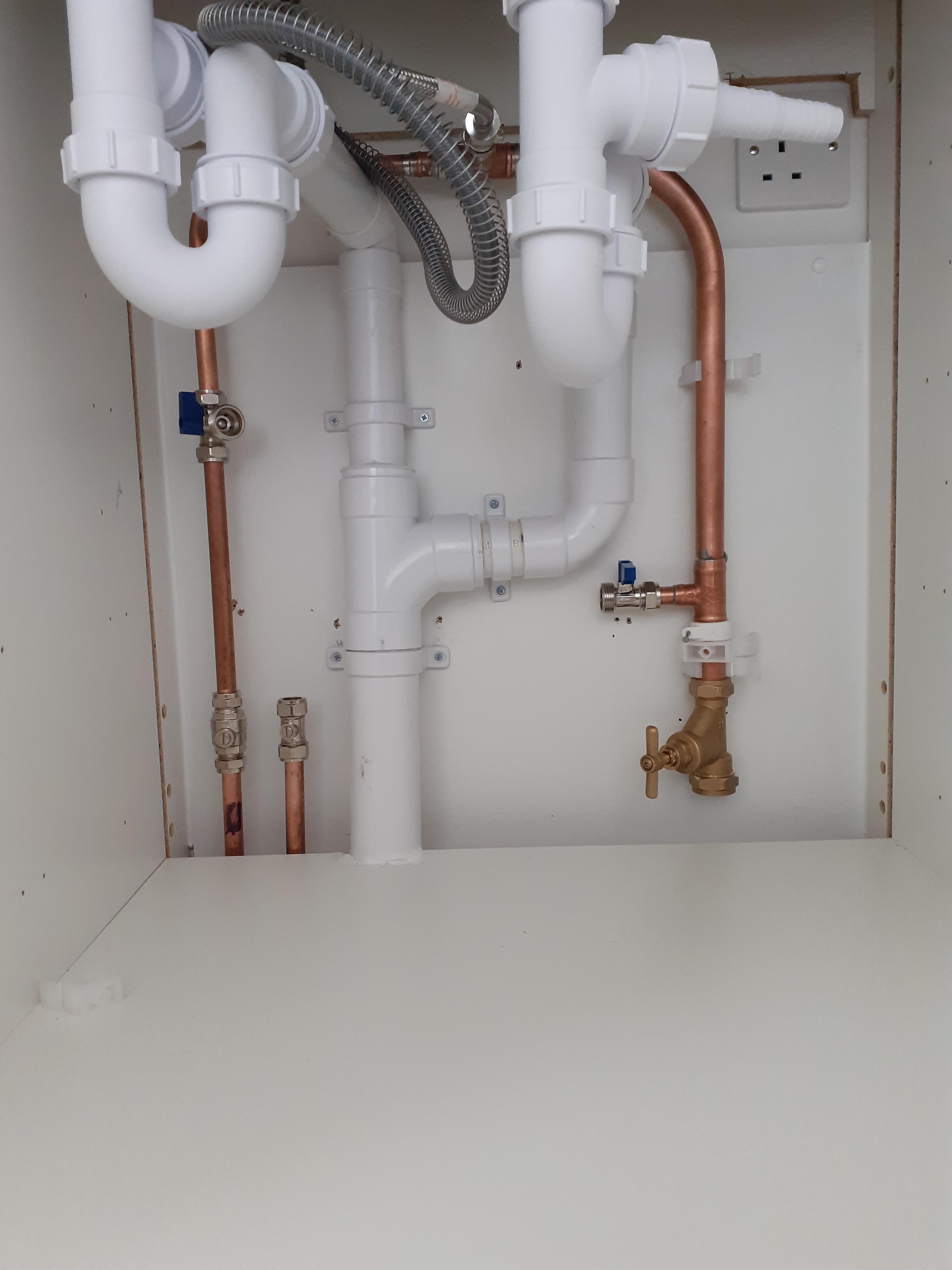
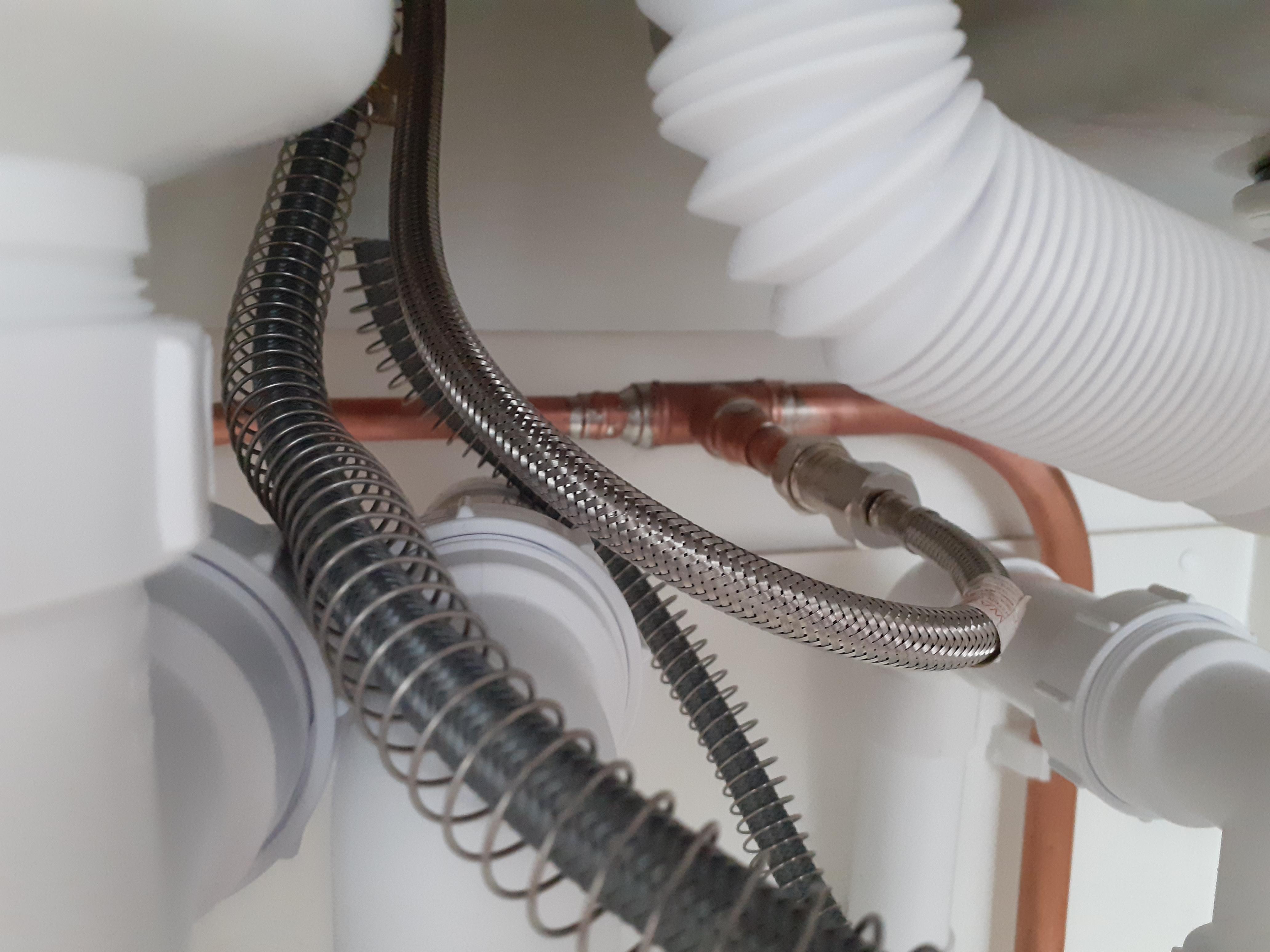
I deliberated for some time on how to do this. 22mm to start which feeds first appliance T and then kitchen tap before dropping to 15mm to head to the bathrooms and boiler. We have very good water pressure/flow rate and it works a treat. Benefit of keeping it up at 22mm until past the kitchen tap (and washing machine as it is on the first T) is that there is nearly no noticeable drop in flow when the kitchen tap is on while water is being used in bathrooms. I also settled for nothing less then soldered and radiused copper. On the waste the run to the 110mm pipe is in 50mm, the first T is 50mm where it reduces to 40mm to each trap totally separately, both sinks can drain at top speed this way and if there was a trap blockage in one it means the other side is still active. This was yet to be fully clipped. Unsupported pipework is a bugbear of mine.
-
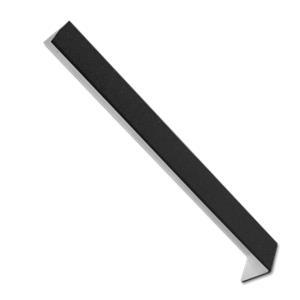
Get yourself one of the larger 90° corner cap sold for this very job. I have an assortment of them in white here.
-
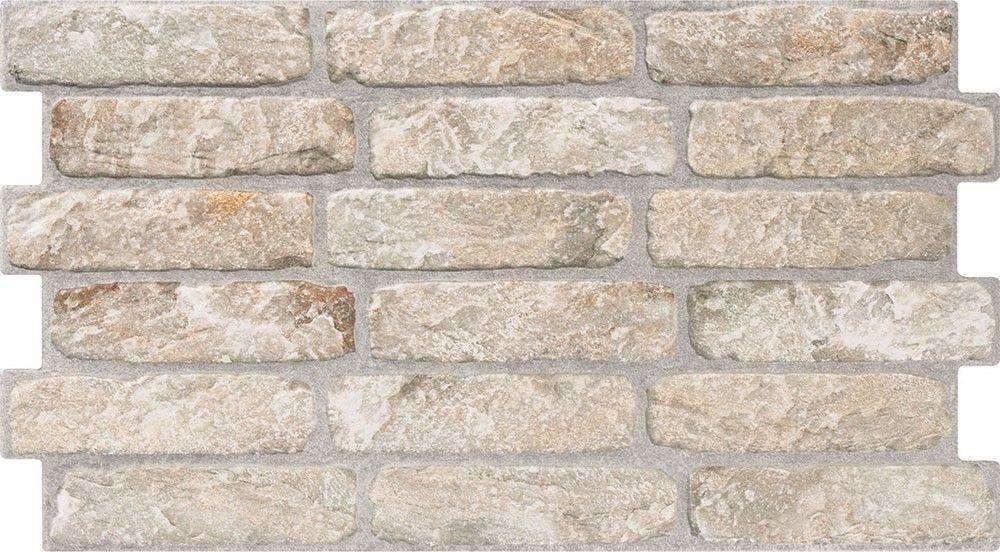
I've never tiled a wall or floor in my life, I think this may be the only job I have not done on a house, so I am looking for a little guidance. The tiles are one of these interlocking things like this: We will just use a single row of tiles (which annoyingly I need to take 25mm off to clear the sockets and leave a 20mm-ish gap that looks meant!). We have a full width "window splashback" to the cooker wall and the kitchen sink is all window so of the near 8m of worktop we only actually have 3 areas in isolation that need tiled, about 600mm between the back door and window, about 600mm around a corner going between two windows and then about 1200mm with a corner too going from a window as far as a double height kitchen unit so the biggest area of tile in one go without a corner is about 750mm! Therefore I am not getting a tiler in, as long as I can get the tiles end to end to sit straight and level then I have won. So, with the tile about 8mm thick will a 10mm tile edger work, or do I need more like a 12mm to allow for 4mm of adhesive? I was thinking of using a standard L type trim, satin chrome or stainless or something, as I will have a lot of vertical exposed edges I was also thinking of running it on the vertical edges. I was planning on using Mapei Waterproof Fix and Grout. Now does this all sound reasonable? Am I going to cry when I make a mess of it all? I'd be more comfortable hand cutting a roof!
-
Please review my foundation/floor/wall junction detailing
Carrerahill replied to Hilldes's topic in Foundations
Don't fill the cavity, always maintain a gap. If you fill with EPS if water were to gather on top of the EPS nothing to stop it running inwards, no gap also means moisture could be trapped. -
Depends on your background and knowledge level to be honest. If you need guided then I'd contemplate speaking to a consultant project manager who for a fee will look after your build, manage it, shout at the contractors for you when they make mistakes and solve issues for you, the will probably save you double to 3 x what their fee will be. Other option is to find some good trades, spit them out a bit but give one the sort of main contractor role, if you feel confident & skilled enough then manage it all yourself and bring everyone together, however, you will need to deal with issues that arise from, contractors blaming other contractors and saying jobs are not theirs and should be done by the next contractor etc. Then there is simply the option of get people in, but beware is all I will say. Did you have a good architect? Would they help to manage it on site for you?
-
Coping with imperfections...
Carrerahill replied to MJNewton's topic in General Self Build & DIY Discussion
I guarantee that if you were to go and visit most of these places they wouldn't look perfect up close. Even when you see your own town or city in a film or something it all looks nice and clean and perfect, walk down the street in real life and you soon see it for what it really is. I've seen so many images of "perfect" buildings or car restorations etc. I then try and copy it and wonder why I can't get my stuff to look as good, when I stand back and look at things and go, wait a minute, my work looks just as good a few steps back and without the overly critical eye! Bet I could go and take photos of my garage and extension and all the renovated rooms and kitchen and you would probably go, oh wow, look at that, that's so nice (well, I hope some of you might!). Well I live here and yes, what we have we like, but it is not perfect. Really start looking at you will spot the run off on the garage roof (off by about 25mm from side to side) - the only way to see this imperfection is to pay attention to the dry verge units, on the bottom left you can see more of the tile than you can at the top left, reverse for the RHS - does it make a difference to the function and longevity of the roof? Not a jot. Does it annoy me? If I actually stand and look at it, yes lots! The main house roof soffit runs up for the last 3 rafters, never measured it by I reckon by about 25mm, you can see it take the slope up, it's hidden partly by the downpipe swan-neck, I reckon most people will never spot it, I stood every weekend of the summer pushing my son in his swing looking up at it and getting annoyed. I think internally I am very happy with the work, my timber frames were near enough perfectly square and true, result is the plasterboard is too and everything else that goes into the room from kitchen worktops to skirtings and architrave in the dining room. Joiner chipped the worktops when he cut them, only paid a joiner to do the masons mitres as it was cheaper to pay him than to buy a good worktop jig and a bigger router - that annoyed me - luckily the splashback tiles will cover the damage which he made at the back of EVERY cut. -
Manifold system versus hot return system
Carrerahill replied to Russell griffiths's topic in General Plumbing
You can calc it by knowing the below details, bit of a ramble here but the figures sort of speak for themselves and if you have a low flow rate issues will arise. So if you know: Time to first hot water leaving appliance (0 seconds if tank) Then you need to know the volume of hot water pipework (0.14l/m for 15mm 0.320l/m for 22mm - valves are negligible). Then you need to know your flow rate - just measured ours and we are on 1 litre every 5 seconds on the hot tap in the kitchen. Then yes, it can be worked out. Unless your pipe runs are over say 10m which is 1.4litres of cold water to clear and assuming no or low lag, then for the hot to move through that is only about 1.4litres before you get heat then I think it should be fine, on our tap that would be about 7 seconds in our house, however if you have a dribble of a tap, then it could take a heck of a while to see 1.4litres come through. It depends on flow too - we have excellent mains pressure and flow (hot is restricted due to boiler), so if our boiler was just a bit quicker we would be able to clear that 1.4litres quickly enough meaning we could see hot water in 7 seconds with a tank. However, we are more like 15m from the boiler so we are needing to clear 2.1litres which is 10.5second just to clear the standing water. I shortened the pipework as much as I could too but it's still the case of hot on full flow for about 15seconds which is then wasting 3litres just to get warm water. It is OK if washing up or needing hot water to clean things off but for hand washing it is a bit of a wait so often lots of soap and cold do - our boiler is however older, I won't change it just to wash my hands quicker in the sink so it's fine, never bothered me. Bathrooms are closer so water to those taps is about as fast as the boiler can spit it out. I did contemplate plumbing to our kitchen sink in 10mm copper - I think it would have worked but without the facts and figures at the time of plumbing I went 15mm. -
Coping with imperfections...
Carrerahill replied to MJNewton's topic in General Self Build & DIY Discussion
I ask those visitors never to return!