Carrerahill
-
Posts
2132 -
Joined
-
Last visited
-
Days Won
10
Everything posted by Carrerahill
-
Quite. LA's I deal with are all pretty quick as the SE's in the LA only usually have about a 2 week lead time, I suspect things may be different in England. A bit like tips, I have never in my life queued to enter a tip in Glasgow, Edinburgh, Scottish Borders or the Highlands. Population thing.
-
Do a proper set of SE drawings and calcs and you can submit that without a SER - that is just a silly fee payable "club" which acts like a certificate to confirm all is well. BC will take full design packages and check them over and accept or reject until they are happy. People have got caught up on the SER train and need to stop wasting money on it when they have already paid for a structural design. We don't do SER.
-
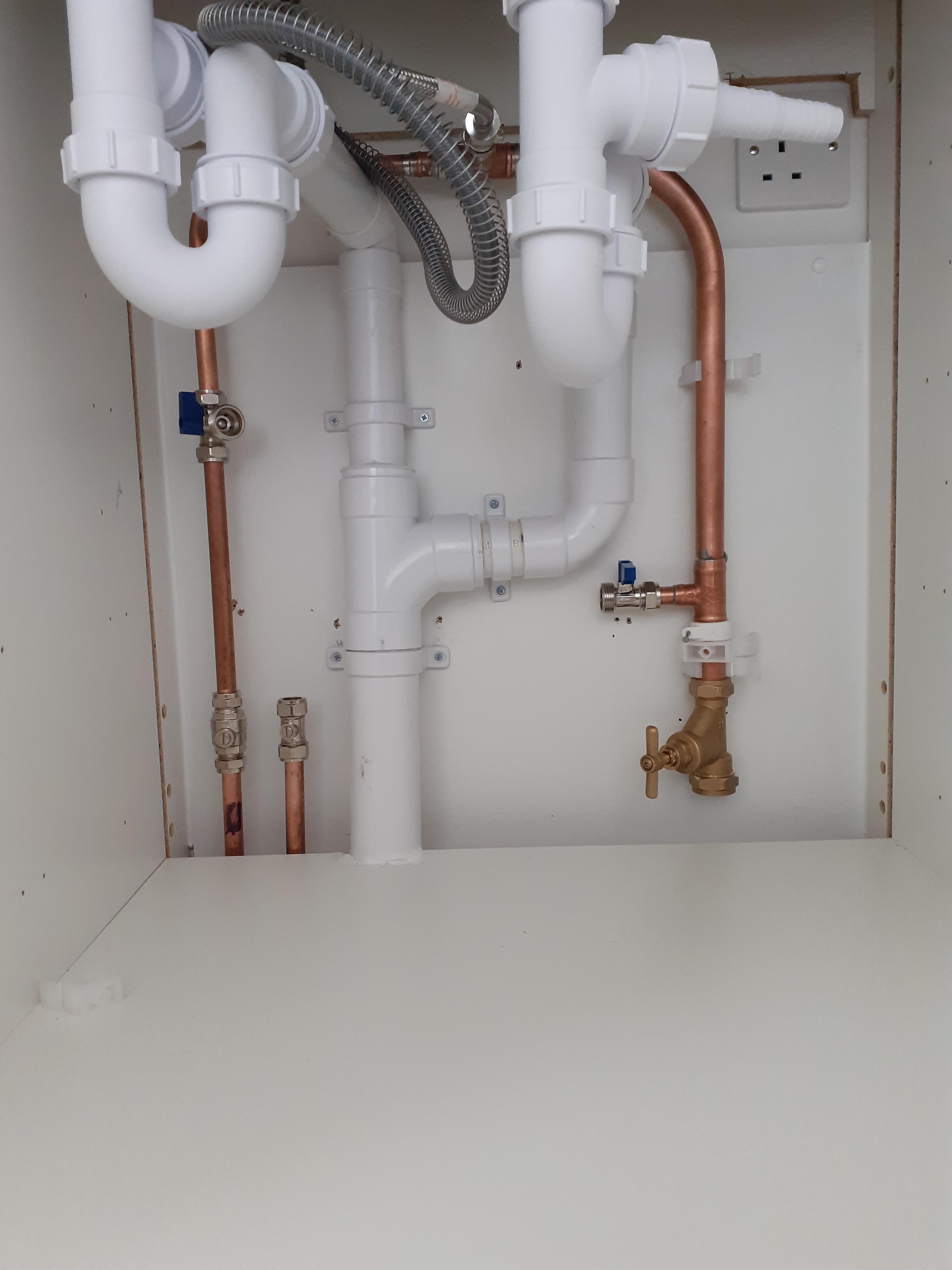
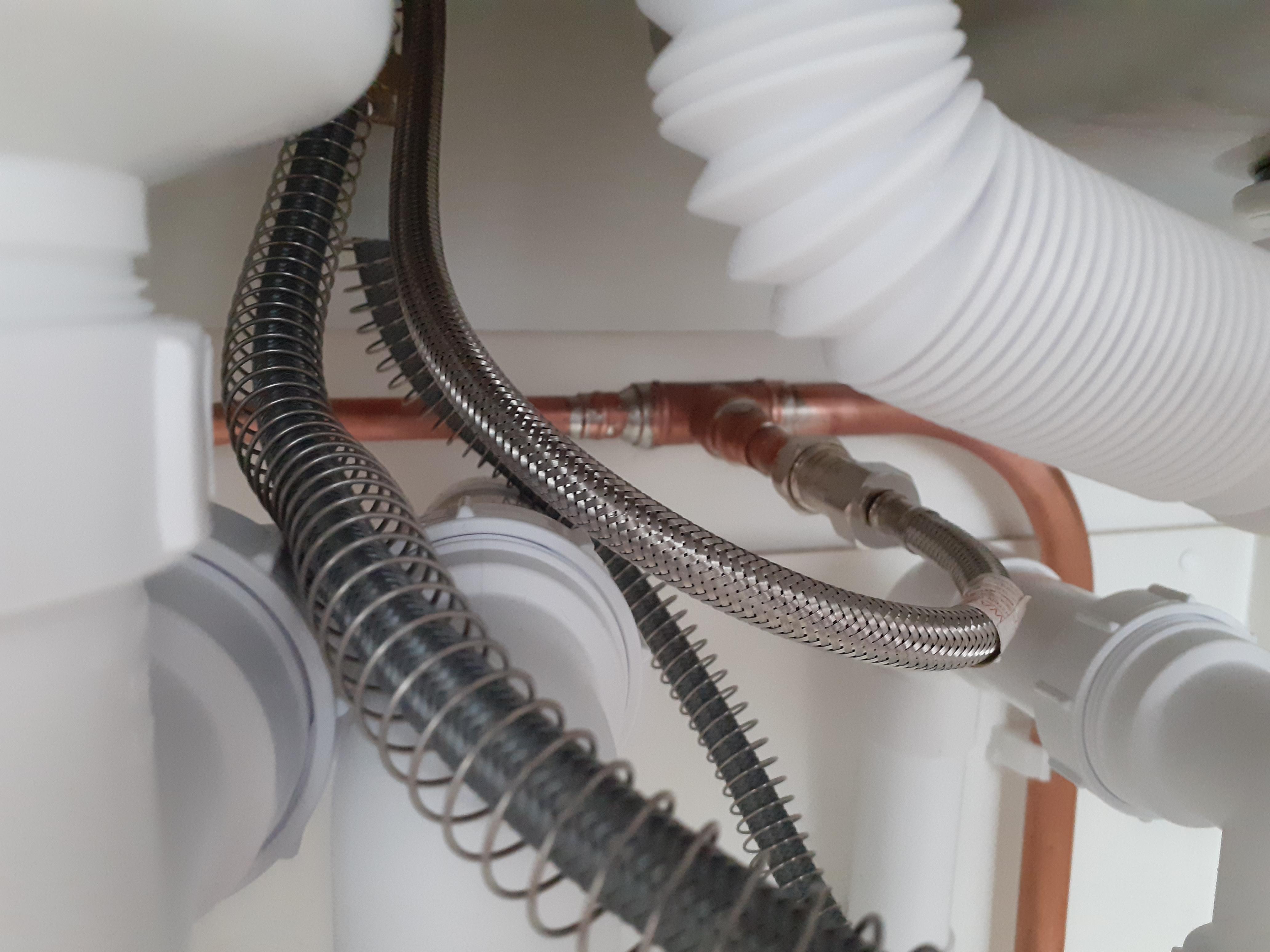
I deliberated for some time on how to do this. 22mm to start which feeds first appliance T and then kitchen tap before dropping to 15mm to head to the bathrooms and boiler. We have very good water pressure/flow rate and it works a treat. Benefit of keeping it up at 22mm until past the kitchen tap (and washing machine as it is on the first T) is that there is nearly no noticeable drop in flow when the kitchen tap is on while water is being used in bathrooms. I also settled for nothing less then soldered and radiused copper. On the waste the run to the 110mm pipe is in 50mm, the first T is 50mm where it reduces to 40mm to each trap totally separately, both sinks can drain at top speed this way and if there was a trap blockage in one it means the other side is still active. This was yet to be fully clipped. Unsupported pipework is a bugbear of mine.
-
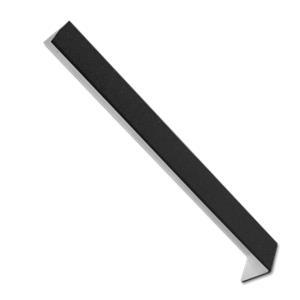
Get yourself one of the larger 90° corner cap sold for this very job. I have an assortment of them in white here.
-
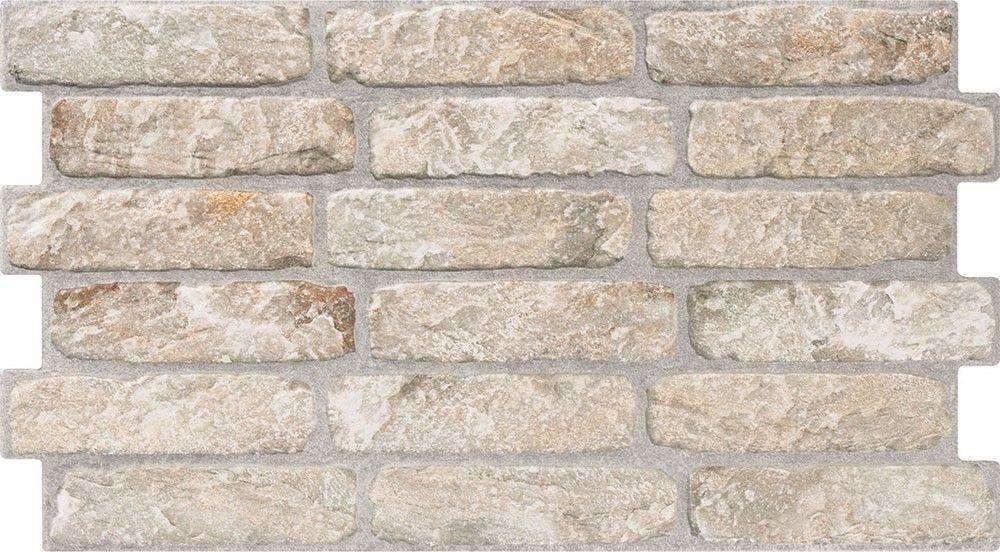
I've never tiled a wall or floor in my life, I think this may be the only job I have not done on a house, so I am looking for a little guidance. The tiles are one of these interlocking things like this: We will just use a single row of tiles (which annoyingly I need to take 25mm off to clear the sockets and leave a 20mm-ish gap that looks meant!). We have a full width "window splashback" to the cooker wall and the kitchen sink is all window so of the near 8m of worktop we only actually have 3 areas in isolation that need tiled, about 600mm between the back door and window, about 600mm around a corner going between two windows and then about 1200mm with a corner too going from a window as far as a double height kitchen unit so the biggest area of tile in one go without a corner is about 750mm! Therefore I am not getting a tiler in, as long as I can get the tiles end to end to sit straight and level then I have won. So, with the tile about 8mm thick will a 10mm tile edger work, or do I need more like a 12mm to allow for 4mm of adhesive? I was thinking of using a standard L type trim, satin chrome or stainless or something, as I will have a lot of vertical exposed edges I was also thinking of running it on the vertical edges. I was planning on using Mapei Waterproof Fix and Grout. Now does this all sound reasonable? Am I going to cry when I make a mess of it all? I'd be more comfortable hand cutting a roof!
-
Please review my foundation/floor/wall junction detailing
Carrerahill replied to Hilldes's topic in Foundations
Don't fill the cavity, always maintain a gap. If you fill with EPS if water were to gather on top of the EPS nothing to stop it running inwards, no gap also means moisture could be trapped. -
Depends on your background and knowledge level to be honest. If you need guided then I'd contemplate speaking to a consultant project manager who for a fee will look after your build, manage it, shout at the contractors for you when they make mistakes and solve issues for you, the will probably save you double to 3 x what their fee will be. Other option is to find some good trades, spit them out a bit but give one the sort of main contractor role, if you feel confident & skilled enough then manage it all yourself and bring everyone together, however, you will need to deal with issues that arise from, contractors blaming other contractors and saying jobs are not theirs and should be done by the next contractor etc. Then there is simply the option of get people in, but beware is all I will say. Did you have a good architect? Would they help to manage it on site for you?
-
Coping with imperfections...
Carrerahill replied to MJNewton's topic in General Self Build & DIY Discussion
I guarantee that if you were to go and visit most of these places they wouldn't look perfect up close. Even when you see your own town or city in a film or something it all looks nice and clean and perfect, walk down the street in real life and you soon see it for what it really is. I've seen so many images of "perfect" buildings or car restorations etc. I then try and copy it and wonder why I can't get my stuff to look as good, when I stand back and look at things and go, wait a minute, my work looks just as good a few steps back and without the overly critical eye! Bet I could go and take photos of my garage and extension and all the renovated rooms and kitchen and you would probably go, oh wow, look at that, that's so nice (well, I hope some of you might!). Well I live here and yes, what we have we like, but it is not perfect. Really start looking at you will spot the run off on the garage roof (off by about 25mm from side to side) - the only way to see this imperfection is to pay attention to the dry verge units, on the bottom left you can see more of the tile than you can at the top left, reverse for the RHS - does it make a difference to the function and longevity of the roof? Not a jot. Does it annoy me? If I actually stand and look at it, yes lots! The main house roof soffit runs up for the last 3 rafters, never measured it by I reckon by about 25mm, you can see it take the slope up, it's hidden partly by the downpipe swan-neck, I reckon most people will never spot it, I stood every weekend of the summer pushing my son in his swing looking up at it and getting annoyed. I think internally I am very happy with the work, my timber frames were near enough perfectly square and true, result is the plasterboard is too and everything else that goes into the room from kitchen worktops to skirtings and architrave in the dining room. Joiner chipped the worktops when he cut them, only paid a joiner to do the masons mitres as it was cheaper to pay him than to buy a good worktop jig and a bigger router - that annoyed me - luckily the splashback tiles will cover the damage which he made at the back of EVERY cut. -
Manifold system versus hot return system
Carrerahill replied to Russell griffiths's topic in General Plumbing
You can calc it by knowing the below details, bit of a ramble here but the figures sort of speak for themselves and if you have a low flow rate issues will arise. So if you know: Time to first hot water leaving appliance (0 seconds if tank) Then you need to know the volume of hot water pipework (0.14l/m for 15mm 0.320l/m for 22mm - valves are negligible). Then you need to know your flow rate - just measured ours and we are on 1 litre every 5 seconds on the hot tap in the kitchen. Then yes, it can be worked out. Unless your pipe runs are over say 10m which is 1.4litres of cold water to clear and assuming no or low lag, then for the hot to move through that is only about 1.4litres before you get heat then I think it should be fine, on our tap that would be about 7 seconds in our house, however if you have a dribble of a tap, then it could take a heck of a while to see 1.4litres come through. It depends on flow too - we have excellent mains pressure and flow (hot is restricted due to boiler), so if our boiler was just a bit quicker we would be able to clear that 1.4litres quickly enough meaning we could see hot water in 7 seconds with a tank. However, we are more like 15m from the boiler so we are needing to clear 2.1litres which is 10.5second just to clear the standing water. I shortened the pipework as much as I could too but it's still the case of hot on full flow for about 15seconds which is then wasting 3litres just to get warm water. It is OK if washing up or needing hot water to clean things off but for hand washing it is a bit of a wait so often lots of soap and cold do - our boiler is however older, I won't change it just to wash my hands quicker in the sink so it's fine, never bothered me. Bathrooms are closer so water to those taps is about as fast as the boiler can spit it out. I did contemplate plumbing to our kitchen sink in 10mm copper - I think it would have worked but without the facts and figures at the time of plumbing I went 15mm. -
Coping with imperfections...
Carrerahill replied to MJNewton's topic in General Self Build & DIY Discussion
I ask those visitors never to return! -
Coping with imperfections...
Carrerahill replied to MJNewton's topic in General Self Build & DIY Discussion
You are not alone, that could be me writing above. I have spent my entire working life, more or less, designing aspects of buildings, sitting in meetings with all disciplines discussing integration and compatibility of design elements and even with a team of 100's working on a new building things still end up just not quite right on site, certainly mistakes or oversights are made but also because generally contractors don't actually care and will drill holes and mount things where suits them, often to the detriment of the user, design, aesthetics or function. However, the fact is then that buildings are not perfect, I think what we see if meant to be pretty good on the whole, but even in new builds you go into cupboards and plant rooms and risers or basements only to find rubbish, paint runs down walls, concrete splashes on equipment, ducting joints that are rough as get out. This is partly why I, like you don't trust many tradesmen, I feel that they don't care. I have used very few trades on my build, I got a brickie in, I was happy with his work and cleanliness, the dry-dasher/builder was good but he got some of the soffit and fascia a bit squint which annoys me but a year after being done I have sort of forgotten about it, but I do sometimes look up at it and it irritates me, for the sake of shaving a rafter tail and packing out another tail it would have been perfect and I would have done that, it would have annoyed my having to go and mess with bits of wood and cutting bits and maybe delaying it by another weekend but I would have done it that way, I built my garage in 2018, on the first side of the roof I was still learning about the details of roof tiling, getting the first tile lifted up enough to allow for the fact it is not sitting on a tile, I got it close but there was always a bigger gap on the bottom row, however I finally fixed that at the weekend as it annoyed me and I am now happy as Larry, because every time I saw it it did annoy me and it did cause me to lie in bed wondering what I should do, how to fix it without a bodge etc. I also now know how to do it and have done it another two times since the first one and my roofing is as far as I am concerned perfect. I think this is part and parcel of this sort of work. If you ask me I would tell you my builds are full of mistakes, but I think really only very few would spot them and at that they are only mistakes because I know they are mistakes. I think builders and joiners and plumbers, all the trades really make them all the time, they shove bits in and glue bits on and stuff things into holes and just don't care. In an ideal world everything would be perfectly square, cut accurately, every finish would be textbook, joinery work would be flawless, but it isn't and in 1-2 years when this is all over and done you will forget about it, you will put a plant next to that bad bit of skirting, or you will hang a picture on the lump on the wall. I do sometimes get fedup with things too always striving for perfection and not getting it, so I get annoyed so I decide that I will risk getting someone in, doesn't happen often but sometimes if I just say I want X, Y and Z done and I come to look at it a week later and it is done, I do feel pleased it has moved on, even if there are a few little issues, but then, maybe I would have had my own issues that might have looked worse. -
I don't like them, they are basically made from a fines only "concrete" mousse, i.e. the slurry has heaps of air entrained into them. They are usually more expensive than ordinary blocks so unless weight was an issue I'd always just use block, they are not as strong, they are actually worse for the environment than ordinary blocks due to the high energy costs for preparing the materials for use in the "concrete". You also can't get a reliable structural fixing into them either as under high loads the bearing area tends to crush opening up the hole over time, perhaps something can be done with epoxy however the block is so wimpy you'd never trust anything of any importance on it.
-
I'd get him to route it so that you can build in the future, and hopefully it is deep enough, I would also have him leave you a connection point so you can tie in your house or garage or whatever you want as well. Also, you need it in writing who is responsible for it all if things go wrong in 20 years time and start flooding your garden etc. You also want to make sure any drain is laid carefully and to spec and potentially insist it is signed off by a civil engineer etc. I would also probably try and arrange as much of this as I could over a cup of coffee and see what could be done. Depends on the type of chap, maybe the bartar system will work for him. Maybe you can get some labour and materials etc. you could have your place done in 2 months if you end up with a part time squad on your build!
-
Same here, only I left it overnight.
-
I did it, I took the risk to be honest and I know the risks and understand the reasons why I should not have done it, I actually believe if you MUST undertake air testing you are meant to display warning signs stating that air pressure testing is underway - that is how dangerous it is deemed. Think pipe-bomb basically. I did my pressure testing in an empty house, my house for that matter, and I undertook it with mitigation measures in place. I had to bury pipework that would not go live for months after it as buried, I sure as heck was not going to bury it without knowing!
-
You are not meant to pressurise water pipes with air because of the risk if something does let go, air is highly compressible, water is not, therefore if you pressurise a system with air then you will have far more of it than you would water, i.e. just the volume of the pipework with water, with air you can multiply it by the pressure. 1 litre of capacity at 2 bar is 2 litres of air (note compressibility of air changes as pressure increases, however from about 0 to 10bar it is about a factor of 1), I'd say you need to pressure test pipework at a little over local water pressure, so when I air pressure tested my pluming I ran it to 4 bar, I don't know the exact capacity of the pipework but I reckon about 15 litres for the runs I was doing, so I probably had about 60 litres of air contained in that pipework, imagine that then let rip at a loose connection, could take your eye out or worse! Also, arguably you could test at 2 bar because if it is going to leak it will probably leak at less then 2bar to be honest, but I was being naughty, however I also felt that going to 4bar would also show more clearly if there was a drop as air can leak out the smallest of holes at a very low rate. I made a pressure test rig with a inline pressure valve and 2 isolation valves then a Schrader valve that let me use my air compressor, I could then isolate the inlet and leave the pipe under pressure over night and check for a drop, I took the risk, which for my test situation was deemed minimal because all the runs were under the floor.
-
Totally agree - I was just jesting to be honest!
-
£1000 tends to do it.
-
Toilet cistern remove and refit... what seals?
Carrerahill replied to Carrerahill's topic in General Plumbing
Bang on - I now have the flush body sitting in the basin, looks like the seal is hard, I can get a new one. -
Toilet cistern remove and refit... what seals?
Carrerahill replied to Carrerahill's topic in General Plumbing
Hmmm - yes I can see that, there are some lugs in there. I might have a look later. If I can do it all from up top that would be good. Maybe I can even find a replacement seal for the valve rather than total replacement! -
Our flush valve is leaking, apart from the leak the annoying result is the fill valve pulsing on and off every blinking 2-3 minutes to refill the lost water. Looks like the seal down at the bottom is just letting a trickle of water past constantly. I have identified our flush valve as a Siamp Skipper 45 Dual Flush and to save any hassle I was just going to buy another the same. The valve itself seals to the cistern with a big o-ring, but what about the seal from the cistern to the pan? Are they all the same size? The whole point of getting the same valve is so that I can do the job without needing to strip it down, go and find someone who stocks the bits drive about, come home, fit it and generally spend 3 hours doing something that should take 30mins. So can anyone confirm the anatomy of a toilet?
-
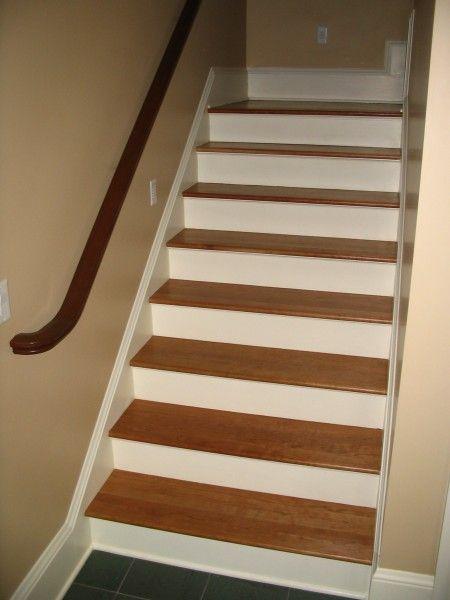
Basically my thinking is you could create the exposed stringer look by making a fake one... it will give the appearance that the stairs are timber build and dress of the sides nicely. You would end up with this - you can leave the top flat wood or dress up if you want, I think it depends on your skirting, I personally would go larger and use the top and bottom of the stringer as a skirting block and just bring my skirting up to it. You did ask, so this is what I will say about the radiator pipes... could you move them? What is under your floor? I see what looks like a joint in caberdeck, is that right? Could you carry those pipes on through the floor, turn under the floor and pop back up at the rad? If I am honest, I think it will be a pain in the neck to change, but I think it will be an even bigger thorn in your side for many years to come as you will have this "odd" bit. I'd certianly create a pipe box - ideally in plasterboard and plaster it in and paint it. to almost make it disappear. We have one of these for our central heating pipes in the hall at the front door, you don't really see it as it was boxed in as shallow as possible and plastered at the same time as the hall. Other alternatives are just to box it all up and try and hide as much as possible.
-
What is on the back of your house and what are you proposing for the front in terms of tile names and colours? Do they look near enough the same? I was under the impression that you would end up with a Frankenstein roof.
-
For the stairs it depends, are you going to carpet them or leave them bare or what is the plan? If you were going to cover them in carpet or even wood I would make a false stringer - basically tale a piece of 1x8 or something, and cut out the stair part, then sit it over the top so it looks like a normal stringer, you can then leave as is or dress with a piece of bead. cut the ends 90° to the floor and you can then run skirting up to these. Another option is just cut and fit skirting up and around them all but I think that looks a bit fussy and doesn't look right in general. If you were say tiling the floor then tile up the wall one tile type thing. As for the rad pipes... what can I say!
-
You can do anything to be honest, bearing in mind weights, but, is it worth it and is it really saving you money. Unless you have a huge roof expanse needing 1000's and 1000's of tiles then I'd just be looking for the right tiles and doing it properly - you will look back and regret it I reckon.